Canada -Point Lepreau nuclear power plant clears last regulatory approval before restart – Nearly double cost
“The project is about three years behind schedule and $1 billion over the original $1.4-billion budget.”
FRIDAY, 02 NOVEMBER 2012 13:54 THE CANADIAN PRESS
POINT LEPREAU, N.B. – The Point Lepreau nuclear power plant in New Brunswick has passed its last regulatory approval before returning to full power generation after a four-year refurbishment.
The Canadian Nuclear Safety Commission announced today that it has allowed the facility to increase reactor power above 35 per cent of its full capacity.
NB Power says more tests will be done, including raising and lowering reactor power and connecting and disconnecting the generator from the grid.
Kathleen Duguay, a spokeswoman for the Crown utility, says it will be weeks before the 660-megawatt station generates full power for its customers.
Asahi: Criminal charges for promoters of nuclear power? Fukushima radiation victims want justice
Published: November 2nd, 2012 at 9:29 am ET
By ENENews
Title: Second mass complaint coming over Fukushima disaster
Source: AJW by The Asahi Shimbun
Author: MASAKAZU HONDA
Date: November 02, 2012
More than 10,000 people from across Japan are seeking criminal charges against officials of Japan’s government and the utility that operates the Fukushima No. 1 nuclear power plant […]
The group numbers about 10,850 individuals, from Hokkaido in the north to Okinawa in the south. […]
Complainants argued that a broadly backed complaint would show that the general public is seeking criminal accountability for those who promoted nuclear power—and hold them responsible for damage from the disaster and for exposing victims to radiation. […]
USA -Board Terminates Review of Calvert Cliffs Nuclear
These pre-existing vulnerabilities mean that the American public is protected more by luck than by skill.”
Rockville, MD – 11/2/2012
By Marty Madden
“I’m most concerned about the NRC’s practice of allowing unsafe reactors to operate. UCS’s Nuclear Power Information Tracker shows 47 reactors that NRC knows to violate fire protection regulations and 27 reactors with seismic protection known to be less than the seismic hazards they face. These pre-existing vulnerabilities mean that the American public is protected more by luck than by skill.”
A three-judge panel has officially terminated its review of a proposal to build a new nuclear reactor in Lusby, federal officials reported. According to U.S. Nuclear Regulatory Commission (NRC) spokesman Neil Sheehan, the Atomic Safety Licensing Board (ASLB) issued its termination notice Thursday, Nov. 1, 60 days after giving the project applicant 60 days to identify a domestic company as a partner in the venture.
The project, known as Calvert Cliffs 3, was originally a joint venture of Constellation Energy Nuclear Group (CENG)—the owners and operators of Calvert Cliffs Nuclear Power Plant—and Electricite de France (EDF). Under the banner of UniStar Nuclear Operating Services, the companies submitted a combined licensing application during the summer of 2007.
Despite overwhelming community support from elected officials, local businesses, residents and the trade unions a group of organizations intervened, formally lodging a protest against the project. The groups—Nuclear Information Resource Service, Beyond Nuclear, Public Citizen and Southern Maryland Citizens Alliance for Renewable Energy Solutions—cited several factors for their protest, including a foreign company’s participation in the project. Federal law has restrictions on the involvement of foreign entities in nuclear projects.
In 2010, CENG ended its involvement with UniStar, making EDF the sole company involved in Calvert Cliffs 3. Constellation’s exit came after a request for a guaranteed loan from the U.S. Department of Energy failed to materialize.
‘UN must suspend Bahrain membership for rights violations’ -Press TV
CNN excepted money to not show an embarrassing Video
Friday Nov 02, 2012
“They have to tell the Bahraini government we are going to suspend your membership because you violated all these human rights and the freedom of assembly, [and] the right to expression, and for this reason people were killed, people were tortured, people were jailed, opposition leaders are still in jail, teachers, physicians are in jail,” President of the Bahraini Medical Association Osama Alaradi said in an interview with Press TV on Friday.
Louisiana Sinkhole? -Gulf Stream Shift Linked to Methane Gas Escaping from Seabeds
“The new work could reinvigorate a debate on the risk of methane release from the oceans and whether destabilized hydrates make the continental slopes more unstable”
By Nature magazine and Virginia Gewin
Somewhere off the eastern coast of North Carolina, a frozen mixture of water and methane gas tucked in seabed sediments is starting to break down. Researchers blame a shifting Gulf Stream — the swift Atlantic Ocean current that flows north from the Gulf of Mexico — which is now delivering warmer waters to areas that had previously only experienced colder temperatures.
“We know methane hydrates exist here and, if warming continues, it can potentially lead to less stable sediments in this region,” says Matthew Hornbach, a marine geologist at the Southern Methodist University in Dallas, Texas, who led the study that is published online today in Nature. The results suggest that the warmer temperatures are destabilizing up to 2.5 gigatons of methane hydrate along the continental slope of the eastern United States. This region is prone to underwater landslides, which could release the methane, a powerful greenhouse gas.
Whether that methane would make it to the atmosphere and worsen global warmingis unclear, but scientists think that it is unlikely. “We don’t need to worry about any huge blow of methane into the atmosphere,” says Carolyn Ruppel, a geophysicist at the US Geological Survey in Woods Hole, Massachusetts. Rather, she says, Hornbach and his co-author Benjamin Phrampus, also of the Southern Methodist University, have uncovered a powerful new way to use data from the geological record to catch non-anthropogenic climate changes that are already happening.
Nuclear news for the past week

Christina Macpherson’s websites & blogs
USA. The hurricane and storm surge has shut 3 nuclear plants. At least 10 nuclear reactors along the East coast experienced problems, with the “Sandy” hurricane. Gas fires are raging 10 miles away from Oyster Creek nuclear plant. Oyster Creek’s reactor was offline for fueling and maintenance. What regulators don’t add, however, is that the reactor still needs cooling for residual decay heat, and that the fuel pool likely contains more fuel and hotter fuel as a result of this procedure, which means it is even more at risk for overheating. And, perhaps most notably, with the reactor shutdown, it is not producing the electricity that could be used to keep water circulating through the spent fuel pool. At the Salem nuclear plant a wave also took out 5 of the 6 critical water pumps. Salem is still operating on emergency cooling systems.
USA elections: “Sandy” hurricane has had a devastating effect on USA’s East coast ,. It has prompted Americans to think about climate change. New York’s Mayor Bloomberg has announced his support for Obama, in view of Obama’s efforts to act on global warming, and in promotion of renewable energy, in contrast to Romney’s climate denialism.
UK. Energy Minister John Hayes announced that new nuclear reactors may get government subsidy, (despite Govt’s promises to the contrary). Japanese company Hitachi desperate for sale of nuclear technology, so will take over the UK’s nuclear project. Meanwhile trade association Renewable UK. reported on new research, showing rapid rise in renewable energy, with wind set to outdo nuclear energy by 2015.
UK will not take part in pre-emptive strike against Iran’s nuclear facilities.
Europe. Nuclear energy on the downward slide, with Finland’s Fennovoima project the latest nuclear project likely to go down the drain.
India. Arrests of anti nuclear activists continue. Despite repression, and the barring of activists, including Australian film-maker David Bradbury) entering Tamil Nadu area, still 1000 protested again against Kudankulam nuclera power plant. India is going to waive its Nuclear Liability law, for the purchase of nuclear technology from Russia. Attorney General G E Vahanvati not happy with this decision.
Japan. Things are not getting any better for communities still living in radiation contaminated areas of Fukushima. A former Tepco worker is taking legal action against the company, for its negligence in not warning Fukushima emergency workers of their radiation danger. TEPCO to make all its employees work for periods at Fukushima each year.
Taiwan: Economics committee wants Taipei’s Nuclear Power Plant in Gongliao District transformed into a gas power plant
New books launched – www.freshcurrents.org ‘Fresh Currents’ charts the way to, and from, Fukushima, for Japan and the world Nuclear Roulette: The Truth about the Most Dangerous Energy Source on Earth i
New Jersey Nuclear plant only 10 miles from gas fires

 Gas fires still burning 10 miles from NJ nuclear plant after Sandy — Official: Devastation can’t be seen from the air… It’s beyond imagination (PHOTOS) http://enenews.com/gas-fires-still-burning-10-miles-from-nj-nuclear-plant-official-the-devastation-is-nothing-that-could-be-seen-from-the-air-it-is-beyond-imagination
November 1st, 2012
Title:Title: New Jersey Natural Gas shutting off service to barrier islands
Source: The Star-Ledger
Author: Seth Augenstein
Date: November 01, 2012
The natural gas fires that have burned for days along the ravaged barrier islands, spanning from Bay Head south to Seaside Park [10 miles north of Oyster Creek Nuclear Generating Station] and also Long Beach Island, are about to be snuffed by New Jersey Natural Gas, the company said this afternoon. […]
Brick Township (Andrew Mills/The Star-Ledger)
The company cannot give an estimate of the number of fires that have burned in the devastated areas. […]
In Brick, roughly a half dozen natural gas fires have burned for three days — and are still going — on the township’s 3-mile stretch of barrier island […]
Authorities are now monitoring the gas fires as they wait for a chance to get into the storm-ravaged area. […]
Title: New Jersey Natural Gas to snuff gas fires on barrier islands
Source: The Asbury Park Press
Date: November 01, 2012 at 1:30 PM
[…] Over the past three days, New Jersey Natural Gas has plugged more than 1,300 leaks in those areas. […]
“Our crews did everything we could to save the system,” said Kathleen T. Ellis, chief operating officer of New Jersey Natural Gas. “We were only able to gain access to some of the most damaged areas within in the last 24 hours, and the devastation is nothing that could be seen from the air.
“It is beyond imagination,” Ellis said. “The only safe thing to do is shut down the system.” [.. Watch: ABC 10 miles from NJ nuke plant: We can hear gas lines hissing — Fire dept. says one spark and town could blow (VIDEO)
Unanswered questions about Oyster Creek nuclear power plant
 Oyster Creek Nuclear Alert: As Floodwaters Fall, More Questions Arise TruthOut , 01 November 2012 11:38By Gregg Levine, capitoilette | News Analysis New Jersey’s Oyster Creek Nuclear Generating Station remains under an official Alert, a day-and-a-half after the US Nuclear Regulatory Commission declared the emergency classification due to flooding triggered by Hurricane Sandy. An Alert is the second category on the NRC’s four-point emergency scale. Neil Sheehan, a spokesman for the federal regulator, said thatfloodwaters around the plant’s water intake structure had receded to 5.7 feet at 2:15 PM EDT Tuesday, down from a high of 7.4 feet reached just after midnight.
Water above 6.5 to 7 feet was expected to compromise Oyster Creek’s capacity to cool its reactor and spent fuel pool, according to the NRC. An “Unusual Event,” the first level of emergency classification, was declared Monday afternoon when floodwaters climbed to 4.7 feet.
Though an emergency pump was brought in when water rose above 6.5 feet late Monday, the NRC and plant owner Exelon have been vague about whether it was needed. As of this writing, it is still not clear if Oyster Creek’s heat transfer system is functioning as designed. Continue reading
UK govt sneaking subsidy into new nuclear industry?
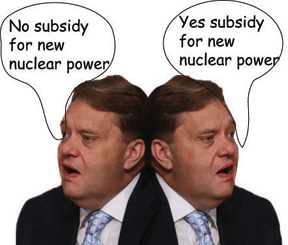 “A subsidy is still a subsidy, even if it is given to others.”
New nuclear reactors could be eligible for subsidies, says minister. John Hayes says there will be no market support ‘unless similar support is also made available to other types of generation’ Juliette Jowit, political correspondent guardian.co.uk, 1 November 2012 The nuclear industry could get subsidies from the taxpayer to build new reactors, the new energy minister has said, despite opposition in the coalition agreement and repeated assurances to the contrary. Continue reading
Renewable energy trumping nuclear in Britain
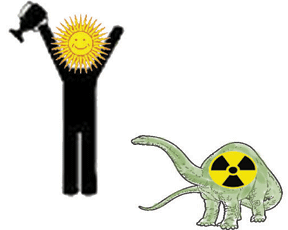 Renewable UK said that last year there were at least 137,000 people involved in the sector, with a further 654,500 jobs in ancillary industries.
Renewable energy will overtake nuclear power by 2018, research says Renewables will provide enough power for one in 10 British homes by 2015 if current growth rates continue Fiona Harvey, environment correspondent The Guardian, 30  October 2012 Renewable energy capacity will overtake nuclear power in the UK by 2018, if current rates of growth continue, and will provide enough power for one in 10 British homes by 2015, according to new research.
The amount of electricity supplied by wind energy alone is up by a quarter since 2010, in a surprisingly good year for the renewables industry. While the government has notably cooled on wind power – more than 100 Tory MPs signed a statement this year opposing new windfarms, and the chancellor of the exchequer, George Osborne, has queried the future of subsidies – the industry has continued to grow, with investment in offshore wind up by about 60% to £1.5bn in the past year. Planning approvals for onshore windfarms also rose, up by about half, to reach a record level, according to the trade association Renewable UK.
Despite the outspoken opposition from many Tory MPs against wind power, there was a rise in the amount of onshore wind capacity approved last year for the first time since 2008. Continue reading
Iran and Israel – moderate responses on nuclear issue

 Could Iran’s Supreme Leader be more cautious than we think?
The Telegraph, By David Blair World November 1st, 2012 My interview with Ehud Barak in London on Tuesday attracted a good deal of attention and comment. The Israeli defence minister’s most striking statement concerned Iran’s decision to convert much of its stockpile of 20 per cent enriched uranium into harmless fuel rods. Without that event, Barak confirmed that the crisis over Iran’s nuclear ambitions would “probably” have peaked about now. Instead, Iran’s decision “allows contemplating delaying the moment of truth by eight to ten months”.
In his speech before the UN General Assembly in September, Benjamin Netanyahu softened Israel’s position on the possibility of an imminent military strike, saying that the critical moment would arrive next spring or summer. Barak told me that Iran’s move was “in the background of our decision”.
So the figures tucked away on page 8 of the last IAEA report on Iran’s nuclear programme turned out to be of vital importance. They showed that Iran took 71.25 kg of its stockpile of 20 per cent enriched uranium and converted it into fuel rods for the Tehran Research Reactor, a civilian facility. The uranium enriched to 20 per cent purity is the material that is closest to weapons-grade. Out of a total holding of 189.4 kg, Iran has devoted 37.6 per cent to a peaceful purpose…..
In 2003, we know that Iran suspended its research on how to build a nuclear warhead (although the evidence suggests that some work was restarted later). Now we know that during the course of this year, Iran took a big chunk of the uranium that was closest to weapons-grade and used it for a harmless purpose. Thanks to Barak’s candour, we also know that this decision probably averted a crisis.
Could Ayatollah Ali Khamenei, the Supreme Leader of Iran, be more cautious than we think? Instead of treading a straight Roman Road to a nuclear weapon, he has twice veered off course. To me, that suggests that he is nervous and feeling the pressure. Is the ultimate destination of Iran’s nuclear programme still an open question? http://blogs.telegraph.co.uk/news/davidblair/100187473/could-irans-supreme-leader-be-more-cautious-than-we-think/
First insurance companies, now even AMERICANS wake up to global warming!
On Oct. 17 the giant German reinsurance company Munich Re issued a prescient report titled Severe Weather in North America. Globally, the rate of extreme weather events is rising, and “nowhere in the world is the rising number of natural catastrophes more evident than in North America.” From 1980 through 2011, weather disasters caused losses totaling $1.06 trillion. Munich Re found “a nearly quintupled number of weather-related loss events in North America for the past three decades.”
 It’s Global Warming, Stupid Bloomberg Business Week By Paul M. Barrett November 01, 2012 Yes, yes, it’s unsophisticated to blame any given storm on climate change. Men and women in white lab coats tell us—and they’re right—that many factors contribute to each severe weather episode. Climate deniers exploit scientific complexity to avoid any discussion at all.
Clarity, however, is not beyond reach. Hurricane Sandy demands it: At least 40 U.S. deaths. Economic losses expected to climb as high as $50 billion. Eight million homes without power. Hundreds of thousands of people evacuated. More than 15,000 flights grounded. Factories, stores, and hospitals shut. Lower Manhattan dark, silent, and underwater.
An unscientific survey of the social networking literature on Sandy reveals an illuminating tweet (you read that correctly) from Jonathan Foley, director of the Institute on the Environment at the University of Minnesota. On Oct. 29, Foley thumbed thusly: “Would this kind of storm happen without climate change? Yes. Fueled by many factors. Is storm stronger because of climate change? Yes.”
Eric Pooley, senior vice president of the Environmental Defense Fund (and former deputy editor of Bloomberg Businessweek), offers a baseball analogy: “We can’t say that steroids caused any one home run by Barry Bonds, but steroids sure helped him hit more and hit them farther. Now we have weather on steroids.” Continue reading
Cancellation of Finland’s nuclear project likely, as Europe retreats from nuclear power
“It is entirely possible that Finland’s Fennovoima project will fail as a result of EON’s exit,”
“A cancellation of the project seems very likely.”
Utilities are pulling out of nuclear projects across Europe as financial constraints and uncertainty over energy prices increases risk.
 EON Exit From Finnish Nuclear Reactor May Trigger Failure Bloomberg, By Torsten Fagerholm – Nov 1, EON AG (EOAN)’s plan to pull out of a joint venture that’s building a nuclear reactor in Finland increases the risk that the project may fail, thwarting the government’s plans to cut reliance on energy imports. Continue reading
San Onofre nuclear plant – back in function – NEVER? or years away
Edison Chairman Ted Craver left open the possibility that the generators might eventually be scrapped.
Craver said it’s not clear if the plant will ever return to full power. He added, “It appears complete replacement of the steam generators would take some years.”
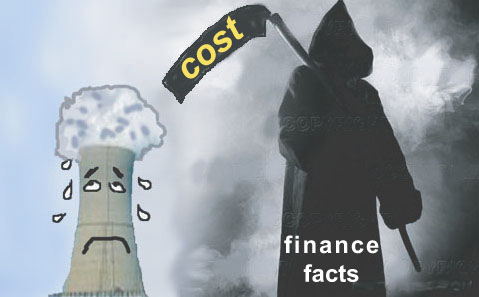 Bills for replacement power, repairs at troubled San Onofre, Calif., nuke plant reach $317M WP, By Associated Press,November 1 LOS ANGELES — Costs tied to the long-running shutdown at the San Onofre nuclear power plant in California have hit $317 million, and
it’s not clear if the ailing plant will return to full power, according to documents released Thursday. Continue reading
In this climate challenged world, nuclear lobbyists have nothing to crow about
Having a grid that simply survives a category 1 hurricane without a Fukushima-sized nuclear disaster is nothing to crow about.
The astronomical cost of restoring power to millions of consumers is real, as is the potential danger still posed by a number of crippled nuclear power plants.
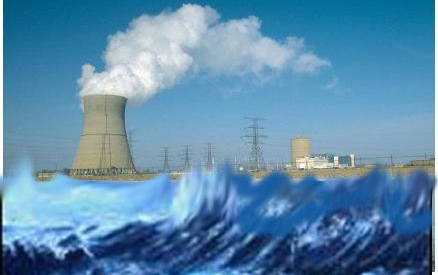 Oyster Creek Nuclear Alert: As Floodwaters Fall, More Questions Arise TruthOut , 01 November 2012 Gregg Levine, capitoilette | News Analysis“……If you thought all of these problems would cause nuclear industry representatives to lay low for a while, well, you’d be wrong: “Our facilities’ ability to weather the strongest Atlantic tropical storm on record is due to rigorous precautions taken in advance of the storm,” Marvin Fertel, chief executive officer of the Nuclear Energy Institute, a Washington-based industry group, said yesterday in a statement.
Fertel went on to brag that of the 34 reactors it said were in Sandy’s path, 24 survived the storm without incident.
Or, to look at it another way, during a single day, the heavily populated eastern coast of the Unite States saw multiple nuclear reactors experience problems. And that’s in the estimation of the nuclear industry’s top lobbyist.
Or, should we say, the underestimation? Of the ten reactors not in Fertel’s group of 24, seven were already offline, and the industry is not counting them. So, by Fertel’s math, Oyster Creek does not figure against what he considers success. Power reductions and failed emergency warning systems are also not factored in, it appears. Continue reading
1 This Month

of the week – Shut Down Drone Warfare!


Tell the Ukrainian Government to Drop Prosecution of Peace Activist Yurii Sheliazhenko

Petition to revoke the licensing of the Near Surface Nuclear Disposal Facility (NSDF) at Chalk River. https://www.ourcommons.ca/petitions/en/Petition/Details?Petition=e-7247
To see nuclear-related stories in greater depth and intensity – go to https://nuclearinformation.wordpress.com
-
Archives
- April 2026 (114)
- March 2026 (251)
- February 2026 (268)
- January 2026 (308)
- December 2025 (358)
- November 2025 (359)
- October 2025 (376)
- September 2025 (257)
- August 2025 (319)
- July 2025 (230)
- June 2025 (348)
- May 2025 (261)
-
Categories
- 1
- 1 NUCLEAR ISSUES
- business and costs
- climate change
- culture and arts
- ENERGY
- environment
- health
- history
- indigenous issues
- Legal
- marketing of nuclear
- media
- opposition to nuclear
- PERSONAL STORIES
- politics
- politics international
- Religion and ethics
- safety
- secrets,lies and civil liberties
- spinbuster
- technology
- Uranium
- wastes
- weapons and war
- Women
- 2 WORLD
- ACTION
- AFRICA
- Atrocities
- AUSTRALIA
- Christina's notes
- Christina's themes
- culture and arts
- Events
- Fuk 2022
- Fuk 2023
- Fukushima 2017
- Fukushima 2018
- fukushima 2019
- Fukushima 2020
- Fukushima 2021
- general
- global warming
- Humour (God we need it)
- Nuclear
- RARE EARTHS
- Reference
- resources – print
- Resources -audiovicual
- Weekly Newsletter
- World
- World Nuclear
- YouTube
-
RSS
Entries RSS
Comments RSS
 nuclear-news