All USA’s nuclear plants can withstand hurricane and flooding – Nuclear Regulatory Comission
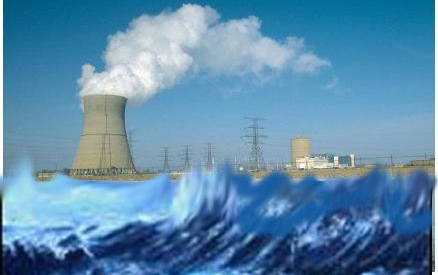 “All plants have flood protection above the predicted storm surge, and key components and systems are housed in watertight buildings capable of withstanding hurricane-force winds and flooding,” the NRC said in a statement earlier today.
Inspectors Dispatched to Nuclear Reactors in Sandy’s Path By Mark Drajem, Kasia Klimasinska and Christine Harvey – Oct 30, 2012 Extra federal inspectors were dispatched to U.S. nuclear-power plants in the path of Hurricane Sandy as operators and officials reassured the public that they are prepared for high winds, power outages and flooding associated with the massive storm.
The Nuclear Regulatory Commission said it sent additional inspectors to 10 sites from Maryland to Connecticut, and issued the employees satellite telephones, as regulators and plant operators grappled with the worst storm to threaten U.S. nuclear facilities since a nuclear disaster in Japan last year. Procedures require the sites to be shut before winds are forecast to exceed hurricane force, the commission said today in a statement.
“Given the breadth and intensity of this historic storm, the NRC is keeping a close watch on all of the nuclear power plants that could be impacted,” NRC Chairman Allison Macfarlane said in a statement. “Our extra inspectors sent to the potentially affected sites will continue, on an around-the-clock basis, to independently verify that the safety of these plants is maintained until the storm has passed and afterwards.”
Analysts said loss of outside power, which is necessary to keep nuclear cores and spent fuel cool, would test procedures put in place after an earthquake-triggered tsunami led to radiation releases at the Fukushima Dai-Ichi plant in March 2011. The Tokyo Electric Power Co. plant lost off site power and backup generators failed after the earthquake.
‘Comparative Risks’
U.S. nuclear plants are well-equipped to handle the threats from Sandy, said Arthur Motta, chairman of the Nuclear Engineering Program at Pennsylvania State University. “In terms of comparative risks, a nuclear power plant is safer than most of the other things nearby,” he said in an interview.
Plants in the path of the storm include Entergy Corp. (ETR)’s Indian Point in New York and Calvert Cliffs in Maryland, owned by Constellation Energy Nuclear Group LLC, a joint venture of Exelon Corp. (EXC) of Chicago and Electricite de France SAin Paris.
“All plants have flood protection above the predicted storm surge, and key components and systems are housed in watertight buildings capable of withstanding hurricane-force winds and flooding,” the NRC said in a statement earlier today.
At Indian Point, the debris in the Hudson River, which could disturb water-intake, poses a greater risk than flooding, Neil Sheehan, an NRC spokesman, said in an interview. All the plants in the storm’s path were told to examine their vicinity for large objects that could become “airborne missiles” in high winds, he said.
Inspectors Dispatched to Nuclear Reactors in Sandy’s Path
Extra federal inspectors were dispatched to U.S. nuclear-power plants in the path of Hurricane Sandy as operators and officials reassured the public that they are prepared for high winds, power outages and flooding associated with the massive storm.
The Nuclear Regulatory Commission said it sent additional inspectors to 10 sites from Maryland to Connecticut, and issued the employees satellite telephones, as regulators and plant operators grappled with the worst storm to threaten U.S. nuclear facilities since a nuclear disaster in Japan last year. Procedures require the sites to be shut before winds are forecast to exceed hurricane force, the commission said today in a statement.

The Vermont Yankee nuclear power plant on the banks of the Connecticut River in Vernon, Vermont. Photographer: Jason R. Henske/AP Photo
“Given the breadth and intensity of this historic storm, the NRC is keeping a close watch on all of the nuclear power plants that could be impacted,” NRC Chairman Allison Macfarlane said in a statement. “Our extra inspectors sent to the potentially affected sites will continue, on an around-the-clock basis, to independently verify that the safety of these plants is maintained until the storm has passed and afterwards.”
Analysts said loss of outside power, which is necessary to keep nuclear cores and spent fuel cool, would test procedures put in place after an earthquake-triggered tsunami led to radiation releases at the Fukushima Dai-Ichi plant in March 2011. The Tokyo Electric Power Co. plant lost off site power and backup generators failed after the earthquake.
‘Comparative Risks’
U.S. nuclear plants are well-equipped to handle the threats from Sandy, said Arthur Motta, chairman of the Nuclear Engineering Program at Pennsylvania State University. “In terms of comparative risks, a nuclear power plant is safer than most of the other things nearby,” he said in an interview.
Plants in the path of the storm include Entergy Corp. (ETR)’s Indian Point in New York and Calvert Cliffs in Maryland, owned by Constellation Energy Nuclear Group LLC, a joint venture of Exelon Corp. (EXC) of Chicago and Electricite de France SA in Paris.
“All plants have flood protection above the predicted storm surge, and key components and systems are housed in watertight buildings capable of withstanding hurricane-force winds and flooding,” the NRC said in a statement earlier today.
At Indian Point, the debris in the Hudson River, which could disturb water-intake, poses a greater risk than flooding, Neil Sheehan, an NRC spokesman, said in an interview. All the plants in the storm’s path were told to examine their vicinity for large objects that could become “airborne missiles” in high winds, he said.
Emergency Gear
Exelon’s Oyster Creek plant in New Jersey, about 33 miles north of Atlantic City and near the center of the storm’s projected path, isn’t operating and is most likely to be affected by high tides and water levels from Sandy.
The company also repositioned emergency gear, activated back-up communications and boosted staffing at its Limerick, Peach Bottom and Three Mile Island plants in Pennsylvania, the company said in a statement.
Plant operators face risks including the loss of outside power and the inability to keep cool spent fuel stored at the facilities.
However, a year and a half after the disaster in Japan and with frequent warnings about Sandy, which reached hurricane status on Oct. 24, operators had adequate time to prepare, Chris Paine, the nuclear program director at the New York-based Natural Resources Defense Council, said in an interview.
‘Plenty of Warning’
“Right now I don’t see this as a kind of storm that poses enormous threat to nuclear plants,” Paine said. “They had plenty of warning, days in this case, to prepare.”
Given the threat of loss of power, “it would be more responsible if NRC and plant operators would shut the plants down in advance,” Kevin Kamps, a radioactive waste specialist at Beyond Nuclear, a Takoma Park, Maryland, group that seeks to end nuclear power and nuclear weapons, said in an interview.
It takes longer to cool down the radioactive core at a plant operating at full power, he said.
“In terms of reactors, you had better hope those diesel generators work adequately,” Kamps said.
Motta, member of a National Academy of Sciences panel on U.S. nuclear safety, disagreed, and said shutting the plants now wouldn’t make much of a difference……http://www.bloomberg.com/news/2012-10-29/inspectors-dispatched-to-nuclear-reactors-in-sandy-s-path.html
No comments yet.
1 This Month

of the week – Shut Down Drone Warfare!


Tell the Ukrainian Government to Drop Prosecution of Peace Activist Yurii Sheliazhenko

Petition to revoke the licensing of the Near Surface Nuclear Disposal Facility (NSDF) at Chalk River. https://www.ourcommons.ca/petitions/en/Petition/Details?Petition=e-7247
To see nuclear-related stories in greater depth and intensity – go to https://nuclearinformation.wordpress.com
-
Archives
- April 2026 (103)
- March 2026 (251)
- February 2026 (268)
- January 2026 (308)
- December 2025 (358)
- November 2025 (359)
- October 2025 (376)
- September 2025 (257)
- August 2025 (319)
- July 2025 (230)
- June 2025 (348)
- May 2025 (261)
-
Categories
- 1
- 1 NUCLEAR ISSUES
- business and costs
- climate change
- culture and arts
- ENERGY
- environment
- health
- history
- indigenous issues
- Legal
- marketing of nuclear
- media
- opposition to nuclear
- PERSONAL STORIES
- politics
- politics international
- Religion and ethics
- safety
- secrets,lies and civil liberties
- spinbuster
- technology
- Uranium
- wastes
- weapons and war
- Women
- 2 WORLD
- ACTION
- AFRICA
- Atrocities
- AUSTRALIA
- Christina's notes
- Christina's themes
- culture and arts
- Events
- Fuk 2022
- Fuk 2023
- Fukushima 2017
- Fukushima 2018
- fukushima 2019
- Fukushima 2020
- Fukushima 2021
- general
- global warming
- Humour (God we need it)
- Nuclear
- RARE EARTHS
- Reference
- resources – print
- Resources -audiovicual
- Weekly Newsletter
- World
- World Nuclear
- YouTube
-
RSS
Entries RSS
Comments RSS
 nuclear-news
Leave a comment