Australian Prime Minister unwise to support India’s dodgy nuclear power program
India is pursuing an unreliable technology. The DAE’s plans involve constructing hundreds of fast breeder reactors.
there are reasons to be worried about the risk of severe accidents at Indian nuclear facilities.
 there are ongoing protests at all new sites selected for nuclear plants. The protracted and intense protests over commissioning of the Koodankulam reactors in Tamil Nadu is just the most spectacular of these.
India’s nuclear power failures warn against uranium exports, The Conversation, MV Ramana 16 October 2012, Selling Australian uranium is reportedly at the top of Prime Minister Julia Gillard’s priorities as she travels to India this week. Before she decides to do that, there are three facts she may want to consider.
First, despite all the hoopla about India’s nuclear ambitions, nuclear energy is unlikely to contribute more than a few percent of the country’s electricity capacity in the next several decades, if ever.
India’s Department of Atomic Energy (DAE) has always promised much and
delivered little. In the early 1970s, for example, DAE projected that
by 2000 there would be 43,000 MW of installed nuclear capacity. In
2000, that capacity was actually 2720 MW. Today, nuclear power
constitutes barely 2% of the total electricity generation capacity.
There is at least one good technical reason why future targets are
unlikely to be met: India is pursuing an unreliable technology. The DAE’s plans involve constructing hundreds of fast breeder reactors. Fast breeder reactors are so-called because they are based on
energetic (fast) neutrons and because they produce (breed) more
fissile material than they consume. In the early decades of nuclear
power, many countries pursued breeder programs. But practically all of
them have given up on breeder reactors as unsafe and uneconomical.
Relying on a technology shown to be unreliable makes it likely that
nuclear power will never become a major source of electricity in
India.
The failure to meet targets is not a result of lack of money. DAE has
always been lavishly funded. Its proposed budget for 2011–12 was
roughly $A1.7 billion; in comparison, the proposed 2011–12 budget of
the Ministry of New and Renewable Energy was $A0.22 billion. It’s
testimony to the government’s priorities.
To put that in perspective, the total generating capacity of renewable
energy projects was 22,233 MW, whereas the installed capacity of
nuclear power was 4780 MW. Though almost all of the growth in modern
renewable energy capacity has been over the last two decades, they
already generate more electricity (in GWh) than all reactors put
together.
Second, there are reasons to be worried about the risk of severe
accidents at Indian nuclear facilities. Among all electricity
generating technologies, nuclear power alone comes with the
possibility of catastrophic accidents, with consequences spreading out
across space and time. Despite improvements in reactor technology, the
probability of such catastrophic accidents remains stubbornly greater
than zero. This poses extreme organisational demands, and these
demands have unfortunately not been met.
Most nuclear facilities in the country have experienced small or large
accident…….
Third, a large majority of the Indian public, particularly those
living near proposed nuclear facilities, learned the obvious lesson
from Fukushima: nuclear reactors are hazardous, and communities living
near nuclear facilities would be the worst affected in the event of an
accident. This is why there are ongoing protests at all new sites
selected for nuclear plants. The protracted and intense protests over
commissioning of the Koodankulam reactors in Tamil Nadu is just the
most spectacular of these. http://theconversation.edu.au/indias-nuclear-power-failures-warn-against-uranium-exports-10131?utm_source=feedburner&utm_medium=feed&utm_campaign=Feed%3A+conversationedu+%28The+Conversation%29
No comments yet.
1 This Month
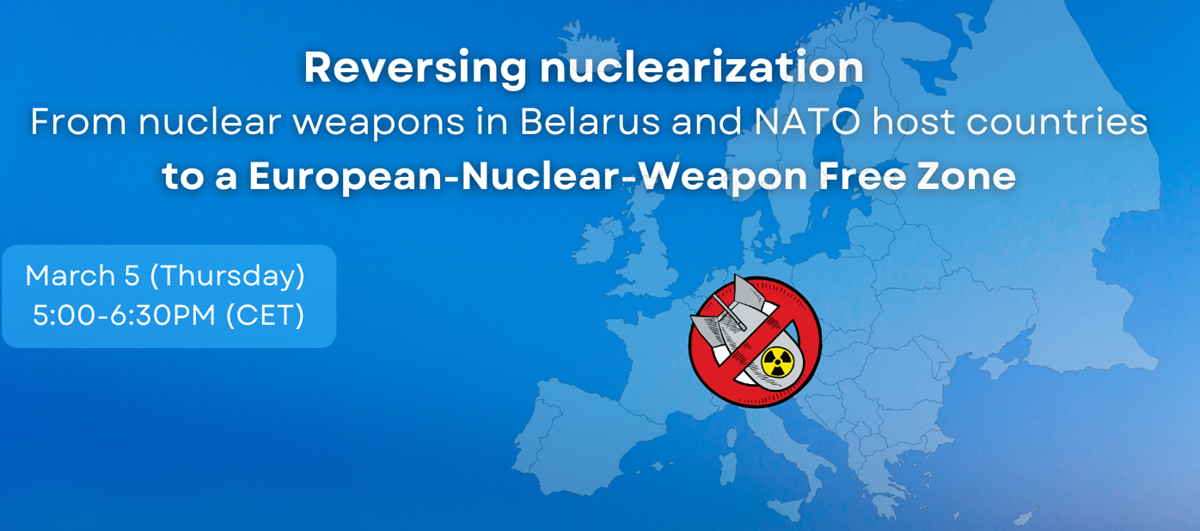
5 March -Online – Reversing nuclearization:
From nuclear weapons in Belarus and NATO host countries to a European-Nuclear-Weapon Free Zone
11am-12:30pm Eastern Time USA / 5pm-6:30pm CET

of the week – Advocating for a
nuclear free beach – https://www.samuellawrencefoundation.org/
The Samuel Lawrence Foundation advocates for a Nuclear Waste Free Beach at San Onofre, join us and take action!

10 March A LIVE WEBINAR THE REAL EFFECTS OF NUCLEAR POWER
What the Industry Isn’t Telling Us
1:00 PM Mountain, 2 pm Central, 3 pm Eastern. Live on the Keepers of the Water Facebook page

18 March Webinar @ 1 PM EST: An Assessment of SMR Projects: The Case of Canada
register for the zoom:
https://us02web.zoom.us/webinar/register/WN_o8BIIOUvQ2ONJR1nta65DQ#/registration

of the week – STOP SMALL MODULAR REACTORS IN CANADA
To see nuclear-related stories in greater depth and intensity – go to https://nuclearinformation.wordpress.com
-
Archives
- March 2026 (51)
- February 2026 (268)
- January 2026 (308)
- December 2025 (358)
- November 2025 (359)
- October 2025 (376)
- September 2025 (258)
- August 2025 (319)
- July 2025 (230)
- June 2025 (348)
- May 2025 (261)
- April 2025 (305)
-
Categories
- 1
- 1 NUCLEAR ISSUES
- business and costs
- climate change
- culture and arts
- ENERGY
- environment
- health
- history
- indigenous issues
- Legal
- marketing of nuclear
- media
- opposition to nuclear
- PERSONAL STORIES
- politics
- politics international
- Religion and ethics
- safety
- secrets,lies and civil liberties
- spinbuster
- technology
- Uranium
- wastes
- weapons and war
- Women
- 2 WORLD
- ACTION
- AFRICA
- Atrocities
- AUSTRALIA
- Christina's notes
- Christina's themes
- culture and arts
- Events
- Fuk 2022
- Fuk 2023
- Fukushima 2017
- Fukushima 2018
- fukushima 2019
- Fukushima 2020
- Fukushima 2021
- general
- global warming
- Humour (God we need it)
- Nuclear
- RARE EARTHS
- Reference
- resources – print
- Resources -audiovicual
- Weekly Newsletter
- World
- World Nuclear
- YouTube
-
RSS
Entries RSS
Comments RSS
 nuclear-news
Leave a comment