Dumped Russian nuclear sub shows no radioactive leaks, but still presents chain reaction dangers
Update..
[…]
“The focus on K-27 shows that the concern for the possibility of chain reaction developing in the reactors of the submarine is well-founded,” he said.
“The Russians dismantled several reactors with liquid metal coolant of the same type as those aboard the K-27 – which were stored on shore – and gained a knowledge that rang the alarm bells,”
[…]
That the expedition focused nearly exclusively on the integrity of the K-27 when there are so many other objects to check, underscores that the concern of a chain reaction aboard the scuttled submarine is very real, said Kudrik.
“The focus on K-27 shows that the concern for the possibility of chain reaction developing in the reactors of the submarine is well-founded,” he said.
[…]
But neither Strand nor Bellona’s Igor Kudrik, an expert on Russian Naval nuclear waste issues, believe this is a complete accounting of the waste.
Indeed, acknowledged Bellona President Frederic Hauge, a precise accounting from the Russian side could hardly be expected given Russia’s own ignorance of the extent of the dumped radioactive waste.
[…]
“K-27 is a dangerous object and there are plans to lift it from the sea bottom for proper disposal,” Yablokov said in remarks to the Bloomberg news agency today. “Technically it’s possible.”
[…]
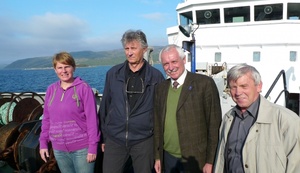
A group of 16 Russian and Norwegian researchers who sailed to take measurements surrounding a Russian nuclear submarine that was scuttled for nuclear waste off the coast of the former Soviet nuclear test archipelago Novaya Zemlya in the Kara Sea have found no radioactive leaks, Norwegian radiation authorities said today.Bellona, 25/09-2012
Per Strand, a director at the Norwegian Radiation Protection agency told Bellona, however, that the primary purpose of the expedition, which returned today, was to inspect the possibility of an uncontrolled chain reaction aboard the K-27 Russian nuclear submarine, which was sunk in 50 meters of water in Novaya Zemlya’s Stepovogo Bay in the Kara Sea as nuclear waste in 1981.
“The Russian side indicated there might be a hypothetical possibility that spent nuclear fuel in the reactor in extreme situations could cause an uncontrolled chain reaction, which can lead to heat and radioactivity releases,” Strand said in a telephone interview from Kirkeness.
The K-27, was dumped by the Soviet Navy in 1981, with spent nuclear fuel packed in its reactors, after a 1968 reactor leak aboard the killed nine sailors. The navy tried to repair it before deciding to seal the nuclear units and sinking the sub.
The researchers also examined some 2000 containers of various kinds of radioactive waste that were dumped in Stepovogo Bay, but found no increase in radiation since the site was last inspected in 1994.
Authorities in Russia and their counterparts in Norway, which lies about 965 kilometers to the west of the sunken sub, need to make a decision about a safe disposal of the K-27, which was the top priority of the expedition, Strand said.
Strand said that the joint research team aboard the Ivan Petrov research vessel took sediment, plant and sea life samples.
They also used a mini submarine to take photos of the K-27’s condition. Though emphasizing that all data collected is preliminary, Strand said it would “contribute to making decisions about whether the submarine needs to be lifted out of the water” for safer storage.
“For now, the first priority will be the development of environmental impact studies based on the information we have collected to judge the feasibility of lifting the submarine,” he said.
Norway’s number one focus for the moment, said Strand, will be developing an effective system of countermeasures should a chain reaction occur aboard the K-27.
Catalogue of nuclear waste in the Kara Sea
The joint expedition – the first of its kind in 18 years – was launched afterRussian authorities gradually released in August to the NRPA a catalogue of nuclear waste dumped at sea by Soviet and Russian authorities over a period of decades ending in the early 1990s.
Included in the radioactive materials dumped into the Kara Sea were 19 ships containing radioactive waste; 14 nuclear reactors, including five that still contain spent nuclear fuel; 735 other pieces of radioactively contaminated heavy machinery; 17,000 containers of radioactive waste, and the K-27 nuclear submarine.
But neither Strand nor Bellona’s Igor Kudrik, an expert on Russian Naval nuclear waste issues, believe this is a complete accounting of the waste.
Indeed, acknowledged Bellona President Frederic Hauge, a precise accounting from the Russian side could hardly be expected given Russia’s own ignorance of the extent of the dumped radioactive waste.
Expedition underscores that chain reaction threat is real
That the expedition focused nearly exclusively on the integrity of the K-27 when there are so many other objects to check, underscores that the concern of a chain reaction aboard the scuttled submarine is very real, said Kudrik.
“The focus on K-27 shows that the concern for the possibility of chain reaction developing in the reactors of the submarine is well-founded,” he said.
“The Russians dismantled several reactors with liquid metal coolant of the same type as those aboard the K-27 – which were stored on shore – and gained a knowledge that rang the alarm bells,” said Kudrik, adding, “further steps should include analyses of the probability of such a worst case scenario, and an evaluation of whether it is possible to lift the submarine.”
Russian environmentalists push for raising the K-27
Preeminent Russian environmentalists Alexei Yablokov, who published research on radioactive waste near Novaya Zemlya in 1992 as former Russian President Boris Yeltsin’s chief environmental advisor, urged that the submarine be lifted Tuesday.
“K-27 is a dangerous object and there are plans to lift it from the sea bottom for proper disposal,” Yablokov said in remarks to the Bloomberg news agency today. “Technically it’s possible.”
Sergei Novikov, a spokesman for the state run nuclear corporation Rosatom, which oversees Russia’s nuclear industry, wasn’t available to comment following calls to his office and mobile phones. Anatoly Zakharchev, the head of the submarine decommissioning unit at Rosatom, was also unavailable for immediate comment.
Effects to oil drilling in the Arctic
Preliminary analysis presented today suggested the enormous nuclear waste finds should not – in their current condition – impede Arctic oil exploration provided companies steer clear of the shallows surrounding Novaya Zemlya.
Norway’s Statoil and Eni SpA of Italy have set up joint ventures with Russian oil giant Rosneft to explore in the Russian area of the Barents Sea, a larger body of water next to the Kara Sea, where the Soviet Union also dumped waste. The partners are targeting about 15 billion and 26 billion barrels of oil and gas resources respectively.
Statoil spokesman Bård Petersen told Bellona today in a telephone interview that,” barring any new revelations regarding the radioactive sources, I do not think they will pose difficulties in the progress of our exploratory progress” with Rosneft.
He did say, however, that Statoil would monitor the discoveries made by the joint Norwegian-Russian expedition.
Bellona’s Kudrik said the financial responsibility for cleaning up the radioactive dump at the bottom of the Kara Sea rests with the Russian government. But he suggested big oil should assist in accelerating the process by lending its offshore expertise.
“Oil companies should make sure that the area is swiped clean of nuclear waste before they start any oil exploration activity,” said Kurdrik. “In the worst-case scenario – that is, an uncontrolled chain reaction in the reactors of K-27 – radiation will spread in the Kara Sea and create major difficulties for any industrial activity.”
http://www.bellona.org/articles/articles_2012/submarine_research_trip
No comments yet.
1 This Month
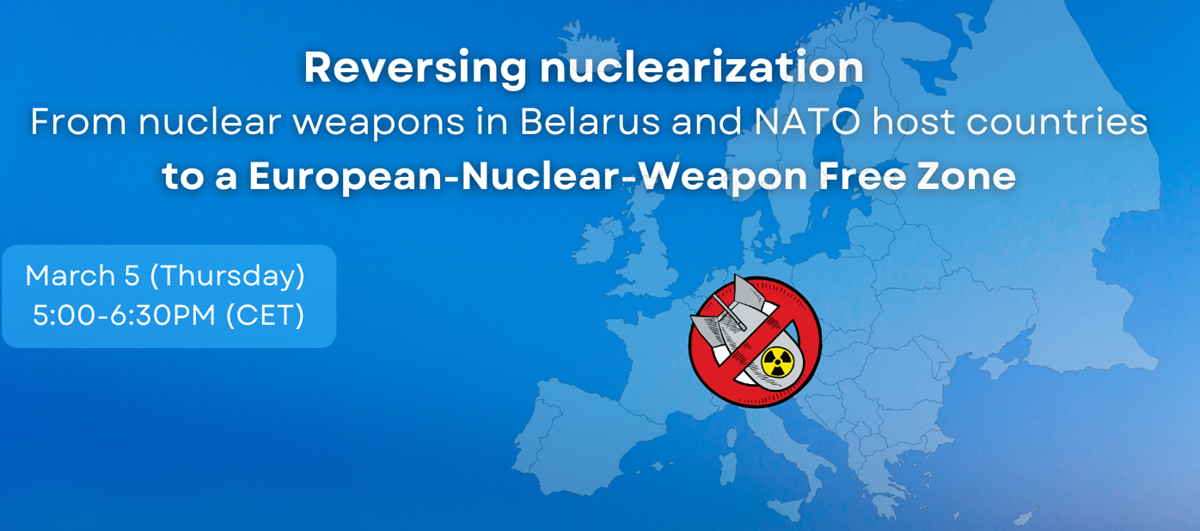
5 March -Online – Reversing nuclearization:
From nuclear weapons in Belarus and NATO host countries to a European-Nuclear-Weapon Free Zone
11am-12:30pm Eastern Time USA / 5pm-6:30pm CET

of the week – Advocating for a
nuclear free beach – https://www.samuellawrencefoundation.org/
The Samuel Lawrence Foundation advocates for a Nuclear Waste Free Beach at San Onofre, join us and take action!

10 March A LIVE WEBINAR THE REAL EFFECTS OF NUCLEAR POWER
What the Industry Isn’t Telling Us
1:00 PM Mountain, 2 pm Central, 3 pm Eastern. Live on the Keepers of the Water Facebook page

18 March Webinar @ 1 PM EST: An Assessment of SMR Projects: The Case of Canada
register for the zoom:
https://us02web.zoom.us/webinar/register/WN_o8BIIOUvQ2ONJR1nta65DQ#/registration

of the week – STOP SMALL MODULAR REACTORS IN CANADA
To see nuclear-related stories in greater depth and intensity – go to https://nuclearinformation.wordpress.com
-
Archives
- March 2026 (38)
- February 2026 (268)
- January 2026 (308)
- December 2025 (358)
- November 2025 (359)
- October 2025 (376)
- September 2025 (258)
- August 2025 (319)
- July 2025 (230)
- June 2025 (348)
- May 2025 (261)
- April 2025 (305)
-
Categories
- 1
- 1 NUCLEAR ISSUES
- business and costs
- climate change
- culture and arts
- ENERGY
- environment
- health
- history
- indigenous issues
- Legal
- marketing of nuclear
- media
- opposition to nuclear
- PERSONAL STORIES
- politics
- politics international
- Religion and ethics
- safety
- secrets,lies and civil liberties
- spinbuster
- technology
- Uranium
- wastes
- weapons and war
- Women
- 2 WORLD
- ACTION
- AFRICA
- Atrocities
- AUSTRALIA
- Christina's notes
- Christina's themes
- culture and arts
- Events
- Fuk 2022
- Fuk 2023
- Fukushima 2017
- Fukushima 2018
- fukushima 2019
- Fukushima 2020
- Fukushima 2021
- general
- global warming
- Humour (God we need it)
- Nuclear
- RARE EARTHS
- Reference
- resources – print
- Resources -audiovicual
- Weekly Newsletter
- World
- World Nuclear
- YouTube
-
RSS
Entries RSS
Comments RSS
 nuclear-news
Leave a comment