Ousted defence minister Nick Harvey claims military and Whitehall backing for cheaper alternatives
“If you can just break yourself out of that frankly almost lunatic mindset for a second, all sorts of alternatives start to look possible, indeed credible.”
The government’s review of the future of the Trident submarine nuclear missile system is likely to suggest a significant downgrading of the UK’s nuclear deterrent, including the possibility of locking the warheads “in a cupboard” for delayed launch only after several weeks of mounting international tension.

The revelation was made by Sir Nick Harvey, the Liberal Democrat who was the defence minister leading the review until the government reshuffle this month. The MP for North Devon said he believed the policy could get support in Whitehall and from senior military figures and Labour.
Harvey said past policy on Trident had been dictated by the 1980s view that the only deterrent to a nuclear attack from the then Soviet Union was the belief that the UK could “flatten Moscow” in retaliation. This led to the UK building Trident and having at least one armed submarine at sea every hour of every day since.
Speaking in detail about the Trident review for the first time since he was sacked as minister, Harvey said: “If you can just break yourself out of that frankly almost lunatic mindset for a second, all sorts of alternatives start to look possible, indeed credible.”
[…]
Harvey’s response was that creating jobs in Barrow should be the last consideration. “The idea that you should produce weapons of mass destruction in order to keep 1,500 jobs going in the Barrow shipyard is palpably ludicrous. We could give them all a couple of million quid and send them to the Bahamas for the rest of their lives , and the world would be a much better place, and we would have saved a lot of money,” he said.
[…]
http://www.guardian.co.uk/uk/2012/sep/26/trident-nuclear-missiles-review-downgrading?newsfeed=true
September 26, 2012
Posted by arclight2011 |
Uncategorized |
1 Comment
Received License from Nuclear Regulatory Commission
By Brianna Panzica
Wednesday, September 26th, 2012
On Tuesday, GE-Hitachi Global Laser Enrichment LLC, a partnership between General Electric Co. (NYSE: GE) and Hitachi Ltd. (TYO: 6501), received approval from the Nuclear Regulatory Commission (NRC) to build a laser enrichment facility.
The partnership is a subset of GE Hitachi Nuclear Energy, a company that makes nuclear reactor components. The new facility will be built at its headquarters in Wilmington, North Carolina.
The company received the technology for the facility from Silex Systems (ASX: SLX), an Australian company focused on research and development for uranium enrichment. The technology, which uses lasers to enrich uranium, had to undergo several years of regulation review before it was approved.
From GE’s press release:
“Receiving our NRC license is a tremendous accomplishment and strong testament to everyone involved in this project,” said Chris Monetta, president and CEO of Global Laser Enrichment. “The technology we’ve developed could be one of the keys to the nation’s long-term energy security. At a minimum, it could provide a steady supply of uranium enriched right here in the U.S. to the country’s nuclear reactors. These reactors provide approximately 20 percent of the nation’s electricity today and will continue to be an important part of the energy mix for decades to come.”
The laser technology is cheaper than many options, and it will bring a flow of enriched uranium right to the U.S. The facility will be able to produce 6 million single work units (SWU) annually, enough to power 42 reactors.
Continue reading →
September 26, 2012
Posted by arclight2011 |
Uncategorized |
Leave a comment
The set of links below are designed to show how the powerful corporations mitigate bad news and show a story line in front of the truth. A simple human rights report that shakes the corporations to their knees. Bp covering up a lack of workers rights concerning Kazahkstan.
BP is also trying to sell shares in a Multibillion dollar deal to clear the last of the gulf compensation payment to the USA
To begin with, below are links to a 95 year old blogger that has been annoying Royal Dutch Shell
FROM A HAPLESS SHELL OFFICIAL:
John and Alfred Donovan well known in UK / Hague. They perceive Shell played them and so have made it their mission to embarrass, belittle and criticize Shell, which they do quite well. Their website, royaldutchsellplc.com is an excellent source of group news and comment and I recommend it far above what our own group internal comms puts out.
WE ENTIRELY AGREE WITH THIS ANALYSIS…
http://royaldutchshellplc.com/2012/04/08/shell-endorsement-of-donovan-website/
Worlds leading source of information about Royal Dutch Shell
Sep 4th, 2012 by John Donovan.
Blogger holds Royal Dutch Shell to account
See VIDEO here http://royaldutchshellplc.com/2012/09/04/worlds-leading-source-of-information-about-royal-dutch-shell-2/
And this from a recent article
After Mishaps, Shell Dials Back Arctic Oil-Drilling Plans
Sep 17th, 2012 by John Donovan.
Christopher Helman, Forbes Staff: 9/17/2012
[…]
But this is a disappointment for Shell, which has spent $5 billion so far on its dream of drilling the Alaskan arctic and had earlier hoped to complete five Alaska wells this year in both the Chukchi and Beaufort seas. Drilling of the Beaufort wells have not yet been approved, and the window of opportunity there closes by Halloween.
Today’s announcement was triggered by damage to a piece of equipment called a containment dome that would be lowered to the seabed to trap oil in the unlikely case of a blowout. The damage occurred during a test of what Shell says would be the first-ever containment system deployed in Arctic waters. “It is clear that some days will be required to repair and fully assess dome readiness,” said Shell in a statement this morning.
[…]
http://royaldutchshellplc.com/2012/09/17/after-mishaps-shell-dials-back-arctic-oil-drilling-plans/
and here is a warning to prospective whistleblowers!
[…]
WARNING TO SHELL EMPLOYEES: Shell Global Affairs Security “CAS”) is spying on Shell employees globally trying to trace who is visiting, posting, or leaking information to this website from Shell premises. Threats, including death threats, have allegedly been made against conscience driven Shell whistleblowers supplying us with information. The worlds biggest leak of employee details as part of a claimed corporate revolution by 116 Shell employees, suggest the espionage operation, threats and draconian litigation have not been entirely successful in cutting off the supply of information to this website.
[…]
On the main home page
Of course Royal Dutch Shell are in a lot of places such as Kazahkstan
By Nariman Gizitdinov on August 30, 2012
[…]
Exxon Mobil Corp. (XOM) and Royal Dutch Shell Plc (RDSA) are seeking bigger stakes in the Kashagan oil field and operating control before starting to expand the $46 billion project, according to two people with knowledge of the matter.
Continue reading →
September 26, 2012
Posted by arclight2011 |
Uncategorized |
Leave a comment
http://stophinkley.org
Stop New Nuclear
Press Release 17 September 2012
MASS TRESPASS PLANNED AT HINKLEY POINT NUCLEAR
POWER STATION – 8 October
Protesters from all over the UK are gearing up for a mass trespass at the site
earmarked for the first of a new generation of nuclear power stations. Hundreds are
planning to converge at a weekend protest camp before scaling the fence round land
being cleared for the controversial Hinkley C power plant in Somerset.

The Stop New Nuclear Alliance expects many people to be arrested. “The
government is refusing to acknowledge that its ‘new nuclear’ strategy is dangerous
and expensive so we are being forced to raise our game,” said spokesperson Nancy
Birch.
Continue reading →
September 26, 2012
Posted by arclight2011 |
Uncategorized |
2 Comments
by Staff Writers London, UK (SPX) Sep 26, 2012
[…]
AREVA, a global leader in nuclear energy and Atkins, one of the world’s leading engineering and design consultancies, have formed a joint venture to compete for projects in the UK nuclear fuel management and decommissioning sector.
The AREVA-ATKINS Partnership UK is expected to bid for significant contracts at Tier 2 level* in the UK nuclear engineering sector.
[…]
AREVA is the world leader in the back end of the nuclear fuel cycle with expertise in all back-end operations. Back-end activities include used-fuel recycling, decommissioning, waste management and transport solutions for each stage of the cycle. AREVA is part of Nuclear Management Partners in the United Kingdom which manages Sellafield.
Atkins is one of the world’s leading engineering and design consultancies with around 9,000 of its 17,500 people based in the UK. Its international nuclear consultancy has been working at Sellafield, Magnox and former UKAEA sites for around 25 years.
The AREVA-ATKINS Partnership UK will have its headquarters in Warrington, in North West England.
[…]
http://www.nuclearpowerdaily.com/reports/New_international_partnership_tailor_made_for_UK_nuclear_industry_999.html
September 26, 2012
Posted by arclight2011 |
Uncategorized |
Leave a comment
[…]
“The time the children spend here is desperately needed to boost their immune system which was badly affected by radiation,” said Ms Keogh.
“The difference it makes to their health is amazing.
“We also keep in contact with them throughout the year, and have someone working for us in Belarus.”
[…]
From Kazahkstan Today
11:45 26.09.2012
“North Kazakhstan Oblast is viewed as a northern gateway of the country. The regional economy is perfect for developing cooperation in agriculture as far as we are an agricultural region of the country. Every year the oblast provides 30% of Kazakhstan’s croppage. We are interested in close cooperation with Belarusian partners in what regards agriculture,” BelTA quotes Nelli Kukushkina.
http://kt.kz/?lang=eng&uin=1133435041&chapter=1153561245
The children who have never seen the sea
 By Stephanie Manley, Reporter
TWO weeks ago their faces were expressionless — but now they are a picture of pure joy.
Seventeen children from Belarus are clearly delig-ting in their stay with families in South Lakeland and north Lancashire.
They are here for a month of recuperation thanks to Olwyn Keogh, of Silverdale, who set up the charity Friends of Chernobyl’s Children.
Continue reading →
September 26, 2012
Posted by arclight2011 |
Uncategorized |
Leave a comment
From EXSKF
09/25/2012 – 21:31
When I saw the tweet, I thought it was another prank. The tweet had a link to a PDF file about the high levels of radioactive cesium in one tree in the yard of a resident in Abiko City located on the west corridor of Chiba with relatively high radiation contamination. The web address of the link indicated it was from the city government, but there was no mention of the city in the document. So I went to the
homepage of Abiko City, and see if I could find the same document from the links at the homepage.

Well I could. After 4 clicks, I landed on this particular page which has a link to the
PDF:
http://www.city.abiko.chiba.jp/index.cfm/18,101468,241,1019,html
The apple in question was brought by a city resident and tested on August 20, 2012 using the city’s NaI scintillation survey meter. As the number was extraordinarily high, the city sent officials to the resident’s home to collect more samples and tested them using the germanium semiconductor detector to be more precise. The result using the germanium detector was even higher.
The city says it was cautious in releasing the information, for fear that it might generate “baseless rumors”. The amount of radioactive cesium in the apples, leaves and branches from the particular tree was extremely high, and couldn’t be explained by comparing it to the samples taken in the same yard and in the neighborhood.
September 26, 2012
Posted by arclight2011 |
Uncategorized |
Leave a comment
Radioactivity Density of the Seawater at the North of 1F Unit 5-6 Discharge Channel (Bq/L)
see chart here
http://www.tepco.co.jp/en/nu/fukushima-np/f1/images/2012sampling/seawater_120926-e.pdf
September 26, 2012
Posted by arclight2011 |
Uncategorized |
Leave a comment
Extract from IAEA website concerning the statement referred to by Reuters below..
[…]
Assumptions
The low projection assumes current trends continue with few changes in policies affecting nuclear power. It does not assume that all national targets for nuclear power will be achieved. It is a “conservative but plausible” projection.
The high projection assumes that the current financial and economic crises will be overcome relatively soon and past rates of economic growth and electricity demand will resume, notably in the Far East. It assumes stringent global policies to mitigate climate change.
The low and high projections are developed by experts from around the world who are assembled by the IAEA each spring. They consider all the operating reactors, possible license renewals, planned shutdowns and plausible construction projects foreseen for the next several decades. They build the projections project-by-project by assessing the plausibility of each in light of, first, the low projection’s assumptions and, second, the high projection’s assumptions.
The projections are made at a regional, rather than national, level. The new low scenario is compatible with a potential decline of the share of nuclear power in Japan’s electricity mix.
[..]
and it looks like Reuters doesnt want people to know the way the conclusions were scientifically and in a peer review setting realised, so they left out the above qoute..
And here is the Reuters article
[…]
VIENNA, Sept 26 (Reuters) – The U.N. atomic agency cut its forecast for nuclear energy growth for a second year as the industry continued to feel the effect of the Fukushima disaster in Japanand said most of the expansion would be in Asia.
The International Atomic Energy Agency (IAEA) said its projection for global nuclear generating capacity by 2030 was down between one and nine percent compared with last year.
Against expectations before the March 2011 earthquake and tsunami in Japan, the projections are between eight and 16 percent lower.
The IAEA said on its website that overall capacity would grow between 25 and 100 percent by 2030, depending on a wide range of factors such as global economic growth.
“Continuing growth in nuclear power following the Fukushima Daiichi nuclear accident is expected, however at a rate lower than estimated a year ago,” the IAEA said.
[…]
http://uk.reuters.com/article/2012/09/26/nuclear-energy-growth-idUKL5E8KQ41E20120926
IAEA Updates Its Projections for Nuclear Power in 2030
25 September 2012
Continue reading →
September 26, 2012
Posted by arclight2011 |
Uncategorized |
Leave a comment
BEIJING, Sept 26 (Reuters) – China’s ambitious reactor building programme is set to resume in the fourth quarter following a suspension imposed after Japan’s March 2011 Fukushima nuclear disaster, official media reported on Wednesday.
The Shanghai Securities News, citing government sources, said new safety regulations were about to be published, paving the way for China to launch new projects for the first time since an earthquake and tsunami left the Fukushima Daiichi reactor complex in northeast Japan on the verge of meltdown.
Following the disaster, the Chinese government suspended construction at all nuclear power projects and ended all new project approvals pending a nationwide safety inspection, and it also promised to “adjust and improve” its plans for the sector.
Before the disaster, Beijing had been expected to set a new 2020 nuclear capacity target of more than 80 gigawatts, but that target is now expected to be scaled back. China’s current total nuclear installed capacity stands at 12.57 gigawatts.
Shanghai Securities News said China’s Ministry of Environmental Protection had already started accelerating the approval process for the nuclear sector.
It also said the second phase of the Sino-Russian Tianwan nuclear project in Jiangsu province on the eastern coast was certain to start construction in December. (Reporting by David Stanway; Editing by Ken Wills)
September 26, 2012
Posted by arclight2011 |
Uncategorized |
Leave a comment
September 25, 2012,
5:00 AM
Fragments of Fukushima
By SHREEYA SINHA
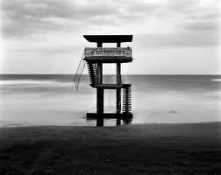
[…]
The first time the Tokyo-based photographer Kosuke Okahara visited a town near the Fukushima Daiichi Nuclear Power Plant in Japan, he grabbed his dosimeter, a device used to measure radiation levels, and looked at his watch to see how much time he could spend at the location.
“I was very scared because of radiation,” he said. “After four to five months, I became calm, and I went back to the beginning of why I was taking pictures.”
That was August 2011, five months after an earthquake and tsunami ravaged Japan and set off the world’s worst nuclear crisis since Chernobyl.
Since then, Mr. Okahara has traveled to Fukushima Prefecture almost every month. On Sept. 6, at the Visa pour l’Image photojournalism festival in France, Getty Images awarded him $20,000 to support his investigation of the fallout from the nuclear accident, and of those who suffered most.
“I’m collecting fragments,” Mr. Okahara said of his work, which includes both photos and audio.
[…]
http://lens.blogs.nytimes.com/2012/09/25/fragments-of-fukushima/
KOSUKE OKAHARA -DOCUMENTARY PHOTOGRAPHER
http://www.kosukeokahara.com/stories/index-e.htm
September 26, 2012
Posted by arclight2011 |
Uncategorized |
Leave a comment
According to the UK HSA website, there is no extra risk associated with the alpha and beta particles because the new Synergy radiation monitoring vehicle for beaches did not find any increase in the particle amounts on the beach near Sellafield Nuclear repossessing plant . However, according to a report on the effectivness on this device appear to be found to be wanting.

The date of the test was 2010 but the publish date of the PDF is 2012 august.
Title: Large scale beach trials to evaluate the operational performance of the
Groundhog Synergy system
[…]
The detection of socalled ‘alpha-rich’ particles has improved since Synergy was brought into operation, but the trials have not demonstrated in what way the improvement was achieved. Nuvia is currently investigating why this is the case and how the performance can be improved.
[…]
http://sellafieldsites.com/wp-content/uploads/2012/08/Synergy-report-Issue-1.pdf
and that curious paragraph says that they dont know how that it was achieved? yet they made this statement on the cover for the above PDF.
[…]
Good evidence was found that the increased object find rate of Synergy can be attributed to its increased sensitivity, rather than to any real increase in the number of objects present on the beaches.
New estimates were made of the health risks to beach users from the ingestion of alpha-rich objects and the changes in the estimated health risks were small and judged not to be significant. The conclusions of the original study therefore remain unchanged.
[…]
http://www.hpa.org.uk/Publications/Radiation/CRCEScientificAndTechnicalReportSeries/HPACRCE038/
Note;
but in early 2011 they gave the results instead, from the so called “inferior” testing system. maybe to hide the fact that the new synergy system was not worth the extra money? and no update on the companies findings into the failed results?
It doesnt sound like they managed to find the small alpha and beta particles if the are below the sand very well.. so it doesnt really work!
September 26, 2012
Posted by arclight2011 |
Uncategorized |
Leave a comment
Update..
[…]
“The focus on K-27 shows that the concern for the possibility of chain reaction developing in the reactors of the submarine is well-founded,” he said.
“The Russians dismantled several reactors with liquid metal coolant of the same type as those aboard the K-27 – which were stored on shore – and gained a knowledge that rang the alarm bells,”
[…]
That the expedition focused nearly exclusively on the integrity of the K-27 when there are so many other objects to check, underscores that the concern of a chain reaction aboard the scuttled submarine is very real, said Kudrik.
“The focus on K-27 shows that the concern for the possibility of chain reaction developing in the reactors of the submarine is well-founded,” he said.
[…]
But neither Strand nor Bellona’s Igor Kudrik, an expert on Russian Naval nuclear waste issues, believe this is a complete accounting of the waste.
Indeed, acknowledged Bellona President Frederic Hauge, a precise accounting from the Russian side could hardly be expected given Russia’s own ignorance of the extent of the dumped radioactive waste.
[…]
“K-27 is a dangerous object and there are plans to lift it from the sea bottom for proper disposal,” Yablokov said in remarks to the Bloomberg news agency today. “Technically it’s possible.”
[…]
A group of 16 Russian and Norwegian researchers who sailed to take measurements surrounding a Russian nuclear submarine that was scuttled for nuclear waste off the coast of the former Soviet nuclear test archipelago Novaya Zemlya in the Kara Sea have found no radioactive leaks, Norwegian radiation authorities said today.Bellona, 25/09-2012
Per Strand, a director at the Norwegian Radiation Protection agency told Bellona, however, that the primary purpose of the expedition, which returned today, was to inspect the possibility of an uncontrolled chain reaction aboard the K-27 Russian nuclear submarine, which was sunk in 50 meters of water in Novaya Zemlya’s Stepovogo Bay in the Kara Sea as nuclear waste in 1981.

“The Russian side indicated there might be a hypothetical possibility that spent nuclear fuel in the reactor in extreme situations could cause an uncontrolled chain reaction, which can lead to heat and radioactivity releases,” Strand said in a telephone interview from Kirkeness.
The K-27, was dumped by the Soviet Navy in 1981, with spent nuclear fuel packed in its reactors, after a 1968 reactor leak aboard the killed nine sailors. The navy tried to repair it before deciding to seal the nuclear units and sinking the sub.
Continue reading →
September 26, 2012
Posted by arclight2011 |
Uncategorized |
Leave a comment








 nuclear-news