Vogtle costs approved despite warnings of overruns and delays
Vogtle costs approved despite warnings of overruns and delays By Kristi E. Swartz The Atlanta Journal-Constitution, 23 Aug 12, Reports of cost overruns and scheduling delays loom over Georgia Power’s Plant Vogtle expansion project…… An independent utility watchdog has warned of scheduling delays at Vogtle, however. The delays have made the project’s capital and financing costs go up, he said.
In addition, Georgia Power is disputing its responsibility for a $425
million cost overrun stemming from delays in getting key license
approvals from federal regulators. The project’s main vendors,
Westinghouse and The Shaw Group, say Georgia Power is responsible for
that amount. Separately the vendors have sued the utility and the
project’s co-owners for additional expenses that came from backfilling
two excavation sites at Vogtle.
The continuing dispute over who will pay for those escalating costs
may force the reactors to start producing power later than their
scheduled 2016 and 2017 dates, the utility’s parent, Southern Co.,
said in a recent document.
Georgia Power and a group of municipal and cooperative electricity
utilities are adding two reactors at Vogtle. The reactors are the
first in the United States to win permits in 30 years. ..
http://www.ajc.com/business/vogtle-costs-approved-despite-1503361.html
Thorium reactors (LFTRs) not really supported by the Nuclear Establishment
D. A,. RyanNovember 6th, 2011 at 13:39 The NNL lead scientist Prof. Howarth deals specifically with the LFTR here and pours cold water on it:
A pro-nuclear engineer let slip to me a while ago the real attiude of the nuke industry to Thorium. They see it as hedging their bets in case fusion proves to be harder than they thought and they don’t get commercial grade fusion plants up and running by the 2050′s. If that occurs, then that’s when Thorium (or LFTR’s) will figure. In other words, to them its a blue sky idea to sort out a future energy crisis, not the one facing us right now. This is why you see a vast gulf of a difference between pro-Thorium bloggers and the nuclear industry establishment.
Nuclear Catastrophy Review & how YOU can Help video From Chris Bsby
https://www.youtube.com/watch?v=qbto7xNypS0
Published on Aug 23, 2012 by MsMilkytheclown1
Please reupload to your channel by pushing the remix button & publish. You can then title it what you like and fill in the description box and tags. Be sure to save changes 🙂 Thank you.
three very important Professor Chris Busby videos compiled together to tell the story of how important it is to stop the Nuclear industry from destroying the planet. We all know the nuclear industry has a history of lies and coverups.
Physician: We don’t know what’s happening — Cesium levels in soil not going down after Chernobyl, some areas have gotten even higher (VIDEO)
Published: August 23rd, 2012 at 3:30 pm ET
By ENENews
“…Atomic Age Symposium II: Fukushima, May 5, 2012 – Session II
Published: August 22, 2012
Published by: University of Chicago….”
“….Jeffrey Patterson, MD, Physicians for Social Responsibility board member: Chernobyl today is still a mess […] The levels of cesium in the soil have stayed the same, and in some areas gotten higher. We don’t know why — what’s happening….”
more here
Symposium 2012
Atomic Age II: Fukushima
日本語の情報はこちらからどうぞ | にほんごの じょうほうは こちらからどうぞ
The Atomic Age: Fukushima
took place on May 5, 2012 in Social Science 122, the University of Chicago.
We are sincerely grateful to all who came to attend the symposium.
For information on Atomic Age Symposium 2011, click here. …”
*Just In* Japan Nuclear Expert: Melted fuel may have gone through cement floor and into ground under Fukushima reactors — I don’t believe Tepco’s claim for one second — Where in the world is it? (VIDEO)
Atomic Age Symposium II: Fukushima, May 5, 2012 – Session III Roundtable
Published: August 22, 2012
Published by: University of Chicago
“…
Hiroaki Koide, nuclear reactor specialist and Assistant Professor at Kyoto University’s Nuclear Research Institute:
The problem right now is not figuring out what the cause of the explosion [at Unit 3] is, but where in the world is the melted nuclear material that is in the plant right now?
Unfortunately we have no way of figuring this out…
We can’t go in and look… there’s nothing we can do at this point…
Like I said we have no idea where the melted nuclear core is at this point…
100 tons [was in reactor]…
Fell through steel reactor…
So where did the melted material go from there? It fell into the containment vessel and what is that made of? Also steel…..”
See this as Source
Symposium 2012
Atomic Age II: Fukushima
日本語の情報はこちらからどうぞ | にほんごの じょうほうは こちらからどうぞ
The Atomic Age: Fukushima
“….took place on May 5, 2012 in Social Science 122, the University of Chicago.
We are sincerely grateful to all who came to attend the symposium.
For information on Atomic Age Symposium 2011, click here. …”
http://lucian.uchicago.edu/blogs/atomicage/symposium-top/aboutsymposium/
Japan New Quake Insurance Subscription Rate Hits Record in FY 2011
http://jen.jiji.com/jc/eng?g=eco&k=2012082300897 (Subscription only)
“…. Tokyo, Aug. 23 (Jiji Press)–A record 53.7 pct of new fire insurance contracts in Japan in fiscal 2011 that ended in March carried earthquake insurance coverage, an industry group said Thursday.
The average nationwide figure was up 5.6 percentage points from a year before, said the Non-LifeInsurance Rating Organization of Japan.
Interest in quake insurance grew after the 9.0-magnitude earthquake and ensuing tsunami hit eastern and northeastern Japan on March 11 last year, pushing the figure above 50 pct for the first time, with a record rate of increase.
Over 10-point growth in quake insurance coverage was seen in disaster-hit prefectures in the Tohoku and northern Kanto regions.
Across the country, Miyagi, one of the hardest-hit prefectures facing the Pacific Ocean, had the highest quake insurance subscription rate of 81.1 pct…..”
Japan earthquake: insurance firms left with crippling bill
By Ben Harrington
7:10AM GMT 14 Mar 2011
“….The cost of the devastating natural disaster could lead to global insurance losses of between £9bn and £21bn, risk analysts at AIR Worldwide predicted.
But the final bill will be higher as it does not yet include damage caused by the tsunami or potential claims against the radiation fallout.
The UK insurance industry could be hard hit as it is the third largest in the world and the largest in Europe, accounting for 8pc of total worldwide premium income.
Many of those losses will be felt by the British businesses that operate in Lloyd’s of London, one of the world’s largest insurance markets.
Chaucer, a small Lloyd’s of London insurer, is likely to face serious losses from the disaster because it specialises in insuring nuclear power plants and is one of the world’s biggest insurers of nuclear risk…..”
And this…
Japan’s Earthquake Poses Unique Challenges to Nation’s Insurance System
Copyright © 2012 Casualty Actuarial Society. All Rights Reserved.
“…CHICAGO—The Great Tohoku Earthquake took an enormous toll on Japan in March, but the country’s insurance system weathered the disaster successfully, according to a presentation by a delegation of Japanese actuaries at the CAS Annual Meeting in November. The facts are well-known: a magnitude 9.0 earthquake—the fourth largest worldwide since 1900—struck just off Japan, sending a tsunami against the country’s east coast. More than 15,000 died, economic losses topped $200 billion, and insurance losses passed $30 billion. But the packed session room got a somber reminder of the enormity of the catastrophe as Daisuke Nishihara, an assistant vice president at Swiss Re’s Japan branch, narrated a video of a coastal area a month after the quake and tsunami. ……”
“…Much of the risk is borne by the Japan Earthquake Reinsurance Company (JER). Private insurers, JER, and the government share the risk, with the government’s share growing as the scale of losses grows. If there are no earthquakes in a year, money collects in a reserve. Before the Tohoku earthquake, the fund stood at about $30 billion….”
“…. As of April, residential earthquake losses totaled $12 billion. Other non-life coverages totaled $7.5 billion gross of reinsurance and $2.5 billion net. Cooperative claims totaled $11 billion, and another $2 billion came from life insuranceclaims…..”
“….With regard to the residential earthquake insurance, the losses were covered by the fund that the government and the insurers had reserved. As a consequence, half of the fund was depleted by the quake and tsunami. For other earthquake insurance, Japanese insurers have their own catastrophe reserves on their balance sheets. As catastrophe claims are paid, the reserve is drawn down. In addition, most Japanese insurers had purchased significant earthquake reinsurance protections, which alleviated insurers’ economic loss and kept the industry financially strong. The solvency margin of the largest insurers—roughly equivalent to the risk-based capital measurement U.S. insurers rely on—will fall a bit, but remain more than two and a half times what regulators require.
Still, the disaster showed some weaknesses in how insurers estimate the financial impact of disasters. Most insurers based loss estimates on the actual distribution of prior disasters, and didn’t model tsunamis. They didn’t anticipate the unprecedented scale of the Tohoku event…..”
http://www.casact.org/newsletter/index.cfm?fa=viewart&id=6300
No mention of Nuclear losses in this article?
That is because the Japanese government is underwriting the whole thing,,
And they want……
Decontamination and bringing the people back to contaminated lands.. this link is the last update to…
Assistance of Residents Affected by the Nuclear Incidents (METI)
December 16, 2011
http://www.meti.go.jp/english/earthquake/nuclear/roadmap/pdf/111216_assistance_02.pdf
Fukushima Plant Workers Lose 20 Dosimeters: TEPCO
http://jen.jiji.com/jc/eng?g=eco&k=2012082300915 (Subscription only)
“….Tokyo, Aug. 23 (Jiji Press)–Tokyo Electric Power Co. <9501> said Thursday that since late June last year, workers at the stricken Fukushima No. 1 nuclear plant have lost 20 dosimeters, while eight others were found not to be attached to work suits.
Workers at the plant, crippled by the disaster in March last year, must carry dosimeters attached to their work clothes under rules set by the Japanese health ministry.
“At the time, we thought there was no problem but clearly there was insufficient supervision,” TEPCO said, after it learned of the misplaced dosimeters.
According to the company, those who lost dosimeters were workers hired by contractors and subcontractors. Only three of the devices have been recovered.
The highest radiation dose on the day that dosimeters were lost is estimated at 0.72 millisievert based on data from dosimeter-carrying workers, the power utility said…..”
19,507 Bq Radioactive Cesium from a Man in Fukushima Who’s Been Eating Shiitake Mushrooms with More Than 140,000 Bq/kg of Cesium
http://ex-skf.blogspot.co.uk/2012/08/19507-bq-radioactive-cesium-from-man-in.html
WEDNESDAY, AUGUST 22, 2012
“…Mind-boggling numbers, but I’m sure they will be dismissed as “no effect on health” because the man is in his 70s.
Another man was found with 11,191 becquerels. Their wives were also found with high levels of radioactive materials in their bodies.
Why? They have been eating food that they grow.
From Mainichi Shinbun (8/22/2012; link added) reporting the news that the health section at Asahi Shinbun reported in early August:….”
And this..
“….The husband and wife in Kawamata-machi have been eating shiitake mushrooms they grow on the logs from Namie-machi [in Fukushima Prefecture], bamboo shoots harvested near their home, and dried persimmons. From the mushrooms, over 140,000 becquerels/kg of radioactive materials [cesium] was found. The couple in Nihonmatsu City has been eating the vegetables given by the couple in Kawamata-machi.
Shiitake logs from Namie-machi… It seems no one bothered to tell them that Namie-machi is probably more heavily contaminated than some of the towns closer to the Fukushima plant. Being in their 70s, their news sources are likely to be the traditional media such as newspapers and TV.
Kawamata-machi is located just west of Iitate-mura, another heavily contaminated location in Fukushima.
Dr. Tsubokura says in the original Asahi article that these levels of internal radiation exposure are seen in Belarus.
However, one of the strange things I’ve noticed since April 1 this year when the new safety standard of 100 Bq/kg of radioactive cesium was put in place is thatpeople in general don’t care much about food contamination any more. It was a big deal, literally up until March 31, the last day under the provisional 500 Bq/kg safety level. If a food item was found with double-digit cesium per kilogram, people were worried….”
More interesting observations on this story on the EXSKF link and some more observations on this story here..
NRDC, EWG Sue to Protect Millions of Californians from Contaminated Drinking Water
SAN FRANCISCO (August 14, 2012) –
“…The Natural Resources Defense Council and the Environmental Working Group today sued the California Department of Public Health for failing to protect millions of Californians from hexavalent chromium, the cancer-causing chemical made infamous in the movie “Erin Brockovich” for contaminating drinking water and sickening residents in the town of Hinkley, California. The agency was supposed to establish a safe drinking water standard for hexavalent chromium eight years ago, but has failed in its duty to safeguard citizens from the toxin.
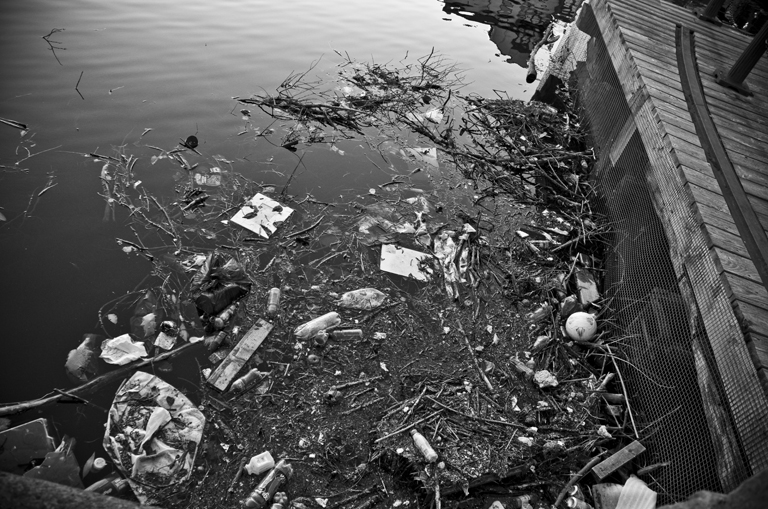
“Millions of Californians are drinking toxic water today due to government neglect,” said Nicholas Morales, attorney at the Natural Resources Defense Council. “The State has not protected our drinking water supply from this carcinogen, so we’re going to the courts to put a stop to it. Clean drinking water is a precious resource, and it’s about time it’s treated as such.”
An Environmental Working Group analysis of official records from the California Department of Public Health’s water quality testing conducted between 2000 and 2011 revealed that about one-third of the more than 7,000 drinking water sources sampled were contaminated with hexavalent chromium at levels that exceed safe limits. These water sources are spread throughout 52 of 58 counties, impacting an estimated 31 million Californians.
In 2001, the California State Legislature mandated the agency adopt a standard by January 1, 2004, giving it two years to do so. Eight years past its legal deadline, the agency still hasn’t made any visible progress and says it could take several more years before a final standard is completed. Filed in the California Superior Court of Alameda, NRDC and EWG’s suit contends the department’s delay is unjustified and it must rapidly proceed to finalize the standard.
“Communities all over California and the U.S. are being poisoned by this dangerous chemical,” said Erin Brockovich, an environmental and consumer advocate. “We have waited long enough and the people of California should not continue to be exposed to unsafe levels of this toxin in their tap water. The California Department of Public Health needs to do its job and adopt a strong standard for hexavalent chromium in drinking water.”
Drinking water sources in Sacramento, San Jose, Los Angeles and Riverside were found to exceed the safe limits of hexavalent chromium, according to a 2010 Environmental Working Group report that tested 25 U.S. cities’ tap water for hexavalent chromium contamination.
The report also found this threat isn’t limited to California. At least 74 million Americans in thousands of communities across 42 states drink tap water polluted with “total chromium,” which includes hexavalent and other forms of the metal.
Even though hexavalent chromium is known to cause cancer, reproductive harm and other severe health effects, there is no national or state drinking water standard for hexavalent chromium. Therefore, water agencies don’t have to comprehensively monitor for or remove hexavalent chromium before it comes out of the tap…..”
Chemist: Residents near sinkhole already reporting respiratory problems, headaches — Concern over impact of many chemicals in air at same time USA
Published: August 23rd, 2012 at 1:39 pm ET
By ENENews
Title: Sinkhole drillers halt to insert pipe casing
Source: The Advocate
“…The Louisiana Environmental Action Network, a Baton Rouge environmental group, has asked Bayou Corne-area residents to log odors and any health symptoms that they feel as a result of the odors.
In two statements released Tuesday, LEAN noted air monitoring by the Louisiana Department of Environmental Quality since Aug. 4 over the sinkhole and in the neighborhoods near the sinkhole had picked up, depending on the location, benzene, toluene, ethylbenzene, other volatile organic compounds and components of natural gas.
Benzene is a known carcinogen.
LEAN also said the levels of those chemicals are below Louisiana ambient air standards, which mark a threshold for health risks…..”
Concerning USA thresholds for health risks..
SAN FRANCISCO (August 14, 2012) –The Natural Resources Defense Council and the Environmental Working Group today sued the California Department of Public Health for failing to protect millions of Californians from hexavalent chromium, the cancer-causing chemical made infamous in the movie “Erin Brockovich” for contaminating drinking water and sickening residents in the town of Hinkley, California. The agency was supposed to establish a safe drinking water standard for hexavalent chromium eight years ago, but has failed in its duty to safeguard citizens from the toxin.
“Millions of Californians are drinking toxic water today due to government neglect,” said Nicholas Morales, attorney at the Natural Resources Defense Council. “The State has not protected our drinking water supply from this carcinogen, so we’re going to the courts to put a stop to it. Clean drinking water is a precious resource, and it’s about time it’s treated as such.”
Asahi: Gov’t calculations “were way off” — Anti-nuclear sentiment has grown so large it could force change in energy policy
(Subscription Only) Title: ANALYSIS: Support for nuke-free Japan defies government calculations
Source: THE ASAHI SHIMBUN
Date: August 23, 2012
“….Policymakers determined to maintain nuclear energy believed most people would still want it as part of the nation’s power generation despite theaccident at the Fukushima No. 1 nuclear plant.
Their calculations were way off.
In a new type of government poll, 46.7 percent of respondents favored scrapping nuclear power generation by 2030 after hearing expert opinions and holding discussions among themselves, according to the results released on Aug. 22.
In fact, anti-nuclear sentiment has grown so large that it could force the government to adjust its plan for the nation’s long-term energy policy and will likely become a key issue in election campaigns…..”
And this speech and others like it probably helped..
Moving Speech by Ms. Muto from Fukushima: “Don’t Snatch Away Our Lives!”(Sep. 19, 2011 VIDEO)
http://www.youtube.com/watch?v=559qQJz2bmk&feature=plcp
Published on Jun 11, 2012 by tokyobrowntabby2
This is a re-upload from my old channel.
This is a speech by Ms. Ruiko Muto at the No-Nuke Rally in Tokyo on September 19, 2011. Ms. Muto is a member of “Action Committee for Decommissioning 40-year-old Fukushima Nuke Plant.” This committee was established in November 2010, before the accident.
Ms. Muto runs a coffee shop using natural energy in Miharu Town in Fukushima Prefecture.
Translation is by Ms. Emma Parker, which is posted on this blog:http://onuma.cocolog-nifty.com/blog1/2011/11/post-7a76.html
You can read the full English transcription there.
(Note: translation of the first 3 lines and the final line done by tokyobrowntabby.)
Original video is at sievert311’s channel: http://youtu.be/5xdszFXI2J0
Translation by Ms. Emma Parker and captioning by tokyobrowntabby.
Mainichi: Almost 20,000 becquerels of cesium detected inside Fukushima man — “This is not a level that would affect health” — Equals less than 1 millisievert per year?
“….Doctor Masaharu Tsubokura, who tested the men, commented, “This is not a level that would affect their health, but when people consume homegrown vegetables and other such products we would like them to undergo tests.
The men live in the town of Kawamata and the city of Nihonmatsu, respectively…..”
Tuesday, August 14, 2012
“….Most exposures likely happened with a week of the meltdown, Tsubokura said, when residents of Minamisoma inhaled airborne cesium….”
http://www.nlm.nih.gov/medlineplus/news/fullstory_128241.html
and here is the measure of the cesium levels
Published on Mar 13, 2012 by criirad
This video shows radiation levels on May 29th 2011, in Fukushima city (Japan) about 60-65 km from the Fukushima Daiichi nuclear reactors.
Measurements are made by a CRIIRAD scientist (Bruno. Chareyron, engineer in nuclear physics) during a meeting between CRIIRAD andJapanese citizens : M. Wataru Iwata (co-founder of Project 47 and CRMS) and persons in charge of the network “Fukushima Network for Saving Children from Radiation”, including M. Nagate (ex-representative), Mrs Marumori (now Executive Director of CRMS) and Mrs Sato. CRIIRAD is sharing its experience of independent radiation monitoring with the Fukushima citizens.
In this video, CRIIRAD researcher is using a gamma radiation detector (DG5 scintillometer) to show the intensity of radiation rates, even inside the office at floor level. Radiation rates are given in counts per second (c/s). With this device, normal values should be about 50 to 150 c/s depending on natural radiation.
The powerful gamma radiations emitted by radioactive caesium deposited on the ground of the parking located in front of the building give a radiation rate about 10 times above normal values inside the building (at the centre of the office), and 15 times above near the window. This radiation will decrease only very slowly. After one year, the decrease should be about 23 % only.
Additional info : look at http://www.criirad.org
video showing HIGH counts per second
guide
1000 cps = 60,000 counts per minute
Masaharu Tsubokura san is NOT telling the truth with his last staement above?? in the first week there were much worse isotopes than the Cesiums
Japan Nuclear Professor: Fukushima smoke stacks releasing radiation on a daily basis (VIDEO)
Published: August 22nd, 2012 at 8:50 pm ET
By ENENews
Atomic Age Symposium II: Fukushima, May 5, 2012 – Session III Roundtable
Published: August 22, 2012
Published by: University of Chicago
At 9:00 in
“….Hiroaki Koide, nuclear reactor specialist and Assistant Professor at Kyoto University’s Nuclear Research Institute: I think you saw some pictures of the Fukushima power plants today, and what you saw there is that it’s got huge stacks, smoke stacks, and there’s stuff coming out of that, and that there’s radiation coming out of that on a daily basis.
There’s also radioactive material in fluid form coming out from the water that is released in trying to keep the radioactive material cool….”
and a video here from last year …..
This is a re-upload from my old channel.
http://www.youtube.com/watch?v=XxUQ6jsHgo4&feature=plcp
Part 2 “About Fukushima”:http://youtu.be/A-HastUwJo8
Dr. Hiroaki Koide is a research associate at Kyoto University Research Reactor Institute. On May 23, 2011, he appeared as a witness to give testimony to the Administrative Oversight Committee in Japan’s Upper House in the Diet. In this second part of his testimony, he talks about the ongoing Fukushima disaster and criticizes government’s handling of the nuclear crisis.
He is in his sixties and still a research associate because he has been studying the “dangers” of nuclear energy all his career. Even before the 3.11 disaster, he had been well-known among pro-nuke people as one of their notable opponents.
But it was after 3.11 that he suddenly gained the spotlight and became quite widely known among the public, especially on the net. Some people almost worship him as a charismatic leader in the anti-nuclear world.
Translation and captioning by tokyobrowntabby.
Tepco: Fukushima plant worker collapses for unknown reasons, suffers cardiac arrest — Internal and external radiation dose over 25 millisieverts
Title: Fukushima Plant Worker Suffers Cardiac Arrest
Source: Jiji Press
Date: Aug 22, 2012
[Tepco] said Wednesday that a man in his 50s suffered cardiac arrest
“……[The worker] was installing an additional tank to store contaminated water when he collapsed for unknown reasons, TEPCO said.
He started working at the plant in August last year.
The cumulative combined radiation dose inside and outside the body of the man was at 25.24 millisieverts. On Wednesday alone, the dose was 0.03 millisievert, the power utility said….”
Radiation Expert: “Alarming” number of children with cysts or lumps on thyroid after Fukushima — Access to Japan’s birth statistics requested, not granted
Title: Scientists fear increased genetic defects in Fukushima
Source: Deutsche Welle (DW)
Author: Judith Hartl
Date: Aug 16, 2012
“…..A series of ultrasound examinations conducted on over 40,000 children in Japan found 35 percent of the children to have lumps or cysts.
“That is not normal among children,” Eisenberg, who is also a retired pediatrician, told DW. He added that the figure was alarming. He, along with some of his colleagues, requested access to Japan’s birth statistics for the time since the disaster at the Daiichi nuclear power plant in Fukushima. As of now, he is still waiting for access to be granted….”
1 This Month



Tell the Ukrainian Government to Drop Prosecution of Peace Activist Yurii Sheliazhenko

Petition to revoke the licensing of the Near Surface Nuclear Disposal Facility (NSDF) at Chalk River. https://www.ourcommons.ca/petitions/en/Petition/Details?Petition=e-7247


of the week – STOP SMALL MODULAR REACTORS IN CANADA
To see nuclear-related stories in greater depth and intensity – go to https://nuclearinformation.wordpress.com
-
Archives
- March 2026 (222)
- February 2026 (268)
- January 2026 (308)
- December 2025 (358)
- November 2025 (359)
- October 2025 (376)
- September 2025 (258)
- August 2025 (319)
- July 2025 (230)
- June 2025 (348)
- May 2025 (261)
- April 2025 (305)
-
Categories
- 1
- 1 NUCLEAR ISSUES
- business and costs
- climate change
- culture and arts
- ENERGY
- environment
- health
- history
- indigenous issues
- Legal
- marketing of nuclear
- media
- opposition to nuclear
- PERSONAL STORIES
- politics
- politics international
- Religion and ethics
- safety
- secrets,lies and civil liberties
- spinbuster
- technology
- Uranium
- wastes
- weapons and war
- Women
- 2 WORLD
- ACTION
- AFRICA
- Atrocities
- AUSTRALIA
- Christina's notes
- Christina's themes
- culture and arts
- Events
- Fuk 2022
- Fuk 2023
- Fukushima 2017
- Fukushima 2018
- fukushima 2019
- Fukushima 2020
- Fukushima 2021
- general
- global warming
- Humour (God we need it)
- Nuclear
- RARE EARTHS
- Reference
- resources – print
- Resources -audiovicual
- Weekly Newsletter
- World
- World Nuclear
- YouTube
-
RSS
Entries RSS
Comments RSS
 nuclear-news
