Just exactly who should pay for San Onofre’s repairs and restart?
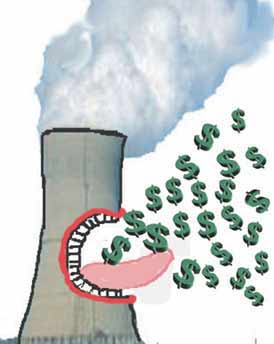 If San Onofre nuclear plant is restarted, who pays? The San Onofre nuclear plant must first be deemed safe to restart. But with costs already mounting, it’s unclear who would foot the bill. By Abby Sewell, Los Angeles Times August 22, 2012
Nearly seven months after the San Onofre nuclear power plant was closed because of a leak, officials are grappling with whether it makes financial sense to bring the plant fully back online, and if so, who should pay for the necessary repairs. Continue reading
Huge solar rooftop system completed in Denmark
Largest N. Europe Rooftop Solar Power System Using REC Panels by Energy Matters, 24 Aug 12, Renewable Energy Corporation (REC) has announced completion of the largest rooftop solar panel system in Northern Europe.
The system sits atop the headquarters of insurance company Topdanmark in Ballerup, near Copenhagen in Denmark. Completed last week, the system features 3,042 REC Peak Energy Series solar panels and has an annual production capacity of 752,000 kWh – enough to meet the needs of almost 200 households.
600 tonnes of electricity generation related carbon emissions will be avoided through the system each year…. http://www.energymatters.com.au/index.php?main_page=news_article&article_id=3353
Japan’s government likely to select the zero nuclear power option
government officials said Tuesday that the council is now most likely to select the zero-nuclear option.
Japan Weighs End to Nuclear Power WSJ, By MARI IWATA and TAKASHI MOCHIZUKI 23 Aug 12, TOKYO—The Japanese government is likely to decide to eliminate all nuclear power over the next two decades in a new long-term energy plan that comes amid strong public opposition to atomic energy and ahead of national elections expected in the next few months, said government officials familiar with policy discussions. Continue reading
Extracting uranium from oceans: very worrying questions arise
Extracting Uranium from oceans offers a mixed bag of possibilities Examiner, AUGUST 22, 2012 BY: DAVID HERRON Oak Ridge National Labs (ORNL) yesterday announced a new technique for efficiently harvesting uranium from the ocean. This raises the possibility that Uranium supplies will be much deeper and longer lasting than previously thought.
For the environmentally minded it raises a quandary…. there are radiation risks galore…. there is the huge spectre of more nuclear accidents and radiation exposure…..
It would appear this material could be used to target other materials. For example there are concerns over supplies of lithium, or of rare earth metals, or various other minerals, some of which are present in ocean water. Could this material be tailored to target extraction of
those materials from the ocean, providing a source of raw materials that is independent of digging rocks out of the ground? If so it could reduce the amount of hard rock mining operations around the world.
Maybe the material could be used in environmental mitigation, in that there are sites poisoned by releases of toxic metals into the ocean.
But what if corporations so efficiently mine the oceans certain metals that it actually affects the chemical balance of the ocean? The existing chemical balance in the ocean is vital to the food chain, and changing that balance would clearly have some effect on the living things in the ocean. Do “we” even have a clue about the potential impact?…
Court ruling on uranium company’s insurance policies
Court rules in uranium mine cleanup dispute http://www.vcstar.com/news/2012/aug/23/court-rules-in-uranium-mine-cleanup-dispute/#ixzz24VeeQu7N
– vcstar.com The Associated Press VCStar.com August 23, 2012 SANTA FE, N.M. (AP) – The state Supreme Court has ruled a uranium company’s insurance policies may cover costs of cleaning up contamination at a former mine in northwestern New Mexico.
The ruling on Thursday sends the dispute back to a district court to
determine what insurers must pay for, if any, involving a cleanup by
United Nuclear Corp. at the Northeast Church Rock mine near Gallup.
The site is adjacent to the Navajo Nation.
The court decision hinged on an insurance provision excluding coverage
for pollution damages unless the discharges were “sudden and
accidental.” The court concluded the term “sudden” meant unexpected
rather than happening over a short period of time. An insurance
company had contended its policies provided no liability coverage
because environmental damage at the mine happened over many years.
Legal action against relicensing Seabrook nuclear power plant
Beyond Nuclear et. al. take NRC to federal court in Seabrook relicensing: Wind power vs. nuclear power Beyond Nuclear 23 Aug 12, Three environmental groups (Beyond Nuclear, Seacoast Anti-Pollution League and the New Hampshire Chapter of the Sierra Club) have taken the U.S. Nuclear Regulatory Commission (NRC) before the U.S. Court of Appeals for the First Circuit (Boston, MA) in a legal challenge to NextEra Corporation’s application to extend the operating license of New Hampshire’s Seabrook nuclear generating station application from 2030 to 2050.
The citizen groups want the court to remedy this injury by ordering NRC to re-admit the groups back into Seabrook hearing process to review the wind energy alternative to the relicensing of the nuclear power station for 2030 to 2050. Oral arguments by the parties in the case are likely to be heard in the Boston federal court by early 2013…. http://www.beyondnuclear.org/nuclear-reactors-whatsnew/2012/8/22/beyond-nuclear-et-al-take-nrc-to-federal-court-in-seabrook-r.html
Weakness of India’s nuclear safety agency
India’s nuclear safety report warns of Fukushima-like disaster NDTV, Edited by Sabyasachi Dasgupta August 23, 2012 New Delhi: The national auditor’s report on India’s nuclear safety has raised concerns over a weak regulatory body. In its report on the
Atomic Energy Regulatory Board’s (AERB) performance audit, the Comptroller and Auditor General has warned a Fukushima or Chernobyl-like disaster if the nuclear safety issue is not addressed by the government. Continue reading
Vogtle costs approved despite warnings of overruns and delays
Vogtle costs approved despite warnings of overruns and delays By Kristi E. Swartz The Atlanta Journal-Constitution, 23 Aug 12, Reports of cost overruns and scheduling delays loom over Georgia Power’s Plant Vogtle expansion project…… An independent utility watchdog has warned of scheduling delays at Vogtle, however. The delays have made the project’s capital and financing costs go up, he said.
In addition, Georgia Power is disputing its responsibility for a $425
million cost overrun stemming from delays in getting key license
approvals from federal regulators. The project’s main vendors,
Westinghouse and The Shaw Group, say Georgia Power is responsible for
that amount. Separately the vendors have sued the utility and the
project’s co-owners for additional expenses that came from backfilling
two excavation sites at Vogtle.
The continuing dispute over who will pay for those escalating costs
may force the reactors to start producing power later than their
scheduled 2016 and 2017 dates, the utility’s parent, Southern Co.,
said in a recent document.
Georgia Power and a group of municipal and cooperative electricity
utilities are adding two reactors at Vogtle. The reactors are the
first in the United States to win permits in 30 years. ..
http://www.ajc.com/business/vogtle-costs-approved-despite-1503361.html
Thorium reactors (LFTRs) not really supported by the Nuclear Establishment
D. A,. RyanNovember 6th, 2011 at 13:39 The NNL lead scientist Prof. Howarth deals specifically with the LFTR here and pours cold water on it:
A pro-nuclear engineer let slip to me a while ago the real attiude of the nuke industry to Thorium. They see it as hedging their bets in case fusion proves to be harder than they thought and they don’t get commercial grade fusion plants up and running by the 2050′s. If that occurs, then that’s when Thorium (or LFTR’s) will figure. In other words, to them its a blue sky idea to sort out a future energy crisis, not the one facing us right now. This is why you see a vast gulf of a difference between pro-Thorium bloggers and the nuclear industry establishment.
Nuclear Catastrophy Review & how YOU can Help video From Chris Bsby
https://www.youtube.com/watch?v=qbto7xNypS0
Published on Aug 23, 2012 by MsMilkytheclown1
Please reupload to your channel by pushing the remix button & publish. You can then title it what you like and fill in the description box and tags. Be sure to save changes 🙂 Thank you.
three very important Professor Chris Busby videos compiled together to tell the story of how important it is to stop the Nuclear industry from destroying the planet. We all know the nuclear industry has a history of lies and coverups.
Physician: We don’t know what’s happening — Cesium levels in soil not going down after Chernobyl, some areas have gotten even higher (VIDEO)
Published: August 23rd, 2012 at 3:30 pm ET
By ENENews
“…Atomic Age Symposium II: Fukushima, May 5, 2012 – Session II
Published: August 22, 2012
Published by: University of Chicago….”
“….Jeffrey Patterson, MD, Physicians for Social Responsibility board member: Chernobyl today is still a mess […] The levels of cesium in the soil have stayed the same, and in some areas gotten higher. We don’t know why — what’s happening….”
more here
Symposium 2012
Atomic Age II: Fukushima
日本語の情報はこちらからどうぞ | にほんごの じょうほうは こちらからどうぞ
The Atomic Age: Fukushima
took place on May 5, 2012 in Social Science 122, the University of Chicago.
We are sincerely grateful to all who came to attend the symposium.
For information on Atomic Age Symposium 2011, click here. …”
*Just In* Japan Nuclear Expert: Melted fuel may have gone through cement floor and into ground under Fukushima reactors — I don’t believe Tepco’s claim for one second — Where in the world is it? (VIDEO)
Atomic Age Symposium II: Fukushima, May 5, 2012 – Session III Roundtable
Published: August 22, 2012
Published by: University of Chicago
“…
Hiroaki Koide, nuclear reactor specialist and Assistant Professor at Kyoto University’s Nuclear Research Institute:
The problem right now is not figuring out what the cause of the explosion [at Unit 3] is, but where in the world is the melted nuclear material that is in the plant right now?
Unfortunately we have no way of figuring this out…
We can’t go in and look… there’s nothing we can do at this point…
Like I said we have no idea where the melted nuclear core is at this point…
100 tons [was in reactor]…
Fell through steel reactor…
So where did the melted material go from there? It fell into the containment vessel and what is that made of? Also steel…..”
See this as Source
Symposium 2012
Atomic Age II: Fukushima
日本語の情報はこちらからどうぞ | にほんごの じょうほうは こちらからどうぞ
The Atomic Age: Fukushima
“….took place on May 5, 2012 in Social Science 122, the University of Chicago.
We are sincerely grateful to all who came to attend the symposium.
For information on Atomic Age Symposium 2011, click here. …”
http://lucian.uchicago.edu/blogs/atomicage/symposium-top/aboutsymposium/
Japan New Quake Insurance Subscription Rate Hits Record in FY 2011
http://jen.jiji.com/jc/eng?g=eco&k=2012082300897 (Subscription only)
“…. Tokyo, Aug. 23 (Jiji Press)–A record 53.7 pct of new fire insurance contracts in Japan in fiscal 2011 that ended in March carried earthquake insurance coverage, an industry group said Thursday.
The average nationwide figure was up 5.6 percentage points from a year before, said the Non-LifeInsurance Rating Organization of Japan.
Interest in quake insurance grew after the 9.0-magnitude earthquake and ensuing tsunami hit eastern and northeastern Japan on March 11 last year, pushing the figure above 50 pct for the first time, with a record rate of increase.
Over 10-point growth in quake insurance coverage was seen in disaster-hit prefectures in the Tohoku and northern Kanto regions.
Across the country, Miyagi, one of the hardest-hit prefectures facing the Pacific Ocean, had the highest quake insurance subscription rate of 81.1 pct…..”
Japan earthquake: insurance firms left with crippling bill
By Ben Harrington
7:10AM GMT 14 Mar 2011
“….The cost of the devastating natural disaster could lead to global insurance losses of between £9bn and £21bn, risk analysts at AIR Worldwide predicted.
But the final bill will be higher as it does not yet include damage caused by the tsunami or potential claims against the radiation fallout.
The UK insurance industry could be hard hit as it is the third largest in the world and the largest in Europe, accounting for 8pc of total worldwide premium income.
Many of those losses will be felt by the British businesses that operate in Lloyd’s of London, one of the world’s largest insurance markets.
Chaucer, a small Lloyd’s of London insurer, is likely to face serious losses from the disaster because it specialises in insuring nuclear power plants and is one of the world’s biggest insurers of nuclear risk…..”
And this…
Japan’s Earthquake Poses Unique Challenges to Nation’s Insurance System
Copyright © 2012 Casualty Actuarial Society. All Rights Reserved.
“…CHICAGO—The Great Tohoku Earthquake took an enormous toll on Japan in March, but the country’s insurance system weathered the disaster successfully, according to a presentation by a delegation of Japanese actuaries at the CAS Annual Meeting in November. The facts are well-known: a magnitude 9.0 earthquake—the fourth largest worldwide since 1900—struck just off Japan, sending a tsunami against the country’s east coast. More than 15,000 died, economic losses topped $200 billion, and insurance losses passed $30 billion. But the packed session room got a somber reminder of the enormity of the catastrophe as Daisuke Nishihara, an assistant vice president at Swiss Re’s Japan branch, narrated a video of a coastal area a month after the quake and tsunami. ……”
“…Much of the risk is borne by the Japan Earthquake Reinsurance Company (JER). Private insurers, JER, and the government share the risk, with the government’s share growing as the scale of losses grows. If there are no earthquakes in a year, money collects in a reserve. Before the Tohoku earthquake, the fund stood at about $30 billion….”
“…. As of April, residential earthquake losses totaled $12 billion. Other non-life coverages totaled $7.5 billion gross of reinsurance and $2.5 billion net. Cooperative claims totaled $11 billion, and another $2 billion came from life insuranceclaims…..”
“….With regard to the residential earthquake insurance, the losses were covered by the fund that the government and the insurers had reserved. As a consequence, half of the fund was depleted by the quake and tsunami. For other earthquake insurance, Japanese insurers have their own catastrophe reserves on their balance sheets. As catastrophe claims are paid, the reserve is drawn down. In addition, most Japanese insurers had purchased significant earthquake reinsurance protections, which alleviated insurers’ economic loss and kept the industry financially strong. The solvency margin of the largest insurers—roughly equivalent to the risk-based capital measurement U.S. insurers rely on—will fall a bit, but remain more than two and a half times what regulators require.
Still, the disaster showed some weaknesses in how insurers estimate the financial impact of disasters. Most insurers based loss estimates on the actual distribution of prior disasters, and didn’t model tsunamis. They didn’t anticipate the unprecedented scale of the Tohoku event…..”
http://www.casact.org/newsletter/index.cfm?fa=viewart&id=6300
No mention of Nuclear losses in this article?
That is because the Japanese government is underwriting the whole thing,,
And they want……
Decontamination and bringing the people back to contaminated lands.. this link is the last update to…
Assistance of Residents Affected by the Nuclear Incidents (METI)
December 16, 2011
http://www.meti.go.jp/english/earthquake/nuclear/roadmap/pdf/111216_assistance_02.pdf
1 This Month
10 March A LIVE WEBINAR THE REAL EFFECTS OF NUCLEAR POWER
What the Industry Isn’t Telling Us
1:00 PM Mountain, 2 pm Central, 3 pm Eastern. Live on the Keepers of the Water Facebook page

18 March Webinar @ 1 PM EST: An Assessment of SMR Projects: The Case of Canada
register for the zoom:
https://us02web.zoom.us/webinar/register/WN_o8BIIOUvQ2ONJR1nta65DQ#/registration


of the week – STOP SMALL MODULAR REACTORS IN CANADA
To see nuclear-related stories in greater depth and intensity – go to https://nuclearinformation.wordpress.com
-
Archives
- February 2026 (268)
- January 2026 (308)
- December 2025 (358)
- November 2025 (359)
- October 2025 (376)
- September 2025 (258)
- August 2025 (319)
- July 2025 (230)
- June 2025 (348)
- May 2025 (261)
- April 2025 (305)
- March 2025 (319)
-
Categories
- 1
- 1 NUCLEAR ISSUES
- business and costs
- climate change
- culture and arts
- ENERGY
- environment
- health
- history
- indigenous issues
- Legal
- marketing of nuclear
- media
- opposition to nuclear
- PERSONAL STORIES
- politics
- politics international
- Religion and ethics
- safety
- secrets,lies and civil liberties
- spinbuster
- technology
- Uranium
- wastes
- weapons and war
- Women
- 2 WORLD
- ACTION
- AFRICA
- Atrocities
- AUSTRALIA
- Christina's notes
- Christina's themes
- culture and arts
- Events
- Fuk 2022
- Fuk 2023
- Fukushima 2017
- Fukushima 2018
- fukushima 2019
- Fukushima 2020
- Fukushima 2021
- general
- global warming
- Humour (God we need it)
- Nuclear
- RARE EARTHS
- Reference
- resources – print
- Resources -audiovicual
- Weekly Newsletter
- World
- World Nuclear
- YouTube
-
RSS
Entries RSS
Comments RSS
 nuclear-news
