Fukushima Plant Workers Lose 20 Dosimeters: TEPCO
http://jen.jiji.com/jc/eng?g=eco&k=2012082300915 (Subscription only)
“….Tokyo, Aug. 23 (Jiji Press)–Tokyo Electric Power Co. <9501> said Thursday that since late June last year, workers at the stricken Fukushima No. 1 nuclear plant have lost 20 dosimeters, while eight others were found not to be attached to work suits.
Workers at the plant, crippled by the disaster in March last year, must carry dosimeters attached to their work clothes under rules set by the Japanese health ministry.
“At the time, we thought there was no problem but clearly there was insufficient supervision,” TEPCO said, after it learned of the misplaced dosimeters.
According to the company, those who lost dosimeters were workers hired by contractors and subcontractors. Only three of the devices have been recovered.
The highest radiation dose on the day that dosimeters were lost is estimated at 0.72 millisievert based on data from dosimeter-carrying workers, the power utility said…..”
19,507 Bq Radioactive Cesium from a Man in Fukushima Who’s Been Eating Shiitake Mushrooms with More Than 140,000 Bq/kg of Cesium
http://ex-skf.blogspot.co.uk/2012/08/19507-bq-radioactive-cesium-from-man-in.html
WEDNESDAY, AUGUST 22, 2012
“…Mind-boggling numbers, but I’m sure they will be dismissed as “no effect on health” because the man is in his 70s.
Another man was found with 11,191 becquerels. Their wives were also found with high levels of radioactive materials in their bodies.
Why? They have been eating food that they grow.
From Mainichi Shinbun (8/22/2012; link added) reporting the news that the health section at Asahi Shinbun reported in early August:….”
And this..
“….The husband and wife in Kawamata-machi have been eating shiitake mushrooms they grow on the logs from Namie-machi [in Fukushima Prefecture], bamboo shoots harvested near their home, and dried persimmons. From the mushrooms, over 140,000 becquerels/kg of radioactive materials [cesium] was found. The couple in Nihonmatsu City has been eating the vegetables given by the couple in Kawamata-machi.
Shiitake logs from Namie-machi… It seems no one bothered to tell them that Namie-machi is probably more heavily contaminated than some of the towns closer to the Fukushima plant. Being in their 70s, their news sources are likely to be the traditional media such as newspapers and TV.
Kawamata-machi is located just west of Iitate-mura, another heavily contaminated location in Fukushima.
Dr. Tsubokura says in the original Asahi article that these levels of internal radiation exposure are seen in Belarus.
However, one of the strange things I’ve noticed since April 1 this year when the new safety standard of 100 Bq/kg of radioactive cesium was put in place is thatpeople in general don’t care much about food contamination any more. It was a big deal, literally up until March 31, the last day under the provisional 500 Bq/kg safety level. If a food item was found with double-digit cesium per kilogram, people were worried….”
More interesting observations on this story on the EXSKF link and some more observations on this story here..
NRDC, EWG Sue to Protect Millions of Californians from Contaminated Drinking Water
SAN FRANCISCO (August 14, 2012) –
“…The Natural Resources Defense Council and the Environmental Working Group today sued the California Department of Public Health for failing to protect millions of Californians from hexavalent chromium, the cancer-causing chemical made infamous in the movie “Erin Brockovich” for contaminating drinking water and sickening residents in the town of Hinkley, California. The agency was supposed to establish a safe drinking water standard for hexavalent chromium eight years ago, but has failed in its duty to safeguard citizens from the toxin.
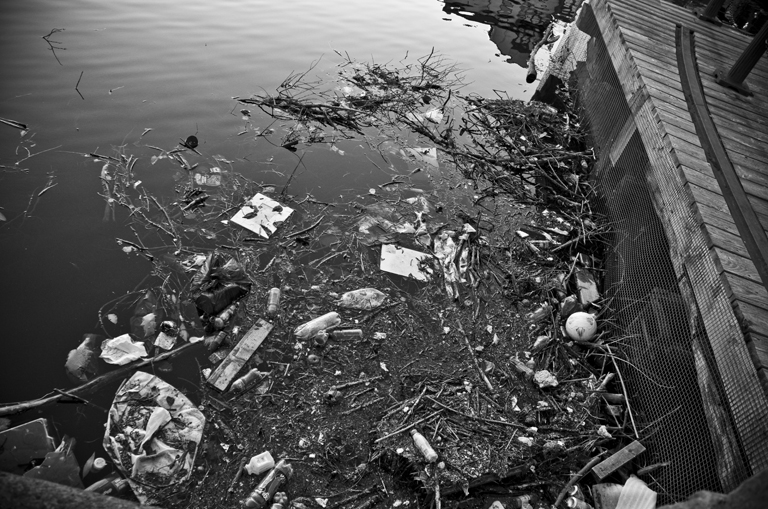
“Millions of Californians are drinking toxic water today due to government neglect,” said Nicholas Morales, attorney at the Natural Resources Defense Council. “The State has not protected our drinking water supply from this carcinogen, so we’re going to the courts to put a stop to it. Clean drinking water is a precious resource, and it’s about time it’s treated as such.”
An Environmental Working Group analysis of official records from the California Department of Public Health’s water quality testing conducted between 2000 and 2011 revealed that about one-third of the more than 7,000 drinking water sources sampled were contaminated with hexavalent chromium at levels that exceed safe limits. These water sources are spread throughout 52 of 58 counties, impacting an estimated 31 million Californians.
In 2001, the California State Legislature mandated the agency adopt a standard by January 1, 2004, giving it two years to do so. Eight years past its legal deadline, the agency still hasn’t made any visible progress and says it could take several more years before a final standard is completed. Filed in the California Superior Court of Alameda, NRDC and EWG’s suit contends the department’s delay is unjustified and it must rapidly proceed to finalize the standard.
“Communities all over California and the U.S. are being poisoned by this dangerous chemical,” said Erin Brockovich, an environmental and consumer advocate. “We have waited long enough and the people of California should not continue to be exposed to unsafe levels of this toxin in their tap water. The California Department of Public Health needs to do its job and adopt a strong standard for hexavalent chromium in drinking water.”
Drinking water sources in Sacramento, San Jose, Los Angeles and Riverside were found to exceed the safe limits of hexavalent chromium, according to a 2010 Environmental Working Group report that tested 25 U.S. cities’ tap water for hexavalent chromium contamination.
The report also found this threat isn’t limited to California. At least 74 million Americans in thousands of communities across 42 states drink tap water polluted with “total chromium,” which includes hexavalent and other forms of the metal.
Even though hexavalent chromium is known to cause cancer, reproductive harm and other severe health effects, there is no national or state drinking water standard for hexavalent chromium. Therefore, water agencies don’t have to comprehensively monitor for or remove hexavalent chromium before it comes out of the tap…..”
Chemist: Residents near sinkhole already reporting respiratory problems, headaches — Concern over impact of many chemicals in air at same time USA
Published: August 23rd, 2012 at 1:39 pm ET
By ENENews
Title: Sinkhole drillers halt to insert pipe casing
Source: The Advocate
“…The Louisiana Environmental Action Network, a Baton Rouge environmental group, has asked Bayou Corne-area residents to log odors and any health symptoms that they feel as a result of the odors.
In two statements released Tuesday, LEAN noted air monitoring by the Louisiana Department of Environmental Quality since Aug. 4 over the sinkhole and in the neighborhoods near the sinkhole had picked up, depending on the location, benzene, toluene, ethylbenzene, other volatile organic compounds and components of natural gas.
Benzene is a known carcinogen.
LEAN also said the levels of those chemicals are below Louisiana ambient air standards, which mark a threshold for health risks…..”
Concerning USA thresholds for health risks..
SAN FRANCISCO (August 14, 2012) –The Natural Resources Defense Council and the Environmental Working Group today sued the California Department of Public Health for failing to protect millions of Californians from hexavalent chromium, the cancer-causing chemical made infamous in the movie “Erin Brockovich” for contaminating drinking water and sickening residents in the town of Hinkley, California. The agency was supposed to establish a safe drinking water standard for hexavalent chromium eight years ago, but has failed in its duty to safeguard citizens from the toxin.
“Millions of Californians are drinking toxic water today due to government neglect,” said Nicholas Morales, attorney at the Natural Resources Defense Council. “The State has not protected our drinking water supply from this carcinogen, so we’re going to the courts to put a stop to it. Clean drinking water is a precious resource, and it’s about time it’s treated as such.”
Asahi: Gov’t calculations “were way off” — Anti-nuclear sentiment has grown so large it could force change in energy policy
(Subscription Only) Title: ANALYSIS: Support for nuke-free Japan defies government calculations
Source: THE ASAHI SHIMBUN
Date: August 23, 2012
“….Policymakers determined to maintain nuclear energy believed most people would still want it as part of the nation’s power generation despite theaccident at the Fukushima No. 1 nuclear plant.
Their calculations were way off.
In a new type of government poll, 46.7 percent of respondents favored scrapping nuclear power generation by 2030 after hearing expert opinions and holding discussions among themselves, according to the results released on Aug. 22.
In fact, anti-nuclear sentiment has grown so large that it could force the government to adjust its plan for the nation’s long-term energy policy and will likely become a key issue in election campaigns…..”
And this speech and others like it probably helped..
Moving Speech by Ms. Muto from Fukushima: “Don’t Snatch Away Our Lives!”(Sep. 19, 2011 VIDEO)
http://www.youtube.com/watch?v=559qQJz2bmk&feature=plcp
Published on Jun 11, 2012 by tokyobrowntabby2
This is a re-upload from my old channel.
This is a speech by Ms. Ruiko Muto at the No-Nuke Rally in Tokyo on September 19, 2011. Ms. Muto is a member of “Action Committee for Decommissioning 40-year-old Fukushima Nuke Plant.” This committee was established in November 2010, before the accident.
Ms. Muto runs a coffee shop using natural energy in Miharu Town in Fukushima Prefecture.
Translation is by Ms. Emma Parker, which is posted on this blog:http://onuma.cocolog-nifty.com/blog1/2011/11/post-7a76.html
You can read the full English transcription there.
(Note: translation of the first 3 lines and the final line done by tokyobrowntabby.)
Original video is at sievert311’s channel: http://youtu.be/5xdszFXI2J0
Translation by Ms. Emma Parker and captioning by tokyobrowntabby.
Mainichi: Almost 20,000 becquerels of cesium detected inside Fukushima man — “This is not a level that would affect health” — Equals less than 1 millisievert per year?
“….Doctor Masaharu Tsubokura, who tested the men, commented, “This is not a level that would affect their health, but when people consume homegrown vegetables and other such products we would like them to undergo tests.
The men live in the town of Kawamata and the city of Nihonmatsu, respectively…..”
Tuesday, August 14, 2012
“….Most exposures likely happened with a week of the meltdown, Tsubokura said, when residents of Minamisoma inhaled airborne cesium….”
http://www.nlm.nih.gov/medlineplus/news/fullstory_128241.html
and here is the measure of the cesium levels
Published on Mar 13, 2012 by criirad
This video shows radiation levels on May 29th 2011, in Fukushima city (Japan) about 60-65 km from the Fukushima Daiichi nuclear reactors.
Measurements are made by a CRIIRAD scientist (Bruno. Chareyron, engineer in nuclear physics) during a meeting between CRIIRAD andJapanese citizens : M. Wataru Iwata (co-founder of Project 47 and CRMS) and persons in charge of the network “Fukushima Network for Saving Children from Radiation”, including M. Nagate (ex-representative), Mrs Marumori (now Executive Director of CRMS) and Mrs Sato. CRIIRAD is sharing its experience of independent radiation monitoring with the Fukushima citizens.
In this video, CRIIRAD researcher is using a gamma radiation detector (DG5 scintillometer) to show the intensity of radiation rates, even inside the office at floor level. Radiation rates are given in counts per second (c/s). With this device, normal values should be about 50 to 150 c/s depending on natural radiation.
The powerful gamma radiations emitted by radioactive caesium deposited on the ground of the parking located in front of the building give a radiation rate about 10 times above normal values inside the building (at the centre of the office), and 15 times above near the window. This radiation will decrease only very slowly. After one year, the decrease should be about 23 % only.
Additional info : look at http://www.criirad.org
video showing HIGH counts per second
guide
1000 cps = 60,000 counts per minute
Masaharu Tsubokura san is NOT telling the truth with his last staement above?? in the first week there were much worse isotopes than the Cesiums
Japan Nuclear Professor: Fukushima smoke stacks releasing radiation on a daily basis (VIDEO)
Published: August 22nd, 2012 at 8:50 pm ET
By ENENews
Atomic Age Symposium II: Fukushima, May 5, 2012 – Session III Roundtable
Published: August 22, 2012
Published by: University of Chicago
At 9:00 in
“….Hiroaki Koide, nuclear reactor specialist and Assistant Professor at Kyoto University’s Nuclear Research Institute: I think you saw some pictures of the Fukushima power plants today, and what you saw there is that it’s got huge stacks, smoke stacks, and there’s stuff coming out of that, and that there’s radiation coming out of that on a daily basis.
There’s also radioactive material in fluid form coming out from the water that is released in trying to keep the radioactive material cool….”
and a video here from last year …..
This is a re-upload from my old channel.
http://www.youtube.com/watch?v=XxUQ6jsHgo4&feature=plcp
Part 2 “About Fukushima”:http://youtu.be/A-HastUwJo8
Dr. Hiroaki Koide is a research associate at Kyoto University Research Reactor Institute. On May 23, 2011, he appeared as a witness to give testimony to the Administrative Oversight Committee in Japan’s Upper House in the Diet. In this second part of his testimony, he talks about the ongoing Fukushima disaster and criticizes government’s handling of the nuclear crisis.
He is in his sixties and still a research associate because he has been studying the “dangers” of nuclear energy all his career. Even before the 3.11 disaster, he had been well-known among pro-nuke people as one of their notable opponents.
But it was after 3.11 that he suddenly gained the spotlight and became quite widely known among the public, especially on the net. Some people almost worship him as a charismatic leader in the anti-nuclear world.
Translation and captioning by tokyobrowntabby.
Tepco: Fukushima plant worker collapses for unknown reasons, suffers cardiac arrest — Internal and external radiation dose over 25 millisieverts
Title: Fukushima Plant Worker Suffers Cardiac Arrest
Source: Jiji Press
Date: Aug 22, 2012
[Tepco] said Wednesday that a man in his 50s suffered cardiac arrest
“……[The worker] was installing an additional tank to store contaminated water when he collapsed for unknown reasons, TEPCO said.
He started working at the plant in August last year.
The cumulative combined radiation dose inside and outside the body of the man was at 25.24 millisieverts. On Wednesday alone, the dose was 0.03 millisievert, the power utility said….”
Radiation Expert: “Alarming” number of children with cysts or lumps on thyroid after Fukushima — Access to Japan’s birth statistics requested, not granted
Title: Scientists fear increased genetic defects in Fukushima
Source: Deutsche Welle (DW)
Author: Judith Hartl
Date: Aug 16, 2012
“…..A series of ultrasound examinations conducted on over 40,000 children in Japan found 35 percent of the children to have lumps or cysts.
“That is not normal among children,” Eisenberg, who is also a retired pediatrician, told DW. He added that the figure was alarming. He, along with some of his colleagues, requested access to Japan’s birth statistics for the time since the disaster at the Daiichi nuclear power plant in Fukushima. As of now, he is still waiting for access to be granted….”
Highlights of the past week in nuclear news

Christina Macpherson’s websites & blogs
Fukushima dominates the nuclear news. Record radiation levels in fish off the Fukushima coast. Fukushima nuclear plant still releasing radiation. Growing dissatisfaction of many Japanese as their government fails to really take action to close down the nuclear industry, and elections approach. Decontamination efforts meet intractable problems, for example, in Japan’s irradiated forest areas. Media and government silence on children’s thyroid abnormalities, and on birth statistics.
USA. As in UK, the nuclear lobby is pitching the dangerous MOX nuclear reprocessing as the solution to nuclear waste. The San Onofre nuclear plant is likely to remain closed permanently. In Louisiana, a sinkhole, now 400 feet wide and over 400 feet deep in spots, risks explosion and possible release of radiation. Many USA nuclear reactors are the same type and age as Belgium’s – which are now estimated to have probably thousands of cracks UK government revealed as having colluded with big nuclear companies to downplay and obscure the seriousness of the Fukushima nuclear disaster.
India. Nuclear company NTPC and Nuclear Power Corporation of India have announced the halting of India’s nuclear power project. Meanwhile the work of The Energy and Resources Institute (TERI), a global NGO, is bringing decentralised solar electricity to millions of villagers in rural India
Australia. BHP is scrapping its big dream for the world’s biggest uranium mine, and biggest man-made hole, at Olympic Dam in South Australia. Despite Australia’s pro nuclear politicians, uranium mining remains a very minor, and failing, export industry. Australia despite its small population, leads the world in home installation of solar photovoltaic energy.
The Australian government is letting Julian Assange down badly, while he gets the support of the “Latin” nations of South America, and a strong freedom of speech movement in UK. Assange’s case may now go to the International Court of Justice. In Melbourne, shock jock radio gives Assange’s mother a Nazi taunt.
Fish found to have record radiation levels, near coast of Fukushima
 Record radiation found in fish off Japan http://www.news.com.au/breaking-news/world/record-radiation-found-in-fish-off-japan/story-e6frfkui-1226456080459#ixzz24P8h1Smb August 22, 2012 RECORD levels of radioactive caesium were detected in fish caught within 20 kilometres of Japan’s damaged Fukushima Daiichi Nuclear Power Station.
The operator Tokyo Electric Power Co said it had found 25,800 becquerels per kilogram of radioactive caesium in greenling, 258 times higher than the government safety standard.
Fishing in waters off the plant has been voluntarily restricted since
the nuclear disaster at the plant, which went into meltdown after the
March 2011 earthquake and tsunami.
Less than a month after the start of the disaster, Tokyo Electric
dumped more than 11,000 tonnes of wastewater containing radioactive
substances into the Pacific.
The previous record of radioactive contamination in fish was 18,700
becquerels per kilogram detected in cherry salmon caught in March,
according to the Fisheries Agency.Wakao Hanaoka, a Greenpeace Japan
official, said the government now needs to carry out a full
investigation of radioactive contamination in a wide range of sea
areas off Fukushima, which has not been done yet.
The organisation’s surveys show higher levels of radioactive
contamination were found in fish and seaweed sampled in areas further
from the Fukushima plant.
Factors that affect the spread of contamination include ocean currents
and seabed configuration, Hanaoka added.
India’s nuclear power projects grinding to a halt

 NTPC puts nuclear power projects on hold, Hindu Business Line, RAHULWADKEMUMBAI,Mumbai, AUG. 22: NTPC has put its plans to set up nuclear power projects, jointly with Nuclear Power Corporation of India, on the backburner. The company has also begun to relocate employees assigned for the projects due to uncertainty in the nuclear power arena.
Nuclear Power Corporation of India (NPCIL) is facing severe delays in setting up plants and NTPC is actually considering exiting the joint venture, said a senior NTPC official, requesting anonymity due to the sensitive nature of the issue.
Another NTPC official, who also did not wish to be named, said around 40 engineers from NPCIL’s Mumbai office, who were being trained to build nuclear plants, have been pulled out and relocated to NTPC’s other thermal power plants. In all, 74 engineers were stationed across the country.
The official said the rest would be withdrawn in phases. Engineers, who were relocated out of Mumbai, were being trained in plant designing, while those stationed at other plant sites were involved in the commissioning of the under-construction plants. Nuclear projects country-wide have been facing massive opposition. While considerations revolve around the safety of the people living near the plant, NPCIL has also been facing a delay in acquisition of land, all of which have
adversely impacted the project.
In the last two years, the engineers had voiced their concerns about their career and lack of professional growth in the joint venture with the senior-most personnel of NTPC. Prolonged disruption of work at the Kudankulam nuclear plant in Tamil Nadu, following protests from anti-nuclear campaigners, had also affected the morale of the engineers. Taking all these factors into consideration they are being withdrawn, the official added….. http://www.thehindubusinessline.com/companies/article3808172.ece?homepage=true&ref=wl_home
Decentralised solar energy for a billion Indian villagers
 Solar energy offers a ray of hope http://www.thehindu.com/news/cities/Visakhapatnam/article3806664.ece RAVI P BENJAMIN TERI is engaged in setting up solar charging stations in rural and Agency areas
With a view to easing the power situation, The Energy and Resources Institute (TERI), a global NGO, is engaged in setting up Solar Charging Stations in the rural and Agency areas in collaboration with the Union Ministry of New and Renewable Energy.
As part of the MNRE mandate to popularise the tapping of solar power, TERI has been introducing solar appliances, including home lighting systems, individual lanterns, and task lights, etc, in the villages which are experiencing long hours of power-cut. TERI State coordinator V. Murthy told The Hindu that nearly 100 SCSs were being set up in rural areas in the State. Solar lights and other appliances were being supplied to every home so that villages can overcome total darkness at the time of power interruption.
The objective of SCSs is mainly to recharge batteries which can be used for four to six hours every day. TERI is engaged in supply of solar lights as well as in opening charging stations manned by a single person. The stations can charge up to 50 lights at a time. Every village will have a local entrepreneur who will supply and maintain the solar lamps.
Every nine villages will have a technical resource person who will ensure smooth functioning of the SCSs. As many as 11 stations are operating in the district and 46 more are in the process of being set up. Thirty stations are operating in Srikakulam district, four in East Godavari district, and 40 are being established. Nine stations are running in Guntur, 12 in Karimnagar, and two in Adilabad. The local people in every village take care of the entrepreneur’s salary by paying for battery recharge.
Also, the nine villages contribute Rs.300 each to take care of the technician’s salary. Local NGOs engaged in Maa Thota and coffee plantations are working with TERI. TERI, Nabard, Vikasa, Kovel Foundation, and a host of NGOs are engaged
in the solar mission of lighting a billion lives.
BHP ditches its monster uranium mine plan
At its peak, the mine was expected to consume more electricity than the city of Adelaide, and 100 Olympic swimming pools worth of fresh water every day.
Olympic Dam was too expensive.

South Australia will be fine. Mining accounts for a relatively small share of South Australia’s overall economy, and only 1 per cent of its employment.
the carbon emissions from Olympic Dam would have dwarfed all the gains in emissions reductions that South Australia has made in renewable energy in recent years
The Olympic Dam Delay Has A Silver Lining New Matilda, By Ben Eltham 23 Aug 12, Why did BHP Billiton halt the Olympic Dam mine? The project was just too expensive. The decision is good news for the South Australian environment, writes Ben Eltham
Picture a hole in the ground four kilometres long and one kilometre deep. Picture a manmade mountain of dirt next to it nearly as high — a mountain of dirt dug from the ground and heaped next to that hole, a new landmark on the South Australian horizon.
Picture a mega-project so large and so thirsty that it would have required a new baseload electricity generator to meet its power needs, and a new desalination plant hundreds of kilometres away on the coast to make the water it required.
Picture a mine so vast, it would have increased the world supply of Uranium by a third.
This was the vast edifice that was to be Olympic Dam — when finished, the largest mine in the world. Continue reading
Opposition to USA plan to commercialise plutonium wastes at Savannah
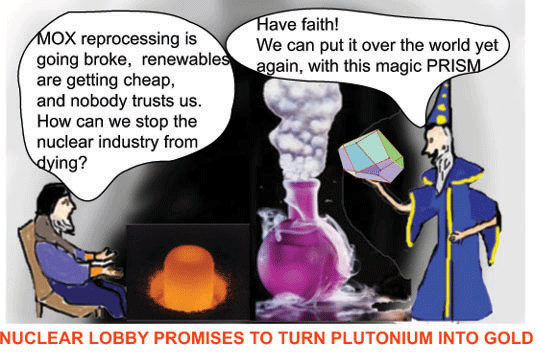 The preferred plan under consideration calls for the shipment of 7.1 metric tons of so-called pits — or cores — of an undisclosed number of nuclear warheads now stored at the Pantex plant in West Texas to Los Alamos National Laboratory in New Mexico and the Savannah River Site for disarmament and processing into fuel for commercial nuclear reactors.
Anti-nuclear activists question plan for shipping plutonium from warheads to New Mexico By Associated Press, August 22 LOS ALAMOS, N.M. — Nuclear watchdogs are fighting a proposal to ship tons of plutonium to New Mexico, including the cores of nuclear warheads that would be dismantled at an aging and structurally questionable lab atop an earthquake fault zone.
Opponents voiced their opposition at a series of public hearings that opened this week on the best way to dispose of the radioactive material as the federal government works to reduce the nation’s nuclear arsenal.
The Department of Energy is studying alternatives for disposing of plutonium in light of federal budget cuts that have derailed plans for new multi-billion-dollar facilities at the Savannah River Site in South Carolina. Continue reading
1 This Month
10 March A LIVE WEBINAR THE REAL EFFECTS OF NUCLEAR POWER
What the Industry Isn’t Telling Us
1:00 PM Mountain, 2 pm Central, 3 pm Eastern. Live on the Keepers of the Water Facebook page

18 March Webinar @ 1 PM EST: An Assessment of SMR Projects: The Case of Canada
register for the zoom:
https://us02web.zoom.us/webinar/register/WN_o8BIIOUvQ2ONJR1nta65DQ#/registration


of the week – STOP SMALL MODULAR REACTORS IN CANADA
To see nuclear-related stories in greater depth and intensity – go to https://nuclearinformation.wordpress.com
-
Archives
- February 2026 (268)
- January 2026 (308)
- December 2025 (358)
- November 2025 (359)
- October 2025 (376)
- September 2025 (258)
- August 2025 (319)
- July 2025 (230)
- June 2025 (348)
- May 2025 (261)
- April 2025 (305)
- March 2025 (319)
-
Categories
- 1
- 1 NUCLEAR ISSUES
- business and costs
- climate change
- culture and arts
- ENERGY
- environment
- health
- history
- indigenous issues
- Legal
- marketing of nuclear
- media
- opposition to nuclear
- PERSONAL STORIES
- politics
- politics international
- Religion and ethics
- safety
- secrets,lies and civil liberties
- spinbuster
- technology
- Uranium
- wastes
- weapons and war
- Women
- 2 WORLD
- ACTION
- AFRICA
- Atrocities
- AUSTRALIA
- Christina's notes
- Christina's themes
- culture and arts
- Events
- Fuk 2022
- Fuk 2023
- Fukushima 2017
- Fukushima 2018
- fukushima 2019
- Fukushima 2020
- Fukushima 2021
- general
- global warming
- Humour (God we need it)
- Nuclear
- RARE EARTHS
- Reference
- resources – print
- Resources -audiovicual
- Weekly Newsletter
- World
- World Nuclear
- YouTube
-
RSS
Entries RSS
Comments RSS
 nuclear-news