A brief history of USA’s nuclear waste (mis)management
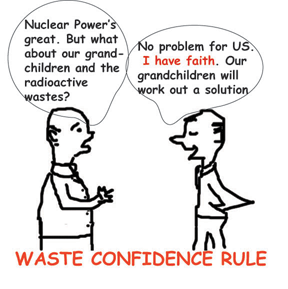 In 2010, the Nuclear Regulatory Commission issued a “waste confidence decision” that asserted that used fuel rods could be stored at the power plants for 60 years after they close down. NRC also asserted that a permanent repository would be ready to handle such wastes “when necessary.”
NUCLEAR WASTE Manila Bulletin By ATTY. ROMEO V. PEFIANCO July 11, 2012, “…Storing used fuel rods from nuclear power reactors is one problem that remains unsolved by the US Nuclear Regulatory Commission. Nuclear waste in the US comes from: 1) nuclear weapons production facilities, 2) nuclear power plants, 3) medical equipment previously used in radiation treatments, 4) industrial sources of radioactivity used as a more powerful alternative to X-rays, and 5) residues from uranium mining. Continue reading
Nuclear referendum for Iran? – call from former Interior Minister
Iran’s former interior minister calls for a nuclear referendum http://www.guardian.co.uk/world/iran-blog/2012/jul/11/iran-abdollah-nouri-calls-for-nuclear-referendum?newsfeed=true
Abdollah Nouri has called on the Iranian regime to hold a referendum over the fate of its nuclear programme. A former Iranian interior minister, Abdollah Nouri, has called on the leaders of the Islamic republic to hold a referendum over the fate of the country’s nuclear programme.
As economic sanctions begin to take their toll and the threat of war looms, Nouri said that “the disadvantages” of the nuclear programme meant that it should be left to people to find a way out of the current stalemate. Continue reading
IAE predicts huge growth in renewable energy
Renewable Energy to See Huge Growth Over Next 5 Years July 11th 2012 GetSolar . Renewable energy, including solar energy, will be even more popular over the coming years, according to a new International Energy Agency report.
Over the next five years, the report predicts a 40 percent increase in the generation of energy from renewable sources worldwide. If that comes to pass, then renewables would generate 1.5 times the amount of energy currently produced in the United States. Continue reading
Tunisia joins in call to investigate possible polonium poisoning of Arafat
Palestinian call for Arafat death probe backed by Tunisia http://www.brecorder.com/world/middle-east/65869-palestinian-call-for-arafat-death-probe-backed-by-tunis-.html , 05 JULY 2012 RAMALLAH: A Palestinian call for an international probe into Yasser
Arafat’s death won official backing from Tunisia on Thursday, after a report showed the leader may have been poisoned.
Palestinian foreign minister Riyad al-Malki told the official Voice of Palestine radio on Thursday that such an enquiry could finally “close the file” on Arafat’s mysterious death.
And Tunisia called for the Arab League to convene.
“We call for an urgent meeting of Arab League foreign ministers and the creation of an international committee to investigate the circumstances surrounding the death” of Arafat, Foreign Minister Rafik Abdessalem told private radio station Mosaique FM. Continue reading
Documentary shows the threat of uranium mining to the Grand Canyon
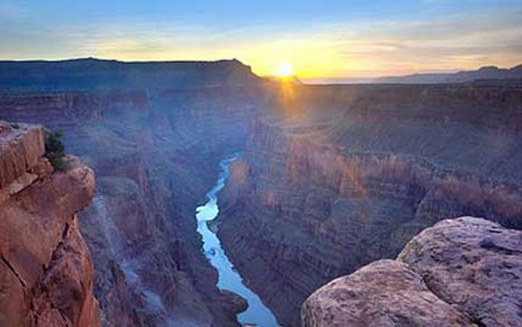
 Documentary Short: How Uranium Mining Threatens The Grand Canyon http://thinkprogress.org/climate/2012/07/11/515109/documentary-short-how-uranium-mining-threatens-the-grand-canyon/?mobile=nc By Public Lands Team on Jul 11, 2012 By Jessica Goad
Today the Center for American Progress and the Sierra Club released a series of short documentary videos called “Public Lands, Private Profits .”
One of the stories, “A Grand Threat ,” profiles the new rush to extract uranium around Grand Canyon National Park. A Canadian company is currently excavating uranium at one mine on the north rim of the canyon, and it has plans for more mines in the near future.
Although Secretary of the Interior Ken Salazar set one million acres off-limits to mineral extraction this past January, that decision applied only to new mining claims, not those already in existence. There are approximately 3,500 mining claims that may be valid — potentially resulting in up to 11 uranium mines near the Grand Canyon.
Shockingly, these new mines are moving forward under environmental studies and plans of operation last approved in the 1980s. Although the Interior Department and the Forest Service have full authority to demand updated environmental reviews, they have not taken that step.
And just two weeks ago, Kaibab National Forest Supervisor Mike Williams agreed to let Denison move forward with its plans to develop the Canyon Mine (featured in the video) under environmental and cultural impact studies from 1986.
Last week, Denison Mines sold its U.S. assets to Energy Fuels Incorporated. Denison declined to comment, but Energy Fuels explained that it is “highly cognizant ” of the responsibilities of mining in the region.
Opponents of uranium mining fear that any water pollution could take years to clean up. To find out more about this issue or to take action, visit the Sierra Club’s website .
$26 million just to find out how much 2 nuclear reactors might cost
TORONTO – It’s like giving the cashier at Tim Hortons a penny to find out how much a cup of coffee costs.CNews 11 July 12,
Ontario Power Generation (OPG) has agreed to pay two prospective reactor builders $26 million to come up with an estimate on how much two new nuclear reactors at the Darlington Generating Station would cost, Energy Minister Chris Bentley told a Queen’s Park committee
Wednesday. Continue reading
USA: Atomic Safety and Licensing Board rules that Pilgrim Watch cannot challenge NRC’s safety rulings
Judges rule against nuclear plant foes http://www.capecodonline.com/apps/pbcs.dll/article?AID=/20120711/NEWS/207110334/-1/NEWSMAP by PATRICK CASSIDY, July 11, 2012 A panel of three judges on the federal Atomic Safety and Licensing Board has rejected a bid by opponents of the Pilgrim Nuclear Power Station in Plymouth to be heard on the response of U.S. nuclear regulators to the Fukushima Dai-ichi disaster last year in Japan.
Duxbury-based Pilgrim Watch had argued that orders issued after the earthquake- and tsunami-fueled nuclear meltdown did not go far enough.
In their ruling issued Tuesday the judges found that, based on judicial and U.S. Nuclear Regulatory Commission precedent, the enforcement orders issued by the NRC “are not open to challenge in an adjudicatory proceeding on Pilgrim Watch’s claim of inadequacy.”
Pilgrim Watch had challenged two orders from the NRC that required that all boiling-water reactors similar to Pilgrim and Fukushima have reliable venting systems and instrumentation to measure water levels in spent fuel pools.
Pilgrim Watch can appeal the ruling to the five-member NRC, according to agency spokesman Neil Sheehan. A group of 14 opponents of Pilgrim’s operations who were arrested for trespassing during a protest there in May are scheduled to appear today in Plymouth District Court.
South Africa’s Pelindaba facility remains a nuclear security danger
SA lags in nuclear security http://www.timeslive.co.za/thetimes/2012/07/12/sa-lags-in-nuclear-security Graeme Hosken | 12 July, 2012 A new report co-authored by a senior
Harvard academic has shed light on some of the security vulnerabilities of South Africa’s nuclear facilities.
Co-written by Harvard University associate professor and nuclear security specialist Matthew Bunn, Progress on Securing Nuclear Weapons and Materials: The Four-Year Effort and Beyond, examines nuclear-material security globally.
It reveals that, though South Africa has completed substantial security upgrades at its Pelindaba nuclear facility, and implemented regulations requiring the protection of nuclear sites against threats, these have yet to be formally enforced.
The report states that South Africa has not committed itself to eliminating hundreds of kilograms of weapons-grade highly enriched uranium.
It has yet to ratify an amendment to the Convention on the Physical Protection of Nuclear Material. The amendment is aimed at improving the physical protection of nuclear material and facilities, and reducing the vulnerability of states to the theft of nuclear material and to nuclear terrorism.
Workers exposed to airborne uranium, due to pressurised yellowcake containers
Pressurized drums create yellowcake uranium hazard, NRC says By Todd Sperry, CNN Senior Producer July 11, 2012 – Washington (CNN) — After three Canadian employees were exposed to yellowcake uranium last month when a lid blew off a pressurized 55-gallon drum, a uranium mining company has informed U.S. nuclear regulatory officials it has found additional drums possibly susceptible to the same problem, CNN has learned..
.. The NRC and
Canadian nuclear officials are investigating drums shipped from a Willow Creek, Wyoming, mining facility operated by Uranium One to an Ontario processing plant where workers opened them, including the one that ejected the powder. The three employees were overcome by a cloud of yellowcake uranium that had unexpectedly become pressurized.
The worker closest to the drum and two others in the area, who were not wearing respirators, were exposed to airborne uranium, according to the NRC..
… Yellowcake is the byproduct of uranium ore that is mined, crushed and milled until concentrated. It is a key component in manufacturing uranium fuel for nuclear reactors.
NRC officials gave Uranium One until this week to identify whether any other drums had become pressurized during manufacture or shipment…… Other drums shipped to the Canadian facility containing yellowcake were found to be bulging from internal pressure, the NRC said.
Recycling is one way to manage rare earths responsibly
 Recycling Rare Earths Stop Lynas, 11 July 12, “…….We know that human induced climate change is a fact. Solutions to cut carbon emissions include energy efficiency, hybrid cars and renewable technologies like wind power which all need rare earths. But it is a dangerous path we are on when we continue with the ‘business as usual’ moto – instead we must continue to challenge the influence of governments and corporations that do not take people’s needs into account by protecting human rights and the environment for future generations.
One partial solution to the negative impacts of rare earth mining and processing would be to reduce consumption and increase the reuse and recycling rates of rare earth elements. Currently the recycling rate for most rare earth metals is around 1% or less . Japan is exploring increased recycling of rare earths fromelectronic waste . If the price of the final materials included the true social and environmental costs of rare earth mining, the incentive to recycle and dig up less would increase.
We must be concerned not only with how our use of rare earths contributes to their depletion, but also how pollution from the production, processing and use of rare earths should be considered in the context of our use – particularly because rare earths are recyclable. http://stoplynas.org/recycle-rare-earths/
Environmental and financial benefits of recycling rare earths
The Recycling Cost-Benefit Equation One of the benefits of recycling rare earth metals from batteries is that a supply of recycled lanthanum should be more reliable than relying on virgin Chinese sources. Recycling also uses less energy and
emits less carbon dioxide than mining. The economics are less firm, but Caffarey said there is a financial justification for recycling rare earths.
Recycling rare earth metals from batteries American Recycler News, by Mark Henricks, July 12, Toyota has sold nearly 3 million Prius hybrid-drive automobiles, each of which contains a battery pack that has more than 20 lbs. of an exotic metal called lanthanum. Lanthanum, like most of the 17 so-called rare earth elements, primarily comes from China, which has recently tightened export quotas. Special properties of rare earth metals make them highly useful for batteries, magnets and electric motors, and China wants to reserve them for its domestic industries.
Tension between rising demand for lanthanum, which has been infrequently used in products before now, and uncertain supply has created growing interest in finding ways to recycle the millions of batteries that will be coming out of hybrid and plug-in electric cars using nickel-metal hydride batteries. There are plenty of precedents. Continue reading
Britain looks at dubious technical “fixes” for its radioactive pile at Sellafield
It is the task of the Nuclear Decommissioning Authority (NDA) to clean all this up. The plans are to pay the French company Areva, who have proved their technology works, to build a new mixed oxide fuel (MOX) plant.
The other option is to let the US-Japanese GE-Hitachi build a new fast PRISM reactor on the site to burn the plutonium and produce electricity. This is a more elegant engineering option but the reactor is totally unproven and is decades away from completion.
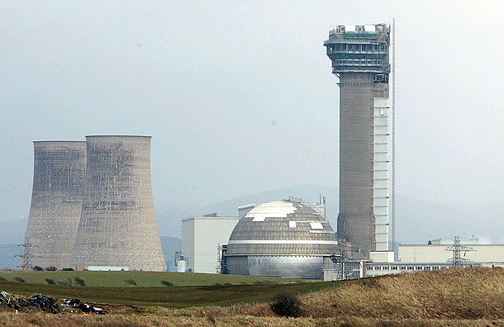 Sellafield: The dangers of Britain’s nuclear dustbin RT, 10 July, 2012“…….Cold war legacy Behind the razor wire, security guards and public relations campaigns,
Sellafield is home to some of the most radioactive buildings in Europe.
The UK has the largest stockpile of Plutonium anywhere in the world and it’s all stored at Sellafield. Plutonium is used for the manufacture of nuclear weapons and is extremely radioactive with a half-life of 25,000 years. Continue reading
New nuclear power plants – Georgia, Tennessee, South Carolina – just gobbling up money!
 The plants burning natural gas are far cheaper to build than nuclear power plants…..….
Building costs rise at US nuclear sites Bloomberg, By Ray Henry on July 10, 2012 ATLANTA (AP) — America’s first new nuclear plants in more than a decade are costing billions more to build and sometimes taking longer to deliver than planned, problems that could chill the industry’s hopes for a jumpstart to the nation’s new nuclear age.
Licensing delay charges, soaring construction expenses and installation glitches as mundane as misshapen metal bars have driven up the costs of three plants in Georgia, Tennessee and South Carolina, from hundreds of millions to as much as $2 billion, according to an Associated Press analysis of public records and regulatory filings.
Those problems, along with jangled nerves from last year’s meltdown in Japan and the lure of cheap natural gas, could discourage utilities from sinking cash into new reactors, experts said. The building slowdown would be another blow to the so-called nuclear renaissance, Continue reading
The underestimated dangers at Los Alamos nuclear weapons laboratory
Nuclear Weapons Lab Underestimates Risk of Radiation Leak, Study Finds, Project on Government Oversight (POGO) By MIA STEINLE, 10 July 12, One of the nation’s main nuclear weapons labs has sharply underestimated the amount of radiation that could leak from the facility as a result of an earthquake, according to a federal advisory panel.
The radiation could be more than four times as intense as the Los Alamos National Laboratory predicted in a safety analysis last year, according to a recent report by the Defense Nuclear Facilities Safety Board. Continue reading
An community solar energy scheme is paying off
 How a community solar scheme is turning sunshine into dollars REneweconomy, By Kelly Vaughn on 11 July 2012 Rocky Mountain Institute Years ago, a Basalt native Paul Spencer set out to build an off-grid home not far from RMI’s Snowmass office. Through the process of designing and building his house, he developed a passion for real estate, and became well versed in renewable energy technologies. He began looking into the option of a green development in the Roaring Fork Valley: super-efficient homes powered by renewable energy.
But, due to trees shading the proposed building sites, rooftop solar didn’t work. Instead, Spencer proposed to build a shared solar array that would power the neighborhood. While the development didn’t go through, the community solar concept remained.
Now, Spencer is the president and founder of Carbondale-based Clean Energy Collective (CEC) an LLC that builds, operates, and maintains community-based clean energy facilities, currently all solar PV……..
1 This Month

Protect Sazan Island from the Trump family! https://secure.avaaz.org/campaign/en/protect_sazan_island_from_the_trump_family_loc/?bqFCVab&v=174511&cl=22707147157&_checksum=5e9dde668860e8231c33699735e16a1fbf22ab2cb01da50c999fe8732b9775ef&utm_source=email&utm_medium=blast_email&utm_campaign=174511


Cuba Is Not a Failed State – It Is a Besieged State
PETITION: “Global Appeal to Endorse Palestinian Right of Return of Refugees”
To see nuclear-related stories in greater depth and intensity – go to https://nuclearinformation.wordpress.com
-
Archives
- June 2026 (129)
- May 2026 (306)
- April 2026 (356)
- March 2026 (251)
- February 2026 (268)
- January 2026 (308)
- December 2025 (358)
- November 2025 (359)
- October 2025 (376)
- September 2025 (257)
- August 2025 (319)
- July 2025 (230)
-
Categories
- 1
- 1 NUCLEAR ISSUES
- business and costs
- climate change
- culture and arts
- ENERGY
- environment
- health
- history
- indigenous issues
- Legal
- marketing of nuclear
- media
- opposition to nuclear
- PERSONAL STORIES
- politics
- politics international
- Religion and ethics
- safety
- secrets,lies and civil liberties
- spinbuster
- technology
- Uranium
- wastes
- weapons and war
- Women
- 2 WORLD
- ACTION
- AFRICA
- Atrocities
- AUSTRALIA
- Christina's notes
- Christina's themes
- culture and arts
- Events
- Fuk 2022
- Fuk 2023
- Fukushima 2017
- Fukushima 2018
- fukushima 2019
- Fukushima 2020
- Fukushima 2021
- general
- global warming
- Humour (God we need it)
- Nuclear
- RARE EARTHS
- Reference
- resources – print
- Resources -audiovicual
- Weekly Newsletter
- World
- World Nuclear
- YouTube
-
RSS
Entries RSS
Comments RSS
 nuclear-news