Nuclear power and nuclear weapons proliferation

 The report, Nuclear Famine: A Billion People at Risk − Global Impacts of Limited Nuclear War on Agriculture, Food Supplies, and Human Nutritio, is available here. Videos are posted on youtube − search ‘nuclear famine’.
Nuclear power & nuclear weapons – two sides of the same coin, July 24, 2012 Green Left, By Jim Green “……. The report on the catastrophic potential of nuclear warfare has important implications for the ongoing debate over nuclear power. Apologists for the nuclear industry trot out any number of furphies in their efforts to distance nuclear power from WMD proliferation, but the facts are in. There is a long history of ostensibly peaceful nuclear programs providing political cover and technical support for nuclear weapons programs − and an expansion of nuclear power can only exacerbate the problem.
Of the 10 nations to have produced nuclear weapons:
• Six did so with political cover and/or technical support from their supposedly peaceful nuclear program – India, Pakistan, Israel, South Africa, North Korea, and France.
• The other four nuclear weapons states (US, Russia, China, Britain) developed nuclear weapons before nuclear power − but there are still significant links between their peaceful and military nuclear programs (such as routine transfer of personnel).
• Eight of the 10 nations have nuclear power reactors and those eight countries account for nearly 60% of global nuclear power capacity.
Examples of the direct use of nuclear power reactors in weapons programs include the following:
• North Korea’s nuclear weapons tests have used plutonium produced in an “Experimental Power Reactor”.
• Power reactors are used in India’s nuclear weapons program − this has long been suspected and is no longer in doubt since India refuses to allow eight out of 22 reactors (and its entire thorium/plutonium program) to be subject to International Atomic Energy Agency (IAEA) safeguards inspections.
• The US has used power reactors in recent years to produce tritium for use in “boosted” nuclear weapons.
• The 1962 test of sub-weapon-grade plutonium by the US may have used plutonium from a power reactor.
• France’s civilian nuclear program provided the base of expertise for its weapons program, and material for weapons was sometimes produced in power reactors.
• Magnox reactors in Britain had the dual roles of producing weapon grade plutonium and generating electricity.
• Pakistan may be using power reactor/s in support of its nuclear weapons program.
Nuclear power programs have facilitated and provided cover for weapons programs even without the direct use of power reactors to produce material for weapons. Nuclear power programs provide a rationale for the acquisition and use of:
• Uranium enrichment technology, which can produce low enriched uranium for power reactors or highly enriched uranium for weapons.
• Reprocessing technology, which separates spent nuclear fuel into three streams − uranium, high-level waste, and weapons-useable plutonium.
• Research and training reactors, which can produce plutonium and other materials for weapons and can also be used for weapons-related research.
The nuclear weapons programs in South Africa and Pakistan were outgrowths of their power programs although enrichment plants, not power reactors, produced most or all of the fissile (explosive) material used in weapons.
Research and training reactors, ostensibly acquired in support of a power program or for other civil purposes, have been a plutonium source for weapons in India and Israel and have been used for weapons-related research and experiments in numerous other countries including Iraq, Iran, South Korea, North Korea, Taiwan, Yugoslavia, and possibly Romania.
Nuclear power programs can facilitate weapons programs even if power reactors are not actually built. Iraq provides a clear illustration of this important point. While Iraq’s nuclear research program provided much cover for the weapons program from the 1970s to 1991, stated interest in developing nuclear power was also significant. Iraq pursued a “shop til you drop” program of acquiring dual-use technology, with much of the shopping done openly and justified by nuclear power ambitions.
According to Khidhir Hamza, a senior nuclear scientist involved in Iraq’s weapons program: “Acquiring nuclear technology within the IAEA safeguards system was the first step in establishing the infrastructure necessary to develop nuclear weapons. In 1973, we decided to acquire a 40-megawatt research reactor, a fuel manufacturing plant, and nuclear fuel reprocessing facilities, all under cover of acquiring the expertise needed to eventually build and operate nuclear power plants and produce and recycle nuclear fuel. Our hidden agenda was to clandestinely develop the expertise and infrastructure needed to produce weapon-grade plutonium.”
Power and proliferation − two sides of the same coin and a major factor to consider when weighing different energy options, all the more so in light of the report on nuclear warfare and global famine. The report, Nuclear Famine: A Billion People at Risk − Global Impacts of Limited Nuclear War on Agriculture, Food Supplies, and Human Nutritio, is available here. Videos are posted on youtube − search ‘nuclear famine’. http://www.greenleft.org.au/node/51667
No comments yet.
1 This Month
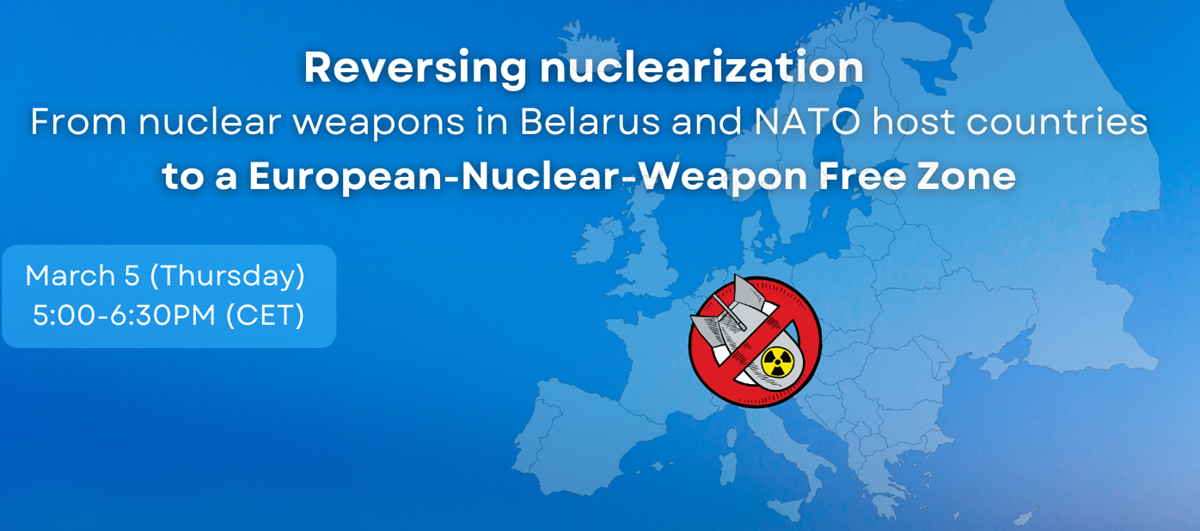
5 March -Online – Reversing nuclearization:
From nuclear weapons in Belarus and NATO host countries to a European-Nuclear-Weapon Free Zone
11am-12:30pm Eastern Time USA / 5pm-6:30pm CET

of the week – Advocating for a
nuclear free beach – https://www.samuellawrencefoundation.org/
The Samuel Lawrence Foundation advocates for a Nuclear Waste Free Beach at San Onofre, join us and take action!
10 March A LIVE WEBINAR THE REAL EFFECTS OF NUCLEAR POWER
What the Industry Isn’t Telling Us
1:00 PM Mountain, 2 pm Central, 3 pm Eastern. Live on the Keepers of the Water Facebook page

18 March Webinar @ 1 PM EST: An Assessment of SMR Projects: The Case of Canada
register for the zoom:
https://us02web.zoom.us/webinar/register/WN_o8BIIOUvQ2ONJR1nta65DQ#/registration

of the week – STOP SMALL MODULAR REACTORS IN CANADA
To see nuclear-related stories in greater depth and intensity – go to https://nuclearinformation.wordpress.com
-
Archives
- March 2026 (38)
- February 2026 (268)
- January 2026 (308)
- December 2025 (358)
- November 2025 (359)
- October 2025 (376)
- September 2025 (258)
- August 2025 (319)
- July 2025 (230)
- June 2025 (348)
- May 2025 (261)
- April 2025 (305)
-
Categories
- 1
- 1 NUCLEAR ISSUES
- business and costs
- climate change
- culture and arts
- ENERGY
- environment
- health
- history
- indigenous issues
- Legal
- marketing of nuclear
- media
- opposition to nuclear
- PERSONAL STORIES
- politics
- politics international
- Religion and ethics
- safety
- secrets,lies and civil liberties
- spinbuster
- technology
- Uranium
- wastes
- weapons and war
- Women
- 2 WORLD
- ACTION
- AFRICA
- Atrocities
- AUSTRALIA
- Christina's notes
- Christina's themes
- culture and arts
- Events
- Fuk 2022
- Fuk 2023
- Fukushima 2017
- Fukushima 2018
- fukushima 2019
- Fukushima 2020
- Fukushima 2021
- general
- global warming
- Humour (God we need it)
- Nuclear
- RARE EARTHS
- Reference
- resources – print
- Resources -audiovicual
- Weekly Newsletter
- World
- World Nuclear
- YouTube
-
RSS
Entries RSS
Comments RSS
 nuclear-news
Leave a comment