Britain’s disastrous record in technology to manage nuclear waste
Minister admits total failure of Sellafield ‘MOX’ plant http://www.independent.co.uk/news/uk/politics/minister-admits-total-failure-of-sellafield-mox-plant-793489.html BY GEOFFREY LEAN It was a deeply embarrassing moment for the Government, though it passed almost without notice.
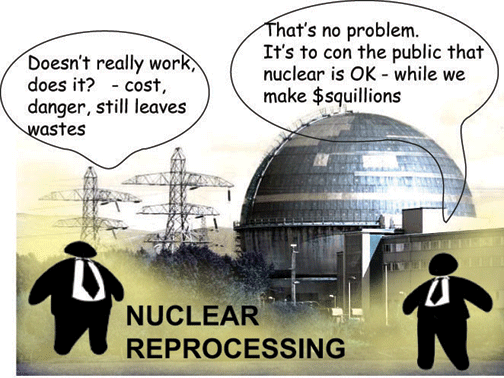
Late last month, the Energy Minister, Malcolm Wicks, had to admit to one of the most comprehensive and catastrophic failures in British industrial history – and one that has led directly to the plans to ship weapons-ready plutonium to France.
Answering a question from Dai Davies, the independent MP for Blaenau Gwent, Mr Wicks confessed that a new plant at Sellafield, built amid great controversy at a cost of £473m, had comprehensively failed to work. Continue reading
Nuclear industry continues to need a law to protect itself from itself!
 this is the only industry that has a law protecting it from itself. The Price-Anderson Nuclear Industries Indemnity Act of 1957 caps the liability of power plant owners and their insurance companies for nuclear accidents at $12.6 billion, after which taxpayers are on the hook. Chernobyl is estimated to have cost some $235 billion for containment, cleanup, and resettlement. Similar costs for the Fukushima disaster are yet to be determined, but estimates have also been in the several hundred-billion dollar range. Many proponents of nuclear power are the same “let the market work” advocates in economics and politics today. If the market were allowed to function in this case, would any new nuclear power plants be built in America — or existing ones re-licensed — if Price-Anderson were repealed?
Is New Nuclear Energy Just Mission Impossible? HUFFINGTON POST, Terry Tamminen Former Secretary, California EPA 07/11/2012 “….the Mission Impossible assignment facing global economies today — powering growth with nuclear energy.
The debate over nuclear energy has generally boiled down to the challenge of waste disposal. Of course there is always talk of safety, but proponents quickly point to the half-century of global experience with nuclear energy and the very few, albeit disastrous, incidents of the proverbial genie escaping its lead-lined, super-cooled, concrete bottle.
Proponents are also quick to dismiss waste issues by pointing to new technologies that recycle much of the spent fuel. The wild card that is common to every nuclear facility and which puts this technology squarely in the Mission Impossible category however, is not technology or waste — it’s human error….. the fact that engineers did not predict it [the Fukushima nuclear catastrophe] and that everyone at Edison is surprised by the failure attests to the limits of human calculation — even after that half-century of experience.
Nor can we dismiss the waste disposal issue so quickly, especially in an age when terrorists are thought to covet spent nuclear material for making mayhem. Delaware Senator Tom Carper commented recently that Congress has tried to solve the disposal issue for decades, but “over 30 years later, we find ourselves at what is really a dead end,” he said. Continue reading
Photographer to document anti-nuclear protest and police reaction at Olympic Dam uranium mine
 David Bradbury is traveling to Roxby with a small camera crew to document the actions at Olympic Dam as part of Lizard’s Revenge. He is driving down (ie. heading south) and is aware of the roadblocks the state is putting in place, but is hoping to make it down by today or tomorrow. His trip and the festival can be followed on Facebook: http://www.facebook.com/pages/David-Bradbury/349981725057349

BHP Billiton who own the mine and run it ‘like Nazi Germany’; so one of the workers told me three years ago when I was there filming after he told me not so politely to put my camera away and ‘f- off’. The miners and the huge multi national mining giant don’t like their right to earn big money and profits ripping out the Heart of Australia and polluting the precious water supply of future generations. Continue reading
Worldwide nuclear industry control of safety regulations
Those “wider structural problems” are far wider than Japan–they are global. The “regulatory capture” cited in the Japanese panel’s report has occurred all over the world–with the nuclear industry and those promoting nuclear power in governments making sure that the nuclear foxes are in charge of the nuclear hen houses. The “pus that pervades Japanese society” is international.
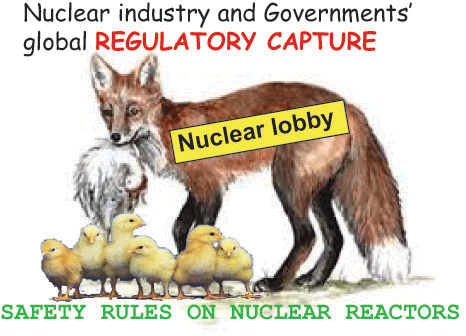
Nuclear Foxes In Charge of the Nuclear Hen Houses, OpEd News, 11 July 12 By Karl Grossman The conclusion of a report of a Japanese parliamentary panel issued last week that the Fukushima Daiichi nuclear power plant disaster was rooted in government-industry “collusion” and thus was “man-made” is mirrored throughout the world. The “regulatory capture” cited by the panel is the pattern among nuclear agencies right up to the International Atomic Energy Agency. Continue reading
Nuclear power licensing and relicensing at a dead end in USA
opposition groups are saying that they will push hard to require site-specific evaluations, which could add years to any licensing or re-licensing process.

 Nuclear Waste Issue Searing American Landscape Forbes, 11 July 12, Nuclear waste possibly ranks as that industry’s top quagmire: Nuclear plant operators are supposed to store their spent fuel onsite until it is properly cooled and at which point, it is supposed to go into a permanent burial facility. The problem is that such an eternal resting spot has never come to pass.
The dilemma has gotten even more complex now that a federal appeals court ruled last month that the Nuclear Regulatory Commission did not properly do its job when it previously told those same nuclear operators that they could extend their onsite storage from 30 years to 60 years . With such a triumphant court decision in their hands, environmental and citizen groups pounced: They subsequently asked the U.S. Court of Appeals in the District of Columbia to stop issuing any nuclear construction or operating licenses until the NRC does its job.
“It’s hard to see how federal and state officials can justify putting more taxpayers or customer money at risk on new reactor projects until this situation is resolved,” says Former NRC Commissioner Peter Bradford, who has lent his support to the 22 groups, called CleanEnergy.org , who filed this petition before the court. Continue reading
Japan Atomic Energy board “sanitises” education about nuclear radiation
The editing of the supplementary reader was commissioned to the Japan Atomic Energy Relations Organization, where senior officials of power utilities serve as board members.
Both the supplementary reader and the teacher’s guide tout the benefits of radiation, but neither of them mentions last year’s nuclear disaster and the public’s alarm about high levels of radiation exposure
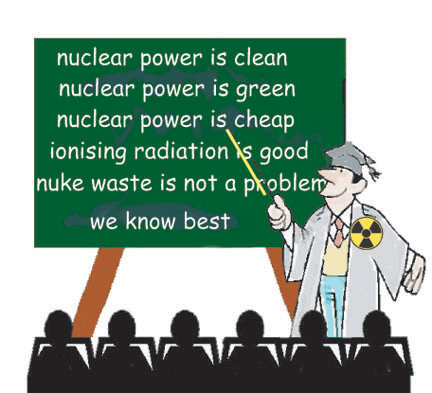
No well-trodden path for radiation literacy classes in Fukushima schools July 12, 2012 THE ASAHI SHIMBUN, by Yasuhito Watanabe and Midori Iki. Schools in Fukushima Prefecture, still reeling from last year’s nuclear disaster, find themselves in uncharted territory with a new addition to their curriculums: radiation literacy classes.
Fukushima’s prefectural board of education ordained that between one and three hours of homeroom activity, or “integrated studies,” be set aside every year for the topic from this academic year through all grades. Continue reading
Fukushima children did receive high radiation to thyroid glands
Study finds lifetime thyroid doses of radiation in Fukushima children July 11, 2012 By YURI OIWA/ Staff Writer Children in Fukushima Prefecture likely received thyroid gland doses of internal radiation, despite earlier government assurances that the levels of such doses were zero, according to an independent study…… subscription only
http://ajw.asahi.com/article/0311disaster/fukushima/AJ201207110058
A brief history of USA’s nuclear waste (mis)management
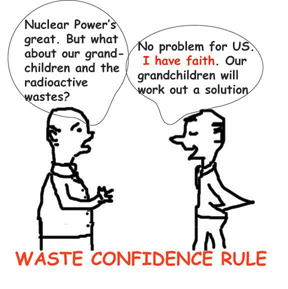 In 2010, the Nuclear Regulatory Commission issued a “waste confidence decision” that asserted that used fuel rods could be stored at the power plants for 60 years after they close down. NRC also asserted that a permanent repository would be ready to handle such wastes “when necessary.”
NUCLEAR WASTE Manila Bulletin By ATTY. ROMEO V. PEFIANCO July 11, 2012, “…Storing used fuel rods from nuclear power reactors is one problem that remains unsolved by the US Nuclear Regulatory Commission. Nuclear waste in the US comes from: 1) nuclear weapons production facilities, 2) nuclear power plants, 3) medical equipment previously used in radiation treatments, 4) industrial sources of radioactivity used as a more powerful alternative to X-rays, and 5) residues from uranium mining. Continue reading
Nuclear referendum for Iran? – call from former Interior Minister
Iran’s former interior minister calls for a nuclear referendum http://www.guardian.co.uk/world/iran-blog/2012/jul/11/iran-abdollah-nouri-calls-for-nuclear-referendum?newsfeed=true
Abdollah Nouri has called on the Iranian regime to hold a referendum over the fate of its nuclear programme. A former Iranian interior minister, Abdollah Nouri, has called on the leaders of the Islamic republic to hold a referendum over the fate of the country’s nuclear programme.
As economic sanctions begin to take their toll and the threat of war looms, Nouri said that “the disadvantages” of the nuclear programme meant that it should be left to people to find a way out of the current stalemate. Continue reading
IAE predicts huge growth in renewable energy
Renewable Energy to See Huge Growth Over Next 5 Years July 11th 2012 GetSolar . Renewable energy, including solar energy, will be even more popular over the coming years, according to a new International Energy Agency report.
Over the next five years, the report predicts a 40 percent increase in the generation of energy from renewable sources worldwide. If that comes to pass, then renewables would generate 1.5 times the amount of energy currently produced in the United States. Continue reading
Tunisia joins in call to investigate possible polonium poisoning of Arafat
Palestinian call for Arafat death probe backed by Tunisia http://www.brecorder.com/world/middle-east/65869-palestinian-call-for-arafat-death-probe-backed-by-tunis-.html , 05 JULY 2012 RAMALLAH: A Palestinian call for an international probe into Yasser
Arafat’s death won official backing from Tunisia on Thursday, after a report showed the leader may have been poisoned.
Palestinian foreign minister Riyad al-Malki told the official Voice of Palestine radio on Thursday that such an enquiry could finally “close the file” on Arafat’s mysterious death.
And Tunisia called for the Arab League to convene.
“We call for an urgent meeting of Arab League foreign ministers and the creation of an international committee to investigate the circumstances surrounding the death” of Arafat, Foreign Minister Rafik Abdessalem told private radio station Mosaique FM. Continue reading
Documentary shows the threat of uranium mining to the Grand Canyon
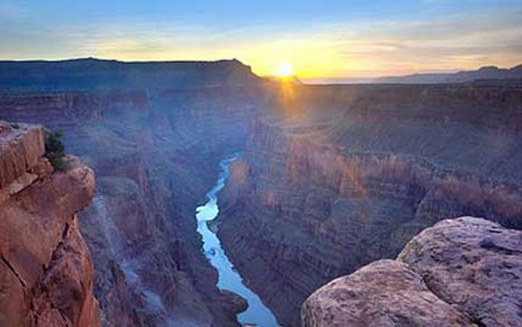
 Documentary Short: How Uranium Mining Threatens The Grand Canyon http://thinkprogress.org/climate/2012/07/11/515109/documentary-short-how-uranium-mining-threatens-the-grand-canyon/?mobile=nc By Public Lands Team on Jul 11, 2012 By Jessica Goad
Today the Center for American Progress and the Sierra Club released a series of short documentary videos called “Public Lands, Private Profits .”
One of the stories, “A Grand Threat ,” profiles the new rush to extract uranium around Grand Canyon National Park. A Canadian company is currently excavating uranium at one mine on the north rim of the canyon, and it has plans for more mines in the near future.
Although Secretary of the Interior Ken Salazar set one million acres off-limits to mineral extraction this past January, that decision applied only to new mining claims, not those already in existence. There are approximately 3,500 mining claims that may be valid — potentially resulting in up to 11 uranium mines near the Grand Canyon.
Shockingly, these new mines are moving forward under environmental studies and plans of operation last approved in the 1980s. Although the Interior Department and the Forest Service have full authority to demand updated environmental reviews, they have not taken that step.
And just two weeks ago, Kaibab National Forest Supervisor Mike Williams agreed to let Denison move forward with its plans to develop the Canyon Mine (featured in the video) under environmental and cultural impact studies from 1986.
Last week, Denison Mines sold its U.S. assets to Energy Fuels Incorporated. Denison declined to comment, but Energy Fuels explained that it is “highly cognizant ” of the responsibilities of mining in the region.
Opponents of uranium mining fear that any water pollution could take years to clean up. To find out more about this issue or to take action, visit the Sierra Club’s website .
$26 million just to find out how much 2 nuclear reactors might cost
TORONTO – It’s like giving the cashier at Tim Hortons a penny to find out how much a cup of coffee costs.CNews 11 July 12,
Ontario Power Generation (OPG) has agreed to pay two prospective reactor builders $26 million to come up with an estimate on how much two new nuclear reactors at the Darlington Generating Station would cost, Energy Minister Chris Bentley told a Queen’s Park committee
Wednesday. Continue reading
USA: Atomic Safety and Licensing Board rules that Pilgrim Watch cannot challenge NRC’s safety rulings
Judges rule against nuclear plant foes http://www.capecodonline.com/apps/pbcs.dll/article?AID=/20120711/NEWS/207110334/-1/NEWSMAP by PATRICK CASSIDY, July 11, 2012 A panel of three judges on the federal Atomic Safety and Licensing Board has rejected a bid by opponents of the Pilgrim Nuclear Power Station in Plymouth to be heard on the response of U.S. nuclear regulators to the Fukushima Dai-ichi disaster last year in Japan.
Duxbury-based Pilgrim Watch had argued that orders issued after the earthquake- and tsunami-fueled nuclear meltdown did not go far enough.
In their ruling issued Tuesday the judges found that, based on judicial and U.S. Nuclear Regulatory Commission precedent, the enforcement orders issued by the NRC “are not open to challenge in an adjudicatory proceeding on Pilgrim Watch’s claim of inadequacy.”
Pilgrim Watch had challenged two orders from the NRC that required that all boiling-water reactors similar to Pilgrim and Fukushima have reliable venting systems and instrumentation to measure water levels in spent fuel pools.
Pilgrim Watch can appeal the ruling to the five-member NRC, according to agency spokesman Neil Sheehan. A group of 14 opponents of Pilgrim’s operations who were arrested for trespassing during a protest there in May are scheduled to appear today in Plymouth District Court.
South Africa’s Pelindaba facility remains a nuclear security danger
SA lags in nuclear security http://www.timeslive.co.za/thetimes/2012/07/12/sa-lags-in-nuclear-security Graeme Hosken | 12 July, 2012 A new report co-authored by a senior
Harvard academic has shed light on some of the security vulnerabilities of South Africa’s nuclear facilities.
Co-written by Harvard University associate professor and nuclear security specialist Matthew Bunn, Progress on Securing Nuclear Weapons and Materials: The Four-Year Effort and Beyond, examines nuclear-material security globally.
It reveals that, though South Africa has completed substantial security upgrades at its Pelindaba nuclear facility, and implemented regulations requiring the protection of nuclear sites against threats, these have yet to be formally enforced.
The report states that South Africa has not committed itself to eliminating hundreds of kilograms of weapons-grade highly enriched uranium.
It has yet to ratify an amendment to the Convention on the Physical Protection of Nuclear Material. The amendment is aimed at improving the physical protection of nuclear material and facilities, and reducing the vulnerability of states to the theft of nuclear material and to nuclear terrorism.
1 This Month

of the week – Shut Down Drone Warfare!


Tell the Ukrainian Government to Drop Prosecution of Peace Activist Yurii Sheliazhenko

Petition to revoke the licensing of the Near Surface Nuclear Disposal Facility (NSDF) at Chalk River. https://www.ourcommons.ca/petitions/en/Petition/Details?Petition=e-7247
To see nuclear-related stories in greater depth and intensity – go to https://nuclearinformation.wordpress.com
-
Archives
- April 2026 (114)
- March 2026 (251)
- February 2026 (268)
- January 2026 (308)
- December 2025 (358)
- November 2025 (359)
- October 2025 (376)
- September 2025 (257)
- August 2025 (319)
- July 2025 (230)
- June 2025 (348)
- May 2025 (261)
-
Categories
- 1
- 1 NUCLEAR ISSUES
- business and costs
- climate change
- culture and arts
- ENERGY
- environment
- health
- history
- indigenous issues
- Legal
- marketing of nuclear
- media
- opposition to nuclear
- PERSONAL STORIES
- politics
- politics international
- Religion and ethics
- safety
- secrets,lies and civil liberties
- spinbuster
- technology
- Uranium
- wastes
- weapons and war
- Women
- 2 WORLD
- ACTION
- AFRICA
- Atrocities
- AUSTRALIA
- Christina's notes
- Christina's themes
- culture and arts
- Events
- Fuk 2022
- Fuk 2023
- Fukushima 2017
- Fukushima 2018
- fukushima 2019
- Fukushima 2020
- Fukushima 2021
- general
- global warming
- Humour (God we need it)
- Nuclear
- RARE EARTHS
- Reference
- resources – print
- Resources -audiovicual
- Weekly Newsletter
- World
- World Nuclear
- YouTube
-
RSS
Entries RSS
Comments RSS
 nuclear-news