Indian Point nuclear plant has three times the radioactivity of Fukushima’s spent fuel pools.
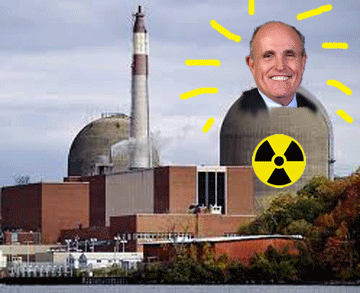 Wake Up and Smell the Radioactive Waste, OpEd News, 20 June 12, By Abby Luby“……Currently at Indian Point, 1,500 tons of high-level irradiated waste is stored in heavy steel and concrete casks on a tarmac a few hundred feet from the Hudson River. The Westchester-based plant produces about 30 tons of radioactive waste every 18 months, which is then crammed into two overcrowded, 40-foot deep spent fuel pools. Each pool holds about 1,000 tons of radioactive waste and has been leaking into the ground and river for years. However, the NRC has maintained that whatever leaches into the river is negligible, reiterating their catch phrase: “Dilution is the solution to pollution.”….
In a study by the Institute for Policy Studies, “Spent Nuclear Fuel Pools in the U.S.: Reducing the Deadly Risks of Storage,” Robert Alvarez, author and senior scholar for nuclear policy, said that Indian Point has three times the radioactivity of Fukushima’s spent fuel pools.
Indian Point is about 30 miles from Manhattan. A 1997 analysis, the Brookhaven National Laboratory [ http://pbadupws.nrc.gov/docs/ML0230/ML023040470.pdf – page 4] estimated a severe fire in a spent-fuel pool would release enough radioactive material to cause as many as 28,000 cancer deaths in a densely populated area and render 188 square miles uninhabitable.
In light of the Fukushima disaster and the potential for future leakage and catastrophic fires, the court ruled that the NRC’s analysis of the impacts of spent fuel storage was insufficient and is now requiring the agency to reassess the environmental impacts of the waste storage. Now it’s up to the NRC to heed the court and truly “protect the health and safety of the public.” http://www.opednews.com/articles/Wake-Up–Smell-the-Radioa-by-Abby-Luby-120614-180.html
No comments yet.
1 This Month

of the week – Shut Down Drone Warfare!


Tell the Ukrainian Government to Drop Prosecution of Peace Activist Yurii Sheliazhenko

Petition to revoke the licensing of the Near Surface Nuclear Disposal Facility (NSDF) at Chalk River. https://www.ourcommons.ca/petitions/en/Petition/Details?Petition=e-7247
To see nuclear-related stories in greater depth and intensity – go to https://nuclearinformation.wordpress.com
-
Archives
- March 2026 (244)
- February 2026 (268)
- January 2026 (308)
- December 2025 (358)
- November 2025 (359)
- October 2025 (376)
- September 2025 (257)
- August 2025 (319)
- July 2025 (230)
- June 2025 (348)
- May 2025 (261)
- April 2025 (305)
-
Categories
- 1
- 1 NUCLEAR ISSUES
- business and costs
- climate change
- culture and arts
- ENERGY
- environment
- health
- history
- indigenous issues
- Legal
- marketing of nuclear
- media
- opposition to nuclear
- PERSONAL STORIES
- politics
- politics international
- Religion and ethics
- safety
- secrets,lies and civil liberties
- spinbuster
- technology
- Uranium
- wastes
- weapons and war
- Women
- 2 WORLD
- ACTION
- AFRICA
- Atrocities
- AUSTRALIA
- Christina's notes
- Christina's themes
- culture and arts
- Events
- Fuk 2022
- Fuk 2023
- Fukushima 2017
- Fukushima 2018
- fukushima 2019
- Fukushima 2020
- Fukushima 2021
- general
- global warming
- Humour (God we need it)
- Nuclear
- RARE EARTHS
- Reference
- resources – print
- Resources -audiovicual
- Weekly Newsletter
- World
- World Nuclear
- YouTube
-
RSS
Entries RSS
Comments RSS
 nuclear-news
Leave a comment