Japan’s nuclear shutdown and political uncertainty
Japan plays nuclear power politics, Star Tribune, by: THE ECONOMIST May 7, 2012
“…….So powerful is the symbolism of having no nuclear plants in operation that Prime Minister Yoshihiko Noda has tried to get at least two reactors back up and running. He has failed, and now his political opponents may try to make capital out of this
…….What both main parties fear is that the nuclear debate could become an electoral issue in what promises to be a stormy summer……
The government’s attempt to restart the reactors comes even before a new regulatory body has been established with the transparency, independence and technical ability that its predecessors lacked. It comes before any attempt has been made to clarify the chain of command for handling such accidents Continue reading
Majority of Japanese would choose energy restrictions rather than restart nuclear power
the survey shows 61 percent of people in the Kinki region, which is expected to face the most serious power shortage, say they “can endure” such restrictions. Seventy-ninepercent of people in the Kanto region, which took sweeping energy-saving measures last summer, also say they can put up with restricted use of power. Meanwhile, more than 70 percent of peoplepolled elsewhere in the country say they can live with such restrictions…..
63% of Japanese citizens say ‘no’ to restarting of Oi nuclear reactors: Mainichi poll. 8 May 12, Sixty-three percent of Japanese people stand against reactivating two idled reactors at the Oi Nuclear Power Plant in Fukui Prefecture, and 74 percent say they “can endure” restricted use of electricity in the summer, a nationwide survey conducted by the Mainichi shows, suggesting that the general public is becoming increasingly in favor of breaking away from nuclear power generation. Continue reading
Radiation hotspots in North Eastern schools in Japan
Japanese schools have radiation hotspots after nuclear disaster Chicago Tribune, May 7, 2012 TOKYO — Schools in north-eastern Japan are suffering from radiation hotspots more than one year after reactor meltdowns at a nuclear power station, a media report said Monday. Continue reading
South Africa urged to not be a sucker for the nuclear salesmen
Nuclear is so Third World; an expensive, hazardous, problematic technology for suckers. The French are the nuclear industry leaders and they are facing declining demand in the developed world. Francois Hollande’s victory yesterday is more bad news for the industry. They are now desperate to sell their technology to corruptible developing countries especially the aspirational Brics.
Why SA should say no to nuclear energy, Politics Web, Brent Meersman 08 May 2012 Brent Meersman says the cost is simply prohibitive and the time frame impossible
Our government, it seems, may be dangerously close to repeating the e-toll fiasco with nuclear energy. As with e-tolls, by the time the pubic wakes up to its implications and how it effects them, the contracts are signed and the citizenry is on the hook for billions. Continue reading
Loss and share price fall for Denison uranium miner
Uranium miner Denison Mines reports US$52-million first-quarter loss
By: The Canadian Press 05/9/2012 TORONTO – Denison Mines Corp. (TSX:DML) reported Wednesday a loss of US$52 million in the first quarter as it took a $44-million writedown on its U.S. assets and operations which it is selling.
The uranium miner, which keeps its books in U.S. dollars, said the loss amounted to 14 cents per share for the quarter ended March 31 compared with a loss of $7.1 million or two cents per share a year ago..
.. Shares in the company, which reported its results after the close of markets, were down four cents at $1.57 on the Toronto Stock Exchange on Wednesday.
Public opposition holds up Lynas’ rare earths processing plans for Malaysia
the expanding protest movement …… has already delayed the project by eight months and cast a shadow over its future.
The resistance – fed by social networks and Malaysia’s increasingly lively independent online media – also raises broader questions over the global expansion of an industry that has created huge environmental problems in China
Opponents say the Lynas plant doesn’t meet with best practice standards for the industry as it is too close to heavily populated areas and in a place where the ground water level is high. Molycorp’s plant in California, by comparison, is situated far from residential areas in an arid climate.
Citizen backlash keeps Malaysia rare earth plant on hold, The West, Siva Sithraputhran, Reuters May 9, 2012 GEBENG, Malaysia – The expensive machinery lies silent, idling as Malaysia’s government weighs a delicate decision to allow shipments of raw material to arrive from Australia and finally start operations at the world’s largest rare earths plant outside China. Continue reading
New Vogtle nuclear reactor – delays and unexpected costs
Utility: Building schedule slips on Ga. nuke plant The Telegraph, Middle Georgia, By RAY HENRY — Associated Press May 9, 2012 The timeline for building a first-of-its-kind nuclear plant in Georgia has slipped seven months, while the Southern Co. faces a dispute over who should pay for $400 million in unanticipated costs, utility executives said Wednesday. Continue reading
Pro nuclear Kristine L. Svinicki to stay on Nuclear Regulatory Commission
Obama nominates Svinicki to nuclear regulatory post despite objections from a top Democrat, Washington Post, By Associated Press, May 8 WASHINGTON — President Barack Obama nominated Kristine L. Svinicki for a new term on the Nuclear Regulatory Commission on Tuesday despite objections from Senate Majority Leader Harry Reid…
.. The Nuclear Energy Institute, an industry lobbying group, applauded Svinicki’s nomination to a new term…… http://www.washingtonpost.com/business/obama-nominates-svinicki-to-nuclear-regulatory-post-despite-objections-from-a-top-democrat/2012/05/08/gIQA2cjOBU_story.html
Legal battle over Yucca nuclear waste plan
 Yucca lives? Nuclear waste dump not dead yet. Vegas Review Journal, 7 May 12 “…..Last week, a federal appeals court heard arguments on whether the Nuclear Regulatory Commission broke the law when it stopped moving forward with a licensing plan for the potential nuclear waste dump 90 miles northwest of Las Vegas…
… The case before a three-judge panel of the U.S. Court of Appeals for the District of
Columbia involved a lawsuit filed by states – including Washington and South Carolina – that seek to get rid of nuclear waste currently being stored at power plants within their boundaries.
At issue is whether the Obama administration overstepped its authority by canceling the Yucca Mountain Project in 2009, leading the Nuclear Regulatory Commission to abandon licensing hearings.
The states argue that Congress has never repealed the 1982 legislation that created the project – known here as the Screw Nevada bill – so the process must go forward by law…… A ruling is expected later this year. Perhaps the judges will agree that Congress has essentially acted by refusing to appropriate funds for the endeavor in the current budget year. If not, the Yucca Mountain battle may continue.
http://www.lvrj.com/opinion/yucca-lives-nuclear-waste-dump-not-dead-yet-150557735.html
No timetable for restarting San Onofre nuclear plant
 Official: Nuclear plant will be offline, Silicon Valley Mercury News, By Associated Press 05/07/2012 LOS ANGELES — The chairman of the Nuclear Regulatory Commission said Monday there is no timetable for restarting the sidelined San Onofre nuclear plant on the Southern California coast, where investigators are trying to determine the cause of unusual wear on hundreds of tubes that carry radioactive water. Continue reading
It could be ‘game over’ for the nuclear industry in Japan, and beyond
We are on the cusp of a solar revolution. One third of our global electricity consumption occurs during hours where solar power production is occurring. Meaning we can deliver solar for 33 per cent of the world’s electricity without even considering storage.
Wind power is coming down in price too, due to innovation, efficiency, and the scale up of projects and technology. As is the maturing Chinese wind industry. China is already aiming for 18 per cent wind power in its total energy supply mix by 2025 and 50GW of solar by
2020.
The end of nuclear, CLIMATE SPECTATOR, Matthew Wright , 8 May 2012 “…….The ongoing fallout of the Fukushima disaster means one of the world’s leading industrial powerhouses has taken a big hit. The sun has set on plans for new reactors to increase nuclear capacity in Japan to 50 per cent.
If electricity supply remains stable through the coming summer without any nuclear restarts then it will be game over for the nuclear utility industry in Japan. This is quite possible given that local governments and popular opinion are against restarts. Continue reading
Delay licensing Pilgrim nuclear reactor, urge politicians
Politicians urge the NRC to further prolong its review of the Pilgrim nuclear reactor’s license, Mass. Market, 2012 May 7 by Jon Chesto Now that the Nuclear Regulatory Commission could be on the verge of finally renewing the license for the Pilgrim nuclear power plant, a number of prominent Bay State politicians have been lining up to support Mary Lampert’s cause.
Lampert, of course, is the chief ringleader behind the Pilgrim Watch advocacy group and arguably the biggest reason it has taken the NRC more than six years (setting a new record) to review the Plymouth plant’s relicensing request.
Lampert and her allies still have unresolved contentions before the NRC. But the agency’s staff is recommending to the commission that oversees the agency that Entergy Corp., Pilgrim’s owner, be given the green light for Pilgrim anyway.
That recommendation prompted several politicians to urge the NRC to put the brakes on the license renewal, at least until every pending issue is resolved. The politicians who sent letters to NRC chairman Gregory Jaczko in the last week about Pilgrim include U.S. Rep. Edward Markey, a Democrat who specializes in energy issues; U.S. Rep. Bill Keating, the Democrat who represents Cape Cod and much of the South Shore in Congress; state Rep. Bob Hedlund, a Republican from the South Shore; and Cape Cod lawmakers Rep. Sarah Peake and Sen. Dan Wolf. Politicians urge the NRC to further prolong its review of the Pilgrim nuclear reactor’s license | Mass. Market http://blogs.wickedlocal.com/massmarkets/2012/05/07/politicians-urge-the-nrc-to-further-prolong-its-review-of-the-pilgrim-nuclear-reactors-license/#ixzz1uM8saHzu
Anti radiation pills given to residents near nuclear reactors – just in case
Radiation-blocking potassium iodide pills to be distributed to those within 10 miles of PSEG Nuclear’s generating complex, NJ.com, , May 07, 2012, By Bill Gallo Jr LOWER ALLOWAYS CREEK TWP. — Residents living within 10 miles of the Artificial Island nuclear generating complex can pick up a fresh supply of radiation-blocking potassium iodide pills here this week.
The Salem County Health Department will distribute the potassium iodide, or KI, tablets at the Lower Alloways Creek Municipal Building on Wednesday from 2 to 6:30 p.m.
KI can stop the thyroid from absorbing radioactive iodine, which can cause thyroid cancer, from radiation released from a nuclear power plant during an emergency…. LAC is home to three reactors operated by PSEG Nuclear — Salem 1, Salem 2 and Hope Creek. The plants comprise the second largest nuclear generating complex in the United States.
Areas that lie within the 10-mile radius from the Island in Salem County are Elsinboro and Lower Alloways Creek townships, Salem City and part of Pennsville , Mannington and Quinton townships.
Officials estimate there are approximately 15,810 people on average within the 10-mile radius from the plants, known as the emergency planning zone, in Salem and Cumberland counties during the daytime. ….. http://www.nj.com/salem/index.ssf/2012/05/radiation-blocking_potassium_i_1.html .
Vladimir Putin again takes hold of the nuclear warfare suitcase
Putin takes back Russia’s nuclear button, Channel New Asia, 07 May 2012 MOSCOW: Russia’s newly sworn-in President Vladimir Putin Monday was handed the black suitcase Monday that controls the country’s vast nuclear arsenal moments after taking his oath to a third term. Continue reading
1 This Month
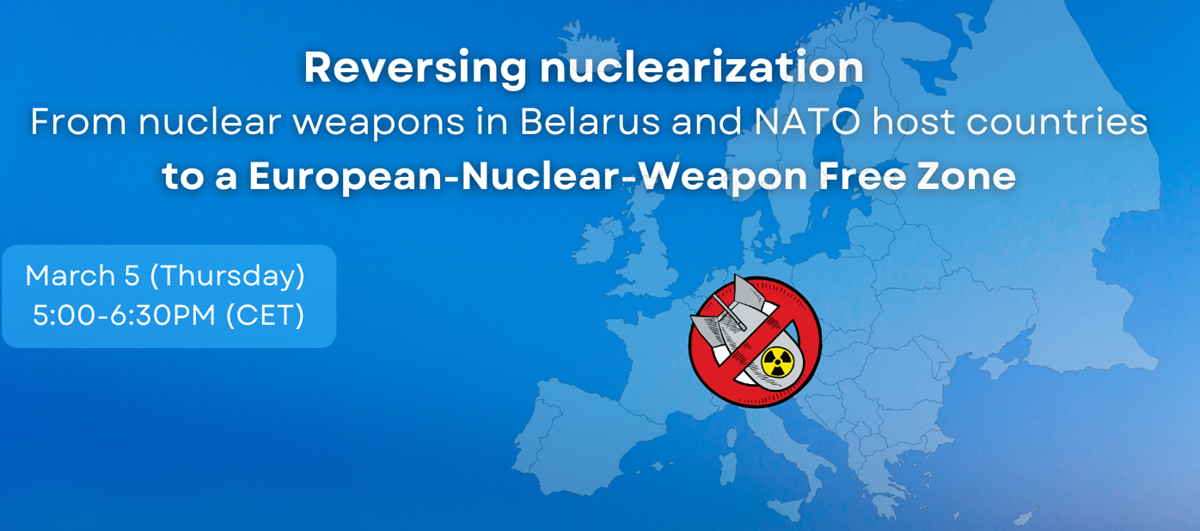
5 March -Online – Reversing nuclearization:
From nuclear weapons in Belarus and NATO host countries to a European-Nuclear-Weapon Free Zone
11am-12:30pm Eastern Time USA / 5pm-6:30pm CET

of the week – Advocating for a
nuclear free beach – https://www.samuellawrencefoundation.org/
The Samuel Lawrence Foundation advocates for a Nuclear Waste Free Beach at San Onofre, join us and take action!

10 March A LIVE WEBINAR THE REAL EFFECTS OF NUCLEAR POWER
What the Industry Isn’t Telling Us
1:00 PM Mountain, 2 pm Central, 3 pm Eastern. Live on the Keepers of the Water Facebook page

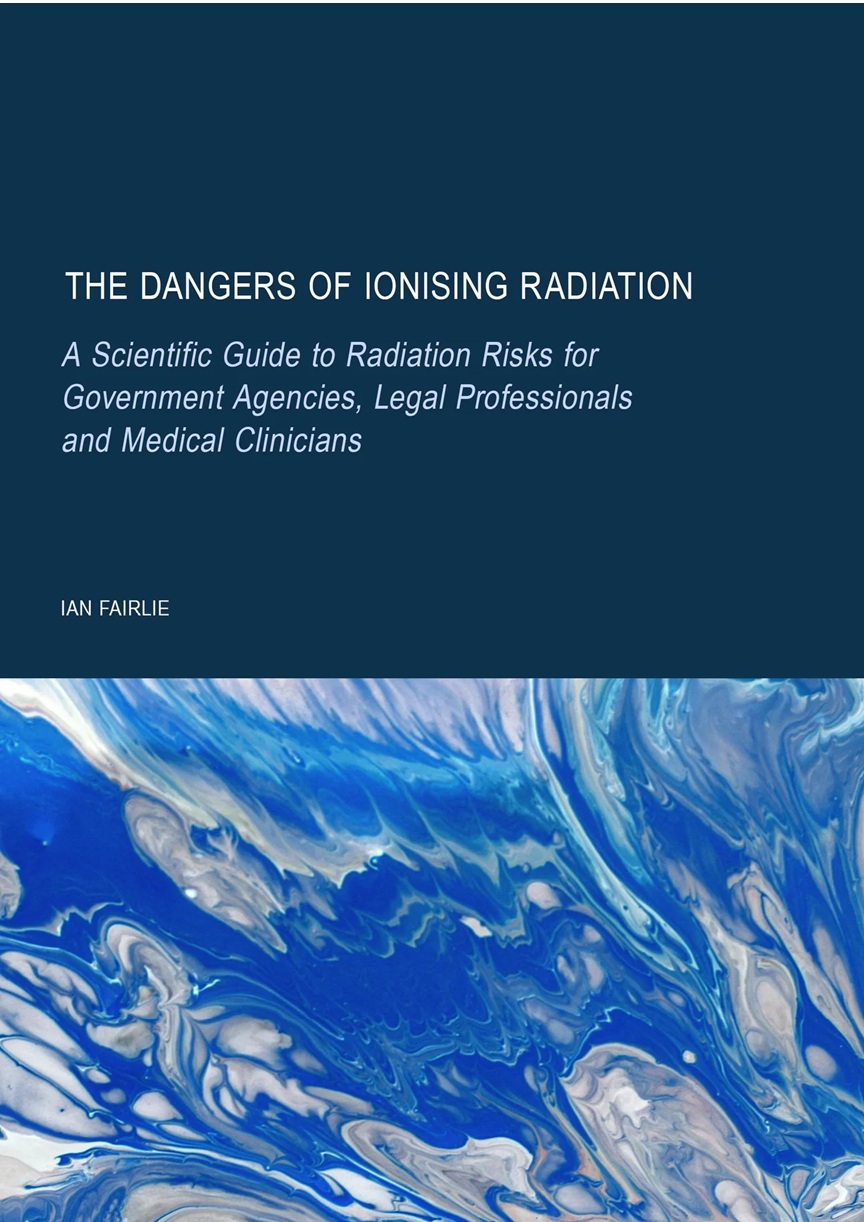
18 March Webinar @ 1 PM EST: An Assessment of SMR Projects: The Case of Canada
register for the zoom:
https://us02web.zoom.us/webinar/register/WN_o8BIIOUvQ2ONJR1nta65DQ#/registration

of the week – STOP SMALL MODULAR REACTORS IN CANADA
To see nuclear-related stories in greater depth and intensity – go to https://nuclearinformation.wordpress.com
-
Archives
- March 2026 (51)
- February 2026 (268)
- January 2026 (308)
- December 2025 (358)
- November 2025 (359)
- October 2025 (376)
- September 2025 (258)
- August 2025 (319)
- July 2025 (230)
- June 2025 (348)
- May 2025 (261)
- April 2025 (305)
-
Categories
- 1
- 1 NUCLEAR ISSUES
- business and costs
- climate change
- culture and arts
- ENERGY
- environment
- health
- history
- indigenous issues
- Legal
- marketing of nuclear
- media
- opposition to nuclear
- PERSONAL STORIES
- politics
- politics international
- Religion and ethics
- safety
- secrets,lies and civil liberties
- spinbuster
- technology
- Uranium
- wastes
- weapons and war
- Women
- 2 WORLD
- ACTION
- AFRICA
- Atrocities
- AUSTRALIA
- Christina's notes
- Christina's themes
- culture and arts
- Events
- Fuk 2022
- Fuk 2023
- Fukushima 2017
- Fukushima 2018
- fukushima 2019
- Fukushima 2020
- Fukushima 2021
- general
- global warming
- Humour (God we need it)
- Nuclear
- RARE EARTHS
- Reference
- resources – print
- Resources -audiovicual
- Weekly Newsletter
- World
- World Nuclear
- YouTube
-
RSS
Entries RSS
Comments RSS
 nuclear-news