Caution urged on medical radiation for children
Too much radiation from medical testing is a growing concern, especially for children, because it may increase the risk of cancer later in life.
While there’s no generally accepted safe lifetime radiation dose for children, Schulman tells parents to keep a list of their child’s medical scans – and pull it out every time a 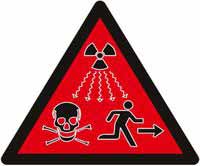 doctor considers ordering another one. That’s especially helpful for children with chronic diseases, who truly need more medical scans than the average youngster.
 FDA urges a lower dose of radiation when child undergoes medical scan Boston Globe, By Lauran Neergaard | ASSOCIATED PRESS MAY 10, 2012 WASHINGTON – When your child’s doctor orders a CT scan, X-ray, or similar test, there are two big questions: Is the scan really needed? And if so, will it deliver a child-sized or adult-sized dose of radiation?
That was the message from the Food and Drug Administration on Wednesday as it took steps to help protect children from getting unneeded radiation from these increasingly common tests.
The FDA is pushing manufacturers to design new scanners to minimize
radiation exposure for the youngest, smallest patients. And it posted
advice on the Internet urging parents to speak up when a doctor orders
a scan – to ask if it’s the best option or if there’s a radiation-free
alternative – and to track how many their child receives.
Too much radiation from medical testing is a growing concern, especially for children, because it may increase the risk of cancer later in life.
Specialists welcomed the FDA’s steps. “We know imaging is extremely
valuable, but we can probably do it with less radiation,’’ said Dr.
Dorothy Bulas of Children’s National Medical Center in Washington,
past president of the Society for Pediatric Radiology.
The use of CT scans, which show more detail than standard X-rays but
entail far more radiation, and other X-ray based medical imaging has
soared in recent years. The tests can be critical to a good diagnosis,
and specialists say people who really need one shouldn’t avoid it for
fear of future risk from radiation.
But research shows that too often the scans are unnecessary – they’re
given too frequently, for example, or in place of other tests that
don’t emit radiation. Children are of particular concern because their
rapidly growing tissues are more sensitive to radiation. Plus, they
have more years ahead of them for radiation-triggered cancers to
develop.
One recent study concluded the average child will receive more than
seven radiation-emitting scans by age 18.
And while pediatric hospitals routinely adjust scanner doses for
youngsters, 90 percent of child imaging is performed in general
hospitals – and the FDA said no one knows how many make those
adjustments…….
Dr. Marilyn Goske of Cincinnati Children’s Hospital, who chairs the
alliance, said the FDA’s move “puts the spotlight on children.’’
Doctors don’t keep track of how much radiation their patients receive
from testing. They just order a scan, and radiation exposure can vary
widely by the age and brand of machine, and the possible diagnosis. An
average CT of the head for an adult is equal to about 100 chest
X-rays, the FDA says, while a CT of the abdomen brings even more.
Radiologists don’t always need the crispest image. Often it’s quite
possible to diagnose while using a fraction of the typical radiation
dose, said Dr. Marta Hernanz-Schulman of Vanderbilt University, who
chairs the American College of Radiology’s pediatric imaging
commission.
While there’s no generally accepted safe lifetime radiation dose for
children, Schulman tells parents to keep a list of their child’s
medical scans – and pull it out every time a doctor considers ordering
another one. That’s especially helpful for children with chronic
diseases, who truly need more medical scans than the average
youngster. http://bostonglobe.com/news/nation/2012/05/09/fda-urges-lower-doses-radiation-for-kids-who-undergo-medical-scans/0RmKQhuDer9UDjhFl4gupI/story.html
No comments yet.
1 This Month



Tell the Ukrainian Government to Drop Prosecution of Peace Activist Yurii Sheliazhenko

Petition to revoke the licensing of the Near Surface Nuclear Disposal Facility (NSDF) at Chalk River. https://www.ourcommons.ca/petitions/en/Petition/Details?Petition=e-7247


of the week – STOP SMALL MODULAR REACTORS IN CANADA
To see nuclear-related stories in greater depth and intensity – go to https://nuclearinformation.wordpress.com
-
Archives
- March 2026 (222)
- February 2026 (268)
- January 2026 (308)
- December 2025 (358)
- November 2025 (359)
- October 2025 (376)
- September 2025 (258)
- August 2025 (319)
- July 2025 (230)
- June 2025 (348)
- May 2025 (261)
- April 2025 (305)
-
Categories
- 1
- 1 NUCLEAR ISSUES
- business and costs
- climate change
- culture and arts
- ENERGY
- environment
- health
- history
- indigenous issues
- Legal
- marketing of nuclear
- media
- opposition to nuclear
- PERSONAL STORIES
- politics
- politics international
- Religion and ethics
- safety
- secrets,lies and civil liberties
- spinbuster
- technology
- Uranium
- wastes
- weapons and war
- Women
- 2 WORLD
- ACTION
- AFRICA
- Atrocities
- AUSTRALIA
- Christina's notes
- Christina's themes
- culture and arts
- Events
- Fuk 2022
- Fuk 2023
- Fukushima 2017
- Fukushima 2018
- fukushima 2019
- Fukushima 2020
- Fukushima 2021
- general
- global warming
- Humour (God we need it)
- Nuclear
- RARE EARTHS
- Reference
- resources – print
- Resources -audiovicual
- Weekly Newsletter
- World
- World Nuclear
- YouTube
-
RSS
Entries RSS
Comments RSS
 nuclear-news
Leave a comment