60 years later, radiation from Mayak nuclear plant still taking its toll
 Many people we spoke to say they are being used as human guinea pigs. They talk of a secret government experiment looking at the effects of radiation exposure on humans.
They say they have to go to a hospital in Chelyabinsk, the regional capital around 50km away, for treatment of the various radiation related illnesses they suffer.
 Living in a nuclear hell, Aljazeera, By Charles Stratford in Europe , 2012-04-04 The town of Muslymovo has to be one of the saddest places on earth. The thousands of people who have little choice but to live here, on the banks of the Techa river not far from Russia’s
southern border with Kazakhstan, are the victims of a nuclear disaster that began more than six decades ago.
They are still suffering with the consequences of life next door to the Mayak nuclear plant – still dying from the radiation-related illnesses that have claimed the lives of so many before them. Continue reading
Health risks of cattle grazing on radioactively contaminated land
Uranium, Cattle Grazing and Risks Unknown NYT. By LESLIE MACMILLAN 4 April 12, As I reported last weekend in The Times, a cattle rancher stumbled upon an abandoned uranium mine in the summer of 2010 on his grazing land, about 60 miles east of the Grand Canyon on the Navajo reservation, and notified federal officials. They came in with Geiger counters and found levels of radioactivity that were alarmingly high.
A year and a half later, the former mine in Cameron, Ariz., is not fenced off to either humans or animals, and cattle continue to roam through the site and eat grass that might be tainted with uranium and other toxic substances.
“Those cattle go to auction in Sun Valley and are sold on the open market,” said Ronald Tohannie, a project manager with the Navajo advocacy groupForgotten People. “Then people eat the meat.” Continue reading
India’s nuclear bodies trample on civil liberties and natural justice
the DAE and NPCIL habitually behave as if they were a law unto themselves. … pre-emptive land acquisition, like imposition of unsafe projects on an unwilling people, violates natural justice. That’s nuclear power for you.

 Nuclear power and natural justice, By Praful Bidwai Apr 04 2012MyDigitalFC.com “…. India’s department of atomic energy (DAE), and its subsidiary, Nuclear Power Corporation of India (NPCIL), are blithely proceeding with a massive expansion of nuclear power generation even as they seek special exemptions under the Right to Information (RTI) Act.
They have proposed two amendments to the Act, which exempt sensitive information on radiation safety and commercially-sensitive information on technology-holders, and to
insulate the RTI Act from bodies to be created under the Nuclear Safety Regulatory Authority Bill to oversee nuclear facilities established for strategic and national defence purposes. Mercifully, central information commissioner Shailesh Gandhi has forcefully rejected these proposals.
Even more pernicious are the nuclear establishment’s moves to bypass or violate safety procedures, Continue reading
Addressing Climate Change: lessons from Indigenous Peoples
“Modern education and knowledge is mainly about how to better dominate nature. It is never about how to live harmoniously with nature.”
“Living well is all about keeping good relations with Mother Earth and not living by domination or extraction.”
Indigenous Peoples Can Show the Path to Low-Carbon Living If Their Land Rights Are Recognized http://newswatch.nationalgeographic.com/2012/04/04/indigenous-peoples-can-show-the-path-to-low-carbon-living-if-their-land-rights-are-recognized/ National Geographic, by Stephen Leahy in Climate Change and Indigenous Peoples April 4, 2012 Indigenous peoples are living examples of societies living, sustainable low-carbon lifestyles. Successfully meeting the global climate change challenge requires that much of the world shift from high carbon-living to low.

This shift is daunting. Current emissions for Australia and United States average about 20 tonnes of carbon dioxide per person. In the coming decades that needs to fall to two tonnes per person as it is currently in Brazil or Dominican Republic.
Emissions from most Indigenous peoples are even lower and are amongst the lowest in the world. Continue reading
Cost of building nuclear plants, and the risk of time and cost overruns
the issue of shifting the risk from the banks back to convincing consumers that they must bear the risk….
the Vogtle project for two AP1000 reactors supplied by Toshiba/Westinghouse, is in a state (Georgia) where the regulator is already allowing cost recovery, even before the start of serious construction…. It is unlikely there will be many more states with regulators willing and able to commit consumers to repay all the costs, especially if things go wrong at these sites
 Prospects for Nuclear Power in 2012, The Energy Report, 5 April 12 “…..Gen III+ Claims The nuclear industry would probably like to forget the claims it made for Generation III+ designs. In short, Gen III+ reactors would achieve the dream combination of being both safer and simpler, making them cheaper and easier to build. The expected overnight (excluding finance charges) construction cost was forecast to be no more than $1,000/kilowatt hour (KWh), so that a typical 1,500-megawatt (MW) nuclear power plant would cost $1.5 billion (B). This was much less than the few plants completed in the 1990s and, not by coincidence, a figure that meant power from new nuclear reactors would be competitive with power from gas-fired plants.
However, the $1,000/KWh promise quickly began to unravel, when the first order for a Gen III+ design, Olkiluoto in Finland, was priced in 2004 at more than double that level. Construction of the European Pressurized Reactor (EPR) supplied by French company Areva, and its only successor so far in the West, Flamanville in France, has descended into farce. Both plants are now five years over their expected construction time and the latest cost estimates are about double the level forecast at construction start. Most recent serious cost estimates and bids in the past few years for Gen III+ designs have been of the order of $6,000/KWh. Continue reading
A really INDEPENDENT radiation expert in Fukushima
Radiation expert takes on red tape in disaster zone, Japan Times, 5 April 12, Kyodo Shinzo Kimura, a radiation hygiene expert combating the nuclear contamination in Fukushima, is a man of action who stops at nothing to accomplish his mission Continue reading
10,000 new renewable energy jobs, in UK marine energy sector
 Positive Energy: Renewable Energy Sector set to Offer More Jobs, Report reed.co.uk, LONDON, April 5, 2012 /PRNewswire via COMTEX/ — Renewable energy sector could potentially offer up to 10,000 more jobs over the next eight years, predicts job site
Starting salaries are also set to rise in the industry Continue reading
USA Navy veterans were exposed to ionising radiation
Federal hearings confirm Navy veterans exposed to leaking radiation first revealed by News Channel 5 By: Ron Regan, newsnet5.com 5 April 12, SAN ANTONIO, Texas – Federal hearings confirm how Navy veterans were unwittingly exposed to leaking radiation that was first revealed in a series of exclusive 5 On Your Side investigations.
U.S. Navy veterans serving at McMurdo Station, Antarctica have long suspected that cancer deaths among those who served at the base in the 1960s and 70s may have been connected to a nuclear plant constructed at the base. Continue reading
UK and USA cannot ignore the economic effects of Fukushima
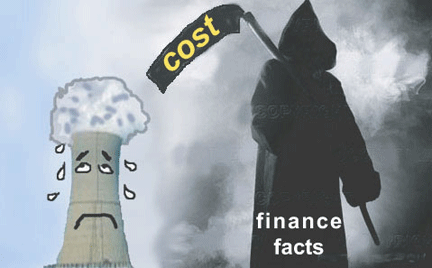

 Prospects for Nuclear Power in 2012, The Energy Report, 5 April 12 “Banks have signaled that they are unwilling to bear the risk of financing new nuclear projects, leaving three sets of interests that might be able to take it on: the utilities, the vendor or the consumer, in some form, via the state.”
Even before the Fukushima disaster, the long-awaited nuclear renaissance in the West seemed to be running out of steam. There were two main factors behind this failure; the new Generation III+ reactors produced to take account of the lessons of Chernobyl that would spearhead the revival were not living up to their promises, and, more importantly, banks were proving unwilling to provide finance.
The key markets for the renaissance were the U.S. and the UK. Continue reading
Japan’s nuclear utilities: debts piling up, banks nervous about funding
the latest setback over Tepco’s restructuring suggests even the mega banks are getting cold feet over providing unsecured loans to their utility clients.
Lights dim for Japan’s nuclear utilities, Reuters, By Mia Stubbs TOKYO, April 4 (IFR) – As the future of Tokyo Electric Power remains in question, concerns are building over how other nuclear power operating electric power companies (Epcos) will fund themselves going forward. Continue reading
Collapse of nuclear power projects for financial reasons
The long list of nuclear reactor projects cancelled due to lack of financing and shoddy economics just got longer. It has been this way for decades
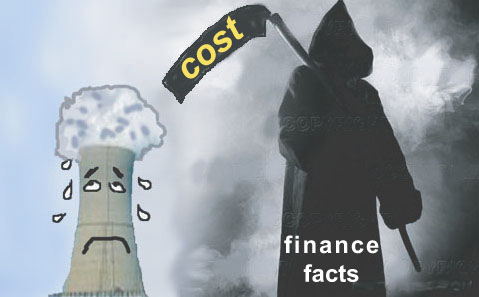 Double trouble for nuclear power: UK and Bulgaria projects collapse Greenpeace, by Justin McKeating – April 4, 2012 Yet more news in the past week about how bad an investment nuclear power is. In Bulgaria a plan to build a nuclear power plant was cancelled while in the UK plans to build two new plants were thrown into chaos.
First, on March 28, the Bulgarian government announced it was cancelling the Belene nuclear power plant, construction of which began way back in 1981. This brings to a successful close10 years of resistance to this bad idea. There were death threats against one of the key activists, Albena Simeonova, legal actions, and the involvement of hundreds of activists, volunteers, citizens, experts, politicians and civil servants.
The Bulgarian project finally collapsed over the issue of its cost. Continue reading
Nuclear power in China has a doubtful future
 Prospects for Nuclear Power in 2012, The Energy Report, 5 April 12, “…….China has dominated new nuclear plant orders in the past few years, accounting for 25 out of the 38 reactors on which construction started worldwide between 2008 and 2010. Six of these units were for Gen III+ designs, four AP1000s and two EPRs. Almost all the others used a design imported from France in the 1980s, which in turn had been licensed from Westinghouse in the early 1970s. This design, the CPR1000, is showing its age and there was an expectation, even before Fukushima, that the AP1000 would replace it. This would have been a huge boost to the AP1000, giving it the volume of orders that might have allowed costs to come down and for teething problems to be solved. The EPR, by contrast, appears to have no prospect of further orders in China.
However, there were signs that the strain of the rapid pace of construction was beginning to show. In 2011, no new starts were made, compared with 10 in 2010. Fukushima explains this to a degree, but some might have been expected in the first three months of 2011 before disaster struck. The reason behind the slowdown is the high cost of the AP1000. The large Chinese utilities appear to be looking at other options.
There is now talk of pursuing indigenous advanced designs developed from the CPR1000 as well as Small Modular Reactors (SMRs). China has always been adept at convincing nuclear suppliers that there was a great future for their particular technology in China. It is unclear whether talk of SMRs and new advanced designs will go any further. China is looking much less committed to nuclear power than it was a year ago.
There is also speculation that China may enter the export market on the entirely unsupported assumptions that its reactors will be cheap and that it can successfully build them away from home soil. South Africa is particularly enthusiastic about Chinese designs, but whether this enthusiasm can be turned into orders remains to be seen.
The reality is that China needs nuclear power much less than the nuclear industry needs China. ….” http://www.theenergyreport.com/pub/na/12441
Britain’s nuclear test veterans continuing their case in the courts
 our case is still live and on going .We have one case still proceeding to High Court another 1002 not yet statute barred and hearing before a Judge of almost 20 pension appeal cases
A Message from the Nuclear Veterans, Paul Langley’s Nuclear History Blog, Dennis Hayden, 5 April 12, THE DUST HAS SETTLED FOLLOWING THE SUPREME COURT DECISION. THE UK CASE IS STILL ON GOING & UK MINISTERS’ JOY WILL BE SHORT LIVED ”…… the Government and nuclear industry will do everything in their power to keep the UK Atomic Veterans Claimants case from a full court hearing on causation . Continue reading
Canada’s nuclear waste problem, risks to Lake Huron
In Canada’s 40-year nuclear power program, two million used fuel bundles have been created, enough to fill six hockey arenas. As Canada’s largest nuclear plant, about 50 per cent of that used nuclear waste is stored above ground at the Bruce plant…..

 Nuclear-waste dump proposal sparks protest in cottage country, Frances Barrick, The Record Apr 04 2012 SAUGEEN SHORES — The battles lines are drawn in Saugeen Shores over the contentious issue of whether this Lake Huron tourist community should be the site of Canada’s first underground repository for high-level nuclear waste.
“I can’t imagine why people would want to come here and vacation beside Canada’s nuclear waste dump,” Continue reading
Nuclear: no answer to climate change, the economics rule it out
 Climate change is kicking in; science tells us we need to make drastic cuts starting now. If nukes are to ride to the rescue, we need a few on the horizon now.
But the new fleet of reactors has not been built and won’t be, because Wall Street won’t fund them.
Why Nuclear Power Is Not the Answer to Global Warming, There is no “nuclear renaissance” and there won’t be: it just doesn’t
make sense economically. http://www.alternet.org environment/154854/why_nuclear_power_is_not_the answer_to_global_warming AlterNet, By Christian Parenti, 4 April 12, Despite the triple meltdown at Fukushima—which has driven tens of thousands of Japanese from their homes, cast radioactive fallout across the U.S., and will likely cost
the Japanese economy ¥50 trillion, or $623 billion—many desperate Greens now embrace nukes. They include Stewart Brand and George Monbiot. What drives these men is panic—a very legitimate fear that wewill trigger self-fueling runaway climate change.
There is no “nuclear renaissance” and there won’t be: it just doesn’t make sense economically. Continue reading
1 This Month
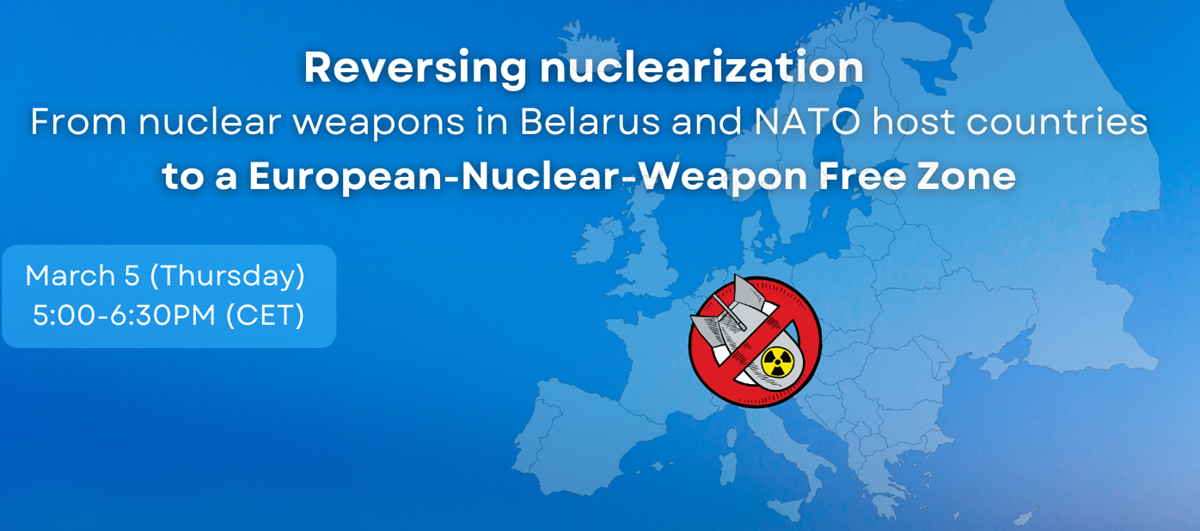
5 March -Online – Reversing nuclearization:
From nuclear weapons in Belarus and NATO host countries to a European-Nuclear-Weapon Free Zone
11am-12:30pm Eastern Time USA / 5pm-6:30pm CET

of the week – Advocating for a
nuclear free beach – https://www.samuellawrencefoundation.org/
The Samuel Lawrence Foundation advocates for a Nuclear Waste Free Beach at San Onofre, join us and take action!

10 March A LIVE WEBINAR THE REAL EFFECTS OF NUCLEAR POWER
What the Industry Isn’t Telling Us
1:00 PM Mountain, 2 pm Central, 3 pm Eastern. Live on the Keepers of the Water Facebook page

18 March Webinar @ 1 PM EST: An Assessment of SMR Projects: The Case of Canada
register for the zoom:
https://us02web.zoom.us/webinar/register/WN_o8BIIOUvQ2ONJR1nta65DQ#/registration

of the week – STOP SMALL MODULAR REACTORS IN CANADA
To see nuclear-related stories in greater depth and intensity – go to https://nuclearinformation.wordpress.com
-
Archives
- March 2026 (51)
- February 2026 (268)
- January 2026 (308)
- December 2025 (358)
- November 2025 (359)
- October 2025 (376)
- September 2025 (258)
- August 2025 (319)
- July 2025 (230)
- June 2025 (348)
- May 2025 (261)
- April 2025 (305)
-
Categories
- 1
- 1 NUCLEAR ISSUES
- business and costs
- climate change
- culture and arts
- ENERGY
- environment
- health
- history
- indigenous issues
- Legal
- marketing of nuclear
- media
- opposition to nuclear
- PERSONAL STORIES
- politics
- politics international
- Religion and ethics
- safety
- secrets,lies and civil liberties
- spinbuster
- technology
- Uranium
- wastes
- weapons and war
- Women
- 2 WORLD
- ACTION
- AFRICA
- Atrocities
- AUSTRALIA
- Christina's notes
- Christina's themes
- culture and arts
- Events
- Fuk 2022
- Fuk 2023
- Fukushima 2017
- Fukushima 2018
- fukushima 2019
- Fukushima 2020
- Fukushima 2021
- general
- global warming
- Humour (God we need it)
- Nuclear
- RARE EARTHS
- Reference
- resources – print
- Resources -audiovicual
- Weekly Newsletter
- World
- World Nuclear
- YouTube
-
RSS
Entries RSS
Comments RSS
 nuclear-news