Conflict of interest in India’s nuclear regulation
 In India, all Indian nuclear plants are in the public sector and so are the agencies that exercise regulatory functions and promotional responsibilities. In this situation, conflict of interest between regulation and promotion is inevitable.
How Fukushima is relevant to Kudankulam, THE HINDU, T. N. SRINIVASAN, T. S. GOPI RETHINARAJ, SURYA SETHI, 8 March 12, “……REGULATORY INDEPENDENCE The Fukushima accident highlighted the need for the independence of regulators from plant operators. The Atomic Energy Regulatory Board (AERB) has long been criticised for being subservient to DAE, the promoting organisation for nuclear power.
After Fukushima, the establishment of a truly independent regulator has been promised.
Currently, institutional deficiencies are structurally inbuilt and hard to eliminate. If they remain, the credibility and autonomy of the regulator cannot be ensured. Historically, nuclear policymaking in India was not transparent and involved only a handful of people in the
government.
The DAE has exploited this arrangement. Unfortunately, the
political leadership left the operational aspects of nuclear affairs
entirely to DAE without creating any institutional mechanism for
independent technical and policy advice on civilian as well as
military aspects.
A glaring example of DAE’s misuse of the Atomic Energy Act to escape
the scrutiny of regulator and courts over public safety concerns came
in the wake of the still unpublished 1996 AERB report. The report is
believed to have exposed how DAE had turned regulation into a farce
because of the cosy arrangement between the regulators and the
regulated. In India, all Indian nuclear plants are in the public
sector and so are the agencies that exercise regulatory functions and
promotional responsibilities. In this situation, conflict of interest
between regulation and promotion is inevitable. Their separation and
the creation of a statutory body for regulation are essential …..”
http://www.thehindu.com/opinion/lead/article2971209.ece?homepage=true
No comments yet.
1 This Month


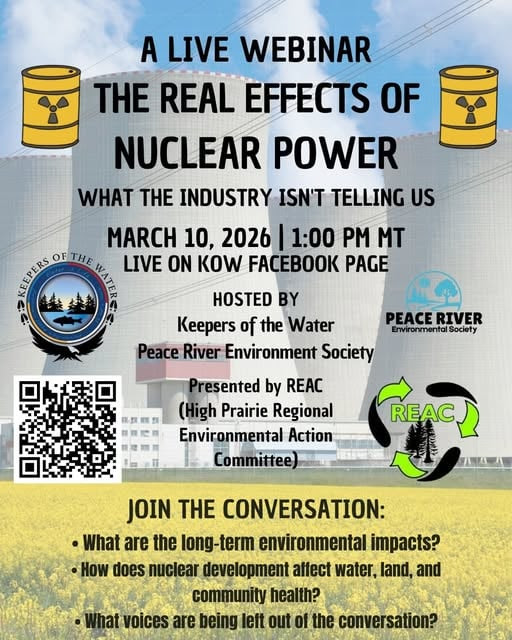
10 March A LIVE WEBINAR THE REAL EFFECTS OF NUCLEAR POWER
What the Industry Isn’t Telling Us
1:00 PM Mountain, 2 pm Central, 3 pm Eastern. Live on the Keepers of the Water Facebook page

18 March Webinar @ 1 PM EST: An Assessment of SMR Projects: The Case of Canada
register for the zoom:
https://us02web.zoom.us/webinar/register/WN_o8BIIOUvQ2ONJR1nta65DQ#/registration


of the week – STOP SMALL MODULAR REACTORS IN CANADA
To see nuclear-related stories in greater depth and intensity – go to https://nuclearinformation.wordpress.com
-
Archives
- March 2026 (76)
- February 2026 (268)
- January 2026 (308)
- December 2025 (358)
- November 2025 (359)
- October 2025 (376)
- September 2025 (258)
- August 2025 (319)
- July 2025 (230)
- June 2025 (348)
- May 2025 (261)
- April 2025 (305)
-
Categories
- 1
- 1 NUCLEAR ISSUES
- business and costs
- climate change
- culture and arts
- ENERGY
- environment
- health
- history
- indigenous issues
- Legal
- marketing of nuclear
- media
- opposition to nuclear
- PERSONAL STORIES
- politics
- politics international
- Religion and ethics
- safety
- secrets,lies and civil liberties
- spinbuster
- technology
- Uranium
- wastes
- weapons and war
- Women
- 2 WORLD
- ACTION
- AFRICA
- Atrocities
- AUSTRALIA
- Christina's notes
- Christina's themes
- culture and arts
- Events
- Fuk 2022
- Fuk 2023
- Fukushima 2017
- Fukushima 2018
- fukushima 2019
- Fukushima 2020
- Fukushima 2021
- general
- global warming
- Humour (God we need it)
- Nuclear
- RARE EARTHS
- Reference
- resources – print
- Resources -audiovicual
- Weekly Newsletter
- World
- World Nuclear
- YouTube
-
RSS
Entries RSS
Comments RSS
 nuclear-news
Leave a comment