Radiation around Fukushima still at uinhabitable levels
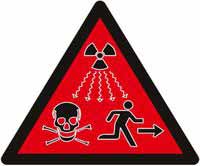 Radiation still high around Fukushima No. 1 http://www.japantimes.co.jp/text/nn20120226a5.html Japan Times, , Feb. 26, 2012, Kyodo High levels of radiation, including a rate of 470 millisieverts per year at one location, have been detected in municipalities near the Fukushima No. 1 nuclear power plant, according to an interim Environment Ministry report. A survey conducted from Nov. 7 to Jan. 16 showed that the readings topped 50 millisieverts on an annual basis — a level deemed uninhabitable under a proposed new classification — in many spots north-northwest of the crippled power station.
The highest level of 470 millisieverts was logged northwest of the
plant at a spot in Futaba, Fukushima Prefecture, while the lowest
level of 5.8 millisieverts was detected in another part of the same
town, the ministry said.
The results were similar to those of an earlier science ministry
survey that used aircraft. The Environment Ministry plans to compile a
final report on the survey by the end of March.
The government will use the data to reclassify the exclusion zone and
the zone where people have been on evacuation alert into three
categories in April.
The first category will be uninhabitable areas with annual radiation
levels of 50 millisieverts or more.
The second will cover areas with levels between 20 and 50
millisieverts where access will be limited.
The third will designate areas with levels below 20 millisieverts
where residents will be allowed to return in stages.
Meanwhile, the Environment Ministry said that high levels of
radioactive cesium have been detected in ash and firewood in eight
prefectures in the Tohoku and Kanto regions, with the highest reading
— 240,000 becquerels per kilogram — measured in ash from a household
in Minamisoma, Fukushima Prefecture. The survey on ash and firewood
from 65 households also found a reading of 163,000 becquerels of
cesium in ash from a household in Kawamata, Fukushima Prefecture.
Under current regulations, waste with radiation levels exceeding
100,000 becquerels must be kept at a disposal site and sealed with
reinforced concrete to keep out rainwater.
No comments yet.
1 This Month


10 March A LIVE WEBINAR THE REAL EFFECTS OF NUCLEAR POWER
What the Industry Isn’t Telling Us
1:00 PM Mountain, 2 pm Central, 3 pm Eastern. Live on the Keepers of the Water Facebook page


18 March Webinar @ 1 PM EST: An Assessment of SMR Projects: The Case of Canada
register for the zoom:
https://us02web.zoom.us/webinar/register/WN_o8BIIOUvQ2ONJR1nta65DQ#/registration


of the week – STOP SMALL MODULAR REACTORS IN CANADA
To see nuclear-related stories in greater depth and intensity – go to https://nuclearinformation.wordpress.com
-
Archives
- March 2026 (76)
- February 2026 (268)
- January 2026 (308)
- December 2025 (358)
- November 2025 (359)
- October 2025 (376)
- September 2025 (258)
- August 2025 (319)
- July 2025 (230)
- June 2025 (348)
- May 2025 (261)
- April 2025 (305)
-
Categories
- 1
- 1 NUCLEAR ISSUES
- business and costs
- climate change
- culture and arts
- ENERGY
- environment
- health
- history
- indigenous issues
- Legal
- marketing of nuclear
- media
- opposition to nuclear
- PERSONAL STORIES
- politics
- politics international
- Religion and ethics
- safety
- secrets,lies and civil liberties
- spinbuster
- technology
- Uranium
- wastes
- weapons and war
- Women
- 2 WORLD
- ACTION
- AFRICA
- Atrocities
- AUSTRALIA
- Christina's notes
- Christina's themes
- culture and arts
- Events
- Fuk 2022
- Fuk 2023
- Fukushima 2017
- Fukushima 2018
- fukushima 2019
- Fukushima 2020
- Fukushima 2021
- general
- global warming
- Humour (God we need it)
- Nuclear
- RARE EARTHS
- Reference
- resources – print
- Resources -audiovicual
- Weekly Newsletter
- World
- World Nuclear
- YouTube
-
RSS
Entries RSS
Comments RSS
 nuclear-news
Leave a comment