Radiation around Fukushima still at uinhabitable levels
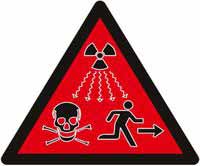 Radiation still high around Fukushima No. 1 http://www.japantimes.co.jp/text/nn20120226a5.html Japan Times, , Feb. 26, 2012, Kyodo High levels of radiation, including a rate of 470 millisieverts per year at one location, have been detected in municipalities near the Fukushima No. 1 nuclear power plant, according to an interim Environment Ministry report. A survey conducted from Nov. 7 to Jan. 16 showed that the readings topped 50 millisieverts on an annual basis — a level deemed uninhabitable under a proposed new classification — in many spots north-northwest of the crippled power station. Continue reading
India’s P.M. blames anti nuclear activists for his government’s paralysis
Dr Singh’s statement was rejected by a coalition of women, fishermen and farmers from 17 villages that have been protesting against the plant. ”By making these absurd allegations, he is diverting everybody’s attention from the real issues here,” activist V. Pushparayan said.
 Indian government paralysed, but PM blames others, The Age Rama Lakshmi, February 26, 2012 FIRST it was the fault of the news media, then of his coalition partners, but now Indian Prime Minister Manmohan Singh is blaming someone else for his government’s inability to carry out planned projects.
On Friday, Dr Singh raised the Cold War-era bogy of the ”foreign hand”, accusing US and Scandinavian non-government organisations of stalling the commissioning of a nuclear power plant in southern India and delaying implementation of government plans to commercialise genetically modified crops by supporting protest groups.
His comments attracted a barrage of criticism….. Continue reading
Political and public opposition to Lynas’ rare earths plant for Malaysia
 Opposition leader Anwar Ibrahim said his alliance would seek an emergency motion in Parliament to urge the government to cancel the project. He also pledged the opposition would scrap the plant if it wins national polls expected by June.
Malaysia’s last rare earth refinery by Japan’s Mitsubishi group, in northern Perak state, was closed in 1992 following protests and claims that it caused birth defects and leukemia among residents. It is one of Asia’s largest radioactive waste cleanup sites.

 3,000 Malaysians rally against Australian-built rare earth plant amid radiation fears Washington Post, By Associated Press, February 25 KUALA LUMPUR, Malaysia — Some 3,000 Malaysians staged a protest Sunday against a rare earth refinery being built by Australian miner Lynas over fears of radioactive contamination.
It marked the largest rally against the $230 million plant in eastern Malaysia, and could pose a headache to the government ahead of national elections widely expected this year. Authorities recently granted Lynas a license to operate the first rare earths plant outside China in years. The plant in Pahang state has been the subject of heated protests over health and environmental risks posed by potential leaks of radioactive waste…..
Opposition leader Anwar Ibrahim said his alliance would seek an emergency motion in Parliament to urge the government to cancel the project. He also pledged the opposition would scrap the plant if it wins national polls expected by June. Continue reading
Coming geological extreme events (not good for nuclear reactors)
Climate change may stir geological mayhem  http://www.newscientist.com/blogs/culturelab/2012/02/climate-change-may-stir-geological-mayhem.html New Scientist, 23 February 2012 Fred Pearce, consultant In Waking the Giant: How a changing climate triggers earthquakes, tsunamis, and volcanoes, geologist Bill McGuire warns we may be waking primordial monsters
IN 2006, London geologist Bill McGuire argued in New Scientist that global warming would trigger epidemics of volcanic eruptions, earthquakes and tsunamis. Now he’s written the book. The story is even scarier writ large….. There is now abundant evidence that catastrophic outbursts of geological activity accompanied past periods
of rapid climate change, for instance, when we shifted in and out of ice ages. The stresses and strains of rising and falling sea levels and the creation and loss of ice sheets triggered these outbursts. Climate change, he says, may already be shaking up the Earth anew. Continue reading
India’s nuclear deal for the benefit of foreign commercial interests
 The “foreign hand” argument perhaps applies more to the government than to the people, Sarma said. “Is it not the foreign hand that was responsible for compelling the UPA government to push through the Indo-US nuclear deal to serve the commercial interests of another country more than promoting self-reliance?
 Anti-nuke groups slam PM remarks Deccan Herald, HYDERABAD/CHENNAI, Feb 26, 20012, Ex-secretary rubbishes foreign hand theory Prime Minister Manmohan Singh’s remarks that some foreign NGOs were behind the agitation against the Kudankulam Nuclear Power Project (KNPP) were rubbished by a former energy secretary at the Centre and drew a strong backlash with anti-nuclear groups organising a big rally in Chennai on Sunday.
Singh’s remarks in a TV interview that some US and Scandinavian NGOs obstructed India’s nuclear energy programme in the backdrop of the seven-month long agitation the nuclear power project in Tamil Nadu drew a sharp retort from former Union energy secretary E A S Sarma in Vishakhapatnam. He trashed the Prime Minister’s talk of “foreign hand” and made out a strong case for suspending the works on nuclear plants in the interests of the country’s future and safety. Continue reading
Analysis of the entrenched interests that control Japan’s nuclear industry
Containing Fukushima: Saving Japan From Itself (Part I) Huffington Post, K.T. Hiraoka Student of Japan working in the public sector 02/25/2012 The disaster at Fukushima last year exposed how entrenched interests among key decision-makers have contaminated Japanese society, endangering the long-term prosperity of Japan. These special interests often do what is right for themselves, as opposed to what is in the best interests of the Japanese people.

In this two-part series, discussion on what has transpired over the past twelve months as a result of decisions made related to the Fukushima disaster (Part I) will lead to a look at decision-making during the crisis in subsequent weeks and months that have passed (Part II). As the current decision-making system in Japan increasingly works to the detriment of Japanese society, what is needed instead is a more transparent, honest, and benevolent decision-making system that listens to the wishes of the people and responds to it…. http://www.huffingtonpost.com/kt-hiraoka/fukushima-anniversary_b_1299832.html
Containing Fukushima: Saving Japan From Itself (Part II) Huffington Post, K.T. Hiraoka Student of Japan working in the public sector 02/26/2012 Yesterday, in Part I of this series, we looked at “nakama” decision-making in Japan during the initial days of the Fukushima crisis. In Part II, the discussion continues with more evidence that the current decision-making system in Japan needs reform.
In the weeks and months since the March 2011 disaster, a plethora of examples have come to light confirming that the danger to Japan’s future lies from within. Throughout the peak of the crisis and as a result of the core meltdowns, Japan’s Iron Triangle continued to withhold information about the true nature of the massive radiation exposure in to the air and sea and on to the land throughout Japan. In the months following the huge radiation releases, consistent ‘underestimations’ of both the amount and types of radiation released came to light.
Making matters worse, it was confirmed earlier this year that none of the nuclear task forces in charge of making critical decisions during the crisis bothered to keep either written or verbal records of their meetings, raising questions about true intent. … http://www.huffingtonpost.com/kt-hiraoka/fukushima-anniversary_b_1302306.html
Indian govt uses funding stop to counter NGO anti nuclear protest
 India freezes aid group funds over nuclear protests Business Recorder, FEBRUARY 26, 2012 India said Saturday it had frozen the assets of three non-profit groups it alleges were diverting foreign aid funds to fuel protests against plans to build two atomic power stations.
The country’s move to construct two giant nuclear power stations in the southern state of Tamil Nadu and one in the western state of Maharashtra has been thrown into disarray following the protests by villagers and activists.
A senior officer at the prime minister’s office told AFP that the home ministry had frozen the accounts of three non-government organisations.
Poverty prevents Nigerians from legal wins over mining corporations
 Nigerians ‘too poor to sue over corporate abuse’, News 24 2012-02-22 Geneva – Victims of environmental disasters or other abuses inflicted by corporations in Nigeria are being denied justice as they are too poor or do not know how to seek legal recourse, jurists said on Wednesday.
“Poor rural victims of corporate human rights abuse are usually unaware of their legal rights and don’t have the financial resources to file court process, gather information and evidence, and afford legal services,” said Carlos Lopez, the International Commission of Jurists’ senior legal advisor in a report.
Even though a legal aid scheme exists, it “suffers from chronic underfunding”. “As a result, it fails to help those most in need to access judicial remedies,” added Lopez.
The problem is illustrated by the small numbers of litigations against corporations, despite several instances of serious pollution generated over the decades of oil or mineral extraction. Of the few that make it to court, even fewer manage to obtain rulings in favour of victims, noted the report…….
The UN environment agency had said that decades of extensive oil pollution in the Ogoniland region – which lies in the Niger Delta – may require the world’s biggest ever clean-up. ….
http://www.news24.com/Africa/News/Nigerians-too-poor-to-sue-over-corporate-abuse-20120222
Hasty and secretive nuclear power move in South Africa

 R300bn nuclear tender shouldn’t be sneaked through – DA, Politics web, 26 February 2012 Lance Greyling says nuclear build programme must be properly scrutinised in parliament Nuclear Build Programme must be debated in Parliament In the budget review for 2012, a price tag of R300 billion appears for Eskom’s nuclear fleet build programme. The programme is designed to deliver 9,600MW of nuclear capacity by 2029 and is described as being in the “final stages of consideration before financial proposals can be determined”
This is all rather curious.
The President did not mention the R300 billion nuclear build programme in his State of the Nation Address. The Minister of Finance did not mention it explicitly in his Budget Speech. Now, apparently, it is in its “final stages”.
There has been no debate in Parliament and no opportunity for the public to scrutinise a nuclear programme that could have a very real impact on all of our lives. Not only will it cost nearly a third of our annual budget, but there are serious safety and environmental concerns to consider.
Given that the shadow of Arms Deal corruption continues to darken our democracy, government should be extra careful about the nuclear build programme. It must err on the side of more transparency, not less. For this reason, the DA will table a motion to debate the nuclear build programme in Parliament at the first opportunity.
From a technical point of view, an Environmental Impact Assessment (EIA) and Feasibility study for the programme should be in the public domain before any project of this magnitude is seriously considered. If a specific amount has already been allocated in the budget, the public has a right to see the evidence on which the budgetary allocation was decided…. http://www.politicsweb.co.za/politicsweb/view/politicsweb/en/page71654?oid=282389&sn=Detail&pid=71616
Rare earths plant a national issue as Malaysians increase opposition to it
the cost of decommissioning the plant 60 years later would be five times the cost of building it.
Lynas ‘devil’ waiting at every doorstep, Free Malaysia Today, Stephanie Sta Maria, February 22, 2012 “…..At a press conference organised ahead of Himpunan Hijau 2.0, the nationwide anti-Lynas rally this Sunday, the groups said that the severe repercussions of the Lynas Advanced Materials Plant (LAMP) has made it a national issue. Continue reading
India’s government, not the anti nuclear protestors, is promoting foreign interests
The question, Shankar says, is to address whether or not nuclear plants are safe. “If they are safe, why did the government agree to free the companies of liability for safety of people,” asks Shankar.
The power plant itself is a foreign entity. It is a Russian plant in Koodamkulam. So whose interest would it serve?”…
PM’s statement on foreign hands unites NGOs, divides govt, Ramesh clarifies freeze on BT brinjal done not under influence of NGOs Business Standard, Sreelatha Menon / New Delhi Feb 27, 2012, A finger of suspicion that Manmohan Singh pointed at non-governmental
organisations last week for pushing foreign agendas has united such bodies in the country, while leaving the government itself divided.
The prime minister’s remarks that foreign-funded NGOs were pushing alien agendas to thwart nuclear enterprises and biotechnology research in India have found the most vocal protests and denials coming not just from such not-for-profit organisations, but even from union rural development minister Jairam Ramesh. Ramesh, while responding to the matter, said yesterday that a moratorium he imposed on BT brimjal was not under the influence of NGOs. It was done, after taking into account the views of states, scientific opinion and the community, he added.
The remarks have created a wedge between the government and the civil society, while indicating that the country’s administration is itself split on key issues….. Continue reading
1 This Month

of the week – Shut Down Drone Warfare!


Tell the Ukrainian Government to Drop Prosecution of Peace Activist Yurii Sheliazhenko

Petition to revoke the licensing of the Near Surface Nuclear Disposal Facility (NSDF) at Chalk River. https://www.ourcommons.ca/petitions/en/Petition/Details?Petition=e-7247
To see nuclear-related stories in greater depth and intensity – go to https://nuclearinformation.wordpress.com
-
Archives
- March 2026 (237)
- February 2026 (268)
- January 2026 (308)
- December 2025 (358)
- November 2025 (359)
- October 2025 (376)
- September 2025 (257)
- August 2025 (319)
- July 2025 (230)
- June 2025 (348)
- May 2025 (261)
- April 2025 (305)
-
Categories
- 1
- 1 NUCLEAR ISSUES
- business and costs
- climate change
- culture and arts
- ENERGY
- environment
- health
- history
- indigenous issues
- Legal
- marketing of nuclear
- media
- opposition to nuclear
- PERSONAL STORIES
- politics
- politics international
- Religion and ethics
- safety
- secrets,lies and civil liberties
- spinbuster
- technology
- Uranium
- wastes
- weapons and war
- Women
- 2 WORLD
- ACTION
- AFRICA
- Atrocities
- AUSTRALIA
- Christina's notes
- Christina's themes
- culture and arts
- Events
- Fuk 2022
- Fuk 2023
- Fukushima 2017
- Fukushima 2018
- fukushima 2019
- Fukushima 2020
- Fukushima 2021
- general
- global warming
- Humour (God we need it)
- Nuclear
- RARE EARTHS
- Reference
- resources – print
- Resources -audiovicual
- Weekly Newsletter
- World
- World Nuclear
- YouTube
-
RSS
Entries RSS
Comments RSS
 nuclear-news