Questions on Australian company Lynas’ radioactive wastes plan in Malaysia
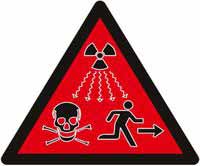 The Lynas Advanced Material project will produce 20,000 tones of radioactive waste, which is 10 times more than the Asian Rare Earth factory in Bukit Merah.
1. Why didn’t Lynas set-up the rare earth plant near its source of extraction in Western Australia as it would have saved a huge amount of money in shipping costs?
2. Why didn’t Lynas obtain an approval from the authorities in Western Australia to set-up the plant?
3. Could the authorities in Western Australia be concerned about the possible radiation leaks, health hazards, birth defects, lead poisoning and other complications?
4. Shouldn’t this in itself raise a red flag with the Malaysian authorities?
 Gov’t fails to learn from Bkt Merah tragedy http://www.freemalaysiatoday.com/2012/02/22/govt-fails-to-learn-from-bkt-merah-tragedy/ Free Malaysia Today February 22, 2012 Is the RM700 million in Lynas investment more important to the government than the lives of its citizens? By Charles Santiago Severe birth defects, eight leukemia cases over five years in a community of 11,000, tears and anguish of the poor people from a largely shoe-making community – these are not news headlines. Neither is it the plot of a movie.
These are the consequences of carelessly allowing the Asian Rare Earth factory to be built in Bukit Merah, Perak in 1982. When Mitsubishi Chemical started operating its rare earth factory, the villagers complained of choking sensation, pungent smell, coughs and colds. The community also saw a sharp rise in the cases of infant deaths, congenital disease, leukemia and lead poisoning. While US$100 million is estimated to be the clean-up cost of the factory and dump site, the largest in the rare earth industry, it has not wiped out the memories and heartache of the villagers who lost their children and loved ones.
But 30 years later, the government has again allowed a rare earth factory to be set-up by Lynas Corporation Ltd in Gebeng, Kuantan. This means the government has waved the green flag with full knowledge of the possible consequences and deadly effects.
The Lynas Advanced Material project will produce 20,000 tones of radioactive waste, which is 10 times more than the Asian Rare Earth factory in Bukit Merah.
A gas called radon
Exposure to radiation, immaterial of the levels, is unsafe. Both Lynas
and the AELB say the exposure to radiation would be low. This cannot
be accepted as radiation levels build up according to the volume of
waste piled together.
Both Lynas and AELB have agreed that the rare earth factory would
produce thorium, a waste by-product from the plant’s operations.
And while they have stressed that thorium is low in radiation, any
prolonged exposure to radiation levels is hazardous.
Let us do a check list here:
1. Why didn’t Lynas set-up the rare earth plant near its source of
extraction in Western Australia as it would have saved a huge amount
of money in shipping costs?
2. Why didn’t Lynas obtain an approval from the authorities in Western
Australia to set-up the plant?
3. Could the authorities in Western Australia be concerned about the
possible radiation leaks, health hazards, birth defects, lead
poisoning and other complications?
4. Shouldn’t this in itself raise a red flag with the Malaysian authorities?
5. Is the RM700 million in foreign investment more important to the
Malaysian government than the lives of its citizens?
Can we, as a safety measure, re-locate residents close to the Lynas
rare earth factory to a safer place? No we cannot because when the ore
containing the rare earth is crushed to remove the thorium it releases
a gas called radon.
And radon can travel thousands of miles and like what public safety
expert Dr T Jayabalan says – “you are not protected anywhere in
Malaysia because the wind will blow it across the nation”.
In a recent development the Australian government reiterated that it
will not accept responsibility for any waste material produced by
Lynas, although one of the five conditions attached to the recent
approval of its temporary operating license is that it must take full
responsibility for waste management from its plant including returning
the waste to the source, if necessary.
In an official statement to FMT, the Western Australian Minister for
Mines and Petroleum, Norman Moore, asserted that “Australia does not
support the importation and storage of other countries’ radioactive
waste”.
But in a media briefing last week, AELB director-general, Raja Abdul
Aziz Raja Adnan, gave his assurance that the board would insist on a
letter of undertaking from Lynas Australia that it would adhere to
this condition.
Lack of transparency
This, once again, proves that the government and Lynas have not been
transparent in the nitty gritty details involving the plant’s
operations and procedures.
On its Facebook, Lynas has said that the plant would cause zero
radiation exposure and it remains committed to its core values of
creating a safe environment for all.
If Lynas could not convince the authorities in Western Australia, why
should we be convinced by this public relations exercise?
In 1985, a team of eight men – a shoe maker, pensioner,
crane-operator, cancer patient, welder, general worker, barber and
tractor driver – sued the Asian Rare Earth factory.
Thousands walked from Bukit Merah to the High Court in Ipoh. After
years of struggle, the factory was shut down and decommissioned. It’s
inspiring to note that a community of uneducated, poor people could
take on a giant corporation and clinch victory.
In the same spirit I pledge solidarity with all the protesters who
would turn up in Kuantan on Sunday to demand the shutting down of the
Lynas rare earth plant.
Charles Santiago is DAP’s MP for Klang.
http://www.freemalaysiatoday.com/2012/02/22/govt-fails-to-learn-from-bkt-merah-tragedy/
No comments yet.
1 This Month

of the week – Shut Down Drone Warfare!


Tell the Ukrainian Government to Drop Prosecution of Peace Activist Yurii Sheliazhenko

Petition to revoke the licensing of the Near Surface Nuclear Disposal Facility (NSDF) at Chalk River. https://www.ourcommons.ca/petitions/en/Petition/Details?Petition=e-7247
To see nuclear-related stories in greater depth and intensity – go to https://nuclearinformation.wordpress.com
-
Archives
- March 2026 (230)
- February 2026 (268)
- January 2026 (308)
- December 2025 (358)
- November 2025 (359)
- October 2025 (376)
- September 2025 (257)
- August 2025 (319)
- July 2025 (230)
- June 2025 (348)
- May 2025 (261)
- April 2025 (305)
-
Categories
- 1
- 1 NUCLEAR ISSUES
- business and costs
- climate change
- culture and arts
- ENERGY
- environment
- health
- history
- indigenous issues
- Legal
- marketing of nuclear
- media
- opposition to nuclear
- PERSONAL STORIES
- politics
- politics international
- Religion and ethics
- safety
- secrets,lies and civil liberties
- spinbuster
- technology
- Uranium
- wastes
- weapons and war
- Women
- 2 WORLD
- ACTION
- AFRICA
- Atrocities
- AUSTRALIA
- Christina's notes
- Christina's themes
- culture and arts
- Events
- Fuk 2022
- Fuk 2023
- Fukushima 2017
- Fukushima 2018
- fukushima 2019
- Fukushima 2020
- Fukushima 2021
- general
- global warming
- Humour (God we need it)
- Nuclear
- RARE EARTHS
- Reference
- resources – print
- Resources -audiovicual
- Weekly Newsletter
- World
- World Nuclear
- YouTube
-
RSS
Entries RSS
Comments RSS
 nuclear-news
Leave a comment