73,000 square metres of concrete to cover Fukushima seabed radiation

 Tepco to cement Fukushima seabed to stem
  radiation Times Live, Sapa-AFP | 22 February, 2012 The operator of Japan’s tsunami-crippled nuclear plant is to cover a large swathe of seabed near the battered reactors with cement in a bid to halt the spread of radiation, the company said Wednesday.
A clay-cement compound will be laid over 73,000 square metres (785,000 square feet) of the floor of the Pacific in front of the Fukushima Daiichi plant on the nation’s northeast coast, said Tokyo Electric Power Co. (TEPCO).
The area is equivalent to around 10 football pitches. “This is meant to prevent further contamination of the ocean… as sample tests have shown a relatively high concentration of radioactive substances in the sea soil in the bay,” a company spokeswoman said….
Contaminated water from the plant leaked into the sea and radioactive particles concentrated on the seabed. Scientists fear ocean currents could pollute areas further afield.
The cover will be 60 centimetres (24 inches) thick, with 10 centimetres expected to be eaten away by seawater every 50 years, the TEPCO official said. http://www.timeslive.co.za/world/2012/02/22/tepco-to-cement-fukushima-seabed-to-stem-radiation
Anti nuclear protestors will target UK’s Hinkley nuclear site

 EDF’s U.K. Hinkley Nuclear Power Site Faces Protests Next Month February 22, 2012, By Catherine Airlie Feb. 22 (Bloomberg) — Electricite de France SA’s Hinkley Point nuclear power station in southwest England will next month be targeted by protestors against new reactors in the U.K.
The Stop New Nuclear Alliance, a grouping of campaigners who oppose nuclear power stations, plans to blockade the station for 24 hours from about 5 p.m. on March 11, Zoe Smith, a campaigner helping arrange the protest, said by telephone from Bristol today. Protesters will gather at the site from midday, she said.
“We aren’t intending to stop production but we are going to blockade the entrance,” preventing vehicles from entering the site. “We’re planning to surround the power station,” she said. The group is against EDF’s plans to build a new nuclear power station at the site,
next to the current one, which has capacity of 860 megawatts……
http://www.businessweek.com/news/2012-02-22/edf-s-u-k-hinkley-nuclear-power-site-faces-protests-next-month.html
Ratepayers to take all financial risks, nuclear company to take profits!
 “It exposes ratepayers to all the risk.” The nuclear industry’s answer to its post-Fukushima challenges, he said, “is to simply rip out the heart of consumer protection and turn the logic of capital markets on their head.”
His message to policymakers is simple, Cooper said. “This is an investment you would not make with your own money. Therefore, you should not make it with the ratepayers’ money.”
The Nuclear Industry’s Answer to Its Marketplace Woes, Greentech media Construction Work in Progress (CWIP) financing shifts the risks of nuclear energy to utility ratepayers. HERMAN K. TRABISH: FEBRUARY 22, 2012 A sign of the nuclear industry’s difficult situation in the aftermath of Fukushima is a proposal before the Iowa legislature that would allow utility MidAmerican Energy Holdings, a subsidiary of Warren Buffett’s Berkshire Hathaway, to build a new nuclear facility in the state using Construction Work in Progress (CWIP) financing (also called advanced cost recovery).
“Investment in nuclear power is the antithesis of the kind of investments you would want to make under the current uncertain conditions,” explained nuclear industry authority Mark Cooper, a senior fellow for economic analysis at Vermont Law School’s Institute for Energy and the Environment. “They cannot raise the capital to build these plants in normal markets under the normal regulatory structures.”
CWIP would allow the utility to raise the money necessary to build a nuclear power plant by billing ratepayers in advance of and during construction.
“Construction Work in Progress was intended to circumvent the core consumer protection of the regulatory decision-making process,” Cooper explained. “It exposes ratepayers to all the risk.” The nuclear industry’s answer to its post-Fukushima challenges, he said, “is to simply rip out the heart of consumer protection and turn the logic of capital markets on their head.”
The Staff of the Iowa Utilities Board concurred with Cooper. Its recommendations to the legislature followed his arguments in “Nuclear Socialism Comes to the Heartland of America,” his most recent paper on nuclear economics. In it, Cooper found that CWIP could increase average utility bills as much as $70 per month “before any power is generated by the reactors.”
His message to policymakers is simple, Cooper said. “This is an investment you would not make with your own money. Therefore, you should not make it with the ratepayers’ money.”
CWIP exposes ratepayers to all the risks inherent in nuclear energy, Cooper explained. Continue reading
Independent radiation monitoring – call adds to San Onofre’s woes
Both reactors at the Southern California Edison-run plant remain offline. Unit 3 was pulled from service January 31 after a radiation leak, prompting the Nuclear Regulatory Commission last week to call for a reactor inspection. Unit 2 was taken offline for scheduled maintenance and upgrades in January and has required the plugging of some of its steam generator tubes.
On January 27, a contract plant worker fell into a reactor pool and an ammonia leak November 1 forced SCE to issue an NRC-required alert. A “follow-up focused baseline inspection” must now be performed on Unit 3. San Clemente Times – Nuclear Critics Continue Pleas for Independent Radiation Monitors Cancer Studies
Questions on Australian company Lynas’ radioactive wastes plan in Malaysia
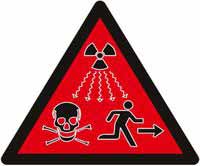 The Lynas Advanced Material project will produce 20,000 tones of radioactive waste, which is 10 times more than the Asian Rare Earth factory in Bukit Merah.
1. Why didn’t Lynas set-up the rare earth plant near its source of extraction in Western Australia as it would have saved a huge amount of money in shipping costs?
2. Why didn’t Lynas obtain an approval from the authorities in Western Australia to set-up the plant?
3. Could the authorities in Western Australia be concerned about the possible radiation leaks, health hazards, birth defects, lead poisoning and other complications?
4. Shouldn’t this in itself raise a red flag with the Malaysian authorities?
 Gov’t fails to learn from Bkt Merah tragedy http://www.freemalaysiatoday.com/2012/02/22/govt-fails-to-learn-from-bkt-merah-tragedy/ Free Malaysia Today February 22, 2012 Is the RM700 million in Lynas investment more important to the government than the lives of its citizens? By Charles Santiago Severe birth defects, eight leukemia cases over five years in a community of 11,000, tears and anguish of the poor people from a largely shoe-making community – these are not news headlines. Neither is it the plot of a movie.
These are the consequences of carelessly allowing the Asian Rare Earth factory to be built in Bukit Merah, Perak in 1982. When Mitsubishi Chemical started operating its rare earth factory, the villagers complained of choking sensation, pungent smell, coughs and colds. The community also saw a sharp rise in the cases of infant deaths, congenital disease, leukemia and lead poisoning. While US$100 million is estimated to be the clean-up cost of the factory and dump site, the largest in the rare earth industry, it has not wiped out the memories and heartache of the villagers who lost their children and loved ones.
But 30 years later, the government has again allowed a rare earth factory to be set-up by Lynas Corporation Ltd in Gebeng, Kuantan. This means the government has waved the green flag with full knowledge of the possible consequences and deadly effects. Continue reading
Two big hurdles to USA selling nuclear reactors to India

 US control regime a hurdle in N-deal, Deccan Herald, Kalyan Ray New Delhi, Feb 22, 2012, US export control regime has become a major stumbling block for concluding commercial nuclear agreements under the four-year-old Indo-US civil nuclear agreement signed in 2008 for peaceful uses of nuclear power.
US nuclear suppliers on Wednesday identified their own country’s control regime as the spoil sport for entering into agreements with Indian companies. The most immediate concern for the two US nuclear majors – GE and Westinghouse – is a specific provision in the US export control rules under which they have to  obtain clearance from the US government not only for supplying reactors to NPCIL but also for other Indian companies involved in constructing a nuclear power plant. “The 810 licence in the US export control regime is the most immediate issue,” Aris S Candris, president and chief executive officer of Westinghouse told Deccan Herald. on the sidelines of an international nuclear symposium here.
At the symposium organised by the World Nuclear Association, both Westinghouse and GE flagged 810 licence as the most immediate stumbling block to kick-start nuclear commerce between the two countries, though both admitted that stiff Indian nuclear liability regime posed another big hurdle. India currently plans to purchase two AP-1000 light water reactors from Westinghouse to install in Chhaya Mithi Virdi in Gujarat and two 1000 MW reactors from GE for Kovvada in Andhra Pradesh. However, land acquisition process has not started yet.
Candris said Westinghouse obtained the 810 approval for the Indian operator, Nuclear Power Corporation of India and regulator, Atomic Energy Regulatory Board. But it needed similar clearance for other nuclear industry players like Larsen and Toubro as well as other companies who will be engaged in constructing nuclear power plant….. http://www.deccanherald.com/content/229404/us-control-regime-hurdle-n.html
First Uranium company teeters on the brink of collapse

 What will happen to First Uranium? First Uranium is looking at a distress sale of assets to settle upcoming debts, a move that would have a number of implications for shareholders Christy Filen , 22 Feb 2012 JOHANNESBURG (MINEWEB) –
It is no secret that First Uranium is in a pickle. Releasing a forecast that shows its cash will run out by the end of March will be cold comfort to shareholders and creditors alike…. First Uranium has turned to what is conceivably its only option and that is a distress sale of its assets in an effort to settle upcoming debts….. As if this wasn’t enough First Uranium’s Ezulwini operation is not making the gradeand its Mine Waste Solutions (MWS) is fighting licensing issues with environmentalists and the Department of Mineral Resources. In terms of the results of an impairment exercise of the Ezulwini Mine’s assets, an impairment adjustment of $180m was recognised in the company’s financial statements…. “The Company’s ability to continue as a going concern is dependent upon its ability to bring these proposed transactions to fruition” said First Uranium….. http://www.mineweb.com/mineweb/view/mineweb/en/page34?oid=145826&sn=Detail&pid=102055
Report on a tour of Fukushima
Into Fukushima’s no-man’s land Calgary Herald, Agence France-Presse February 21, 2012 FUKUSHIMA DAIICHI – Every two minutes on the bus ride through the ghost towns surrounding Japan’s Fukushima Daiichi nuclear plant, a company guide in a white protective suit holds up a display showing the radiation level. And it is rising. Continue reading
Plight, and flight, of Fukushima’s farming communities
anti-nuclear activists and parents who are continuing to lobby for better protection standards for children in Fukushima insist they will not be satisfied until the government takes steps to evacuate the entire younger generation to fully safe areas.
More than 100,000 people, mostly younger people, have left Fukushima to escape radiation contamination. ….The mass migration is bound to affect agriculture production
Trust Deficit – Worst Fallout of Fukushima, By Suvendrini Kakuchi TOKYO, Feb 22, 2012 (IPS) “……..The past few months have seen the government scrambling to regain public trust with food grown in Fukushima and the neighbouring areas by scraping away contaminated top soil from local farms. Continue reading
Okinawa snow event cancelled due to radiation fears
Radiation fears see Okinawa snow event cancelled Asia One News, , Feb 22, 2012 TOKYO – A Japanese city on subtropical Okinawa island was forced to cancel a traditional snow event for kids after parents said the snow shipped from the northeast may be radioactive, officials said Wednesday.
The city of Naha had planned the annual event on Thursday with the Maritime Self-Defence Force’s aircraft group, which carried more than 600 kilograms (1,300 pounds) of snow from northern Aomori prefecture.
But dozens of parents, who have fled from the disaster-hit region to the southern island in fear of radioactive contamination from the crippled Fukushima Daiichi plant, demanded the event be cancelled…… http://www.asiaone.com/News/AsiaOne%2BNews/Asia/Story/A1Story20120222-329496.html
Radiation increasing in environment around Savannah River Nuclear Site
“Many things can cause infant death and low birth weight and so on,” “Radiation may not have caused all these deaths, but it certainly should be taken seriously.”
cesium levels in deer and wild hogs killed at the site have increased in recent years, rather than decreased.

 Environmental group contends SRS radiation hazards are increasing, Augusta Chronicle, By Rob Pavey, Staff Writer, Feb. 22, 2012 Environmental groups unveiled a new analysis Wednesday they contend warrants a re-examination of health impacts associated with Savannah River Site radiation. What we are saying is that you have a suspicious situation that certainly calls for a new inquiry,” said Louis Zeller, executive director of the Blue Ridge Environmental Defense League.
The 75-page report involved a year-long study of data from the U.S. Energy Department, state and federal environmental regulators and health departments in Georgia and South Carolina.
Among the findings were indicators that radiation levels are gradually increasing, rather than decreasing, as other studies have said; and that “radiosensitive” diseases and deaths – including infant and fetal deaths, thyroid and lung cancers and leukemia – exceeded the national average in the five-county area surrounding SRS, where about 2,000 “excess deaths” occurred since 2002. Continue reading
Uranium mining’s radiation dangers continue near Grand Canyon
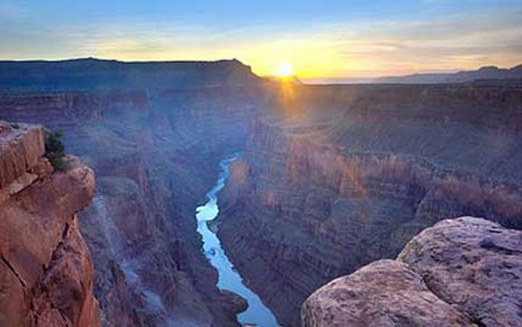
 Risks remain from uranium mining near the Grand Canyon Feb 22, 2012 High Country News By Heather Hansen, Red Lodge Clearing House. “….. There are over 5,000 active uranium claims within those one million acres. The withdrawal goes a long way toward protecting the watersheds, seeps and springs, sacred sites and critical wildlife habitat in the area because the only claims that can now be mined would have had to establish “valid existing rights,” before the 2009 moratorium. Yet even with these protections, the mines with existing rights — the ones allowed to operate despite the moratorium — may still have a significant negative impact on the Grand Canyon environment Continue reading
The economic benefits of renewable energy
Renewable energy has both environmental and business dividends, EPA administrator says at Stockton symposium Feb 22, 2012. Press of Atlantic City, By JOEL LANDAU, Staff Writer | GALLOWAY TOWNSHIP — Renewable energy is not only important for the country’s environmental future but the nation’s economic recovery as well, said U.S. Environmental Protection Agency Administrator Lisa Jackson… Continue reading
Praise from Putin for Soviet’s nuclear spies
Putin praises Cold War moles for stealing U.S. nuclear secrets By Steve Gutterman MOSCOW | Wed Feb 22, 2012 (Reuters) – Vladimir Putin praised Cold War-era scientists on Thursday for stealing U.S. nuclear secrets so that United States would not be the world’s sole atomic power, in comments reflecting his vision of Russia as a counterweight to U.S. power. Continue reading
How the nuclear lobby’s devious marketing distorts “incentives”
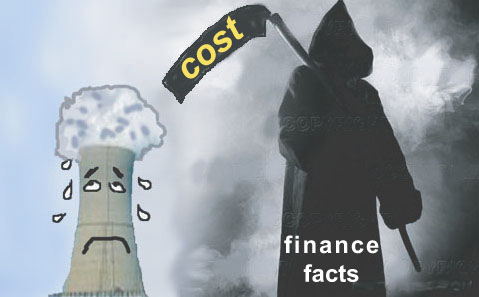 the NRC’s decision on Vogtle was “a non-event” because, he said, “The morning after the license was issued, nobody on Wall Street woke up and said, ‘Hey! Now I’m going to buy in!'” The licensing decision had, he said, “no effect on the economics.”
The Nuclear Industry’s Answer to Its Marketplace Woes, Greentech media Construction Work in Progress (CWIP) financing shifts the risks of nuclear energy to utility ratepayers. HERMAN K. TRABISH: FEBRUARY 22, 2012 “……..An example of incentive distortion is “the sunk-costs argument” now being used by Southern Company for the Vogtle reactors under development in Georgia with CWIP financing. Construction there is reportedly both behind schedule and over budget. Southern Company, Cooper said, is arguing that, with as much as $4 billion in sunk costs, “It’s cheaper to finish this project than to start something else.”
Some nuclear developers, he added, will simply tell regulators that have authorized the spending of billions in ratepayer funds, “If you don’t give me the next $50 million, I’m going to abandon this project.” Continue reading
1 This Month

of the week – Shut Down Drone Warfare!


Tell the Ukrainian Government to Drop Prosecution of Peace Activist Yurii Sheliazhenko

Petition to revoke the licensing of the Near Surface Nuclear Disposal Facility (NSDF) at Chalk River. https://www.ourcommons.ca/petitions/en/Petition/Details?Petition=e-7247
To see nuclear-related stories in greater depth and intensity – go to https://nuclearinformation.wordpress.com
-
Archives
- March 2026 (230)
- February 2026 (268)
- January 2026 (308)
- December 2025 (358)
- November 2025 (359)
- October 2025 (376)
- September 2025 (257)
- August 2025 (319)
- July 2025 (230)
- June 2025 (348)
- May 2025 (261)
- April 2025 (305)
-
Categories
- 1
- 1 NUCLEAR ISSUES
- business and costs
- climate change
- culture and arts
- ENERGY
- environment
- health
- history
- indigenous issues
- Legal
- marketing of nuclear
- media
- opposition to nuclear
- PERSONAL STORIES
- politics
- politics international
- Religion and ethics
- safety
- secrets,lies and civil liberties
- spinbuster
- technology
- Uranium
- wastes
- weapons and war
- Women
- 2 WORLD
- ACTION
- AFRICA
- Atrocities
- AUSTRALIA
- Christina's notes
- Christina's themes
- culture and arts
- Events
- Fuk 2022
- Fuk 2023
- Fukushima 2017
- Fukushima 2018
- fukushima 2019
- Fukushima 2020
- Fukushima 2021
- general
- global warming
- Humour (God we need it)
- Nuclear
- RARE EARTHS
- Reference
- resources – print
- Resources -audiovicual
- Weekly Newsletter
- World
- World Nuclear
- YouTube
-
RSS
Entries RSS
Comments RSS
 nuclear-news