Great potential for decentralised solar and wind energy in Kenya
Kenya receives an estimated 4 to 6 kWh per square meter per day of solar insolation, equivalent to about 300 million tonnes of oil according to African Energy Policy Research Network 2004.
Kenya has one of the best wind resources in the world averaging between 3 and 10m/s with northern Kenya recording speeds of up to 11m/s.
 Innovation and Diversification Are Key for Kenya’s Renewable Energy Industry, Renewable Energy World, By Peter Kahare, February 20, 2012 KENYA — Decentralizing and diversifying renewable energy power generation technologies could be the panacea to save Kenyans from unreliable and expensive power supplied by hydro and thermal power generation, a recent study has found.
The new study by Christian Aid, an international agency that seeks solutions to chronic poverty in various nations says that empowering communities in rural areas in Kenya to produce power through renewable, cleaner sources could reduce overreliance on hydropower and fully exploit the renewable energy potential while offering opportunity to unlock economic growth. Participation of local communities in renewable energy technology projects such as
small/micro hydro, wind, solar, bagasse cogeneration and improved stoves could increase energy security and mitigate against climate change effects that badly affect the hydro power generation technology,” says Alison Doig, the report’s lead author and senior climate change advisor at Christian aid.
Doig states that decentralized renewable energy projects would be
beneficial in terms of mitigating the risk of climate change, poor
hydrology and environmental degradation as well as high international
fuel costs…… The study says that Kenya has significant potential
for solar energy to be exploited particularly in the Northern Kenya.
Kenya receives an estimated 4 to 6 kWh per square meter per day of solar insolation, equivalent to about 300 million tonnes of oil according to African Energy Policy Research Network 2004. In 2010, the
Kenyan government formulated Solar Water Heating Regulations, which it
hoped would increase the uptake of solar water heating technology. The
regulations are set to provide a relief from the over-reliance on
petroleum imports by institutions and households.
The potential of pico-, mini- and micro-hydro is estimated to be 3000
MW nationwide yet only six mini-hydro plants are in operation with a
total capacity of 13.64 MW, according to small-hydro.com. For now, one
plant is supplying 0.3 MW to the National grid, a mini hydro at Imenti
tea factory in Meru Township, which is more than 300 kilometers east
of Nairobi city. These systems could be extremely useful for off-grid
rural electrification.
Wind Power
Kenya has one of the best wind resources in the world averaging
between 3 and 10m/s with northern Kenya recording speeds of up to
11m/s. Installed capacity from wind generated power is currently 5.1
MW.
Northern Kenya and along the coast are ideal sites for setting up wind
farms, the Christian Aid study notes. Wind energy can be located
where agricultural production is impractical like in the North Eastern
province, states the report. Currently, the Lake Turkana Wind Project,
which is being constructed in the arid North …
http://www.renewableenergyworld.com/rea/news/article/2012/02/innovation-and-diversification-are-key-for-kenyas-renewable-energy-industry
No comments yet.
1 This Month
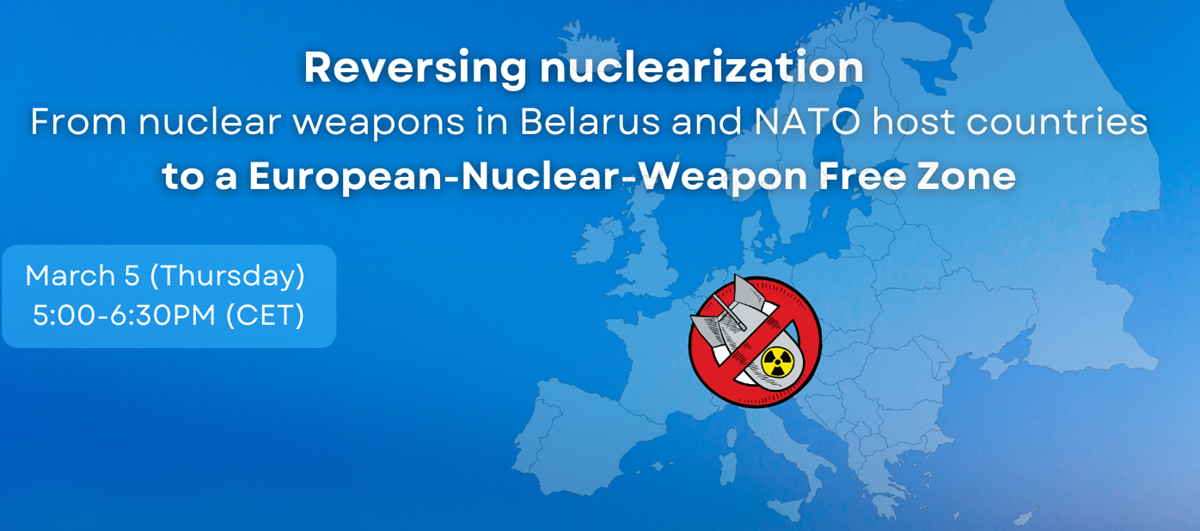
5 March -Online – Reversing nuclearization:
From nuclear weapons in Belarus and NATO host countries to a European-Nuclear-Weapon Free Zone
11am-12:30pm Eastern Time USA / 5pm-6:30pm CET

of the week – Advocating for a
nuclear free beach – https://www.samuellawrencefoundation.org/
The Samuel Lawrence Foundation advocates for a Nuclear Waste Free Beach at San Onofre, join us and take action!

10 March A LIVE WEBINAR THE REAL EFFECTS OF NUCLEAR POWER
What the Industry Isn’t Telling Us
1:00 PM Mountain, 2 pm Central, 3 pm Eastern. Live on the Keepers of the Water Facebook page

18 March Webinar @ 1 PM EST: An Assessment of SMR Projects: The Case of Canada
register for the zoom:
https://us02web.zoom.us/webinar/register/WN_o8BIIOUvQ2ONJR1nta65DQ#/registration

of the week – STOP SMALL MODULAR REACTORS IN CANADA
To see nuclear-related stories in greater depth and intensity – go to https://nuclearinformation.wordpress.com
-
Archives
- March 2026 (51)
- February 2026 (268)
- January 2026 (308)
- December 2025 (358)
- November 2025 (359)
- October 2025 (376)
- September 2025 (258)
- August 2025 (319)
- July 2025 (230)
- June 2025 (348)
- May 2025 (261)
- April 2025 (305)
-
Categories
- 1
- 1 NUCLEAR ISSUES
- business and costs
- climate change
- culture and arts
- ENERGY
- environment
- health
- history
- indigenous issues
- Legal
- marketing of nuclear
- media
- opposition to nuclear
- PERSONAL STORIES
- politics
- politics international
- Religion and ethics
- safety
- secrets,lies and civil liberties
- spinbuster
- technology
- Uranium
- wastes
- weapons and war
- Women
- 2 WORLD
- ACTION
- AFRICA
- Atrocities
- AUSTRALIA
- Christina's notes
- Christina's themes
- culture and arts
- Events
- Fuk 2022
- Fuk 2023
- Fukushima 2017
- Fukushima 2018
- fukushima 2019
- Fukushima 2020
- Fukushima 2021
- general
- global warming
- Humour (God we need it)
- Nuclear
- RARE EARTHS
- Reference
- resources – print
- Resources -audiovicual
- Weekly Newsletter
- World
- World Nuclear
- YouTube
-
RSS
Entries RSS
Comments RSS
 nuclear-news
Leave a comment