Nuclear radiation and water pollution – theme for February 2012
 What you are not supposed to know:It doesn’t take an accident for a nuclear power plant to release radioactivity into our air, water and soil. All it takes is the plant’s everyday routine operation, and federal regulations permit these radioactive releases…
.Government regulations allow radioactive water to be released to the environment containing “permissible” levels of contamination. Permissible does not mean safe.Detectors at reactors are set to allow contaminated water to be released, unfiltered, if below “permissible” legal levels.
The Nuclear Regulatory Commission relies upon self-reporting and computer modeling from reactor operators to track radioactive releases and their projected dispersion. A significant portion of the environmental monitoring data is extrapolated – virtual, not real.Accurate accounting of all radioactive wastes released to the air, water and soil from the entire reactor fuel production system is simply not available. http://www.nirs.org/factsheets/routineradioactivereleases.htm
Nuclear disaster and fresh water : The risk of radioactive releases into fresh water water through a nuclear accident is an ever present danger. Drinking water for millions of people could be contaminated.
Sea water From Fukushima huge amounts of contaminated water accumulated during efforts to cool the reactors, with much of it reaching the sea, and radiation has been found in fish, seaweed and other seafood.
“At least 462 trillion becquerels of radioactive strontium have leaked to the Pacific Ocean since the March disaster at the Fukushima No. 1 nuclear power plant, making it one of the world’s most severe such cases of marine pollution, according to calculations by The Asahi Shimbun newspaper. http://www.examiner.com/human-rights-in-national/over-462-trillion-becquerels-fukushima-strontium-pacific-ocean-seafood-risk?CID=examiner_alerts_article
Radioactive leakage to water, in normal operations of nuclear reactors
RADIOACTIVE “DRINKING WATER” for million american people… While US licenses first nuclear reactors since 1978. by RNA International February 11, 2012 – Press Conference, Red Wing, Minnesota My name is Christina Mills. I am a staff scientist and policy analyst with the Institute for Energy and Environmental Research (IEER) which provides policymakers, journalists, and the public with understandable and accurate scientific and technical information on energy and environmental issues.
IEER’s aim is to bring scientific excellence to public policy issues in order to promote the democratization of science and a safer, healthier environment.
As the report “Too Close to Home” discusses, nuclear power plants pose a threat to the drinking water of millions of Americans. Unfortunately many Americans have been and continue to be exposed to radioactive drinking water as the result of routine operations at the country’s nuclear reactor fleet. Continue reading
Despite approval of 2 new US nuclear reactors, the nuclear industry has ground to a halt
 These US reactors are only happening in Georgia, where the electricity price is regulated. Elsewhere, the nuclear renaissance has ground to a halt.
building a nuclear power plant is risky and that risk falls on the banks and the banks are not happy with that.
There were only ever two firm orders for nuclear power plants in the West using these new designs; one is in Finland and one is in France and both of those are going badly wrong. All the other projects are no more than projections of what might happen in the future……. And the industry needs China more than it needs nuclear.

 http://www.abc.net.au/pm/content/2012/s3428147.htm No nuke comeback despite US approval of two reactors, Matt Peacock reported this story , February 10, 201 ABC Radio P.M.Listen to MP3 of this story
MARK COLVIN: In the United States, the Nuclear Regulatory Commission has approved construction of two new nuclear power plants in Georgia. They’ll be the first nuclear reactors in the US since the Three Mile
Island accident more than 30 years ago.
While the nuclear industry is hailing this decision as a breakthrough, Matt Peacock reports; a so-called nuclear renaissance seems further away than ever. Continue reading
Booming business for Japan’s nuclear companies, as taxpayers foot the radioactive cleanup bill
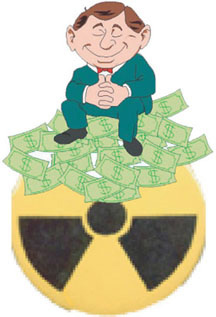
 Report From Japanese Nuclear Industry Insiders: Business is Booming, Rocket News 24, February 10, 2012 A lingering topic of the Fukushima incident has been how to go forward. Should nuclear plants in Japan be improved or discontinued.
What have been revealed to reporter Hirotoshi Ito by industry insiders are the massive business deals being prepared behind this important social issue.
According to Ito, what we don’t see occurring is what he calls “backspin business” which is profit made off of situations that undo
previous progress. Key players that once had the now-dubious honor of building a strong, clean, and safe nuclear power infrastructure are making preparations to profit from its damage.
For example, Tokyo Electric Power Company (TEPCO) has long struggled with the task of disposing of nuclear waste. Local residents of all TEPCO’s desired locations have been understandably hesitant to accept tons of radioactive material into their neighborhoods.Luckily for TEPCO the wasteland of the likely to be decommissioned Fukushima Daini (Number 2) Reactor is now the perfect place for them to set-up a decontamination factory….
General contractors are also in line to rake in money. Thanks to their friends at the JAEA, three companies, Kashima, Obayashigumi, and Taiseikensetsu were responsible for building 45 of Japan’s nuclear plants. Now they are looking to JAEA for work decontaminating 12 cities in Fukushima Prefecture. The Japanese government has entrusted JAEA with management of clean-up efforts in the area. If you recall, one of JAEA’s previous incarnations, the PNC, was responsible for the Monju Nuclear Plant accident and cover-up. JAEA has since been bogged down in an expensive effort to restart and maintain that plant for over a decade.
One benefit to regular citizens is the trickle-down revenue local business can make from clean-up crews. Beyond that, the largest
investors in this massive project, the Japanese taxpayers, are taking all the risk and getting no dividends. Meanwhile in the words of one TEPCO employee “after the closing and decontamination, [these companies] will be able to put food on the table for decades.”..
http://en.rocketnews24.com/2012/02/10/report-from-japanese-nuclear-industry-insiders-business-is-booming/
Japanese nuclear corporations clean up financially from radiation clean-up
 Even more disturbing to critics of the decontamination program is the fact that the government awarded the first contracts to three giant construction companies — corporations that have no more expertise in radiation cleanup than anyone else does, but that profited hugely from Japan’s previous embrace of nuclear power.
Japan Starts Nuclear Cleanup, With Little Idea of How By HIROKO TABUCHI, NYT February 10, 2012 IITATE, Japan — As 500 workers in hazmat suits and respirator masks fanned out to decontaminate this village 20 miles from the ravaged Fukushima Daiichi nuclear reactors, their confusion was apparent. “Dig five centimeters or 10 centimeters deep here?” a site supervisor asked his colleagues, pointing to a patch of radioactive topsoil to be removed. He then gestured across the village square toward the community center. “Isn’t that going to be demolished? Shall we decontaminate it or not?”
A day laborer wiping down windows at an abandoned school nearby shrugged at the work crew’s haphazard approach. “We are all amateurs,” he said. “Nobody really knows how to clean up radiation.” Continue reading
Opponents of nuclear power for Gorakhpur village joined by 10 other villages
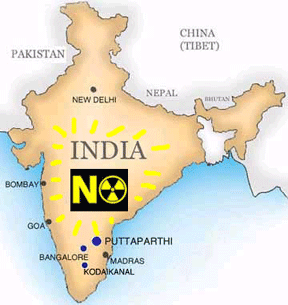 10 villages join protest against nuclear plant Times of India, Bhaskar Mukherjee, TNN | Feb 11, 2012, FATEHABAD: Protesters against the proposed nuclear power plant in Gorakhpur village got a major support on Friday when 200 villagers from 10 nearby villages came out in the streets of Fatehabad, the district headquarter, to oppose the power plant, expressing security concerns.
The protesters gathered in the local grain market and then marched to the mini secretariat to hand over a memorandum against the plant, signed by 10,000 people, to deputy commissioner M L Kaushik. Villagers including women from Kharakheri, Dhanger, Mochiwali, Khajuri, Chobara, Jandli, Dahman, Kajal Heri, Nehla and Gorakhpur participated in the demonstration.
President of Kisan Sangharsh Samiti Hans Raj Siwach said, “We are on a protest call for the past 546 days but the government does not care. We shall not let the government acquire our agriculture land.” He asked, “Why does the Haryana government want to set up nuclear power plant. Don’t they realize what the Fukushima nuclear disaster did to Japan?”
At least 1,313 acres of land in the village are to be acquired for the nuclear plant. Farmers of Gorakhpur had recently held three officials hostage when they visited the village for taking measurements. The officials were only let go when they promised never to come to the village again. They were forced to write down their promise on paper and sign it.
In the meantime, the residents of the village submitted memorandums against the setting up of the nuclear plant on their land. http://timesofindia.indiatimes.com/india/10-villages-join-protest-against-nuclear-plant/articleshow/11843998.cms
Ratings agency sees little future for new nuclear reactors
 Fitch says new nuclear plant may spur few more, Reuters, Caryn Trokie, New York Ratings Unit, Feb 10 -, Fitch Ratings believes that the Nuclear Regulatory Commission’s (NRC) vote on February 9 approving the combined construction and operating license (COL) for Plant Vogtle Units 3 and 4 is a significant milestone in the development of new nuclear capacity in the US but has limited impact on credit.
The new reactors are being developed by Southern Company subsidiary, Georgia Power Company (GPC) along with its partners the Municipal Electric Authority of Georgia (MEAG), Oglethorpe Power Corporation (OPC), and the city of Dalton, GA..
.. The two public power utilities have already prefunded, through debt issuance, a substantial portion of their share of the construction
costs. GPC will rely on a combination of Department of Energy loan guarantees and traditional utility funding sources. The utility
benefits from constructive rate treatment of project costs including recovery of construction work in progress on financing costs…..
We believe that new COL applications beyond those in process are unlikely in the near term. Despite significant enthusiasm for nuclear
power in recent years as an alternative to fossil generation, diminished load growth in the slow economy and historically low
natural gas and wholesale electric prices have dampened interest. Combined with lower prospects for carbon emission regulations and
evolving safety standards following the events at Fukushima, the industry’s focus has shifted to maintenance of the nation’s existing
nuclear fleet.
Details of the approval are not yet available. Fitch will review them as soon as they are made available to us to evaluate the conditions included in the COL and any impact they may have on the cost or timing of completion. http://www.reuters.com/article/2012/02/10/idUSWNA998020120210
Call to replace nuclear proponent Srinivasan with an independent expert on safety panel
 ‘Remove pro-nuclear Srinivasan from panel’ Press Trust Of India, Hindustan Times, Chennai, February 10, 2012 The anti-nuclear forum spearheading the stir against Koodankulam Nuclear Power Project on Friday demanded removal of former Atomic Energy Commission chief MR Srinivasan from the state expert panel to allay people’s safety concerns, calling him “pro-nuclear”.
People’s Movement Against Nuclear Energy (PMANE) said it welcomed constitution of the four-member state panel but pointed out that Srinivasan was a “well-known pro-nuclear person.”
Srinivasan was the former chairman and a current member of India’s Atomic Energy Commission. He was also a member of the site selection committee in the 1980s for the KNPP and has been writing and speaking in favor of nuclear power and the Koodankulam project itself, S P Udayakumar, leading the anti-nuclear movement, said in a statement.
He said people had expected that the state expert team would be neutral and independent “but Dr Srinivasan is neither.So it is hard for the PMANE to accept Dr Srinivasan.”
It asked the chief minister to replace Srinivasan with another expert and expand the team with experts in Geology, Oceanography and
Hydrology. PMANE also requested Jayalalithaa to make the State Expert Team meet its own experts, consider their findings and engage in a “genuine dialogue” and listen to the fears and concerns of the people and arrive at a conclusion in a democratic manner on the basis of majority opinion.
He alleged that having failed to allay the fears of the people, the Centre was sending spies into the areas around Koodankulam “to divide
our communities, create fear and panic among the people and instigate violence..”… http://www.hindustantimes.com/India-news/Chennai/Remove-pro-nuclear-Srinivasan-from-panel/Article1-809419.aspx
Tamil Nadu government appoints pro nuclear enthusiast to head nuclear safety panel!
N-expert to head Kudankulam panel, TNN | Feb 10, 2012, CHENNAI: The Tamil Nadu government on Thursday constituted a four-member expert committee, headed by former chairman Atomic Energy Commission M R Srinivasan, to look into the safety aspects of the Kudankulam nuclear power project and address the fears of the locals. Srinivasan’s inclusion is significant as he isknown to be a strong votary of nuclear power. He was one of the .architects of the Indo-US nuclear deal.
$14 billion to build Vogtle nuclear plant. If it makes losses, $8.3 billion loan guarantee from govt?
 The Vogtle plant will cost $14 billion at least to build……..If things go as planned, the reactors will be making electricity four to five years from now. If not, the company is seeking an $8.3 billion loan guarantee from the federal government to cover losses.
Nuclear Safety, Cost Issues Loom As U.S. OKs Reactor, NPR, by CHRISTOPHER JOYCE February 10, 2012 The nuclear industry is celebrating the federal Nuclear Regulatory Commission’s decision to give the go-ahead for a utility company to build two new nuclear reactors in Georgia, the first license to be granted for a new reactor in the U.S. since 1978. But last year’s accident at reactors in Fukushima, Japan, still clouds the future of nuclear power, as does the cost of new power plants.
Southern Co. will build the reactors at its Vogtle site in Georgia, where two older reactors already operate. Scott Peterson, vice president of the industry’s Nuclear Energy Institute, says it’s not a “nuclear renaissance,” but instead a “first wave” for new reactors….
Costs But demand for electricity is flat, and the price of natural gas, also used to make electricity, is low. Continue reading
Nuclear Regulatory Commission Chairman warns on safety factors for Vogtle new nuclear plant
 Southern’s `Monumental Accomplishment’ Tempered by Fukushima, Bloomberg, By Brian Wingfield – Feb 9, 2012 The chief regulator’s dissent in a vote that approved the first U.S. permit in 34 years to build a nuclear reactor is fueling a debate over safety as the first anniversary of Japan’s nuclear disaster nears.
The U.S. Nuclear Regulatory Commission voted 4-1 yesterday to award Southern Co. (SO) of Atlanta a license to build two reactors at its Vogtle plant near Augusta, Georgia. The agency should have required the company to implement lessons from Japan’s nuclear crisis last year, said Chairman Gregory Jaczko, who opposed the license.
“Right now we know there are things that need to be fixed, things that need to be changed, or at least things that need to be analyzed,” Jaczko said yesterday in an interview at NRC headquarters in Rockville, Maryland. “For us to issue this license, and say ‘we’ll deal with them later,’ to me is kind of putting the cart before the horse.” Continue reading
The lower price of gas is causing the stillbirth of the nuclear ‘renaissance’
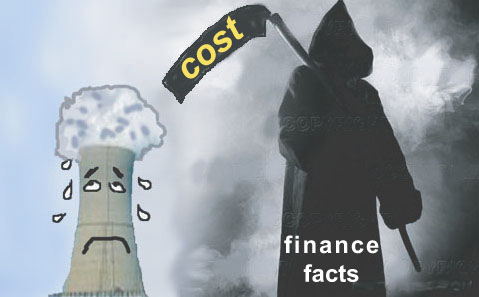 Nuclear Power vs. Natural Gas, February 10, 2012, NYT, By MATTHEW L. WALD When critics say nuclear power is risky, they often mean the risk of an accident. But people in the nuclear industry say that the bigger threat is natural gas.
To look like a smart move, the $14 billion nuclear project undertaken by the Southern Company and its partners must meet several challenges, including actually completing the job for that figure, always a question in nuclear construction.
But for the 104 nuclear reactors now running in this country, and for many of the ones that have retired, the big issue has always been the price of electricity from competing sources. And generally, that comes down to a prediction about the future cost of natural gas, which usually sets the price of electricity on the grid in much of the United States.
The nuclear industry must also reckon with the prospect that in the 2020’s or 2030’s, that the United States will get more serious about limiting carbon dioxide emissions, which would be a plus for nuclear operators. Substituting gas for coal does reduce emissions, but there is still far too much carbon in natural gas to allow its widespread use if the electric system is to reduce its emissions by 80 percent by 2050. That was the national goal endorsed by President Obama when he ran for president in 2008.
In fact, some electricity experts say that if the economy as a whole has to cut emissions by 80 percent, the electric sector will have shoulder even deeper reductions, given that other areas, like transportation, can probably manage less….
John W. Rowe, the chairman of Exelon, the nation’s biggest nuclear utility, had said that he would not build a new reactor at today’s natural gas prices. Referring to the geologic formations from which natural gas is extracted, he said in a recent speech, “Shale is good for the country, bad for new nuclear development.”
“There must be a shortage of natural gas and stable high prices to make the economics right, ‘’ he said of nuclear power in a speech to a nuclear group. And the Union of Concerned Scientists, a group that is generally critical of nuclear energy, argues that new reactors will be more expensive than other “readily available alternatives, including energy efficiency, renewable energy and natural gas.” http://green.blogs.nytimes.com/2012/02/10/natural-gas-vs-nuclear-power/
France’s power price rise,with nuclear reactor outage. Wind output to double
Europe Power-Nuclear outage lifts French weekend price,
* EDF’s 1,300-MW Cattenom reactor in unplanned outage PARIS, Feb 10 (Reuters) – French weekend prices jumped
early on Friday as a second unplanned nuclear outage within 12 hours caused panic in the market about a supply shortage, …. French
baseload power for Saturday delivery traded nearly twice as high as in the neighbouring German market at 100.00
euros, after EDF’s 1,300 Cattenom 2 nuclear reactor went offline unexpectedly overnight, tightening supply margins already under
strain from high winter demand.
Wind power output next week is expected to double compared with this week. “In the first part of the week, wind power production will reach above the seasonal normal levels,… http://af.reuters.com/article/energyOilNews/idAFL5E8DA2YW20120210
“Nuclear Nation,” and “No Man’s Zone” – films show the human horror of Fukushima nuclear disaster
 Berlin Film Festival: 3 documentaries on Japan nuclear disaster LA Times, Susan Stone in Berlin, February 10, 2012 | Less than a year after the massive earthquake and tsunami in Japan devastated whole towns and crippled the Fukushima Daiichi nuclear plant, causing a radioactive disaster, filmic portraits at the Berlin International Film Festival are presenting the human fallout.
Three documentaries appearing at the Berlinale provide sort of post-nuclear ghost stories — landscapes and people haunted by the aftermath of the nuclear accident and residual radiation.
Atsushi Funahashi’s “Nuclear Nation,” which was to debut Friday night in a world premiere, documents life in exile for the residents of Futaba, a town that prospered and then all but perished, its rise and fall tightly woven together with the Fukushima nuclear plant.
National subsidies and major tax breaks came to Futaba starting in the 1960s, compensation for the presence of the plant. Along with jobs for citizens, the plant brought money for a new community center, library and sports facilities.
Funahashi’s film shows that all lies empty now, beyond the ornate city gates reading “Atomic energy makes our town and society prosperous” — the entire city has been designated as an exclusion zone, and will be uninhabitable for years. ….
Toshi Fujiwara’s “No Man’s Zone” screens Sunday, and aspires to more artiness, featuring a voice-over by Armenian Canadian actress Arsinée Khanjian. Fujiwara hopes to show the beauty in the tainted landscape, while leveling a critique of the disaster and how it was handled. …
The documentaries are screening just days after a fresh reminder of the ongoing problems at the Fukushima Daiichi plant. On Feb. 8,
workers battled rising temperatures in one of the plant’s reactors, raising new questions about the stability of the facility.
The films should have a special resonance in Berlin, where anti-nuclear sentiment has been strong for years, partly due to
secrecy around and problems following the Chernobyl accident in Ukraine in 1986. After the disaster at Japan’s Fukushima nuclear
power plant in March 2011, the German government decided to phase out all nuclear energy by 2022, and started by immediately shutting several plants.
Fukushima nuclear disaster is an ongoing emeergency
Harvey Wasserman, 10 Feb 12, … the biggest shock waves this week were caused by Tama University Professor Hiroshi Tasaka, a key advisor to Prime Minister Naoto Kan during the Fukushima disaster.
Warning that Fukushima is “far from over,” Tasaka said official assurances of the complex’s alleged safety were based on “groundless
optimism.” Tasaka cited more than 1500 fuel rods dangerously exposed to the open atmosphere at Unit Four alone. The waste problem has gone nationwide, he said in a newly published book, as “the storage capacities of the spent fuel pools at the nation’s nuclear power
plants are reaching their limits,”
Tasaka’s statements came as a new temperature spike unexpectedly stuck Fukushina Unit Two. For reasons not yet clear, heat releases in excess of 158 degrees Farenheit spewed from the core, prompting Tokyo Electric to pump in more water and boric acid meant to damp down an apparently on-going chain reaction. Prof. Tasaka and others warn that this in turn will contribute to spreading still more radiation into the water table and oceans.
With bitter debate raging in Japan, the US and elsewhere over the killing power of Fukushima’s emissions, the certification of a new US
reactor design may someday be remembered as a bizarre epitaph for the 20th century’s most expensive failed technology.
Without state ratepayers and federal taxpayers being forced to foot the bill, new reactor construction in the US is going nowhere.
And without a final resolution to the on-going horrors at Fukushima, the entire planet, from Tokyo to Alaska to Georgia and beyond, remains at serious radioactive risk.
1 This Month


18 March Webinar @ 1 PM EST: An Assessment of SMR Projects: The Case of Canada
register for the zoom:
https://us02web.zoom.us/webinar/register/WN_o8BIIOUvQ2ONJR1nta65DQ#/registration


of the week – STOP SMALL MODULAR REACTORS IN CANADA
To see nuclear-related stories in greater depth and intensity – go to https://nuclearinformation.wordpress.com
-
Archives
- March 2026 (141)
- February 2026 (268)
- January 2026 (308)
- December 2025 (358)
- November 2025 (359)
- October 2025 (376)
- September 2025 (258)
- August 2025 (319)
- July 2025 (230)
- June 2025 (348)
- May 2025 (261)
- April 2025 (305)
-
Categories
- 1
- 1 NUCLEAR ISSUES
- business and costs
- climate change
- culture and arts
- ENERGY
- environment
- health
- history
- indigenous issues
- Legal
- marketing of nuclear
- media
- opposition to nuclear
- PERSONAL STORIES
- politics
- politics international
- Religion and ethics
- safety
- secrets,lies and civil liberties
- spinbuster
- technology
- Uranium
- wastes
- weapons and war
- Women
- 2 WORLD
- ACTION
- AFRICA
- Atrocities
- AUSTRALIA
- Christina's notes
- Christina's themes
- culture and arts
- Events
- Fuk 2022
- Fuk 2023
- Fukushima 2017
- Fukushima 2018
- fukushima 2019
- Fukushima 2020
- Fukushima 2021
- general
- global warming
- Humour (God we need it)
- Nuclear
- RARE EARTHS
- Reference
- resources – print
- Resources -audiovicual
- Weekly Newsletter
- World
- World Nuclear
- YouTube
-
RSS
Entries RSS
Comments RSS
 nuclear-news