Nuclear power and WATER – theme for February 2012
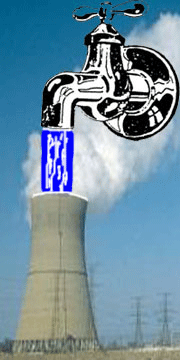 Effects of uranium mining and nuclear power on water.

Overuse of precious fresh water.One of the greatest dangers of the nuclear/uranium industry is in its use of water. Both uranium mining and nuclear reactors require enormous amounts of water. This is a threat to the world’s scarce resources of fresh water.
Pollution. Both uranium mining and nuclear reactors also pollute water. In uranium mining, water is often used to pour over radioactive dust tailings: radioactive water can leach down into groundwater. In the “in situ leach” process, radioactive water is disposed of into the aquifer.
Nuclear reactors use water for cooling – the resulting hot water is released into the source, river, or coastal sea, to thermally pollute the area, damaging plants and fish.
Effects of water scarcity, and hot water on nuclear reactors.. In heat waves, nuclear reactors often will need to be shut down, as their river sources of cooling water become too warm to function as a coolant.
As global warming brings about a rise in average temperatures and ocean levels, inland reactors will increasingly contribute to, and be affected by, water shortages. During the record-breaking 2003 heat wave in France, operations at 17 commercial nuclear reactors had to be scaled back or stopped because of rapidly rising temperatures in rivers and lake. Spain’s reactor at Santa María de Garoña was shut for a week in July 2006 after high temperatures were recorded in the Ebro River.
Paradoxically, then, the very conditions that made it impossible for the nuclear industry to deliver full power in Europe in 2003 and 2006 created peak demand for electricity, owing to the increased use of air conditioning. http://chellaney.net/2011/03/14/paradox-of-nuclear-power-water-guzzler-yet-vulnerable-to-water/
Seawater can be used to cool reactors, but it has to be purified. Corrosive elements in the seawater would otherwise ruin the reactors – so seawater is a last resort for cooling. As in the case of the Fukushima emergency – seawater was used, as ruining the reactors was preferable to a catastrophic nuclear meltdown.
No comments yet.
1 This Month
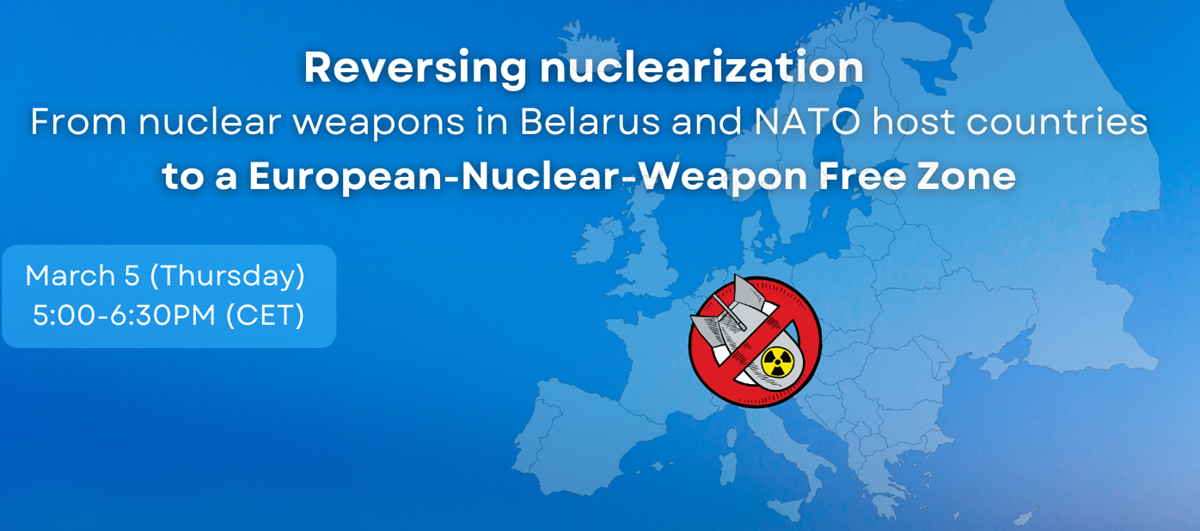
5 March -Online – Reversing nuclearization:
From nuclear weapons in Belarus and NATO host countries to a European-Nuclear-Weapon Free Zone
11am-12:30pm Eastern Time USA / 5pm-6:30pm CET

of the week – Advocating for a
nuclear free beach – https://www.samuellawrencefoundation.org/
The Samuel Lawrence Foundation advocates for a Nuclear Waste Free Beach at San Onofre, join us and take action!

10 March A LIVE WEBINAR THE REAL EFFECTS OF NUCLEAR POWER
What the Industry Isn’t Telling Us
1:00 PM Mountain, 2 pm Central, 3 pm Eastern. Live on the Keepers of the Water Facebook page

18 March Webinar @ 1 PM EST: An Assessment of SMR Projects: The Case of Canada
register for the zoom:
https://us02web.zoom.us/webinar/register/WN_o8BIIOUvQ2ONJR1nta65DQ#/registration

of the week – STOP SMALL MODULAR REACTORS IN CANADA
To see nuclear-related stories in greater depth and intensity – go to https://nuclearinformation.wordpress.com
-
Archives
- March 2026 (38)
- February 2026 (268)
- January 2026 (308)
- December 2025 (358)
- November 2025 (359)
- October 2025 (376)
- September 2025 (258)
- August 2025 (319)
- July 2025 (230)
- June 2025 (348)
- May 2025 (261)
- April 2025 (305)
-
Categories
- 1
- 1 NUCLEAR ISSUES
- business and costs
- climate change
- culture and arts
- ENERGY
- environment
- health
- history
- indigenous issues
- Legal
- marketing of nuclear
- media
- opposition to nuclear
- PERSONAL STORIES
- politics
- politics international
- Religion and ethics
- safety
- secrets,lies and civil liberties
- spinbuster
- technology
- Uranium
- wastes
- weapons and war
- Women
- 2 WORLD
- ACTION
- AFRICA
- Atrocities
- AUSTRALIA
- Christina's notes
- Christina's themes
- culture and arts
- Events
- Fuk 2022
- Fuk 2023
- Fukushima 2017
- Fukushima 2018
- fukushima 2019
- Fukushima 2020
- Fukushima 2021
- general
- global warming
- Humour (God we need it)
- Nuclear
- RARE EARTHS
- Reference
- resources – print
- Resources -audiovicual
- Weekly Newsletter
- World
- World Nuclear
- YouTube
-
RSS
Entries RSS
Comments RSS
 nuclear-news
Leave a comment