David Suzuki busts the spin on nuclear power and nuclear fallout
Fukushima to Canada: Nuclear power creates toxic pollution for 250,00 years http://www.agoracosmopolitan.com/news/canadian_news/2011/12/19/2288.html 19 DECEMBER 2011 The Canadian, BY : BY DAVID SUZUKI Anyone who thinks that Japan can “decontaminate” a region suffering from nuclear fallout in the manner presented in YouTube video has been duped if you read David Suzuki’s insights in the following article.
Nuclear power is experiencing a revival due to growing concerns about climate change. The nuclear industry has reinvented itself as an environmentally friendly option, producing electricity without the air pollution and greenhouse gas emissions of coal, oil or gas.
But a closer look reveals nuclear power is neither an environmentally or financially viable option. Nuclear power creates radioactive waste for which there is no accepted method of safely managing or storing.
It is also prohibitively expensive. The last plant constructed in
Ontario, Darlington, was budgeted at $3.4 billion but ended up costing
$15 billion when it was finally completed in the mid-1980s.
Environmental problems
Whatever benefits nuclear technology may provide through decreased air
pollutants are more than made up for by large and unresolved
environmental problems. As of 2000, Canada had 35,000 tonnes of highly
radioactive nuclear waste and nowhere to put it. With a radioactive
half-life of 25,000 years, nuclear waste remains dangerous for 250,000
years, meaning huge costs and risks for future generations.
As well, mining uranium for nuclear power is extremely
energy-intensive, meaning that nuclear power is in fact a considerable
source of greenhouse gases. Furthermore, routine releases and
accidental spills of contaminated water from mining operations have
poisoned fisheries and threatened the health of local communities.
Many safety issues surround nuclear power, especially as power plants
age. Nuclear plants routinely emit radioactive material, imposing
cancer risks on workers, their children and people in surrounding
communities. Power plants can also leak other hazardous materials. For
example, Pickering reactor #4 had a heavy water leak in April 1996
that released radioactive tritium into Lake Ontario, contaminating
drinking water supplies.
Economic problems
The energy source once billed as “too cheap to meter” has proven to be
one of the most expensive energy sources in history.
Between 1956 and 2000, Canada’s state-owned Atomic Energy of Canada
Limited (AECL) received subsidies totaling $16.6 billion. Even with
these subsidies, nuclear power is far more expensive than both fossil
fuels and renewables. The last 20 reactors built in the U.S. had an
average cost of $5,000 per kilowatt of capacity; the last one built in
Canada cost $4,000 per kilowatt. Compare these prices to the current
prices for large-scale wind power and natural gas plants, currently at
$1,200 and $1,000 per kilowatt respectively.
The figures for nuclear do not include lifecycle costs to society from
environmental and health damage, or the costs of accidents, clean up,
waste disposal or plant decommissioning. And nuclear plants are not
only expensive, they’re also financially risky because of their long
lead times, huge cost overruns and open-ended liabilities.
Internet site reference:
http://www.davidsuzuki.org/issues/climate-change/science/energy/nuclear-energy
1 Comment »
Leave a comment
1 This Month
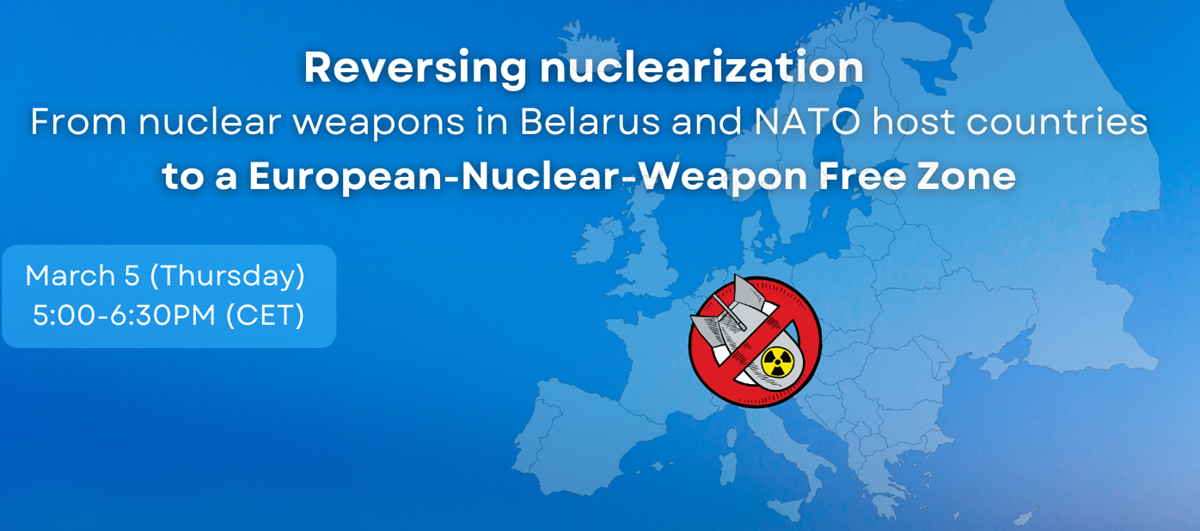
5 March -Online – Reversing nuclearization:
From nuclear weapons in Belarus and NATO host countries to a European-Nuclear-Weapon Free Zone
11am-12:30pm Eastern Time USA / 5pm-6:30pm CET

of the week – Advocating for a
nuclear free beach – https://www.samuellawrencefoundation.org/
The Samuel Lawrence Foundation advocates for a Nuclear Waste Free Beach at San Onofre, join us and take action!

10 March A LIVE WEBINAR THE REAL EFFECTS OF NUCLEAR POWER
What the Industry Isn’t Telling Us
1:00 PM Mountain, 2 pm Central, 3 pm Eastern. Live on the Keepers of the Water Facebook page


18 March Webinar @ 1 PM EST: An Assessment of SMR Projects: The Case of Canada
register for the zoom:
https://us02web.zoom.us/webinar/register/WN_o8BIIOUvQ2ONJR1nta65DQ#/registration

of the week – STOP SMALL MODULAR REACTORS IN CANADA
To see nuclear-related stories in greater depth and intensity – go to https://nuclearinformation.wordpress.com
-
Archives
- March 2026 (38)
- February 2026 (268)
- January 2026 (308)
- December 2025 (358)
- November 2025 (359)
- October 2025 (376)
- September 2025 (258)
- August 2025 (319)
- July 2025 (230)
- June 2025 (348)
- May 2025 (261)
- April 2025 (305)
-
Categories
- 1
- 1 NUCLEAR ISSUES
- business and costs
- climate change
- culture and arts
- ENERGY
- environment
- health
- history
- indigenous issues
- Legal
- marketing of nuclear
- media
- opposition to nuclear
- PERSONAL STORIES
- politics
- politics international
- Religion and ethics
- safety
- secrets,lies and civil liberties
- spinbuster
- technology
- Uranium
- wastes
- weapons and war
- Women
- 2 WORLD
- ACTION
- AFRICA
- Atrocities
- AUSTRALIA
- Christina's notes
- Christina's themes
- culture and arts
- Events
- Fuk 2022
- Fuk 2023
- Fukushima 2017
- Fukushima 2018
- fukushima 2019
- Fukushima 2020
- Fukushima 2021
- general
- global warming
- Humour (God we need it)
- Nuclear
- RARE EARTHS
- Reference
- resources – print
- Resources -audiovicual
- Weekly Newsletter
- World
- World Nuclear
- YouTube
-
RSS
Entries RSS
Comments RSS
 nuclear-news
Thank goodness SOME people can report what most news systems don’t seem to be able to!