High radiation exposure of Fukushima residents. Internal radiation not measured
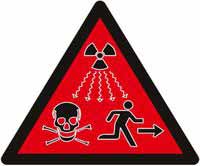 Exposure levels were higher for residents who worked at nuclear facilities.
The survey didn’t look at so-called internal exposure, or radiation taken into human body from contaminated air, water or food.
 Local Japan Survey Shows High Radiation Exposure WSJ, By YUKA HAYASHI, 14 Dec 11 TOKYO—Hundreds of Fukushima residents were exposed to radiation well above the level permitted for the general public following the March nuclear disaster, according to an official survey released Tuesday, confirming the accident’s broad impact on local communities.
But the survey of 1,589 residents—measuring radiation exposure to the
skin—from three towns near the disaster-hit Fukushima Daiichi nuclear
plant showed no residents were exposed to radiation above levels set
for forced evacuation. Some of the residents of the towns were
evacuated soon after the accident but others weren’t told to do so
until late April, which was criticized at the time as a relatively
slow reaction by the government, putting residents at risk of high
exposure.
The survey by the Fukushima Prefecture local government looked at the
cumulative external radiation exposure of residents of Namie, Iitate
and part of Kawamata towns in the four months following the March 11
accident. The towns aren’t the closest to the troubled plant; those
towns were evacuated soon after the accident and weren’t included in
the survey…..
Exposure levels were higher for residents who worked at nuclear
facilities. Of the 138 nuclear workers in the three towns, five were
exposed to radiation levels of over 10 millisieverts. The most
elevated level was reported for a worker who received 37.4
millisieverts.
The International Commission on Radiological Protection, an
influential Canada-based group of scientists that sets radiation
safety standards, recommends authorities limit radiation exposure
after a nuclear accident in the “lower part of the 1-20 millisievert
per year band.”
Experts say the risk of cancer increases in measurable ways once a
population is exposed to more than 100 millisieverts.
The survey didn’t look at so-called internal exposure, or radiation
taken into human body from contaminated air, water or food.
http://online.wsj.com/article/SB10001424052970204336104577096040486445190.html
No comments yet.
1 This Month

of the week – Shut Down Drone Warfare!


Tell the Ukrainian Government to Drop Prosecution of Peace Activist Yurii Sheliazhenko

Petition to revoke the licensing of the Near Surface Nuclear Disposal Facility (NSDF) at Chalk River. https://www.ourcommons.ca/petitions/en/Petition/Details?Petition=e-7247
To see nuclear-related stories in greater depth and intensity – go to https://nuclearinformation.wordpress.com
-
Archives
- March 2026 (230)
- February 2026 (268)
- January 2026 (308)
- December 2025 (358)
- November 2025 (359)
- October 2025 (376)
- September 2025 (257)
- August 2025 (319)
- July 2025 (230)
- June 2025 (348)
- May 2025 (261)
- April 2025 (305)
-
Categories
- 1
- 1 NUCLEAR ISSUES
- business and costs
- climate change
- culture and arts
- ENERGY
- environment
- health
- history
- indigenous issues
- Legal
- marketing of nuclear
- media
- opposition to nuclear
- PERSONAL STORIES
- politics
- politics international
- Religion and ethics
- safety
- secrets,lies and civil liberties
- spinbuster
- technology
- Uranium
- wastes
- weapons and war
- Women
- 2 WORLD
- ACTION
- AFRICA
- Atrocities
- AUSTRALIA
- Christina's notes
- Christina's themes
- culture and arts
- Events
- Fuk 2022
- Fuk 2023
- Fukushima 2017
- Fukushima 2018
- fukushima 2019
- Fukushima 2020
- Fukushima 2021
- general
- global warming
- Humour (God we need it)
- Nuclear
- RARE EARTHS
- Reference
- resources – print
- Resources -audiovicual
- Weekly Newsletter
- World
- World Nuclear
- YouTube
-
RSS
Entries RSS
Comments RSS
 nuclear-news
Leave a comment