Long range threat of Fukushima radiation accumulating on ocean floor
 the releases have not ended, so that is of concern. If the contaminants end up in the marine sediments/muds, then they will remain there for decades to come,
Fukushima ocean radiation could pose sleeper threat, Smart Planet, By David Worthington | December 7, 2011 Scientists have determined that the unprecedented release of radioactivity into the Pacific Ocean from the Fukushima nuclear disaster poses no direct exposure threat to people, but caution that the accumulated fallout lying in sediment is a potential danger for decades to come.
The findings were published in a report, Impacts of the Fukushima Nuclear Power Plants on Marine Radioactivity, on Wednesday. Levels of cesium and iodine peaked in April, a month after the core meltdowns when seawater used to cool the reactors and spent fuel rods was pumped out of the facility into the nearby ocean.
Levels of radioactive cesium peaked at 50 million times normal levels, becoming the largest accidental release of radiation into the ocean in history, said Woods Hole Oceanographic Institution chemist Ken Buesseler.
Buesseler and two Japanese colleagues, Michio Aoyama of the Meteorological Research Institute and Masao Fukasawa of the Japan Agency for Marine-Earth Science and Technology, collaborated on the report. The Gordon and Betty Moore Foundation and the National Science Foundation’s Chemical Oceanography program funded the research.
The concentrations of cesium offshore were much higher than those measured in the ocean after the Chernobyl accident 25 years ago, Buesseler added. …. radiation remained 10,000 times higher than baseline levels measured a year before the disaster through July.
Samples were taken 18 miles offshore from the reactors.
It is highly likely that there were continued direct releases from the reactors or storage tanks, as well as indirect releases from contaminated groundwater or coastal sediments, according to the report.
Tokyo Electric Power Company, the owners of the Fukushima reactors, disclosed that 45 tons of highly radioactive wastewater containing strontium escaped from a treatment facility this past weekend.
“This latest news suggests that the releases have not ended, so that is of concern. If the contaminants end up in the marine sediments/muds, then they will remain there for decades to come, and thus potentially be of concern for benthic biota and consumers of benthic fish/shell fish, i.e. any local filter feeders near the source waters at the coast,” said Buesseler.
Strontium has a similar 30-year half-life to cesium, and is linked to bone cancer. Buesseler noted that small fish eaten with the bones (vs. filets) could be enriched with radiation, but said that measuring the isotopes was challenging and could take time……
No comments yet.
1 This Month
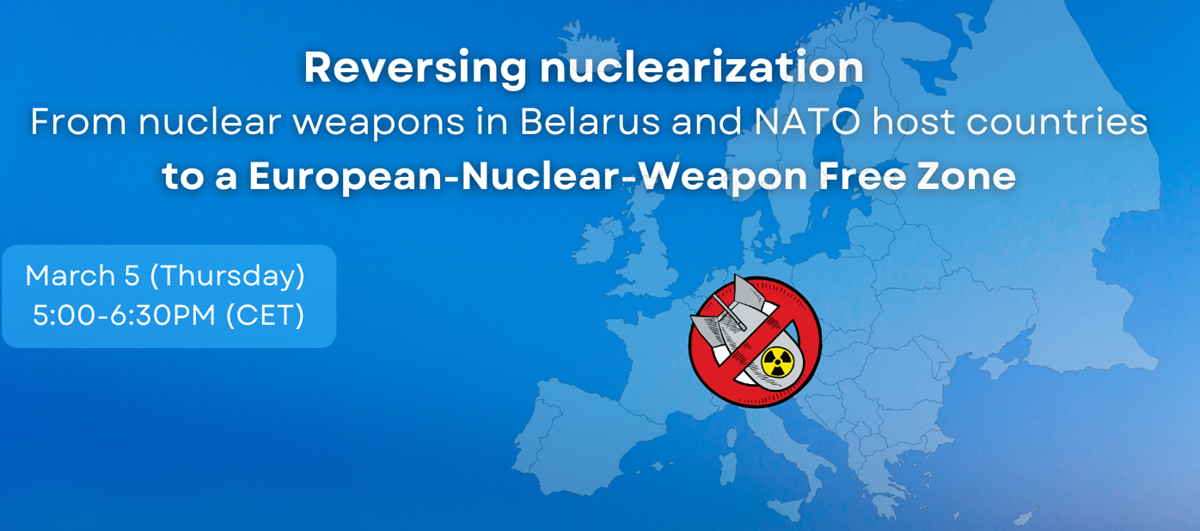
5 March -Online – Reversing nuclearization:
From nuclear weapons in Belarus and NATO host countries to a European-Nuclear-Weapon Free Zone
11am-12:30pm Eastern Time USA / 5pm-6:30pm CET

of the week – Advocating for a
nuclear free beach – https://www.samuellawrencefoundation.org/
The Samuel Lawrence Foundation advocates for a Nuclear Waste Free Beach at San Onofre, join us and take action!

10 March A LIVE WEBINAR THE REAL EFFECTS OF NUCLEAR POWER
What the Industry Isn’t Telling Us
1:00 PM Mountain, 2 pm Central, 3 pm Eastern. Live on the Keepers of the Water Facebook page

18 March Webinar @ 1 PM EST: An Assessment of SMR Projects: The Case of Canada
register for the zoom:
https://us02web.zoom.us/webinar/register/WN_o8BIIOUvQ2ONJR1nta65DQ#/registration

of the week – STOP SMALL MODULAR REACTORS IN CANADA
To see nuclear-related stories in greater depth and intensity – go to https://nuclearinformation.wordpress.com
-
Archives
- March 2026 (51)
- February 2026 (268)
- January 2026 (308)
- December 2025 (358)
- November 2025 (359)
- October 2025 (376)
- September 2025 (258)
- August 2025 (319)
- July 2025 (230)
- June 2025 (348)
- May 2025 (261)
- April 2025 (305)
-
Categories
- 1
- 1 NUCLEAR ISSUES
- business and costs
- climate change
- culture and arts
- ENERGY
- environment
- health
- history
- indigenous issues
- Legal
- marketing of nuclear
- media
- opposition to nuclear
- PERSONAL STORIES
- politics
- politics international
- Religion and ethics
- safety
- secrets,lies and civil liberties
- spinbuster
- technology
- Uranium
- wastes
- weapons and war
- Women
- 2 WORLD
- ACTION
- AFRICA
- Atrocities
- AUSTRALIA
- Christina's notes
- Christina's themes
- culture and arts
- Events
- Fuk 2022
- Fuk 2023
- Fukushima 2017
- Fukushima 2018
- fukushima 2019
- Fukushima 2020
- Fukushima 2021
- general
- global warming
- Humour (God we need it)
- Nuclear
- RARE EARTHS
- Reference
- resources – print
- Resources -audiovicual
- Weekly Newsletter
- World
- World Nuclear
- YouTube
-
RSS
Entries RSS
Comments RSS
 nuclear-news
Leave a comment