Japan’s nuclear clique, the “nuclear village” fighting to stop renewable energy
the Diet managers were proposing 3 people, a majority, from the nuclear village who are disinclined to support renewables
Japanese renewable-energy supporters present credible evidence that Shindo and his compatriots’ backgrounds show them to be major figures in the clique that devised the policies that led to Japan’s current very low level of renewables and over-reliance on nuclear and other unsustainable power sources. Their suggested appointment to the FIT price-setting council is an indication of how strong the nuclear village remains in Nagatacho and Kasumigaseki, the political and bureaucratic centres of the central government even after support for nuclear power plummeted in public opinion polls.

Japan’s Nuclear Village Wages War on Renewable Energy and the Feed-in Tariff
Japan Focus Dec. 08, 2011, Andrew DeWit The effects of the Fukushima shock continue to spread. Throughout the eventful summer, one of those consequences was the turn away from nuclear power with a dramatic emphasis on renewable power and the feed-in tariff (FIT) to deploy it fast. The FIT policy was championed by former Prime Minister Kan Naoto as well as the CEO of Softbank, Son Masayoshi. They and others in the political, business, non-profit, and academic communities strongly endorsed a legislative bill to expand Japan’s handicapped FIT to geothermal, wind, biomass and small hydro.
The bill was passed on August of 26 with explicit constraints on the Ministry of Economy Trade and Industry’s (METI) capacity to hamstring renewables in favour of nuclear power and on behalf of the nuclear village. Notably, the bill took price setting out of METI’s hands. But now METI and its allies in the nuclear village are trying to get that clout back in their hands.
The price-setting mechanism is of signal importance because the role of the FIT is to provide incentives for the adoption of renewable energy. At present most renewable energy produces power that is more expensive than conventional forms of energy, especially coal. The cost of renewable energy is rapidly declining, however, with solar module prices falling by 40% within this year alone. We can see a quickly changing cost profile wherein prices for conventional power are rising while renewable power costs are declining at an accelerating rate.
The point of crossover, where a given renewable source’s cost drops below the average for conventional power, depends on the speed of these movements. The FIT helps to accelerate renewables’ cost reduction by purchasing their currently more expensive power at a guaranteed price and for a guaranteed period of time, with the cost borne by the consumer and the price support ratcheted down with the falling cost of energy production. Thus the FIT gives renewable power producers, such as households, farmers, large and small businesses, local governments, and other actors the pecuniary incentive to install renewable energy power generation.
The minutiae of the pricing function are extremely important because renewables vary greatly in their degree of maturity and hence their respective cost profiles. For example, onshore wind power is a relatively mature renewable power generation source, one whose need for price support is relatively low. By contrast, the per-kilowatt hour cost of solar is still high, and hence solar requires an adequate cost premium to be an attractive target of investment. Also, geothermal costs less per unit of power output than solar but is more expensive than wind. Hence, in order to maximize the production of renewable energy, an appropriate premium needs to be paid to ensure that there is sufficient incentive to invest in a variety of renewable power sources…..
A 5-member price-setting committee was written into the bill that passed on August 26 and is now in process of becoming a reality. This process has set off a firestorm of controversy. The controversy erupted in the last week of November when it became apparent that the Diet managers were proposing 3 people, a majority, from the nuclear village who are disinclined to support renewables through an advanced FIT. One of these individuals is Shindo Kosei, Executive VP of Nippon Steel and head of Keidanren’s Global Environment Division. Japanese renewable-energy supporters present credible evidence that Shindo and his compatriots’ backgrounds show them to be major figures in the clique that devised the policies that led to Japan’s current very low level of renewables and over-reliance on nuclear and other unsustainable power sources. Their suggested appointment to the FIT price-setting council is an indication of how strong the nuclear village remains in Nagatacho and Kasumigaseki, the political and bureaucratic centres of the central government even after support for nuclear power plummeted in public opinion polls. The December 2 Asahi newspaper was sufficiently alarmed by these developments to call on the Democrats and their allies to reconsider the suggested appointments.
When the very large and growing coalition in support of renewables got wind of this move to install three anti-FIT people on the 5-person committee, a powerful wave of opposition was set in motion. About November 28, this wave started from within the Institute for Sustainable Energy Policies and its allied organizations and began traveling rapidly through the social media. The issue was brought up in the mainstream press by midweek and had expanded to the editorial in the mainstream Asahi newspaper by December 2nd. Complementing the editorial major news conferences and other events. A major press conference is slated for December 5 and will be followed up by additional coverage and activism.
It will be interesting, to say the least, to watch how this unfolds. Certainly the government of PM Noda seems to be inclined to favor Tepco and the other monopolized utilities that dominate nuclear power. The nuclear village affords campaign finance and votes at a time of nerve-wracking political and economic instability…..
Tepco should be nationalized in order to resolve this core issue and related urgent matters such as deregulating the power economy. But it would seem that the nuclear village has convinced the Noda regime to exclude deregulation of power from the upcoming (by the end of December) and hastily announced interim report of the all-import METI Advisory Committee for Natural Resources and Energy. Not to nationalize and deregulate this clearly bankrupt firm and parasitized market risks a protracted game of passing hot-potato costs back and forth between Tepco and the state while pretending that they don’t exist. All the while, the game detracts from Japan’s ability to address its real problems including what to do in the face of mounting difficulties in the international economy. …
No comments yet.
1 This Month
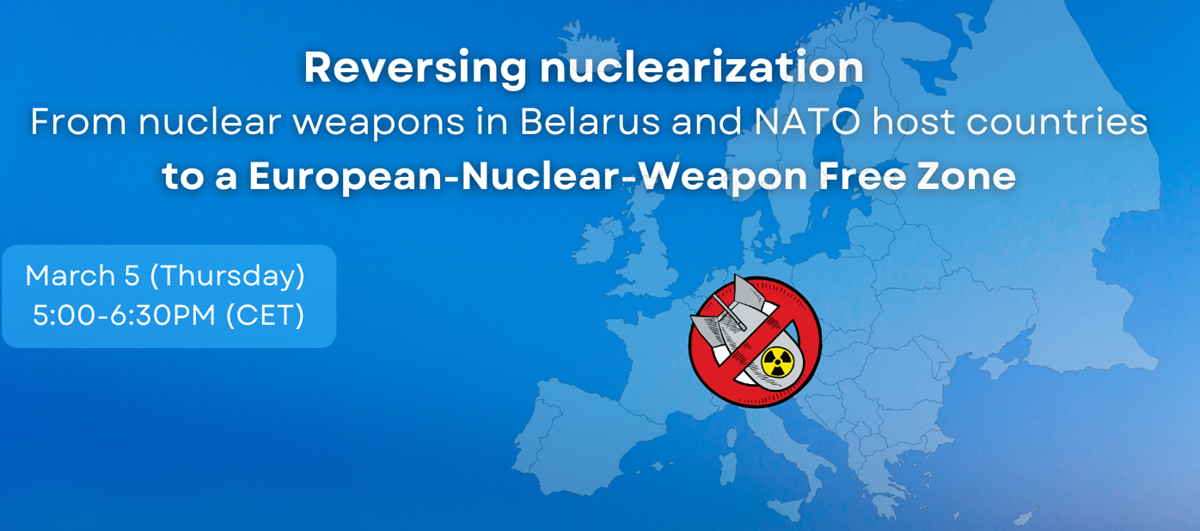
5 March -Online – Reversing nuclearization:
From nuclear weapons in Belarus and NATO host countries to a European-Nuclear-Weapon Free Zone
11am-12:30pm Eastern Time USA / 5pm-6:30pm CET

of the week – Advocating for a
nuclear free beach – https://www.samuellawrencefoundation.org/
The Samuel Lawrence Foundation advocates for a Nuclear Waste Free Beach at San Onofre, join us and take action!

10 March A LIVE WEBINAR THE REAL EFFECTS OF NUCLEAR POWER
What the Industry Isn’t Telling Us
1:00 PM Mountain, 2 pm Central, 3 pm Eastern. Live on the Keepers of the Water Facebook page


18 March Webinar @ 1 PM EST: An Assessment of SMR Projects: The Case of Canada
register for the zoom:
https://us02web.zoom.us/webinar/register/WN_o8BIIOUvQ2ONJR1nta65DQ#/registration

of the week – STOP SMALL MODULAR REACTORS IN CANADA
To see nuclear-related stories in greater depth and intensity – go to https://nuclearinformation.wordpress.com
-
Archives
- March 2026 (51)
- February 2026 (268)
- January 2026 (308)
- December 2025 (358)
- November 2025 (359)
- October 2025 (376)
- September 2025 (258)
- August 2025 (319)
- July 2025 (230)
- June 2025 (348)
- May 2025 (261)
- April 2025 (305)
-
Categories
- 1
- 1 NUCLEAR ISSUES
- business and costs
- climate change
- culture and arts
- ENERGY
- environment
- health
- history
- indigenous issues
- Legal
- marketing of nuclear
- media
- opposition to nuclear
- PERSONAL STORIES
- politics
- politics international
- Religion and ethics
- safety
- secrets,lies and civil liberties
- spinbuster
- technology
- Uranium
- wastes
- weapons and war
- Women
- 2 WORLD
- ACTION
- AFRICA
- Atrocities
- AUSTRALIA
- Christina's notes
- Christina's themes
- culture and arts
- Events
- Fuk 2022
- Fuk 2023
- Fukushima 2017
- Fukushima 2018
- fukushima 2019
- Fukushima 2020
- Fukushima 2021
- general
- global warming
- Humour (God we need it)
- Nuclear
- RARE EARTHS
- Reference
- resources – print
- Resources -audiovicual
- Weekly Newsletter
- World
- World Nuclear
- YouTube
-
RSS
Entries RSS
Comments RSS
 nuclear-news
Leave a comment