Australia’s hypocrisy on uranium exporting and nuclear disarmament
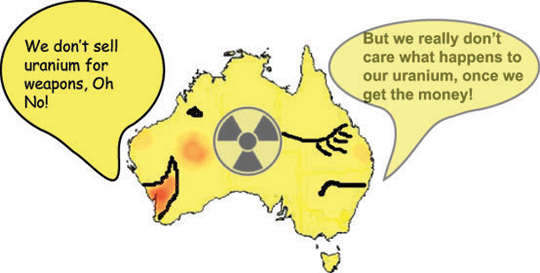
states – the U.S., U.K., China, France, Russia – although not one of them takes seriously its obligation under the Non-Proliferation Treaty (NPT) to pursue disarmament in good faith.
policy and binding Labor platform policy. That’s pretty low. We claim to have championed the adoption of ‘Additional Protocols’,
agreements that provide the International Atomic Energy Agency (IAEA)
with somewhat greater powers to uncover covert weapons programs. But
we waited until all of our customer countries had an Additional
Protocol in place before making it a condition of uranium sales,
that’s not leveraging improvements in the safeguards regime, it’s
low-brow PR.
We claim to be working to discourage countries from producing fissile
(explosive) material for nuclear bombs, yet we export uranium to
countries blocking progress on the proposed Fissile Material Cut-Off
Treaty. And we give Japan permission to separate and stockpile
plutonium although that stockpiling has fanned regional proliferation
risks and tensions in North-East Asia for many years…….
Australia has a relatively ‘strict’ policy of requiring Australian
consent to separate and stockpile plutonium produced from Australian
uranium. In practice we have failed when put to the test and
permission to separate plutonium has never once been refused.
We sell uranium to countries with a recent history of weapons-related
research. In 2004, South Korea disclosed information about a range of
weapons-related R&D over the preceding 20 years. Australia has
supplied South Korea with uranium since 1986. We don’t know whether
Australian uranium or its by-products were used in any of the illicit
research in South Korea. The attitude from the Howard government and
its safeguards office was ‘see no evil, hear no evil’.
The 2006 approval to sell uranium to China set another new low:
uranium sales to an undemocratic, secretive state with an appalling
human rights record (such as jailing nuclear whistle-blowers). That
precedent was reinforced with the subsequent approval of uranium sales
to Russia (another undemocratic nuclear weapons state, though Russia
prefers to deal with dissidents by poisoning them with radioactive
polonium).
The Russian agreement set a new low: uranium sales to a country that
is very rarely visited by International Atomic Energy Agency (IAEA)
safeguards inspectors – just two inspections over the past decade.
Federal parliament’s treaties committee recommended against uranium
sales to Russia until some sort of safeguards system was put in place,
only to have its recommendation ignored.
Another new low with the Russian agreement: we granted permission to
Russia to process Australian uranium at a nuclear plant that is
entirely beyond the scope of IAEA inspections. The IAEA has no
authority to inspect the plant even if it had the resources and the
inclination to do so.
The decision to sell to India sets a new low: uranium sales to a
country which is outside the NPT altogether and is not subject to the
requirement of the ‘declared’ weapons states to pursue nuclear
disarmament in good faith. As former Defence Department Secretary Paul
Barratt recently said: “The discrimination is in India’s favour, not
against it.”
And another low: India would be the only one of Australia’s uranium
customers that is definitely continuing to produce fissile material
for weapons (China may also be doing so).
And another low: we take pride in Australia’s ‘leadership’ role in the
development of the Comprehensive Test Ban Treaty yet we sell uranium
to countries that have signed but not ratified the CTBT (the U.S and
China) and the government now plans to sell uranium to India, which
has neither signed nor ratified the CTBT. The CTBT remains in limbo
because those three countries, and a few others, refuse to ratify it.
And another low: if uranium sales to India proceed, it will be the
first time since the Cold War that we have sold uranium to a country
which is engaged in a nuclear arms race. India and Pakistan have
increased the size of their nuclear weapons arsenals by 25-35 per cent
over the past year alone. Both continue to develop nuclear-capable
missiles. Both are expanding their capacity to produce fissile
material. Both refuse to sign or ratify the CTBT.
The India decision marks a low-point in Australia’s international
diplomacy. To permit uranium sales with no meaningful commitment by
India to curb its weapons program, …
How low can we go? Plans are in train to sell uranium to the United
Arab Emirates, probably followed by other undemocratic state in the
Middle East. We were planning uranium sales to the Shah of Iran months
before his overthrow in 1979. The Middle East has been (and remains) a
nuclear hot-spot with numerous covert nuclear weapons programs –
successful, aborted, destroyed or ongoing. The Middle East has also
seen numerous conventional military strikes and attempted strikes on
nuclear plants, in Iraq (several times), Iran, Israel, and most
recently Israel’s strike on a suspected reactor site in Syria.
Short of selling uranium deliberately and specifically for weapons
production – as we did after World War II – I don’t think its possible
for Australian uranium export policy to sink any lower.
http://www.onlineopinion.com.au/view.asp?article=12991&page=2
No comments yet.
1 This Month
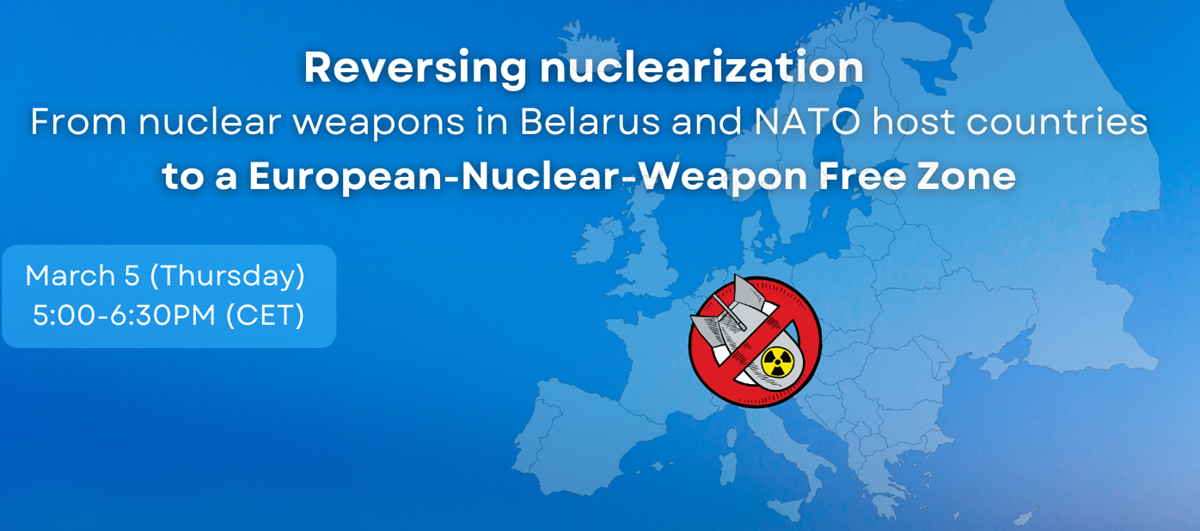
5 March -Online – Reversing nuclearization:
From nuclear weapons in Belarus and NATO host countries to a European-Nuclear-Weapon Free Zone
11am-12:30pm Eastern Time USA / 5pm-6:30pm CET

of the week – Advocating for a
nuclear free beach – https://www.samuellawrencefoundation.org/
The Samuel Lawrence Foundation advocates for a Nuclear Waste Free Beach at San Onofre, join us and take action!
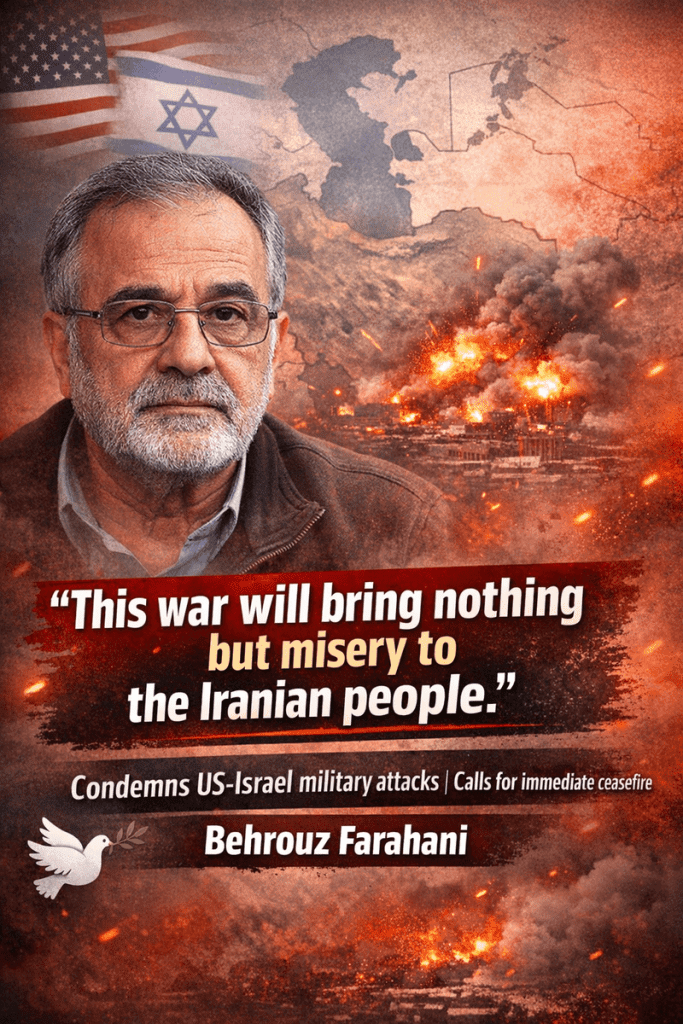
10 March A LIVE WEBINAR THE REAL EFFECTS OF NUCLEAR POWER
What the Industry Isn’t Telling Us
1:00 PM Mountain, 2 pm Central, 3 pm Eastern. Live on the Keepers of the Water Facebook page

18 March Webinar @ 1 PM EST: An Assessment of SMR Projects: The Case of Canada
register for the zoom:
https://us02web.zoom.us/webinar/register/WN_o8BIIOUvQ2ONJR1nta65DQ#/registration

of the week – STOP SMALL MODULAR REACTORS IN CANADA
To see nuclear-related stories in greater depth and intensity – go to https://nuclearinformation.wordpress.com
-
Archives
- March 2026 (51)
- February 2026 (268)
- January 2026 (308)
- December 2025 (358)
- November 2025 (359)
- October 2025 (376)
- September 2025 (258)
- August 2025 (319)
- July 2025 (230)
- June 2025 (348)
- May 2025 (261)
- April 2025 (305)
-
Categories
- 1
- 1 NUCLEAR ISSUES
- business and costs
- climate change
- culture and arts
- ENERGY
- environment
- health
- history
- indigenous issues
- Legal
- marketing of nuclear
- media
- opposition to nuclear
- PERSONAL STORIES
- politics
- politics international
- Religion and ethics
- safety
- secrets,lies and civil liberties
- spinbuster
- technology
- Uranium
- wastes
- weapons and war
- Women
- 2 WORLD
- ACTION
- AFRICA
- Atrocities
- AUSTRALIA
- Christina's notes
- Christina's themes
- culture and arts
- Events
- Fuk 2022
- Fuk 2023
- Fukushima 2017
- Fukushima 2018
- fukushima 2019
- Fukushima 2020
- Fukushima 2021
- general
- global warming
- Humour (God we need it)
- Nuclear
- RARE EARTHS
- Reference
- resources – print
- Resources -audiovicual
- Weekly Newsletter
- World
- World Nuclear
- YouTube
-
RSS
Entries RSS
Comments RSS
 nuclear-news
Leave a comment