We may be entering an era of rational laws for the public good
 One reason the US consistently sets such lame renewable energy goals and then fails to meet them is that the carbon lobby has owned Congress for decades and recently has figured out how to successfully control broadcast media and Presidential elections.
But we may be entering an era where looking after the public good by enacting rational regulations experiences a resurgence, as happened with environmental law and regulation making in the 1970’s….
Is It Too Late To Stem A Worldwide Outbreak Of Rational Governance?, Tree Hugger, John Laumer, November 28, 2011 Something interesting is going on in Australia. The world’s first national carbon tax was just finalized. What makes this especially interesting is that they have an economy highly dependent upon coal exports and coal burning…..
Jaitapur nuclear plant delayed in haggles over Nuclear Liability Law, and Nuclear Non Proliferation Treaty
 Jaitapur nuclear plant work may not start before 2014 France, says
  Bernard Bigot, remains committed to fulfil all its obligations LiveMint.com 28 Nov 11Makarand Gadgil Mumbai: French Atomic Energy Commission chairman Bernard Bigot said on Monday that work on the Jaitapur nuclear power project in Ratnagiri district of Maharashtra was unlikely to start before 2014 due to regulatory hurdles
He referred to the delay in concluding the commercial contract between Areva and the government-owned Nuclear Power Corp. of India Ltd (NPCIL) Continue reading
Renewable energy set to boom
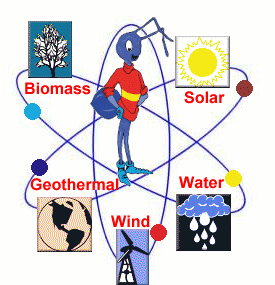 “These results indicate that last year’s record renewable energy investment was no one-off despite the recent economic gloom. Big winners over the next 20 years will be the emerging renewable energy hubs in Latin America, Asia, the Middle East and Africa
Bloomberg Predicts $7 Trillion Renewable Energy Spend By 2030, by Energy Matters, 29 Nov 11 New figures from Bloomberg New Energy Finance (BNEF) predict that by 2030, global spending on renewable energy installations will have hit $7 trillion.
BNEF predicts doubling from 2010’s record-breaking $195 billion, to $395 billion in 2020, before reaching $460 billion in 2030. By 2030, the report states, 15.7 percent of the world’s energy (including hydropower) will come from renewable sources. Continue reading
$trillions at stake, as nuclear ‘renaissance’ falters
 With nuclear plants costing several billion dollars apiece, the answer
  to those questions may be worth a trillion dollars to the nuclear industry. Little wonder that the main players have rushed to reassure their clients that all is well.
The American nuclear industry has also gone on a public relations drive.
Greenpeace EU Policy Campaigner Jan Haverkamp. “Fukushima will end all this talk about a nuclear renaissance. The industry says nothing will change. Forget it,”
The Nuclear Industry’s Trillion Dollar Question, 28-Nov-11, FRANCE, Muriel Boselli and Geert De Clercq “……Before Fukushima, more than 300 nuclear reactors were planned or proposed worldwide, the vast majority of them in fast-growing developing economies. While parts of the developed world might now freeze or even reduce their reliance on nuclear, emerging markets such as China, India, the Middle East and Eastern Europe will continue their nuclear drive.
But with fewer plants to bid on, the competition for new projects is likely to grow even fiercer — and more complicated. Will concern about safety benefit Western reactor builders, or will cheaper suppliers in Russia and South Korea hold their own? And what if the crisis at Fukushima drags on as appears likely? Could it still trigger the start of another ice age for nuclear power, like Chernobyl did in 1986? Or will it be a bump, a temporary dip in an upward growth curve? Continue reading
French company AREVA finding wind energy a better bet than nuclear?
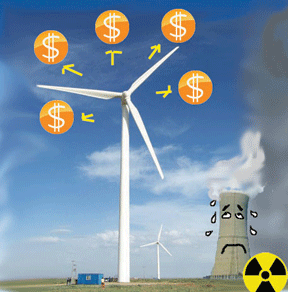 Areva has looked to diversify away from
  nuclear energy and build up solar, wind and biomassbusinesses. …..Areva has teamed up with energy group GDF Suez SA and concessions company Vinci SA to bid for a part of the French government’s wind turbine project…The French government aims for a total of 1,200 wind turbines to be eventually built, costing a total of €10 billion.
In mid-December Areva is set to detail the financial impact of the nuclear disaster at Fukushima this March.
Areva Diversifies Further Into Wind, WSJ, 28 Nov, By MAX COLCHESTER And NOÉMIE BISSERBE, PARIS—Areva SA said Monday it is in advanced talks to build about 120 wind turbines at two offshore wind farms in Germany, as theengineering group continues to diversify away from nuclear energy…. Continue reading
Illness of Fukushima nuclear plant director – could be radiation caused?
Fukushima nuclear power plant director steps down suddenly due to ‘illness’ The director of Japan’s damaged Fukushima nuclear power plant is stepping down due to illness, with officials refusing to confirm whether his condition is radiation related. The Telegraph By Danielle Demetriou in Tokyo 28 Nov 2011 Masao Yoshida, 56, has been hospitalised for “treatment of illness” and will relinquish his director post at Fukushima Daiichi nuclear power plant in northeast Japan from Thursday.
His sudden departure without a specific medical explanation is likely to prompt speculation surrounding the possible connection between his medical condition and exposure to high radiation levels at the plant……
Mr Yoshida has been on site at Fukushima Daiichi plant for more than eight months, ever since the March 11 earthquake and tsunami knocked out crucial cooling systems and sparked the ongoing crisis…. http://www.telegraph.co.uk/news/worldnews/asia/japan/8919991/Fukushima-nuclear-power-plant-director-steps-down-suddenly-due-to-illness.html
Taiwan’s nuclear waste dilemma

 Activists challenge government on nuclear waste management policy, Taiwan News, Central News Agency, Taipei, By Hsu Chih-wei and Elizabeth Hsu Nov. 28 (CNA) Environmental groups charged Monday that Taiwan’s government has not resolved how to deal with nuclear waste and proposed suspending operations at the country’s three nuclearpower plants until the issue was dealt with.
The environmentalists made the appeal at an environmental assessment meeting held by the
Cabinet-level Environmental Protection Administration (EPA) on the government’s radioactive waste management policy. During the meeting, officials from the Atomic Energy Council (AEC), the country’s top nuclear regulatory body, presented a report on its proposed approach to dealing with nuclear waste that will become official policy ifapproved by the EPA assessment committee. One of the plan’s centerpieces was to have nuclear waste recycled overseas beforeshipping it back to Taiwan for permanent storage.
But environmental activists, including Green Citizens’ Action Alliance Deputy Secretary-General Hung Shen-han, were not convinced the solution was viable and advocated shutting down Taiwan’s three nuclear power plants until the issue was clearly addressed. Hung contended that one way or another, radioactive waste had to be stored either at home or abroad, and no foreign country has so far been willing to lease Taiwan land for storage of the waste. He acknowledged that radioactive waste could be recycled overseas but said the leftover material was still unstable and would still have to be stored in Taiwan, which he saw as a bad option.
Hung compared nuclear waste to a ticking time-bomb that threatened the life and
property of Taiwan’s people because of the unstable geographic nature of the island, which is prone to earthquakes. …. The government has selected Wuchiu in Kinmen and Daren in Taitung to serve as permanent storage sites for the waste, but it has encountered strong opposition from people in the two townships. http://www.taiwannews.com.tw/etn/news_content.php?id=1771961
The lingering nuclear disaster of Chernobyl
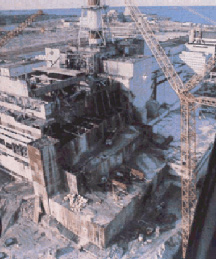 the global death toll by 2004 was closer to 1 million and said health effects included birth defects, pregnancy losses, accelerated aging, brain damage, heart, endocrine, kidney, gastrointestinal and lung diseases.
The physical and financial legacies of that disaster are obvious: a 30-km uninhabited ring around the Chernobyl plant, billions of dollars spent cleaning the region and a major new effort to drum up 600 million euros ($840 million) in fresh funds that Kiev says is needed to build a more durable casement over the stricken reactor. Continue reading
Explosion near Isfahan, in Iran, possibly near nuclear centre
| Blast near Iran nuclear facility Gulf Daily News, , November 29, 2011 |
 TEHRAN: The sound of an apparent explosion was heard from Iran’s Isfahan city yesterday, Gholamreza Ansari, the head of the judiciary in the province said. An important Iranian nuclear facility involved in processing uranium is located near the city, although Iranian media reports did not say whether the explosion was near the nuclear centre. International Atomic Energy Agency spokeswoman Gill Tudor said the UN watchdog was aware of the reports but had no further information. TEHRAN: The sound of an apparent explosion was heard from Iran’s Isfahan city yesterday, Gholamreza Ansari, the head of the judiciary in the province said. An important Iranian nuclear facility involved in processing uranium is located near the city, although Iranian media reports did not say whether the explosion was near the nuclear centre. International Atomic Energy Agency spokeswoman Gill Tudor said the UN watchdog was aware of the reports but had no further information.
Iranian media provided contradictory information about the incident, which came less that three weeks after a massive explosion at a military base near Tehran that killed more than a dozen members of the Revolutionary Guard including the head of its missile forces…. http://www.gulf-daily-news.com/NewsDetails.aspx?storyid=318693 |
American public misunderstands scientific agreement on climate change
 “It is no accident that so many Americans misunderstand the widespread scientific agreement about human-caused climate change. A well-financed disinformation campaign deliberately created a myth about there being lack of agreement. The climate science community should take all reasonable measures to put this myth to rest.”
Support for Climate Policy Linked to People’s Perceptions About Scientific Agreement Regarding Global Warming, ScienceDaily (Nov. 21, 2011) — People who believe there is a lot of disagreement among scientists about global warming tend to be less certain that global warming is happening and less supportive of climate policy, researchers at George Mason, San Diego State, and Yale Universities report in a new study published in the journal Nature Climate Change. Continue reading
The risks and consequences of a nuclear war between USA and China
Is a Nuclear War with China Possible?, Huntington News.net , November 28, 2011 – BY LAWRENCE S. WITTNER While nuclear weapons exist, there remains a danger that they will be used. After all, for centuries national conflicts have led to wars, with nations employing their deadliest weapons. The current deterioration of U.S. relations with China might end up providing us with yet another example of this phenomenon. Continue reading
India’s confused nuclear weapons policy
Nuclear weapons have limited, not augmented, India’s strategic options, BY:RAMESH THAKUR , THE AUSTRALIAN . November 29, 2011 “….India’s nuclear weapons policy remains confused. ……..Under prime minister Jawaharlal Nehru’s formative influence, India’s nuclear policy used to be that of a disarmament champion informed by a strategic vision. By contrast, its policy as a nuclear-armed state since 1998 has been ad hoc and episodic.
……Before 1998, India refused to let interests come in the way of principles. Since 1998, India has defined national security so narrowly that values are not allowed to “infect” interests. ……..Recent decades have involved a flexing of muscle devoid of value-promoting notions of good governance.
India is the proud possessor of nuclear weapons, but projects little sophisticated sense of how to use them for deterrence, defence or compellence guided by strategic doctrines. Pakistan has concluded that India’s non-response to serial terrorist provocations is the product of nuclear stalemate in the subcontinent, meaning that, far from augmenting, nuclear weapons have further limited India’s strategic options.
In the meantime, the poverty of India’s moral leadership is reflected in the near-total lack of nuclear disarmament leadership. India needs to bestir itself to make the transition to a norm entrepreneur once again.
Does India seek nuclear abolition? Does it wish to join the NPT-licit powers in converting the NPT from a de jure nuclear prohibition into a de facto non-proliferation regime? Or would it be happiest with the early collapse of the NPT regime and relaxed at proliferation?
Without these answers, India’s nuclear policy will remain ad hoc, reactive and hostage to events and forces outside its control.. http://www.theaustralian.com.au/news/world/nuclear-weapons-have-limited-not-augmented-indias-strategic-options/story-e6frg6ux-1226208508350
Australia breaking international law if selling uranium to India
PLANS to sell uranium to India could hit a legal snag because of an anti-nuclear treaty Australia helped create. Herald Sun, 29 Nov 11Australian National University treaty law expert Don Rothwell says the South Pacific Nuclear Free Zone treaty, known as the Rarotonga treaty, stops Australia trading the nuclear material with India.
Prof Rothwell, who questioned the legality of the Malaysian solution before it was rejected by the High Court, has provided advice to the International Campaign to Abolish Nuclear Weapons.
“If India does not agree to Article III.1 Non-Proliferation Treaty safeguards and Australia were to export uranium to India, Australia would be in violation of its Treaty of Rarotonga obligations,” the legal advice says.
This could lead to a challenge from other countries that are part of the treaty.
Prime Minister Julia Gillard wants the ALP to agree to change its platform to allow sales of uranium to India, which she has said would create jobs in Australia and would still have safeguards attached.
A vote will be put to members at the party’s national conference this weekend.
The Coalition already has a policy to allow uranium sales to India.
Tim Wright, the Australian director of ICAN, said the Prime Minister had failed to consult her lawyers. “Not only is the sale of uranium to India illegal, it is also highly dangerous given that India is rapidly bolstering its nuclear forces,” Mr Wright said….http://www.heraldsun.com.au/news/more-news/rarotonga-treaty-may-prevent-sale-of-uranium-to-india/story-fn7x8me2-1226208772517
France’s politics making the nuclear industry anxious
Uranium And The French Threat FN Arena News – Greg Peel – 29 Nov… TradeTech did not publish its usual weekly update on uranium spot market … impact on European CO2 pricing (which might be interesting for Australia). …
|
Drug use among nuclear plant workers – eleven sacked
Nuclear plant workers fired over alleged drug use, KAREN HOWLETT TORONTO Globe and Mail, Nov. 28, 2011 Eleven employees at a nuclear power station in Ontario have been dismissed with cause for allegedly using drugs on the job.
Ontario Power Generation issued a statement Monday evening, saying it took prompt action to ensure that neither the safety nor security of the nuclear plant was compromised after allegations of the drug-related activity were made…. http://www.theglobeandmail.com/news/national/nuclear-plant-workers-fired-over-alleged-drug-use/article2252432/
1 This Month

of the week – Shut Down Drone Warfare!


Tell the Ukrainian Government to Drop Prosecution of Peace Activist Yurii Sheliazhenko

Petition to revoke the licensing of the Near Surface Nuclear Disposal Facility (NSDF) at Chalk River. https://www.ourcommons.ca/petitions/en/Petition/Details?Petition=e-7247
To see nuclear-related stories in greater depth and intensity – go to https://nuclearinformation.wordpress.com
-
Archives
- March 2026 (237)
- February 2026 (268)
- January 2026 (308)
- December 2025 (358)
- November 2025 (359)
- October 2025 (376)
- September 2025 (257)
- August 2025 (319)
- July 2025 (230)
- June 2025 (348)
- May 2025 (261)
- April 2025 (305)
-
Categories
- 1
- 1 NUCLEAR ISSUES
- business and costs
- climate change
- culture and arts
- ENERGY
- environment
- health
- history
- indigenous issues
- Legal
- marketing of nuclear
- media
- opposition to nuclear
- PERSONAL STORIES
- politics
- politics international
- Religion and ethics
- safety
- secrets,lies and civil liberties
- spinbuster
- technology
- Uranium
- wastes
- weapons and war
- Women
- 2 WORLD
- ACTION
- AFRICA
- Atrocities
- AUSTRALIA
- Christina's notes
- Christina's themes
- culture and arts
- Events
- Fuk 2022
- Fuk 2023
- Fukushima 2017
- Fukushima 2018
- fukushima 2019
- Fukushima 2020
- Fukushima 2021
- general
- global warming
- Humour (God we need it)
- Nuclear
- RARE EARTHS
- Reference
- resources – print
- Resources -audiovicual
- Weekly Newsletter
- World
- World Nuclear
- YouTube
-
RSS
Entries RSS
Comments RSS
 nuclear-news