The hidden nature of cancer caused by ionising radiation
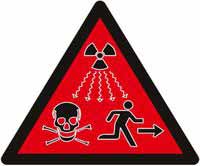
 Future cancers from Fukushima plant may be hidden, Google News, By MALCOLM RITTER, 21 Nov 11 “……The idea that Fukushima-related cancers may go undetected gives no comfort to Edwin Lyman, a physicist and senior scientist with the Union of Concerned Scientists, a group that advocates for nuclear safety. He said that even if cancers don’t turn up in population studies, that “doesn’t mean the cancers aren’t there, and it doesn’t mean it doesn’t matter.”
“I think that a prediction of thousands of cancer deaths as a result of the radiation from Fukushima is not out of line,” Lyman said. But he stressed that authorities can do a lot to limit the toll by reducing future exposure to the radiation. That could mean expensive decontamination projects, large areas of condemned land and people never returning home, he said. “There’s some difficult choices ahead.”…..
Fukushima has distributed radiation monitors to 280,000 children at its elementary and junior high schools. Many children are allowed to play outside only two or three hours a day. Schools have removed topsoil on the playgrounds to reduce the dose, and the Education Ministry provided radiation handbooks for teachers. Thousands of children have been moved out of Fukushima since the March disasters, mainly due to radiation fears.
Many parents and concerned citizens in and around Fukushima, some even as far as Tokyo, carry Geiger counters for daily measurement of radiation levels in their neighborhoods, especially near schools and kindergartens. The devices are probably one of the most popular electronics gadgets across Japan these days. People can rent them at DVD shops or drug stores in Fukushima, while many Internet rental businesses specializing in Geiger counters also have emerged.
Citizens groups are also setting up radiation measuring centers where people can submit vegetables, milk or other foods for tests. Some people are turning to traditional Japanese diet — pickled plum, miso soup and brown rice — based on a belief that it boosts the immune system.
“I try what I believe is the best, because I don’t trust the government any more,” says Chieko Shiina, who has turned to that diet. The 65-year-old Fukushima farmer had to close a small Japanese-style inn due to the nuclear crisis.
She thinks leaving Fukushima would be safer but says there is nowhere else to go.
“I know we continue to be irradiated, even right at this moment. I know it would be best just to leave Fukushima,” she said…..
To an individual the question may have little meaning, since it deals with the difference between no risk and small risk. For example, the general population was told to evacuate areas that would expose them to more than 20 millisieverts a year. A millisievert measures radiation dose and 20 mSv is about seven times the average dose of background radiation Americans get in a year. A child exposed to 20 mSv for a year would face a calculated risk of about 1 in 400 of getting cancer someday as a result, says David Brenner of Columbia University. So that would add 0.25 percent onto the typical lifetime cancer risk of about 40 percent, he said…..
Eisuke Matsui, a lung cancer specialist and a former associate professor at Gifu University School of Medicine, criticized the project. He said it appears to largely ignore potential radiation-induced health risks like diabetes, cataracts and heart problems that have been hinted at by some studies of Chernobyl.
“If thyroid cancer is virtually the only abnormality on which they are focusing, I must say there is a big question mark over the reliability of this survey,” he said.
He also suggested sampling hair, clipped nails and fallen baby teeth to test for radioactive isotopes such as strontium that are undetectable by the survey’s current approach.
“We should check as many potential problems as possible,” Matsui said.
Yasumura acknowledges the main purpose of his study is “to relieve radiation fears.” But Matsui says he has a problem with that.
“A health survey should be a start,” Matsui says, “not a goal.”
No comments yet.
1 This Month

of the week – Shut Down Drone Warfare!


Tell the Ukrainian Government to Drop Prosecution of Peace Activist Yurii Sheliazhenko

Petition to revoke the licensing of the Near Surface Nuclear Disposal Facility (NSDF) at Chalk River. https://www.ourcommons.ca/petitions/en/Petition/Details?Petition=e-7247
To see nuclear-related stories in greater depth and intensity – go to https://nuclearinformation.wordpress.com
-
Archives
- April 2026 (91)
- March 2026 (251)
- February 2026 (268)
- January 2026 (308)
- December 2025 (358)
- November 2025 (359)
- October 2025 (376)
- September 2025 (257)
- August 2025 (319)
- July 2025 (230)
- June 2025 (348)
- May 2025 (261)
-
Categories
- 1
- 1 NUCLEAR ISSUES
- business and costs
- climate change
- culture and arts
- ENERGY
- environment
- health
- history
- indigenous issues
- Legal
- marketing of nuclear
- media
- opposition to nuclear
- PERSONAL STORIES
- politics
- politics international
- Religion and ethics
- safety
- secrets,lies and civil liberties
- spinbuster
- technology
- Uranium
- wastes
- weapons and war
- Women
- 2 WORLD
- ACTION
- AFRICA
- Atrocities
- AUSTRALIA
- Christina's notes
- Christina's themes
- culture and arts
- Events
- Fuk 2022
- Fuk 2023
- Fukushima 2017
- Fukushima 2018
- fukushima 2019
- Fukushima 2020
- Fukushima 2021
- general
- global warming
- Humour (God we need it)
- Nuclear
- RARE EARTHS
- Reference
- resources – print
- Resources -audiovicual
- Weekly Newsletter
- World
- World Nuclear
- YouTube
-
RSS
Entries RSS
Comments RSS
 nuclear-news
Leave a comment