Iran and nuclear issues: diplomacy is the only answer
Let’s be clear: there is still no concrete evidence Iran is building a bomb.The latest report from the IAEA, despite its much discussed reference to “possible military dimensions to Iran’s nuclear programme”, also admits that its inspectors continue “to verify the non-diversion of declared nuclear material at [Iran’s] nuclear facilities”.
 The simple fact is there is no alternative to diplomacy, no matter how truculent or paranoid the leaders of Iran might seem to western eyes. If a nuclear-armed Iran is to be avoided, US politicians have to dial down their threatening rhetoric and tackle the very real and rational perception, on the streets of Tehran and Isfahan, of America and Israel as military threats to the Islamic Republic. Iranians are fearful, nervous, defensive – and, as the Middle East map shows, perhaps with good reason…
 If you lived in Iran, wouldn’t you want the nuclear bomb? Mehdi Hasan, guardian.co.uk, 19 Nov 11 The best way for the US to stop Iran developing nuclear weapons is to dial down the rhetoric and adopt some diplomacy
Imagine, for a moment, that you are an Iranian mullah. Sitting crosslegged on your Persian rug in Tehran, sipping a cup of chai, you glance up at the map of the Middle East on the wall. It is a disturbing image: your country, the Islamic Republic of Iran, is surrounded on all sides by virulent enemies and regional rivals, both nuclear and non-nuclear… Continue reading
Fukushima: 11 evacuated cities and towns, but their people will vote in elections
All of the parties and groups involved in the Fukushima assembly election said last month that they wanted nuclear power to be phased out……
For as long as they remain uninhabitable and their residents dispersed, the future of the contaminated areas will be clouded by uncertainty. …

 Japan’s nuclear disaster towns hold remote local elections Guardian UK, 20 Nov 11 Evacuated residents from Okuma and Futaba in Fukushima plant exclusion zone ballot for regional assemblies from afar They have been deserted for eight months, and could stay that way for years, their former inhabitants now scattered around north-east Japan.
But the towns of Okuma and Futaba, located in the shadow of the Fukushima Daiichi nuclear power plant, have shown that civic life must go on, even in the wake of a major nuclear accident. In one of the more surreal episodes of world democracy, tens of thousands were eligible to vote on Sunday for regional assemblies and mayors in towns that have all but ceased to exist. Continue reading
The hidden nature of cancer caused by ionising radiation
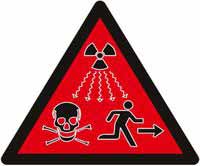 Future cancers from Fukushima plant may be hidden, Google News, By MALCOLM RITTER, 21 Nov 11 “……The idea that Fukushima-related cancers may go undetected gives no comfort to Edwin Lyman, a physicist and senior scientist with the Union of Concerned Scientists, a group that advocates for nuclear safety. He said that even if cancers don’t turn up in population studies, that “doesn’t mean the cancers aren’t there, and it doesn’t mean it doesn’t matter.” Continue reading
Iran strenuously denying nuclear weapons plans
‘Nuclear powers on brink of rui, Press TV 21 Nov 11, A senior Iranian commander says Iran has no desire to repeat the experience of nuclear powers, which are now on the verge of disintegration.
Tehran, however, categorically rejects such allegations, saying that as a signatory to the Non-Proliferation Treaty, it has the right to acquire and develop nuclear technology for peaceful purposes. Salami went on to add that the much repeated Western accusations against Iran’s civilian nuclear program are “baseless and lack logic.” “All of these allegations aim to mount pressure on Iran and the Islamic Revolution and are nothing new,” Salami concluded.
The International Atomic Energy Agency has conducted numerous inspections of Iran’s nuclear facilities, but has never found any evidence showing that Iran’s civilian nuclear program has been diverted to nuclear weapons production.
Danger of AREVA’s nuclear waste convoy from France to Germany
 If the radioactivity from the transport was dispersed in an accident or an attack, Areva would be discharged from almost all liability.

 Last Minute information – high-risk transport from France to Germany leaving one day early, 21 Nov 11 Transport of highly radioactive nuclear waste will again cross France from west to east, and part of Germany, exposing people and the SNCF agents to nuclear risks. Originally scheduled this Thursday, 24 November, the train from Valognes railway terminal has been advanced one day by AREVA and SNCF to try to avoid the huge mobilisation that is being prepared. The convoy should leave Valognes on Wednesday 23 at 14:36.The two routes planned by the authorities from Amiens remain unchanged, the convoy could head north towards Arras or south to Reims. Eleven containers carrying 301 barrels of high activity waste “re-treated” at the Areva plant in La Hague (Manche).
A rolling Chernobyl : Europe again under the threat of a nuclear convoy at high risk The official inventory of radioactivity in the transport amounted to 3756.5 peta becquerel (PBq) or 3.75 billion billion Becquerel of Becquerel. For comparison, the convoy will transport many times the radioactivity released during the Chernobyl disaster [i]. Scattered in the environment, the radio-toxicity potential [ii] this convoy would be enough to poison the whole human race [iii]. Continue reading
Corruption in media coverage of Fukushima radiation dangers
 The corrupt reporting of Fukushima radiation risks Independent Australia 14 Nov 11 Nuclear authorities and the mainstream media have been actively minimising and trivialising the grave radiation dangers of the Fukushima disaster, says John LaForge.
The ongoing radiation catastrophe stemming from three out-of-control nuclear reactors in Fukushima, Japan, has taken a back seat to far graver news events of late — Michael Jackson’s doctor, fund-raising by presidential hopefuls and fluctuations in the stockmarket.
Meanwhile, reporting about the ongoing disaster relentlessly repeats the minimization and trivialization of radiation risk that began March 11, Continue reading
Climate Change likely to bring more frequent extreme weather
 Extreme weather to worsen with climate change: UN, ABC News, November 19, 2011 An increase in heat waves is almost certain, while heavier rainfall, more floods, stronger cyclones, landslides and more intense droughts are likely across the globe this century as the Earth’s climate warms, UN scientists say.
In a report released in Uganda on Friday, the UN Intergovernmental Panel on Climate Change (IPCC) urged countries to make disaster management plans to adapt to the growing risk of extreme weather linked to human-induced climate change. Continue reading
India should make Nuclear Suppliers Group fully liable for accident costs
Jeremy Leggett urges India to claim full nuclear liability from suppliersTimes of India Laxmi Ajai Prasanna, TNN | Nov 20, 2011, THIRUVANANTHAPURAM: “India should make the Nuclear Suppliers’ Group face the full liability costs in case of an eventuality,” says Jeremy Leggett, an international climate campaigner and Greenpeace UK’s chief scientist and author of ‘Half Gone oil, gas, hot air and the global energy crisis’.
Taking his stance on the ‘Civil Nuclear Liability Act’ introduced in the Indian Parliament, he says, “Voicing for total liability cap will deter the investment bankers to face up the huge economic responsibility. That way India could safeguard its interest for clean and green energy and avert the recurrence of a Fukushima-type disaster.” In an interview to TOI here on Saturday, Leggett’s message for India in the context of exploring and utilising alternative energy sources was to ‘Catch up and shine fast’.
When told that the Indian government has toned down the right to recourse in the legality of the ‘Civil Liability Act’ conceding to the pressures of the nuclear lobby, Leggett says, “I am 57 now and realised that things don’t happen as expected, nuclear energy though not a safe option, is given the nod by the policy makers and decision makers of the government supported by fragile leaders…….
1 This Month

of the week – Shut Down Drone Warfare!


Tell the Ukrainian Government to Drop Prosecution of Peace Activist Yurii Sheliazhenko

Petition to revoke the licensing of the Near Surface Nuclear Disposal Facility (NSDF) at Chalk River. https://www.ourcommons.ca/petitions/en/Petition/Details?Petition=e-7247
To see nuclear-related stories in greater depth and intensity – go to https://nuclearinformation.wordpress.com
-
Archives
- April 2026 (91)
- March 2026 (251)
- February 2026 (268)
- January 2026 (308)
- December 2025 (358)
- November 2025 (359)
- October 2025 (376)
- September 2025 (257)
- August 2025 (319)
- July 2025 (230)
- June 2025 (348)
- May 2025 (261)
-
Categories
- 1
- 1 NUCLEAR ISSUES
- business and costs
- climate change
- culture and arts
- ENERGY
- environment
- health
- history
- indigenous issues
- Legal
- marketing of nuclear
- media
- opposition to nuclear
- PERSONAL STORIES
- politics
- politics international
- Religion and ethics
- safety
- secrets,lies and civil liberties
- spinbuster
- technology
- Uranium
- wastes
- weapons and war
- Women
- 2 WORLD
- ACTION
- AFRICA
- Atrocities
- AUSTRALIA
- Christina's notes
- Christina's themes
- culture and arts
- Events
- Fuk 2022
- Fuk 2023
- Fukushima 2017
- Fukushima 2018
- fukushima 2019
- Fukushima 2020
- Fukushima 2021
- general
- global warming
- Humour (God we need it)
- Nuclear
- RARE EARTHS
- Reference
- resources – print
- Resources -audiovicual
- Weekly Newsletter
- World
- World Nuclear
- YouTube
-
RSS
Entries RSS
Comments RSS
 nuclear-news