Inadequacy of Japan’s radiation cleanup plan
“I really doubt their seriousness (about decontamination),” said radiation expert Tomoya Yamauchi, a professor at the Graduate School of Maritime Sciences at Kobe University…..
The experts said the government’s goal of human effort achieving a 10 to 20 percent reduction is not ambitious enough.
“A 10 percent reduction doesn’t really mean anything. I mean, 40 percent of the radiation would be reduced just by natural causes, so I think the government is almost saying it is just going to wait for the radioactive materials to decrease naturally,” said Shunichi Tanaka, former chairman of the Atomic Energy Society of Japan.
The main radioactive materials that spewed from the Fukushima No. 1 plant are cesium-134 and -137, the second of which has a half-life of 30 years. Given the relatively short half-life of cesium-134, the total radiation will naturally be halved in four years and fall to one-third in six years, although the threat from the latter will remain for a longer time.
The government is now trying to reduce contamination mainly by using high-power water hoses, known as pressure washers, on structures and removing surface soil and vegetation in limited areas.
But radioactive cesium can find its way into minute cracks and crevices. It is hard to remove, for example, from roofs made of certain materials, or surfaces that are rusted or whose paint is peeling, Yamauchi said.
He has monitored radiation in areas in the city of Fukushima and found that the levels were still quite high after the city performed cleanup operations.
To lower the contamination to pre-March 11 levels, Yamauchi said drastic, and highly costly, efforts by the government are needed, including replacing roofs and removing the surface asphalt of roads.
Tanaka meanwhile pointed out that the government has not even floated a plan for decontaminating the no-go zones where the radiation exceeds 20 millisieverts per year — areas where there isn’t even a timetable for when evacuees will be able to return.
If the government doesn’t speed up the decontamination work, it will be years before the evacuees may be able to return home, he said, adding that the government can’t set a target date because it isn’t sure how the cleanup effort will fare…..
Another issue is the need for communities to reach consensus on where to temporarily store contaminated waste…..
No comments yet.
1 This Month
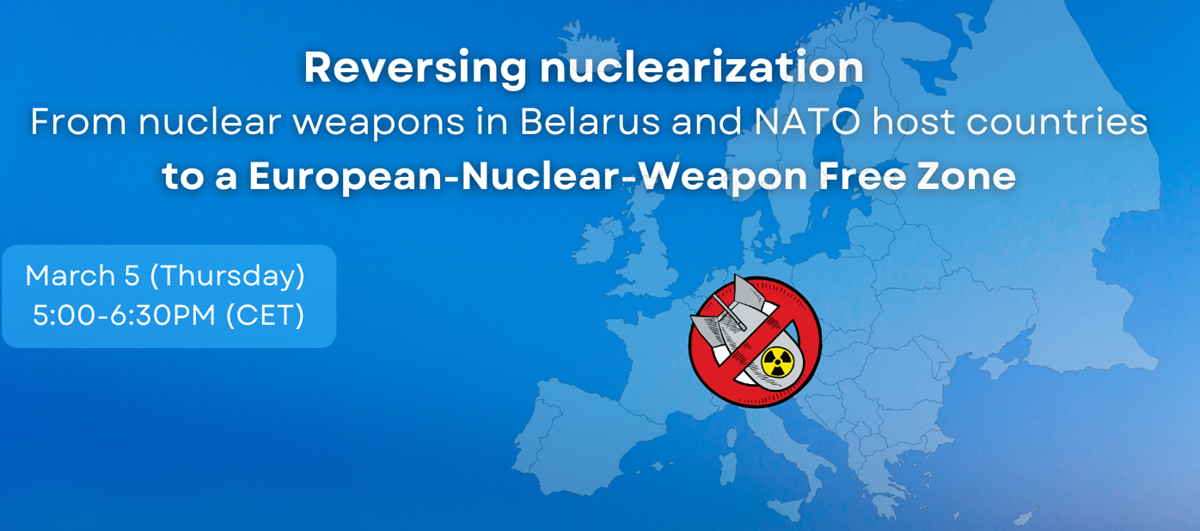
5 March -Online – Reversing nuclearization:
From nuclear weapons in Belarus and NATO host countries to a European-Nuclear-Weapon Free Zone
11am-12:30pm Eastern Time USA / 5pm-6:30pm CET

of the week – Advocating for a
nuclear free beach – https://www.samuellawrencefoundation.org/
The Samuel Lawrence Foundation advocates for a Nuclear Waste Free Beach at San Onofre, join us and take action!

10 March A LIVE WEBINAR THE REAL EFFECTS OF NUCLEAR POWER
What the Industry Isn’t Telling Us
1:00 PM Mountain, 2 pm Central, 3 pm Eastern. Live on the Keepers of the Water Facebook page

18 March Webinar @ 1 PM EST: An Assessment of SMR Projects: The Case of Canada
register for the zoom:
https://us02web.zoom.us/webinar/register/WN_o8BIIOUvQ2ONJR1nta65DQ#/registration

of the week – STOP SMALL MODULAR REACTORS IN CANADA
To see nuclear-related stories in greater depth and intensity – go to https://nuclearinformation.wordpress.com
-
Archives
- March 2026 (51)
- February 2026 (268)
- January 2026 (308)
- December 2025 (358)
- November 2025 (359)
- October 2025 (376)
- September 2025 (258)
- August 2025 (319)
- July 2025 (230)
- June 2025 (348)
- May 2025 (261)
- April 2025 (305)
-
Categories
- 1
- 1 NUCLEAR ISSUES
- business and costs
- climate change
- culture and arts
- ENERGY
- environment
- health
- history
- indigenous issues
- Legal
- marketing of nuclear
- media
- opposition to nuclear
- PERSONAL STORIES
- politics
- politics international
- Religion and ethics
- safety
- secrets,lies and civil liberties
- spinbuster
- technology
- Uranium
- wastes
- weapons and war
- Women
- 2 WORLD
- ACTION
- AFRICA
- Atrocities
- AUSTRALIA
- Christina's notes
- Christina's themes
- culture and arts
- Events
- Fuk 2022
- Fuk 2023
- Fukushima 2017
- Fukushima 2018
- fukushima 2019
- Fukushima 2020
- Fukushima 2021
- general
- global warming
- Humour (God we need it)
- Nuclear
- RARE EARTHS
- Reference
- resources – print
- Resources -audiovicual
- Weekly Newsletter
- World
- World Nuclear
- YouTube
-
RSS
Entries RSS
Comments RSS
 nuclear-news
Leave a comment