Need for Japan to monitor health of workers and others exposed to Fukushima radiation
 Fukushima health concerns Japan Times, 8 Nov 11 As efforts to end the nuclear disaster at Tokyo Electric Power Co.’s Fukushima No. 1 nuclear power plant drag on, it is important for the central and local governments to step up their efforts to closely examine the health conditions of people concerned and to decontaminate areas contaminated by radiation.
The people who have been most affected by radiation from the Fukushima plant are workers, both from Tepco and from subcontractors, who have been trying to bring the radiation-leaking plant under control. In the nation’s history, these workers rank second only to the victims of the atomic bombings of Hiroshima and Nagasaki in terms of their exposure to radiation, therefore the possibility cannot be ruled out that they will develop cancer. Tepco and the central government must do their best to prevent workers’ overexposure to radiation and take necessary measures should workers become overexposed to radiation.
It is of great concern that little has been disclosed regarding the conditions of the workers at the Fukushima No. 1 nuclear power plant. Tepco and the central government should disseminate information on the actual working conditions of these people, even if such information seems repetitious and includes what they regard as minor incidents. People are forgetful. They need to be informed. Such information will help raise people’s awareness about the issue of radiation and its impact on health.
It must not be forgotten that exposure to radiation has long-term effects on human health. In the Hiroshima and Nagasaki atomic bombings, the number of leukemia cases started to increase among bombing survivors two years after the bombs were dropped. In the case of the 1986 Chernobyl accident, thyroid cancer began to appear among children several years after the disaster happened. Particular attention should be paid to the health of children….
In August, the Nuclear Safety Commission of Japan estimated that the Fukushima accidents released a total of 570,000 terabecquerels of radioactive substances, including some 11,000 terabecquerels of radioactive cesium 137.
But a preliminary report issued in late October, whose chief writer is Mr. Andreas Stohl of the Norwegian Institute for Air Research, estimates that the accidents released about 36,000 terabecquerels of radioactive cesium 137 from their start through April 20. It is more than three times the estimate by Japan’s Nuclear Safety Commission and 42 percent of the estimated release from Chernobyl……
As for internal radiation exposure from food and drink, the Food Safety Commission on Oct. 27 said that a cumulative dose of 100 millisieverts or more in one’s lifetime can cause health risks. But when it had mentioned the limit of 100 millisieverts in July, it explained that the limit covered both external and internal radiation exposure. Its new announcement means that the government has not set the limit for external radiation exposure. It also failed to clarify whether the new dose limit is safe enough for children and pregnant women…..
It is important for the central and local governments to establish a system to closely measure both outdoor radiation levels and radiation levels in food products and to take necessary measures. In areas near Fukushima No. 1 power plant, many hospitals’ functions have weakened because doctors and nurses have left. Urgent efforts must be made to beef up medical staffing at these hospitals. http://www.japantimes.co.jp/text/ed20111108a1.html
No comments yet.
1 This Month
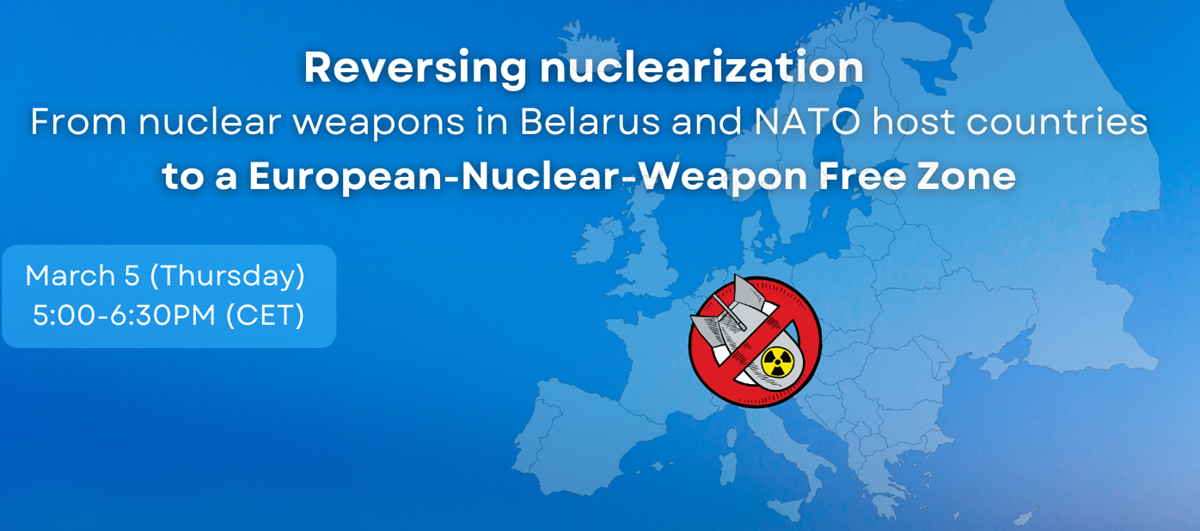
5 March -Online – Reversing nuclearization:
From nuclear weapons in Belarus and NATO host countries to a European-Nuclear-Weapon Free Zone
11am-12:30pm Eastern Time USA / 5pm-6:30pm CET

of the week – Advocating for a
nuclear free beach – https://www.samuellawrencefoundation.org/
The Samuel Lawrence Foundation advocates for a Nuclear Waste Free Beach at San Onofre, join us and take action!

10 March A LIVE WEBINAR THE REAL EFFECTS OF NUCLEAR POWER
What the Industry Isn’t Telling Us
1:00 PM Mountain, 2 pm Central, 3 pm Eastern. Live on the Keepers of the Water Facebook page

18 March Webinar @ 1 PM EST: An Assessment of SMR Projects: The Case of Canada
register for the zoom:
https://us02web.zoom.us/webinar/register/WN_o8BIIOUvQ2ONJR1nta65DQ#/registration

of the week – STOP SMALL MODULAR REACTORS IN CANADA
To see nuclear-related stories in greater depth and intensity – go to https://nuclearinformation.wordpress.com
-
Archives
- March 2026 (51)
- February 2026 (268)
- January 2026 (308)
- December 2025 (358)
- November 2025 (359)
- October 2025 (376)
- September 2025 (258)
- August 2025 (319)
- July 2025 (230)
- June 2025 (348)
- May 2025 (261)
- April 2025 (305)
-
Categories
- 1
- 1 NUCLEAR ISSUES
- business and costs
- climate change
- culture and arts
- ENERGY
- environment
- health
- history
- indigenous issues
- Legal
- marketing of nuclear
- media
- opposition to nuclear
- PERSONAL STORIES
- politics
- politics international
- Religion and ethics
- safety
- secrets,lies and civil liberties
- spinbuster
- technology
- Uranium
- wastes
- weapons and war
- Women
- 2 WORLD
- ACTION
- AFRICA
- Atrocities
- AUSTRALIA
- Christina's notes
- Christina's themes
- culture and arts
- Events
- Fuk 2022
- Fuk 2023
- Fukushima 2017
- Fukushima 2018
- fukushima 2019
- Fukushima 2020
- Fukushima 2021
- general
- global warming
- Humour (God we need it)
- Nuclear
- RARE EARTHS
- Reference
- resources – print
- Resources -audiovicual
- Weekly Newsletter
- World
- World Nuclear
- YouTube
-
RSS
Entries RSS
Comments RSS
 nuclear-news
Leave a comment