Japan – protest by Fukushima women
 VIDEO http://www.greenpeace.org/international/en/news/Blogs/makingwaves/women-from-fukushima-gather-to-find-hope-in-t/blog/37555/ Women from Fukushima gather to ‘find hope in the despair’ of nuclear disaster by Laura Kenyon, Greenpeace International – October 28, 2011 Yesterday close to two hundred women from Fukushima began a three-day sit-in outside the Tokyo office of Japan’s Ministry of Economy calling for the evacuation of children from areas with high radiation levels and the permanent shut down of nuclear reactors in Japan currently switched off. Their peaceful protest is a powerful – almost radical – act in a country where standing up for something can often mean ostracism from one’s community. These are not women who regularly participate in civil protest. These are mothers who fear for their children’s safety and future. These are grandmothers separated from their families. The fact that they have put their own lives and families on hold for these three days reflects the harrowing situation these women and their families have found themselves in since the nuclear disaster. Continue reading
Japanese govt’s costly, desperate measures to save TEPCO from bankruptcy
Stopgap measures for TEPCO / Utility’s liabilities may exceed assets without government’s help, Kunihiko Yasue and Chiaki Toyoda / Yomiuri Shimbun Staff Writers, 29 oct 11, Tokyo Electric Power Co.’s application Friday for more than 1 trillion yen in government funds was meant to help the utility swiftly compensate people for damage caused by the crisis at its Fukushima No. 1 nuclear power plant.
TEPCO has already started making full-fledged compensation payments, and without the government’s assistance its liabilities could exceed its assets. Continue reading
Nuclear energy is in no way a solution to climate change
 Is Nuclear Energy a Fuel with a Future?, Huffington Post, Andy Mannle, : 10/28/11 “………the nuclear industry needs to do more than build a few plants a year to be a true low-carbon alternative to fossil fuels. A hard look at the science of reducing atmospheric carbon to 350ppm shows why.
To get the world off coal, which produces roughly half of the world’s power, would require 7-8 terawatts of energy. One nuclear power plant yields a gigawatt of power, meaning 8000 nuclear power plants would be needed to produce 8 terawatts. To do this by 2050, 200 plants would need to be built a year, which is roughly one every 1.5 days. Since nuclear plants only have a lifespan of 50 years, by the time the required amount is built, early plants would have to start being decommissioned. After that, new plants would need to keep being built at the same pace just to replace retiring ones.
So if the world goes nuclear, supplying half the power we need would require building a new plant every other day forever.
Even if this rate of growth were feasible, it is clearly unsustainable. Of course, no single strategy is going to wean us off coal in several decades. We will need a combination of carbon reduction strategies — what Princeton researchers Robert Socolow and Stephen Pacala call “stabilization wedges” that each reduce a billion tons a year for the next 50 years. The “wedges” include efficiency, renewables, carbon sequestration, reforestation, and replacing coal plants with natural gas. But even for nuclear to generate a single wedge would require tripling our current nuclear capacity.
The reality is global CO2 emissions are rising, not falling. And we can’t build enough nuclear alone to stop them. As such, nuclear’s benefits as a low-carbon alternative would only materialize in the context of a global war on carbon. Absent that, nuclear becomes just another low-carbon energy source competing on the open market with cleaner renewables and cheaper natural gas. Ironically, the current slow growth of nuclear and the possibility of an actual nuclear retreat after Fukushimacould mean an acceleration in our rising CO2 emissions, cautions the International Energy Agency….. http://www.huffingtonpost.com/andy-mannle/nuclear-energy-a-fuel-with_b_1032727.html
Japan to decide on level for lifetime exposure to ionising radiation
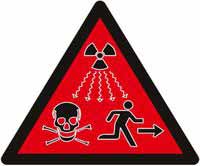 The report pointed out effects of radiation exposure on children are more serious than those on adults,
 Govt to cap radiation limit / Report recommends lifetime exposure of no more than 100mSv, The Yomiuri Shimbun, 29 Oct 11, A report by the Cabinet Office’s Food Safety Commission has recommended a person’s cumulative lifetime radiation exposure from food should be limited to about 100 millisieverts.
The report compiled Thursday covers possible effects on health from internal exposure from food containing radioactive substances. Based on the report, the Health, Labor and Welfare Ministry will begin considering individual regulatory figures for foods.
It is likely the new limits will be stricter than interim limits, hurriedly implemented shortly after the crisis began at the Fukushima No. 1 nuclear power plant. Continue reading
The danger of dismantling nuclear submarines in a city
It is the magnitude of the consequences of a nuclear accident that make it unacceptable to locate such a facility in the middle of a city of 250,000 people….
Devonport is not immune from accidents. There have been nine radioactive leaks since 1997. The impact of a significant accident in the dockyard would be devastating. It would not remain confined behind its walls but would affect a much wider area.

 Should N-subs be dismantled in city? Plymouth Herald, October 28, 2011 ONE of the most controversial proposals to affect Plymouth in generations is set to be thrust firmly into the public domain from today.
The Ministry of Defence has today begun a 16-week consultation exercise exploring the options for dismantling decommissioned nuclear-powered submarines. The consultation aims to find a permanent home for The Submarine Dismantling Project (SDP) – either in Plymouth, or Scotland. Continue reading
Quiet wind turbine for decentralised energy systems
Suited to grid and non-grid connections, the turbine is extremely versatile and has great appeal for commercial sites, urban environments, such as industrial parks, airports, community groups, universities, councils, ports and manufacturing facilities…..
VIDEO
http://www.azocleantech.com/news.aspx?newsID=15749 Australian Company Launches World’s Quietest Wind Turbine, AZO CleanTech October 26, 2011 Australian renewable energy innovation continues to lead the way with the launch of the worlds’ quietest wind turbine, released to market this week. The cutting edge turbine stands 21 metres high and features a unique, intuitive blade design that is virtually silent.
The Eco Whisper Turbine is set to revolutionise delivery of renewable electricity supply for urban and rural applications, Continue reading
Japan ceases policy of promoting nuclear energy
Japan drops nuclear promotion, Today, Oct 29, 2011 TOKYO – Japan’s government abandoned its policy of promoting atomic power, saying it will reduce reliance on the sector in its first annual review of energy since the Fukushima nuclear disaster. Continue reading
Wikileaks reveal Saudi Arabia’s fears about Iran’s nuclear plant

 Plumbing WikiLeaks: Saudi Arabia Fears
 Iranian Nuclear Meltdown and Potential Terrorism to Desalination, Circle of Blue, By Brett Walton, 28 OCTOBER 2011 Classified cables show that Saudi and U.S. officials believe water supplies along the Persian Gulf are at high-risk for terrorist attacks and possible contamination from nearby nuclear plants. This is the first of a new series that will analyze the water-related U.S. embassy cables published by WikiLeaks.
“The location is so dangerous,” said Prince Turki Al-Kabeer, the undersecretary for multilateral affairs from the Saudi Ministry of Foreign Affairs. “Not just to us, but to the world economy!”
Ostensibly, Prince Turki was meeting with the Netherlands ambassador, the Russian ambassador, and a political/military counselor from the American embassy to discuss an initiative against nuclear terrorism. But — according to a classified American embassy cable from 2009 that has since been published by WikiLeaks — the conversation turned to Iran’s nuclear program and the Russian-built reactor at Bushehr, a site less than 300 kilometers (186 miles) from Saudi shores on Iran’s Persian Gulf coast.
Prince Turki went on to say that Russia should “use its influence” to persuade Iran to relocate the reactor to the Caspian Sea, where there would be sufficient water for cooling, and, the cable’s author makes clear, isolation from Saudi territory, if a nuclear accident were to occur.
At risk, according to both Saudi and U.S. officials, are the desalination plants supplying much of Saudi Arabia’s drinking water, and the Persian Gulf waterway that conveys a large portion of the world’s oil exports — 6.6 million barrels per day… http://www.circleofblue.org/waternews/2011/world/plumbing-wikileaks-saudi-arabia-fears-iranian-nuclear-meltdown-and-potential-terrorism-to-desalination/
Compelling evidence that global warming is real
He and his fellow researchers examined a huge data set of observed temperatures from monitoring stations around the world and concluded the average land temperature has risen 1 degree since the mid-1950s. This agrees with the rise estimated by the United Nations-sponsored Intergovernmental Panel on Climate Change.
Muller and his colleagues looked at five times as many temperature readings as did other researchers, a total of 1.6 billion records, and now have put that merged database online
It is the know-nothing politicians — not scientists — who are committing an unforgivable fraud
Chilling news for climate sceptics, The Age, Eugene Robinson, October 28, 2011 Research by a former poster boy for doubters makes it much harder to deny warming.
FOR the clueless or cynical diehards who deny global warming, it’s getting awfully cold out there. The latest icy blast of reality comes from an eminent scientist whom climate-change sceptics once lauded as one of their own.
Richard Muller, a respected physicist at the University of California, Berkeley, used to dismiss alarming climate research as “polluted by political and activist frenzy’’. Frustrated at what he considered shoddy science, Muller launched his own comprehensive study to set the record straight.
Instead, the record set him straight. Continue reading
Nuclear industry admits that it cannot compete on costs
Is Nuclear Energy a Fuel with a Future?, Huffington Post, Andy Mannle, : 10/28/11 “……… Powerful industry lobbies in the U.S. and elsewhere will continue to support nuclear as a fuel source, of course, but even the industry recognizes that a major expansion is unlikely.
Speaking at an American Nuclear Society conference in August 2011, John Rowe, CEO of Exelon, the country’s largest nuclear utility said 3 of the 4 conditions necessary for expanding nuclear cannot be met. While newer designs offer the right technology, Rowe argues that the government has not resolved waste disposal issues. Additionally, there is currently excess generation capacity because the economic recession has slowed energy consumption. While this will likely change as we retire more coal plants and the economy grows, the influx of cheap natural gas from shale has undercut nuclear’s higher prices.
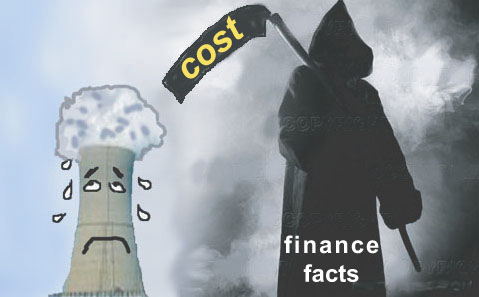
Today, nuclear cannot compete on cost with fossil fuels, and cannot compete on quality with renewables. Going forward, renewables offer rapid growth and innovation combined with falling costs, which will make it harder for nuclear to compete in the future. And as fossil fuel prices rise, they will also likely drive up nuclear’s construction costs, offsetting any price advantage there.
Without a major breakthrough, it seems safe to say nuclear will never be cheaper than coal or natural gas; nor will it be as safe, clean, and attractive to consumers and investors as renewables. In the end, the most likely option for nuclear energy is neither renaissance nor retreat, but continued slow growth, with heated arguments on all sides…. http://www.huffingtonpost.com/andy-mannle/nuclear-energy-a-fuel-with_b_1032727.html
Las Vegas’ water supply must be protected from uranium mining
Keep uranium out of our water supply, Launce Rake, Las Vegas Sun, Oct. 28, 2011 Uranium mining on the Colorado River, near the Grand Canyon National Park, is a bad idea that needs to be rejected by Nevada’s representatives in Congress. Uranium mining contaminates rivers — even mines that closed years or decades ago leach toxic and radioactive material into our water. The mining industry wants to start mining about 90 miles northeast of Las Vegas on the Arizona Strip, within range of Lake Mead and our water supply.
The U.S. Department of Interior told the uranium mining industry this week that our water is too important to risk with its mines. Our entire congressional delegation should support the decision and keep the mines away from our drinking water. http://www.lasvegassun.com/news/2011/oct/28/keep-uranium-out-our-water-supply/
1 This Month

of the week – Shut Down Drone Warfare!


Tell the Ukrainian Government to Drop Prosecution of Peace Activist Yurii Sheliazhenko

Petition to revoke the licensing of the Near Surface Nuclear Disposal Facility (NSDF) at Chalk River. https://www.ourcommons.ca/petitions/en/Petition/Details?Petition=e-7247
To see nuclear-related stories in greater depth and intensity – go to https://nuclearinformation.wordpress.com
-
Archives
- March 2026 (230)
- February 2026 (268)
- January 2026 (308)
- December 2025 (358)
- November 2025 (359)
- October 2025 (376)
- September 2025 (257)
- August 2025 (319)
- July 2025 (230)
- June 2025 (348)
- May 2025 (261)
- April 2025 (305)
-
Categories
- 1
- 1 NUCLEAR ISSUES
- business and costs
- climate change
- culture and arts
- ENERGY
- environment
- health
- history
- indigenous issues
- Legal
- marketing of nuclear
- media
- opposition to nuclear
- PERSONAL STORIES
- politics
- politics international
- Religion and ethics
- safety
- secrets,lies and civil liberties
- spinbuster
- technology
- Uranium
- wastes
- weapons and war
- Women
- 2 WORLD
- ACTION
- AFRICA
- Atrocities
- AUSTRALIA
- Christina's notes
- Christina's themes
- culture and arts
- Events
- Fuk 2022
- Fuk 2023
- Fukushima 2017
- Fukushima 2018
- fukushima 2019
- Fukushima 2020
- Fukushima 2021
- general
- global warming
- Humour (God we need it)
- Nuclear
- RARE EARTHS
- Reference
- resources – print
- Resources -audiovicual
- Weekly Newsletter
- World
- World Nuclear
- YouTube
-
RSS
Entries RSS
Comments RSS
 nuclear-news