USA’s MOX plutonium nuclear fuel plant a costly, dangerous, flop
 “The government would be crazy to consider building another MOX plant. MOX cannot be recycled.”….
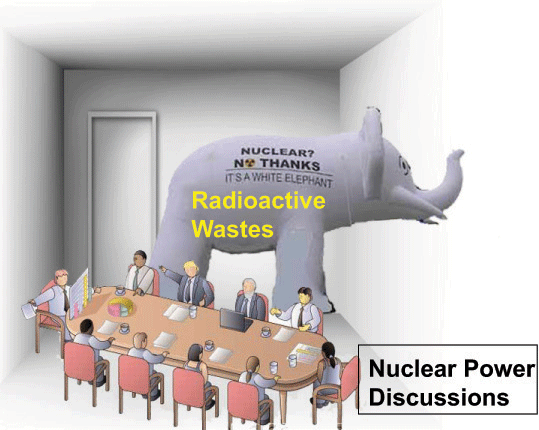 The Bomb Plant: A MOX White Elephant?, DC Bureau By Joseph Trento, on October 20th, 2011 The National Nuclear Security Administration may have a $10 billion taxpayer-financed white elephant on its hands based on Britain’s experience with a similar plant that has been shuttered after a decade of failed operations. Continue reading
Japan’s radiation pollution wider and more serious than previously estimated
the contamination in the area is so severe that authorities need to remove not only the topsoil but also road surfaces, roofs and concrete walls….
“Radiation levels drop soon after decontamination work, but whenever it rains, contaminated soil flows into the area from surrounding mountain forests and the levels climb once again,” she said.
Experts and locals said woodlands that cover 71 per cent of Fukushima prefecture have been highly contaminated.

Concern grows over wider radiation contamination, Oman Daily Observer 22 October 2011 By Takehiko Kambayashi – Scientists, environmentalists and citizens’ groups have called for Japanese authorities to evacuate more areas in the wake of March’s nuclear accident after finding wider radiation contamination than officially reported. Continue reading
South Africa’s shame of radiation caused illness in uranium workers
 Nuclear illness scourge, The new Age, Mel Frykberg, 20 Oct 11, Exposure to uranium at South African nuclear facilities over the years has left dozens of people dead and hundreds of others terminally ill, an investigation by The New Age has revealed. “These nuclear workers have been used and abused like cannon fodder and then abandoned without any care or compensation when they were no longer of any use to the nuclear industry,” said Mashile Phalane, the former coordinator of Earthlife Africa (ELA).
ELA and the Pelindaba Working Group – comprising ex-employees and antinuclear activists – are leading the battle to get compensation for victims. Former nuclear workers claim that they were not provided with protective clothing nor given the necessary medical attention when they were exposed to radiation.
Most claim they were given little or, in many cases, no financial compensation and in many cases were summarily dismissed once their symptoms became known. The country’s nuclear watchdog, the Nuclear Energy Corporation of South Africa (Necsa), stands accused by activists involved in the long-running campaign to ensure justice for victims and their families, of destroying the lives of hundreds of ex-employees.
China to cut back its nuclear power plans
 China nuclear targets to be cut after Fukushima -industry, Oct 21, 2011, HONG KONG Oct 21 (Reuters) – China’s 2020 nuclear capacity targets are likely to be scaled down after the country imposed a moratorium on new project approvals following the Fukushima disaster in Japan in March, industry officials said on Friday.
China was originally scheduled to release a revised blueprint for its nuclear sector this year, with many predicting a new 2020 target of 86 GW, up from the previous 40 GW….. In March, the government ordered a nationwide inspection of existing plants and construction sites in order to allay public disquiet about the safety of nuclear power…..
Areas of concern included the safety of the many “second-generation” reactors set to go into operation, the shortage of qualified safety and operational personnel, and the possible construction of nuclear projects in seismically vulnerable provinces like Sichuan.
Officials have suggested that no new second-generation reactors will be approved, leaving the way clear for third-generation models designed by France’s Areva and U.S.-based Westinghouse, owned by Toshiba …. “We should ensure the safety of nuclear energy before coming up with new projects,” said Zhao Chengkun, vice-chairman of the CNEA….. http://af.reuters.com/article/metalsNews/idAFL3E7LL0EM20111021
Japan might have to widen the radiation evacuation area
Seven months on, Japan yet to finalize nuclear evacuation plan, (Reuters), (Reporting by Yoko Kubota) 22 Oct 11, – Japanese nuclear experts are considering widening the evacuation zone in the event of a nuclear disaster, more than seven months after the world’s worst such disaster since Chernobyl…..
A committee under Japan’s Nuclear Safety Commission has been reviewing the country’s nuclear disaster prevention guidelines, trying to learn lessons from the worst nuclear disaster since 1986.
It is considering creating a 30-km (18-mile) radius around nuclear power plants where residents should be ready to take shelter or prepare to evacuate, a draft document compiled by the NSC secretariat and released by the NSC on Thursday showed.
This compares with a current zone of a radius up to 10 km. It is also considering recommending that local authorities in a 50-km radius from plants be prepared to provide iodine tablets that help prevent thyroid cancers from radiation exposure.
The committee is planning to revise the draft document and finalize recommendations on evacuation zones next month. It plans to come up with a mid-term review this year, while it may take years to fully revise the guidelines, an official at the NSC secretariat said.
About 80,000 residents were forced to evacuate from a 20-km radius from the Fukushima Daiichi plant after the radiation crisis and some 30,000 more left the 20-30-km radius zone, though some are starting to come back……
The United States and some other countries had advised its citizens to stay out of a 80-km radius of the Fukushima plant. http://www.reuters.com/article/2011/10/21/us-japan-nuclear-idUSTRE79K24420111021
$13 billion or more to decontaminate Japan’s radiation from Fukushima nuclear disaster
Japan: Radiation Cleanup Will Cost at Least $13 Billion, Premier Says, NYT, By REUTERS, October 21, 2011 Prime Minister Yoshihiko Noda, left, said the government would spend at least $13 billion to clean up vast areas contaminated by radiation from the world’s worst nuclear disaster since Chernobyl…..
How corporate America, the CIA and Walt Disney talked Japan into nuclear technology
 The plan had the advantage of making allies dependent on technology from corporate giants General Electric Co. and Westinghouse,
 Tepco ‘Deal With Devil’ Signals End to Japan’s Postwar Era Bloomberg, October 21, 2011,“……….Hiroshima Bombing Japan’s development into the world’s third-biggest user of nuclear energy dates from the last days of the war. Yasuhiro Nakasone, who would later become Prime Minister and a powerful advocate of atomic energy, was serving as a naval officer in Japan when Hiroshima was bombed. After the war, he began the work of persuading the U.S. to sell Japan nuclear technology…..
Japan’s interest coincided with U.S. concern about what to do with its own surplus of weapons-grade plutonium, and the suspicion that created in the Soviet Union, Laura E. Hein wrote in “Fueling Growth — The Energy Revolution and Economic Policy in Postwar Japan.”
U.S. President Dwight Eisenhower’s solution was the “Atoms for Peace” program to use U.S. plutonium to provide nuclear fuel for its allies. Continue reading
Nuclear power as cure for climate change- the big con
 The Big Con Is Nuclear Power Really a Trump Card Against Global Warming?, CounterPunch, by TAKASHI HIROSE OCTOBER 19, 2011 In recent years there seemed to be a nuclear power renaissance. One reason for this has been the adoption by its promoters of the theme of global warming, and their claim that nuclear power is clean energy because it does not produce carbon emissions. But is nuclear power in fact the clean-energy solution its promoters claim? Continue reading
 Breakthroughs in electric car design
 Charge a car in time it takes for a coffee, SMH, Stephen Ottley, October 22, 2011 ELECTRIC cars are a big step closer to mainstream acceptance thanks to two breakthroughs. Long battery recharging has been the biggest hurdle for the car industry to overcome. But a technology being developed by Nissan and Japan’s Kansai University could solve the problem.
It has reportedly created a charger that can replenish a car’s batteries in 10 minutes, without any adverse affect on the batteries. Currently it can take up to eight hours to recharge an electric car…..
At present so-called fast chargers require 30 minutes to restore batteries to just 80 per cent capacity and cost more than $30,000.
The industry has been struggling to come up with a solution to long charging times as electric cars fight to become a viable alternative to petrol cars….Another hurdle cleared by the industry is an agreed standard of recharging plugs.
The move is seen as crucial to the implementation of public charging infrastructure. Volkswagen, General Motors, Ford, Audi, BMW, Mercedes-Benz and Porsche have all agreed to work together on the universal system for plug outlets, voltage and cables….http://smh.drive.com.au/charge-a-car-in-time-it-takes-for-a-coffee-20111021-1mcaf.html
leak from nuclear reactors in Pakistan
Leak at Pakistani nuclear plant, no radiation damage reported yet, National Post, Reuters Oct 20, 2011 By Faisal Aziz KARACHI — A Pakistani nuclear power plant imposed a seven-hour emergency after heavy water leaked from a feeder pipe to the reactor, but no radiation or damage has been reported, an official said on Thursday. Continue reading
1 This Month
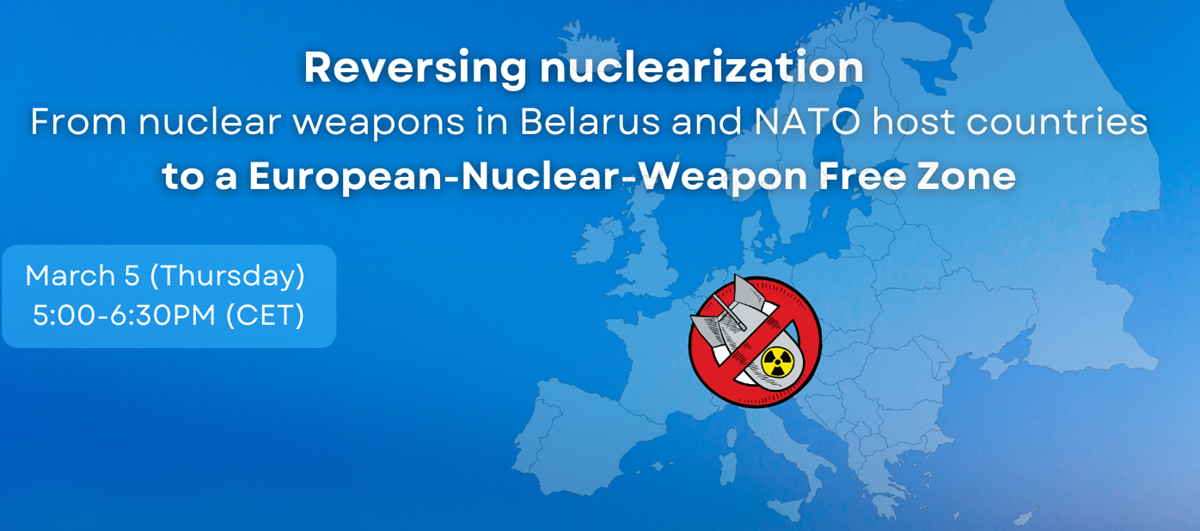
5 March -Online – Reversing nuclearization:
From nuclear weapons in Belarus and NATO host countries to a European-Nuclear-Weapon Free Zone
11am-12:30pm Eastern Time USA / 5pm-6:30pm CET

of the week – Advocating for a
nuclear free beach – https://www.samuellawrencefoundation.org/
The Samuel Lawrence Foundation advocates for a Nuclear Waste Free Beach at San Onofre, join us and take action!

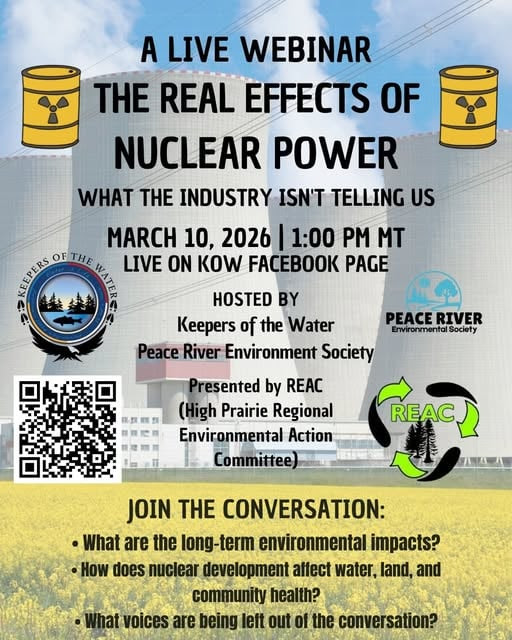
10 March A LIVE WEBINAR THE REAL EFFECTS OF NUCLEAR POWER
What the Industry Isn’t Telling Us
1:00 PM Mountain, 2 pm Central, 3 pm Eastern. Live on the Keepers of the Water Facebook page
18 March Webinar @ 1 PM EST: An Assessment of SMR Projects: The Case of Canada
register for the zoom:
https://us02web.zoom.us/webinar/register/WN_o8BIIOUvQ2ONJR1nta65DQ#/registration

of the week – STOP SMALL MODULAR REACTORS IN CANADA
To see nuclear-related stories in greater depth and intensity – go to https://nuclearinformation.wordpress.com
-
Archives
- March 2026 (38)
- February 2026 (268)
- January 2026 (308)
- December 2025 (358)
- November 2025 (359)
- October 2025 (376)
- September 2025 (258)
- August 2025 (319)
- July 2025 (230)
- June 2025 (348)
- May 2025 (261)
- April 2025 (305)
-
Categories
- 1
- 1 NUCLEAR ISSUES
- business and costs
- climate change
- culture and arts
- ENERGY
- environment
- health
- history
- indigenous issues
- Legal
- marketing of nuclear
- media
- opposition to nuclear
- PERSONAL STORIES
- politics
- politics international
- Religion and ethics
- safety
- secrets,lies and civil liberties
- spinbuster
- technology
- Uranium
- wastes
- weapons and war
- Women
- 2 WORLD
- ACTION
- AFRICA
- Atrocities
- AUSTRALIA
- Christina's notes
- Christina's themes
- culture and arts
- Events
- Fuk 2022
- Fuk 2023
- Fukushima 2017
- Fukushima 2018
- fukushima 2019
- Fukushima 2020
- Fukushima 2021
- general
- global warming
- Humour (God we need it)
- Nuclear
- RARE EARTHS
- Reference
- resources – print
- Resources -audiovicual
- Weekly Newsletter
- World
- World Nuclear
- YouTube
-
RSS
Entries RSS
Comments RSS
 nuclear-news