Support of government and the people points to success for Germany’s nuclear phaseout
Germany will be able to make the nuclear phase-out without any serious risks, as 80% of the people back up the government and even themselves massively invest in renewable energies. At the same time the economy profits from 100,000 new jobs and enterprising tasks.
 “Germany’s Nuclear Phase-out Will Be Successful and Without Serious Risks” The Energy Collective, 6 Oct 11, Germany has made one of the most radical policy changes in the wake of Fukushima. Like Japan, it decided to phase out nuclear power by 2022. Furthermore, by the middle of the century, fossil fuels shall only play a minor role in the energy supply of the country….
How can Germany succeed in phasing out nuclear energy while also decarbonising its energy supply?
Hans-Josef Fell: The current growth rates of power generation from renewable energies have significantly accelerated within the last 6 months. Germany’s amount of power generation from renewable energies has risen from 17% to 20.8 % between late 2010 and the middle of 2011. If Germany held this growth rate, a total supply of eco-power could be reached in Germany until 2030. That means that all power plants could be closed down much earlier than 2020 and that all fossil power plants could be closed until 2030. That would mean a complete decarbonization of the electricity industry could be achieved.
What about energy security – will the Germans continue to always have enough power available?
Hans-Josef Fell: If we continued to rely on fossil resources, a continuous energy supply would be difficult. Energy would become more scarce, less safe and more expensive. But renewable energies don’t know scarcity of resources and thus lead to a safe and cheap energy supply. Ups and downs in supply of energy generated out of sun and wind can be compensated by a mixture of storeable renewable energies such as water, biogas, geothermics and by additional storages. In Brandenburg, Germany, the first mixed power plant – a mixture of windfarm, biogas plant and hydrogen storage system – is put into service.
Will the abolition of nuclear power plants increase the dependence on energy supply from abroad?
Hans-Josef Fell: No. Germany will be totally independent and it’ll even increase its electricity exports to its neighbor countries if enough wind and solar supplies are available. This will especially be the case during the summer period, when French nuclear power plants can’t cover Frances needs because they aren’t able to cool their reactors because of low water and high water temperatures in the French rivers.
What are the costs of the energy change and are the energy prices in Germany going to rise?
Hans-Josef Fell: The recent investments in renewable energies turn to account within only a few years, because high costs for purchasing fossil and atomic fuels can be avoided. Without a changeover to renewable energies, which do not require fuel costs, energy prices would rise significantly because the scarcity of normal resources would push them up. A study of the Californian universities Stanford and Davis already proved that the investment costs for renewable energies are only half as high as the required fuel costs for twenty years without any renewable energies. This study also shows that a global supply of energy with 100% of renewable energies until 2030 would be technologically and industrially possible as well as it would be of economic advance.
How do you estimate the risk that Germany fails at this whole task?
Hans-Josef Fell: Germany will be able to make the nuclear phase-out without any serious risks, as 80% of the people back up the government and even themselves massively invest in renewable energies. At the same time the economy profits from 100,000 new jobs and enterprising tasks.
No comments yet.
1 This Month
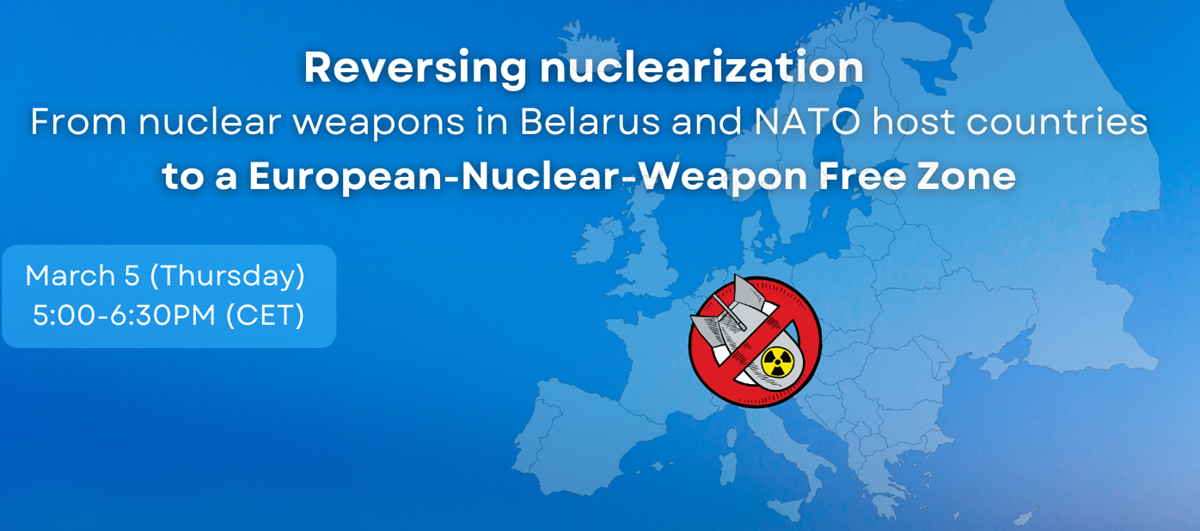
5 March -Online – Reversing nuclearization:
From nuclear weapons in Belarus and NATO host countries to a European-Nuclear-Weapon Free Zone
11am-12:30pm Eastern Time USA / 5pm-6:30pm CET

of the week – Advocating for a
nuclear free beach – https://www.samuellawrencefoundation.org/
The Samuel Lawrence Foundation advocates for a Nuclear Waste Free Beach at San Onofre, join us and take action!

10 March A LIVE WEBINAR THE REAL EFFECTS OF NUCLEAR POWER
What the Industry Isn’t Telling Us
1:00 PM Mountain, 2 pm Central, 3 pm Eastern. Live on the Keepers of the Water Facebook page

18 March Webinar @ 1 PM EST: An Assessment of SMR Projects: The Case of Canada
register for the zoom:
https://us02web.zoom.us/webinar/register/WN_o8BIIOUvQ2ONJR1nta65DQ#/registration

of the week – STOP SMALL MODULAR REACTORS IN CANADA
To see nuclear-related stories in greater depth and intensity – go to https://nuclearinformation.wordpress.com
-
Archives
- March 2026 (51)
- February 2026 (268)
- January 2026 (308)
- December 2025 (358)
- November 2025 (359)
- October 2025 (376)
- September 2025 (258)
- August 2025 (319)
- July 2025 (230)
- June 2025 (348)
- May 2025 (261)
- April 2025 (305)
-
Categories
- 1
- 1 NUCLEAR ISSUES
- business and costs
- climate change
- culture and arts
- ENERGY
- environment
- health
- history
- indigenous issues
- Legal
- marketing of nuclear
- media
- opposition to nuclear
- PERSONAL STORIES
- politics
- politics international
- Religion and ethics
- safety
- secrets,lies and civil liberties
- spinbuster
- technology
- Uranium
- wastes
- weapons and war
- Women
- 2 WORLD
- ACTION
- AFRICA
- Atrocities
- AUSTRALIA
- Christina's notes
- Christina's themes
- culture and arts
- Events
- Fuk 2022
- Fuk 2023
- Fukushima 2017
- Fukushima 2018
- fukushima 2019
- Fukushima 2020
- Fukushima 2021
- general
- global warming
- Humour (God we need it)
- Nuclear
- RARE EARTHS
- Reference
- resources – print
- Resources -audiovicual
- Weekly Newsletter
- World
- World Nuclear
- YouTube
-
RSS
Entries RSS
Comments RSS
 nuclear-news
Leave a comment