Radiation pills for USA States – good idea or not?
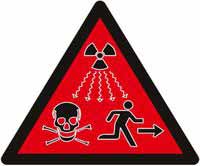 NRC officials say they do not favor expanded distribution because there’s a misconception about potassium iodide’s powers and a fear people might delay in heeding evacuation orders, if they have pills. “It doesn’t protect against damage to organs other than the thyroid,” said Patricia Milligan, a certified health physicist in the NRC’s division of preparedness and response. “It’s not an anti-radiation pill, as some people seem to think”
States Urged to Offer Radiation Pills, WSJ, By REBECCA SMITH —Yuka Hayashi contributed to this article. 24 Aug 11, It has been nearly a decade since Congress passed a law promoting distribution of pills to people living near nuclear plants that would minimize one potentially lethal effect of accidental radiation exposure. But the law still hasn’t been implemented.
Now, lawmakers and public advocates are once again urging action, citing Tuesday’s earthquake in Virginia and the much larger temblor last March in Japan as evidence that more needs to be done because, in each case, nuclear reactors temporarily lost grid power, a condition that poses the threat of radiation release if reactors overheat and can’t be sufficiently cooled……
U.S. law requires the president to authorize the distribution of pills to people living within 20 miles of reactors to protect them against a type of cancer caused by radiation exposure. The pills—containing inexpensive potassium iodide, which is the substance used to iodize common table salt—can prevent thyroid cancer by saturating the thyroid gland with a harmless type of iodine, keeping it from absorbing radioactive iodine that might be inhaled or ingested after a radiation release. Each 65mg pill provides about a day’s worth of protection.
The law never was implemented because the Bush administration, in early 2008, used a waiver in the law that allowed the president to skip the distribution in an extended area beyond an existing 10-mile emergency planning zone if a “more effective prophylaxis or preventive measures” was identified.
John Marburger, Mr. Bush’s science advisor, who died last month of complications from lymphoma, exercised the exemption by ruling then that “avoidance of exposure altogether” was a better prophylaxis than potassium iodide. He said avoidance could be accomplished “through evacuation” and “interdiction of contaminated food.”
Thus, the executive branch action, in effect, “wiped the law from the books,” said Peter Crane, a retired attorney in Seattle who worked at the U.S. Nuclear Regulatory Commission and strongly supports the law’s implementation. He and others, including Rep. Edward Markey (D., Mass.), author of the provision in the 2002 act, now are urging the Obama administration and the NRC to take another look at the issue.
Advocates of the law cite evidence showing that many Japanese citizens, including hundreds of children, were exposed to radiation in March…
, in Fukushima prefecture, where the crippled reactors are located, some 1.51 million potassium iodide pills were distributed, enough to dose 750,000 people living within 30 miles, or 50 kilometers , of the plant. Many of those living closest to the plant already had left the area by the time pills were made available, Japanese officials said last week.
Mr. Markey said this week that the accident in Japan underscores the need to provide pills as a “common-sense measure” to people living within 20 miles of reactors “in recognition of the probability that rapid evacuation during a nuclear meltdown may be difficult and time-consuming.”….
NRC officials say they do not favor expanded distribution because there’s a misconception about potassium iodide’s powers and a fear people might delay in heeding evacuation orders, if they have pills. “It doesn’t protect against damage to organs other than the thyroid,” said Patricia Milligan, a certified health physicist in the NRC’s division of preparedness and response. “It’s not an anti-radiation pill, as some people seem to think”
1 Comment »
Leave a comment
1 This Month

of the week – Shut Down Drone Warfare!


Tell the Ukrainian Government to Drop Prosecution of Peace Activist Yurii Sheliazhenko

Petition to revoke the licensing of the Near Surface Nuclear Disposal Facility (NSDF) at Chalk River. https://www.ourcommons.ca/petitions/en/Petition/Details?Petition=e-7247
To see nuclear-related stories in greater depth and intensity – go to https://nuclearinformation.wordpress.com
-
Archives
- March 2026 (244)
- February 2026 (268)
- January 2026 (308)
- December 2025 (358)
- November 2025 (359)
- October 2025 (376)
- September 2025 (257)
- August 2025 (319)
- July 2025 (230)
- June 2025 (348)
- May 2025 (261)
- April 2025 (305)
-
Categories
- 1
- 1 NUCLEAR ISSUES
- business and costs
- climate change
- culture and arts
- ENERGY
- environment
- health
- history
- indigenous issues
- Legal
- marketing of nuclear
- media
- opposition to nuclear
- PERSONAL STORIES
- politics
- politics international
- Religion and ethics
- safety
- secrets,lies and civil liberties
- spinbuster
- technology
- Uranium
- wastes
- weapons and war
- Women
- 2 WORLD
- ACTION
- AFRICA
- Atrocities
- AUSTRALIA
- Christina's notes
- Christina's themes
- culture and arts
- Events
- Fuk 2022
- Fuk 2023
- Fukushima 2017
- Fukushima 2018
- fukushima 2019
- Fukushima 2020
- Fukushima 2021
- general
- global warming
- Humour (God we need it)
- Nuclear
- RARE EARTHS
- Reference
- resources – print
- Resources -audiovicual
- Weekly Newsletter
- World
- World Nuclear
- YouTube
-
RSS
Entries RSS
Comments RSS
 nuclear-news
David Brownstein, M.D. states: “I have come to the conclusion that iodine deficiency sets up the immune system to malfunction which can lead to many . . . disorders developing.” http://www.optimox.com/pics/Iodine/IOD-09/IOD_09.htm A sampling of sundry articles and authors shows that oral iodine has been used to treat fibromyalgia, chronic fatigue immune deficiency syndrome, autoimmune disorders, fibrocystic breast disease, polycystic ovary syndrome, various cancers, hyperthyroidism, hypothyroidism, goiter, obesity, diabetes, varicose veins, hemorrhoids, urinary tract infections, lead and mercury poisoning, syphilis (“this disease yields in the most rapid and unmistakable fashion to iodides” —circa 1911), aneurysm, arteriosclerosis, angina pectoris, hypertension, cataracts, cardiac arrhythmias, gout, hemophilia, Bright’s disease (nephritis), asthma, bronchitis, and odd skin disturbances. It is sufficient to say that a dietary iodine deficiency is not a good thing to have!
Circa 1920 iodide was added to table salt for the public prevention of goiter, a disorder of the thyroid gland. Subsequently, the incidence of goiter markedly decreased. In the early 1960s potassium iodate was used as a dough conditioner for bread, and so back then one slice of bread would satisfy the RDA of 150 µg. for iodine. But nowadays dietary iodine is becoming marginal, even deficient. The iodine in dough conditioner was replaced with bromine (a chemical relative), effectively removing bread from being a source of iodine. And people are nowadays trying to avoid their main source of iodine, namely table salt, because of its association with high blood ressure. Additionally, the amount of iodine required to prevent disease is much less than that required to promote health (health requires about 60 times the amount of iodine used to prevent goiter). The result is widespread iodine/iodide deficiencies in the American diet. Says Guy E. Abraham, M.D.: “the human body needs at least 100 times the RDA” ( http://www.optimox.com/pics/Iodine/IOD-08/IOD_08.htm ) That is about 15 milligrams (not micrograms) of iodine/iodide per day.
(http://scripturalphysics.org/etc/TheFormula.html)
It seems out of place that the government is reluctant to make iodine supplements available before a nuclear emergency, especially when Americans are already iodine deficient, and therefore more susceptible to uptake of radioactive iodine.
And misconceptions are best treated with education.