The spread of Fukushima nuclear radiation in our interconnected world
 amazed that particles could be spread across the world from such a small footprint like a reactor, which he compared in size to a swimming pool.
“It shows you how connected the world is,” he said. “What happens in one place can show up someplace else.”
Scientists at UC San Diego did produce a number — a total of 400 neutrons per square meter between Mar. 13 and Mar. 20, some 365 times natural, background radiation levels……
“It’s a large amount of radioactivity, obviously,” said Mark H. Thiemens, dean of the university’s Division of Physical Sciences and an author of the new study.
Perhaps at least as interesting is the way Thiemens, post-doctoral researcher Antra Priyadarshi and their team reached the number: by measuring tiny amounts of stray particles from the crippled Fukushima Daiichi reactors blown on ocean winds across the Pacific and into detectors in La Jolla.
“The fact that we see it across the Pacific Ocean means there was a serious amount of radioactivity at the source,” Thiemens said…….
Many types of particles were produced in the crisis that were later measured on the West Coast, including by a U.S. Environmental Protection Agency detector in Anaheim — all of it in spectacularly tiny quantities that posed no health risk to West Coast residents.
But Thiemens and Priyadarshi focused on the radioactive sulfur. While some of that is produced naturally by cosmic rays in the atmosphere, it cannot reach the quantities seen near the ocean surface during the attempt to cool the Japanese reactors with seawater.
“If they would have put in fresh water, there would be no production of radioactive sulfur,” Priyadarshi said.
By tracing the path of the particles backward and accounting for decay of particles and loss to the ocean, they were able to estimate how big the initial burst of radation was over the troubled reactors, at least in square meters.
Thiemens said he would have to leave it to other scientists to determine how much total radiation was released, or perhaps to refine his team’s calculations.
He said he was amazed that particles could be spread across the world from such a small footprint like a reactor, which he compared in size to a swimming pool.
“It shows you how connected the world is,” he said. “What happens in one place can show up someplace else.”
The study was published online this week in the science journal, Proceedings of the National Academy of Scientists.
http://www.ocregister.com/news/reactors-312426-scientists-thiemens.html
No comments yet.
1 This Month
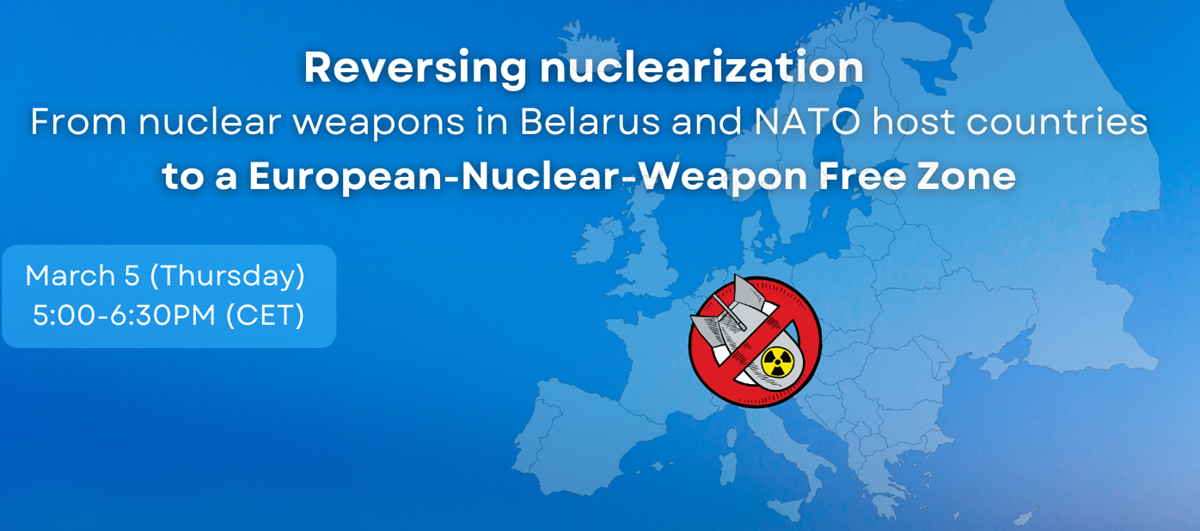
5 March -Online – Reversing nuclearization:
From nuclear weapons in Belarus and NATO host countries to a European-Nuclear-Weapon Free Zone
11am-12:30pm Eastern Time USA / 5pm-6:30pm CET

of the week – Advocating for a
nuclear free beach – https://www.samuellawrencefoundation.org/
The Samuel Lawrence Foundation advocates for a Nuclear Waste Free Beach at San Onofre, join us and take action!

10 March A LIVE WEBINAR THE REAL EFFECTS OF NUCLEAR POWER
What the Industry Isn’t Telling Us
1:00 PM Mountain, 2 pm Central, 3 pm Eastern. Live on the Keepers of the Water Facebook page

18 March Webinar @ 1 PM EST: An Assessment of SMR Projects: The Case of Canada
register for the zoom:
https://us02web.zoom.us/webinar/register/WN_o8BIIOUvQ2ONJR1nta65DQ#/registration

of the week – STOP SMALL MODULAR REACTORS IN CANADA
To see nuclear-related stories in greater depth and intensity – go to https://nuclearinformation.wordpress.com
-
Archives
- March 2026 (51)
- February 2026 (268)
- January 2026 (308)
- December 2025 (358)
- November 2025 (359)
- October 2025 (376)
- September 2025 (258)
- August 2025 (319)
- July 2025 (230)
- June 2025 (348)
- May 2025 (261)
- April 2025 (305)
-
Categories
- 1
- 1 NUCLEAR ISSUES
- business and costs
- climate change
- culture and arts
- ENERGY
- environment
- health
- history
- indigenous issues
- Legal
- marketing of nuclear
- media
- opposition to nuclear
- PERSONAL STORIES
- politics
- politics international
- Religion and ethics
- safety
- secrets,lies and civil liberties
- spinbuster
- technology
- Uranium
- wastes
- weapons and war
- Women
- 2 WORLD
- ACTION
- AFRICA
- Atrocities
- AUSTRALIA
- Christina's notes
- Christina's themes
- culture and arts
- Events
- Fuk 2022
- Fuk 2023
- Fukushima 2017
- Fukushima 2018
- fukushima 2019
- Fukushima 2020
- Fukushima 2021
- general
- global warming
- Humour (God we need it)
- Nuclear
- RARE EARTHS
- Reference
- resources – print
- Resources -audiovicual
- Weekly Newsletter
- World
- World Nuclear
- YouTube
-
RSS
Entries RSS
Comments RSS
 nuclear-news
Leave a comment