Full body airport scanners that emit no radiation
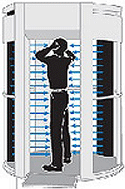 In July, Thruvision’s terahertz-scanning technology was tested at airports in Sydney and Melbourne, Australia, along with millimeter wave scanners from L3. Ron Frye, Thruvision’s Director of International Business Development, reports that the trials ended with positive results
Safer full-body scanners? SF Gate, 11 Aug 11, As controversy simmers surrounding the levels of radiation used in full body scanners, a small company based in the United Kingdom has developed a machine that emits no radiation at all.
Over the last year, the US Transportation Security Administration (TSA) has installed two types of full body scanners at airport security checkpoints across the country. L3′s Provision millimeter wave scanners (used at SFO) beam radio waves through clothing to detect potentially dangerous objects hidden by terrorists. Rapiscan backscatter scanners (at San Jose and Oakland airports) use low-dose x-rays to do the same…….
While controversy swirls around the use of millimeter wave or backscatter technology, Thruvision, a small company based in the United Kingdom, is hoping that governments and airport authorities around the world will take a look at its scanning device that emits no radiation at all. Instead, it passively reads the terahertz radiation emitted by human beings, and detects anomalies when concealed items block that radiation. In addition, it does not capture or display intimate body details thereby removing the need for “modesty filtering” software recently added devices in the US.
In July, Thruvision’s terahertz-scanning technology was tested at airports in Sydney and Melbourne, Australia, along with millimeter wave scanners from L3. Ron Frye, Thruvision’s Director of International Business Development, reports that the trials ended with positive results, but Australian authorities have not yet made any firm decisions about usage of full body scanners. He added that airport authorities in Japan, Indonesia, Malaysia and the Philippines are also considering deploying its scanning devices….
Why aren’t the devices, which are also less expensive than scanners from L3 or Rapiscan, used at US airports? Frye explains, “While our products are used for security screening at military facilities in the US, we estimate it would cost $2-3 million to get through the TSA testing, evaluation and approval process, which could take 2-3 years. We are a small company [37 employees, $4 million annual sales] and don’t have the resources to be able to take that on now. And anyway, we’ve got plenty of business now from airports and other facilities in Asia and the Middle East.”
http://www.sfgate.com/cgi-bin/blogs/cmcginnis/detail?entry_id=95161
No comments yet.
1 This Month
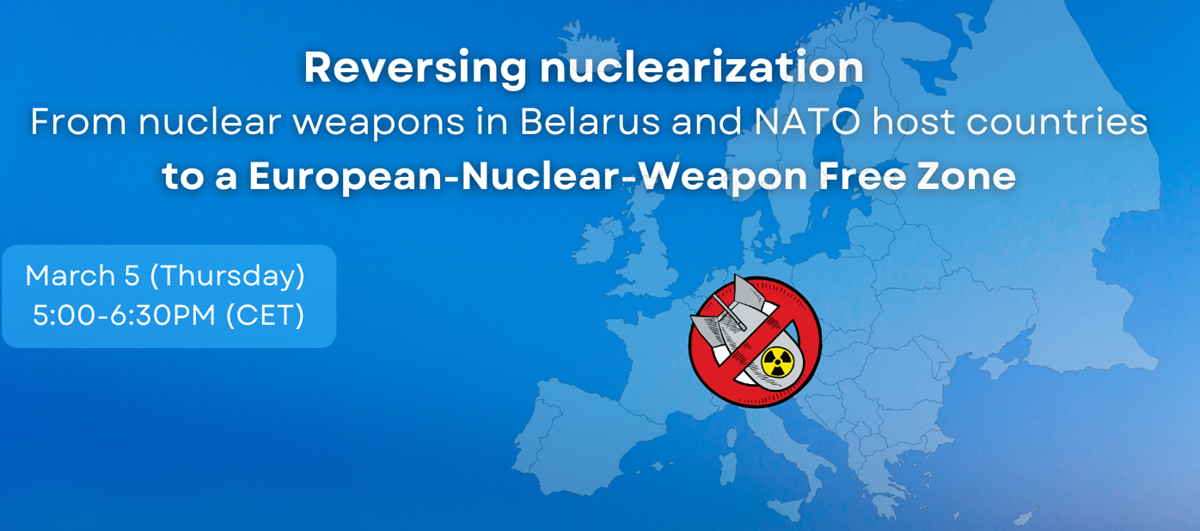
5 March -Online – Reversing nuclearization:
From nuclear weapons in Belarus and NATO host countries to a European-Nuclear-Weapon Free Zone
11am-12:30pm Eastern Time USA / 5pm-6:30pm CET

of the week – Advocating for a
nuclear free beach – https://www.samuellawrencefoundation.org/
The Samuel Lawrence Foundation advocates for a Nuclear Waste Free Beach at San Onofre, join us and take action!

10 March A LIVE WEBINAR THE REAL EFFECTS OF NUCLEAR POWER
What the Industry Isn’t Telling Us
1:00 PM Mountain, 2 pm Central, 3 pm Eastern. Live on the Keepers of the Water Facebook page

18 March Webinar @ 1 PM EST: An Assessment of SMR Projects: The Case of Canada
register for the zoom:
https://us02web.zoom.us/webinar/register/WN_o8BIIOUvQ2ONJR1nta65DQ#/registration

of the week – STOP SMALL MODULAR REACTORS IN CANADA
To see nuclear-related stories in greater depth and intensity – go to https://nuclearinformation.wordpress.com
-
Archives
- March 2026 (51)
- February 2026 (268)
- January 2026 (308)
- December 2025 (358)
- November 2025 (359)
- October 2025 (376)
- September 2025 (258)
- August 2025 (319)
- July 2025 (230)
- June 2025 (348)
- May 2025 (261)
- April 2025 (305)
-
Categories
- 1
- 1 NUCLEAR ISSUES
- business and costs
- climate change
- culture and arts
- ENERGY
- environment
- health
- history
- indigenous issues
- Legal
- marketing of nuclear
- media
- opposition to nuclear
- PERSONAL STORIES
- politics
- politics international
- Religion and ethics
- safety
- secrets,lies and civil liberties
- spinbuster
- technology
- Uranium
- wastes
- weapons and war
- Women
- 2 WORLD
- ACTION
- AFRICA
- Atrocities
- AUSTRALIA
- Christina's notes
- Christina's themes
- culture and arts
- Events
- Fuk 2022
- Fuk 2023
- Fukushima 2017
- Fukushima 2018
- fukushima 2019
- Fukushima 2020
- Fukushima 2021
- general
- global warming
- Humour (God we need it)
- Nuclear
- RARE EARTHS
- Reference
- resources – print
- Resources -audiovicual
- Weekly Newsletter
- World
- World Nuclear
- YouTube
-
RSS
Entries RSS
Comments RSS
 nuclear-news
Leave a comment