Climate Change Increases Nuclear Danger
 In the coming months, you’re going to hear presidential candidates talk about climate change. You probably won’t hear them say much about nuclear safety. But the two are inextricably linked. A warmer climate leads to more severe storms, which increases the chances of a Japan-style nuclear meltdown…..Either we need to get out of the nuclear energy business or reduce our greenhouse gas emissions — or both.-
Climate change, nuclear power risks linked, Sun Sentinel August 05, 2011|By Anthony Orlando
The Japanese tsunami was a freak occurrence. Once in a thousand years. It can’t happen to our nuclear power plants.
But freak occurrences are happening more often nowadays.
It all started with heat. Last year tied the record for the hottest surface temperature. It’s hardly a coincidence that 2010 also set the record for the most precipitation over land. Hot air warms the oceans, evaporates the water, carries the water in clouds and empties over land in the form of rain or snow. It was all in your middle school textbook.
Some of that precipitation was frustrating, like the unusually ferocious snowstorms that pummeled the East Coast. Some was downright dangerous, like the tropical cyclones that are increasing in intensity.
That was then. This is now, when we open the newspapers to read that 11,000 residents of Minot, N.D., evacuated just before water spilled over the levees. Last month, it was the tornadoes that erupted across the country, generating more damage (estimated at $4 billion to $7 billion) than any spring weather disaster in U.S. history.
There’s no escaping the facts: Weather is becoming more extreme, more costly, and more deadly.
But surely our nuclear reactors are safe. We protect them from severe weather. It can’t happen here.
Not according to a recent AP investigation, which found example after example of regulators loosening regulations instead of enforcing them. Inside our power plants are brittle vessels, leaky valves, cracked tubing, and corroded piping — and they’re increasing.
Another AP investigation found that three out of every four nuclear sites have leaked radioactive tritium, sometimes into the groundwater. The government responded that they’re not sure how to detect or stop the leaks.
In the coming months, you’re going to hear presidential candidates talk about climate change. You probably won’t hear them say much about nuclear safety. But the two are inextricably linked. A warmer climate leads to more severe storms, which increases the chances of a Japan-style nuclear meltdown.
No comments yet.
1 This Month
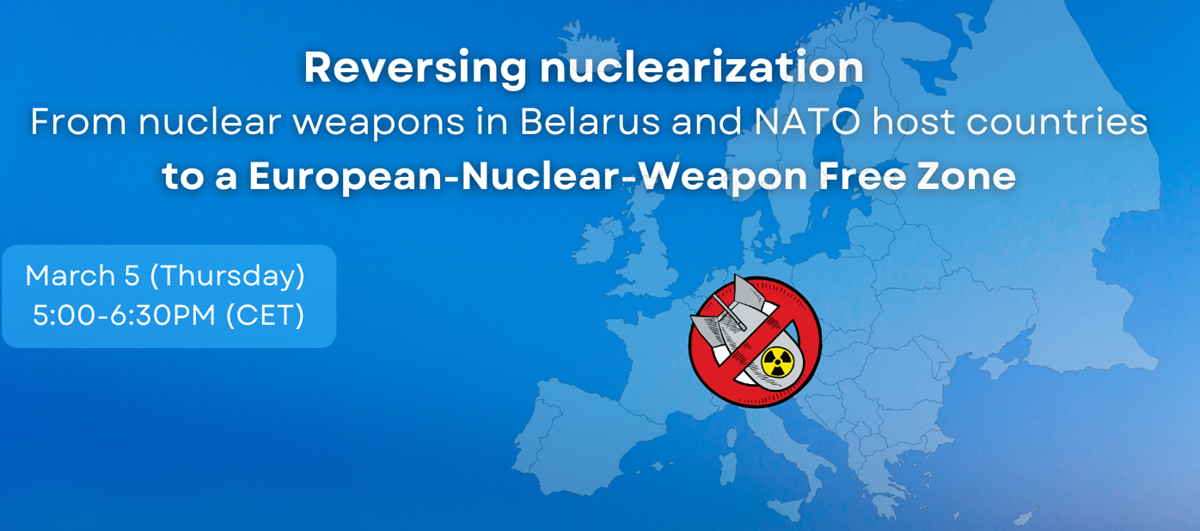
5 March -Online – Reversing nuclearization:
From nuclear weapons in Belarus and NATO host countries to a European-Nuclear-Weapon Free Zone
11am-12:30pm Eastern Time USA / 5pm-6:30pm CET

of the week – Advocating for a
nuclear free beach – https://www.samuellawrencefoundation.org/
The Samuel Lawrence Foundation advocates for a Nuclear Waste Free Beach at San Onofre, join us and take action!
10 March A LIVE WEBINAR THE REAL EFFECTS OF NUCLEAR POWER
What the Industry Isn’t Telling Us
1:00 PM Mountain, 2 pm Central, 3 pm Eastern. Live on the Keepers of the Water Facebook page

18 March Webinar @ 1 PM EST: An Assessment of SMR Projects: The Case of Canada
register for the zoom:
https://us02web.zoom.us/webinar/register/WN_o8BIIOUvQ2ONJR1nta65DQ#/registration

of the week – STOP SMALL MODULAR REACTORS IN CANADA
To see nuclear-related stories in greater depth and intensity – go to https://nuclearinformation.wordpress.com
-
Archives
- March 2026 (51)
- February 2026 (268)
- January 2026 (308)
- December 2025 (358)
- November 2025 (359)
- October 2025 (376)
- September 2025 (258)
- August 2025 (319)
- July 2025 (230)
- June 2025 (348)
- May 2025 (261)
- April 2025 (305)
-
Categories
- 1
- 1 NUCLEAR ISSUES
- business and costs
- climate change
- culture and arts
- ENERGY
- environment
- health
- history
- indigenous issues
- Legal
- marketing of nuclear
- media
- opposition to nuclear
- PERSONAL STORIES
- politics
- politics international
- Religion and ethics
- safety
- secrets,lies and civil liberties
- spinbuster
- technology
- Uranium
- wastes
- weapons and war
- Women
- 2 WORLD
- ACTION
- AFRICA
- Atrocities
- AUSTRALIA
- Christina's notes
- Christina's themes
- culture and arts
- Events
- Fuk 2022
- Fuk 2023
- Fukushima 2017
- Fukushima 2018
- fukushima 2019
- Fukushima 2020
- Fukushima 2021
- general
- global warming
- Humour (God we need it)
- Nuclear
- RARE EARTHS
- Reference
- resources – print
- Resources -audiovicual
- Weekly Newsletter
- World
- World Nuclear
- YouTube
-
RSS
Entries RSS
Comments RSS
 nuclear-news
Leave a comment