How the mainstream media influences public opinion against renewable energy
 press coverage is important because it can influence not only “what people perceive and believe” but also “what politicians think they believe”. Indeed, politicians take the temperature of public opinion partly through the barometer of the press, and consistently negative coverage of renewables will doubtless “limit the perception of political space and impetus for political action”
How UK newspaper coverage is skewed against renewables, More than half of the coverage of renewable energy solutions in the mainstream British press is negative...The Guardian, by Duncan Clark 5 August 2011 “….. previously unpublishedanalysis of British newspaper coverage of renewable energy. Carried out by the Public Interest Research Centre (Pirc), the research confirms the Mail’s unusually anti-green stance, though it also highlights the remarkable degree of negativity that renewable energy receives in the UK press more broadly – including in the Sun.
The analysis looked at coverage of renewables in July 2009, a time when the public debate about climate science seemed almost won and the emphasis was shifting increasingly to the pros and cons of low-carbon energy sources. Pirc examined renewables coverage in the highest-circulation tabloid, mid-market and broadsheet dailies – the Sun, Daily Mail and Daily Telegraph respectively – and also included the Independent as a pro-environment counterweight. (Apparently the Guardian couldn’t be chosen because of lack of local access to printed archives.)
The results don’t make very happy reading for advocates of renewable energy. In the Mail, a staggering three-quarters of articles “centrally concerned with renewables” took a negative stance, and only 8% were positive. The Sun came out almost as anti-renewables as the Mail – though largely thanks to the efforts of Jeremy Clarkson, who singlehandedly accounted for two-thirds of the Sun’s negative pieces, according to the research…….
Although the ground might have shifted a little since 2009, I suspect these results broadly reflect the state of play today. They make for depressing reading partly because they suggest that potential solutions to global warming get an even rougher ride in the press than climate science itself – which is saying something. Interestingly, the results also seem to fly in the face of the assumption among many green campaigners that the way to engage the press and public on climate change is to focus on the solutions rather than the problems.
Is it significant that more than half the coverage of renewables in the mainstream British press is negative? I think it is – especially in a country where planning obstacles are a major barrier to new renewable energy installations, and in which the Institution of Mechanical Engineers has warned that our clean energy target may already be out of reach…….
on an issue such as renewable energy, where fairly small numbers of “antis” can block or delay major installations, every negative story or piece of misinformation counts. (And there’s no doubt that there is plenty of misinformation on this topic alongside all the legitimate opinion: to give just one example, the Mail recently made a big deal about the costs of renewable energy policies on household bills but inflated the true figure by more than 100% due to an almost laughable number of deliberate or accidental errors in their calculations.)….
No comments yet.
1 This Month
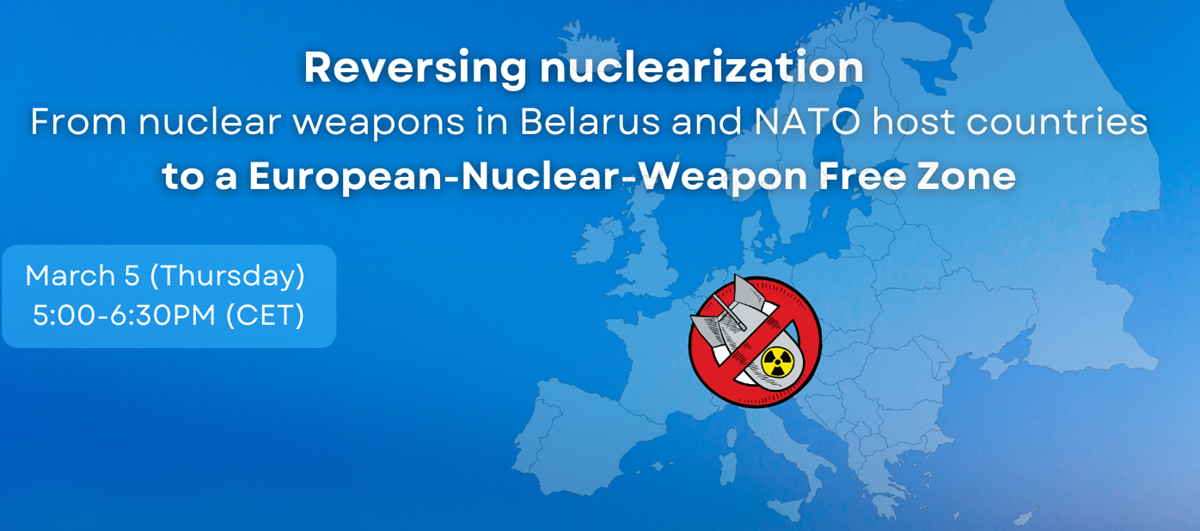
5 March -Online – Reversing nuclearization:
From nuclear weapons in Belarus and NATO host countries to a European-Nuclear-Weapon Free Zone
11am-12:30pm Eastern Time USA / 5pm-6:30pm CET

of the week – Advocating for a
nuclear free beach – https://www.samuellawrencefoundation.org/
The Samuel Lawrence Foundation advocates for a Nuclear Waste Free Beach at San Onofre, join us and take action!

10 March A LIVE WEBINAR THE REAL EFFECTS OF NUCLEAR POWER
What the Industry Isn’t Telling Us
1:00 PM Mountain, 2 pm Central, 3 pm Eastern. Live on the Keepers of the Water Facebook page


18 March Webinar @ 1 PM EST: An Assessment of SMR Projects: The Case of Canada
register for the zoom:
https://us02web.zoom.us/webinar/register/WN_o8BIIOUvQ2ONJR1nta65DQ#/registration

of the week – STOP SMALL MODULAR REACTORS IN CANADA
To see nuclear-related stories in greater depth and intensity – go to https://nuclearinformation.wordpress.com
-
Archives
- March 2026 (51)
- February 2026 (268)
- January 2026 (308)
- December 2025 (358)
- November 2025 (359)
- October 2025 (376)
- September 2025 (258)
- August 2025 (319)
- July 2025 (230)
- June 2025 (348)
- May 2025 (261)
- April 2025 (305)
-
Categories
- 1
- 1 NUCLEAR ISSUES
- business and costs
- climate change
- culture and arts
- ENERGY
- environment
- health
- history
- indigenous issues
- Legal
- marketing of nuclear
- media
- opposition to nuclear
- PERSONAL STORIES
- politics
- politics international
- Religion and ethics
- safety
- secrets,lies and civil liberties
- spinbuster
- technology
- Uranium
- wastes
- weapons and war
- Women
- 2 WORLD
- ACTION
- AFRICA
- Atrocities
- AUSTRALIA
- Christina's notes
- Christina's themes
- culture and arts
- Events
- Fuk 2022
- Fuk 2023
- Fukushima 2017
- Fukushima 2018
- fukushima 2019
- Fukushima 2020
- Fukushima 2021
- general
- global warming
- Humour (God we need it)
- Nuclear
- RARE EARTHS
- Reference
- resources – print
- Resources -audiovicual
- Weekly Newsletter
- World
- World Nuclear
- YouTube
-
RSS
Entries RSS
Comments RSS
 nuclear-news
Leave a comment