For the first time, atomic bomb survivors oppose nuclear power, as well as nuclear weapons
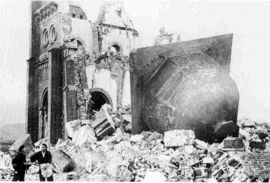 “They convinced us that nuclear power was different from nuclear bombs,” said Mr. Yamada, 80, who was in junior high school when Nagasaki was bombed. “Fukushima showed us that they are not so different.”
Atomic Bomb Survivors Join Opposition to Nuclear Power, New York Times, By MARTIN FACKLER, August 6, 2011, NAGASAKI, Japan — In 1945, Masahito Hirose saw the white mushroom cloud rise from the atomic bomb that incinerated this city and that left his aunt to die a slow, painful death, bleeding from her nose and gums. Still, like other survivors of the attacks here and in Hiroshima, he quietly accepted Japan’s postwar embrace of nuclear-generated power, believing government assurances that it was both safe and necessary for the nation’s economic rise.
That was before this year’s disaster at the Fukushima Daiichi nuclear plant in northern Japan confronted the survivors once again with their old nightmare: thousands of civilians exposed to radiation. Aghast at the catastrophic failure of nuclear technology, and outraged by recent revelations that the government and power industry had planted nuclear proponents at town hall-style meetings, the elderly atomic bomb survivors, dwindling in numbers, have begun stepping forward for the first time to oppose nuclear power.
Now, as both Hiroshima and Nagasaki observe the 66th anniversary of the twin American atomic attacks at the end of World War II, the survivors are hoping that they can use their unique moral standing, as the only victims of nuclear bombings, to wean both Japan and the world from what they see as mankind’s tragedy-prone efforts to tap the atom.
“Is it Japan’s fate to repeatedly serve as a warning to the world about the dangers of radiation?” said Mr. Hirose, 81, who was a junior high school student when an American bomb obliterated much of Nagasaki, killing about 40,000 people instantly. “I wish we had found the courage to speak out earlier against nuclear power.”
But speaking out, even here, was no simple matter. It would have required them to challenge Japan’s postwar establishment, a difficult position in a consensus-driven nation that had put itself on a forced march out of devastation and toward economic development. ………..
Last month, the Hidankyo, the group representing the 10,000 or so still-living survivors of the bombings, appealed for the first time for Japan to eliminate civilian nuclear power. In its action plan for next year, the group called for halting construction of new nuclear plants and the gradual phasing out of Japan’s 54 current reactors as energy alternatives are found……….
Some atomic bombing survivors ruefully admit that it took a disaster the size of Fukushima to free them from that myth.
No comments yet.
1 This Month

of the week – Shut Down Drone Warfare!


Tell the Ukrainian Government to Drop Prosecution of Peace Activist Yurii Sheliazhenko

Petition to revoke the licensing of the Near Surface Nuclear Disposal Facility (NSDF) at Chalk River. https://www.ourcommons.ca/petitions/en/Petition/Details?Petition=e-7247
To see nuclear-related stories in greater depth and intensity – go to https://nuclearinformation.wordpress.com
-
Archives
- March 2026 (230)
- February 2026 (268)
- January 2026 (308)
- December 2025 (358)
- November 2025 (359)
- October 2025 (376)
- September 2025 (257)
- August 2025 (319)
- July 2025 (230)
- June 2025 (348)
- May 2025 (261)
- April 2025 (305)
-
Categories
- 1
- 1 NUCLEAR ISSUES
- business and costs
- climate change
- culture and arts
- ENERGY
- environment
- health
- history
- indigenous issues
- Legal
- marketing of nuclear
- media
- opposition to nuclear
- PERSONAL STORIES
- politics
- politics international
- Religion and ethics
- safety
- secrets,lies and civil liberties
- spinbuster
- technology
- Uranium
- wastes
- weapons and war
- Women
- 2 WORLD
- ACTION
- AFRICA
- Atrocities
- AUSTRALIA
- Christina's notes
- Christina's themes
- culture and arts
- Events
- Fuk 2022
- Fuk 2023
- Fukushima 2017
- Fukushima 2018
- fukushima 2019
- Fukushima 2020
- Fukushima 2021
- general
- global warming
- Humour (God we need it)
- Nuclear
- RARE EARTHS
- Reference
- resources – print
- Resources -audiovicual
- Weekly Newsletter
- World
- World Nuclear
- YouTube
-
RSS
Entries RSS
Comments RSS
 nuclear-news
Leave a comment