Britain drags out nuclear veterans compensation case, hoping they’ll all die off
Britain urged to settle nuclear payout for veterans, THE AUSTRALIAN , July 04, 2011 THE British government was under pressure last night to settle a multimillion-pound fight with more than 1000 veterans of nuclear tests in Australia and the Pacific or risk wasting even more money on a “morally unjustifiable” legal battle that could drag on for years.
Supporters of the pensioners, who participated in Britain’s atomic bomb trials in the Pacific in the 1950s, said that it was time for the Ministry of Defence to follow the world’s four other main nuclear powers and pay compensation. Continue reading
Authorities are not giving a clear story on nuclear radiation and nuclear safety
Reporting from the scene of the disaster is hobbled. The only people with access are workers for the Tokyo Electric Power Co., owner of the reactors, and there is abundant evidence that they have downplayed the seriousness at every juncture, for obvious reasons…….
Nuclear plants a ‘plague’ , By Kevin Brooker, Calgary Herald, July 4, 2011, “…….Earlier this decade, when nuclear power plants were being painted with a green brush by their promoters, Caldicott fired back with a 2006 book, Nuclear Power Is Not the Answer. In it, she contends that nuclear power cannot sustain itself without many, often hidden, subsidies, and moreover, that its supply chain from mining to processing to reactor is itself a massive producer of greenhouse gases. Worse yet, one of the byproducts is plutonium, making them virtual nuclear weapons factories. Continue reading
India not happy with restrictions on nuclear technology purchases
The guidelines restrict the sale of such technology to countries which, like nuclear-armed India, have not signed up to the Nuclear Non-Proliferation Treaty.
India sees the move as a challenge to the waiver from NSG rules — negotiated by the United States — that the country was granted in 2008.
Companies from France, Russia, the United States and Japan are competing for a slice of the $175 billion India plans to spend on nuclear reactors, and Rao hinted that a willingness to provide technology transfers would be a factor in awarding contracts…….http://www.google.com/hostednews/afp/article/ALeqM5jkXesvZlAN_8w4o-iAseAmj42rUA?docId=CNG.a2927e2a2a9f66d6246282cccdc54dd8.651
Nuclear and Uranium Policy – Western Australia Labor Party
Labor policy adopted- 25th June 2011, Chapter 4: Economics, Industry and Regional Development, Minerals and Energy, Uranium Mining and Nuclear Energy
241. Recognising the hazards and dangers of nuclear power, especially relating to:
a. The safety of the nuclear fuel cycle;
b. The unsolved problems pertaining to the reprocessing and storage of radioactive wastes and spent fuel;
c. The growing concern about the biomedical effects of even low radiation
d. The coupling of nuclear energy and nuclear weapon developments
e. The added danger of a future plutonium economy and the threats to civil liberties involved in a nuclear economy; and
f. The fact that Labor policy contained herein on fossil fuels, energy conservation and renewable resources will ensure Western Australia energy self sufficiency.
242. Labor will:
a. Reject nuclear power as an option for electricity generation in Western Australia;
b. Oppose the establishment of a nuclear enrichment facility in the State;
c. Reject the establishment of nuclear processing plants or the storage of nuclear wastes in the state;
d. allow no uranium mining or development in Western Australia; and
e. The platform recognises WA long and continuous opposition to uranium mining. The commencement and continuation of any uranium project is inconsistent with Labor Policy. Labor will accept no obligation to complete approval processes or honour contractual arrangements entered into by a previous government where such approvals or contracts are directed towards an outcome inconsistent with Labor s, restrictions and conditions applicable to the mining, processing, sale and transportation of uranium platform.
f. place thorium under the currently mines in Australia as outlines in the Resources and Energy section of the National Platform, so far as they relate to nuclear non-proliferation.
Decentralised solar energy boom taking off in India
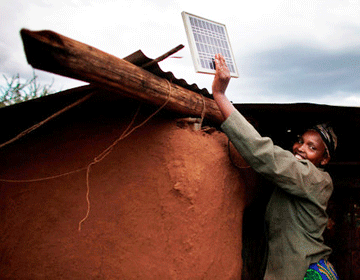 solar technology presents an elegant and immediate solution to powering everything from light bulbs and heaters to water purifiers and pumps…….most new grid capacity will be sucked up by industry, leaving little for the poor who live in off-grid desert outcrops, mountain hamlets and jungle villages like Nada. For them, the surest way to get electricity anytime soon may be to get a solar panel and make it themselves.
 Fuel for solar boom could come from rural India, where thousands give up on grid, buy panels, Washington Post, 2 July 11 “……….Across India, thousands of homes are receiving their first light through small companies and aid programs that are bypassing the central electricity grid to deliver solar panels to the rural poor. Those customers could provide the human energy that advocates of solar power have been looking for to fuel a boom in the next decade.
With 40 percent of India’s rural households lacking electricity and nearly a third of its 30 million agricultural water pumps running on subsidized diesel, “there is a huge market and a lot of potential,” said Santosh Kamath, executive director of consulting firm KPMG in India. “Decentralized solar installations are going to take off in a very big way and will probably be larger than the grid-connected segment.”…… Continue reading
Future global energy winners: gas and renewables, nuclear the loser
Analysis: Gas, renewables to be future energy sources of choice, By Henning Gloystein and Barbara Lewis, LONDON | Jul 1, 2011 (Reuters) – Natural gas will fast become the fossil fuel of choice to complement renewable energy for the foreseeable future, after long being regarded as merely a step on the way to a greener energy mix.
Especially in electricity generation, natural gas has so far stood in competition with coal-fired and nuclear production.
But coal’s high carbon emission levels have reduced its market allure, while the crisis at Japan’s Fukushima plant following an earthquake in March has put a serious dent in the prospects for global nuclear power generation…..http://www.reuters.com/article/2011/07/01/us-gas-future-idUSTRE7603BN20110701
—
USA Senate Bill to set up temporary nuclear waste storage sites
 Senators float bill to create interim storage sites for spent nuclear fuel, THE HILL By Andrew Restuccia – 07/01/11, Sens. Lisa Murkowski (R-Alaska) and Mary Landrieu (D-La.) floated legislation Friday that would require the Energy Department to establish two temporary repositories for spent fuel from the country’s nuclear power plants.
The legislation comes amid increased frustration by Republicans and some Democrats over the Obama administration’s decision to abandon Yucca Mountain, a proposed nuclear waste repository designated by Congress that has been mired by years of delay.
“This proposal addresses one of the most glaring failures of our national nuclear policy — what to do with the used nuclear fuel currently that is currently being stored at over 100 sites across the country,” Murkowski said in a statement Friday.
The lawmakers say the legislation is intended to end a series of lawsuits filed by utilities because the federal government has yet to establish a permanent waste repository. The lawsuits could cost the federal government billions of dollars. ….
The storage of spent nuclear fuel has come under increased scrutiny in the aftermath of the disaster at Japan’s Fukushima Daiichi nuclear power plant.
Sen. Dianne Feinstein (D-Calif.) has raised questions about the way spent fuel is stored in light of issues at the spent fuel pools at the Japanese plant. In the United States, spent fuel rods are placed in pools for several years and then moved into dry cask storage.
“It is clear that we lack a comprehensive national policy to address the nuclear fuel cycle,” Feinstein, the chairwoman of the Appropriations Committee’s Energy and Water subcommittee, said earlier this year.
A recent NRC inspector general report said the commission does not have an adequate system in place for the inspection of nuclear spent fuel storage sites…..
Nuclear Regulatory Commission rubber stamps Salem Nuclear plants’ license renewal
 Salem Nuclear Power Plants Sail Through Relicensing Process, NJSP Spotlight, By Tom Johnson, July 1 The federal government yesterday approved a 20-year extension of the operating licenses for the two Salem nuclear power plants in Lower Alloways Creek Township in South Jersey. The extension from the U.S. Nuclear Regulatory Commission (NRC) was not unexpected, since the its staff had signed off on the extension earlier this month and the regulatory agency has never failed to approve a relicensing request…….
Safety Concerns, Jeff Tittel, director of the New Jersey Sierra Club, expressed disappointment in the decision. “The NRC believes in license first, inspect and regulate later. They have it backward,” Tittel said. “We believe outside independent experts need to review the plants and their different design features to ensure safety.”
In the relicensing process, the NRC failed to address sizable tritium leaks causing contamination of groundwater near the plant, Tittel said. He also argued that the Salem plant is old, saying the federal agency failed to look at metal fatigue and other issues that come up as these facilities age……http://www.njspotlight.com/stories/11/0701/0058/
Opposition in Japan to restarting Genkai nuclear reactors
Saga governor comes under fire over Genkai restart, Japan Times, July 2, 2011, KYODO, Saga — Saga Gov. Yasushi Furukawa came under fire at the prefectural assembly Friday over his apparent willingness to approve the restart of two reactors at the Genkai nuclear power station. …
During a session of the assembly’s committee on nuclear power safety, Yasushige Miyazaki, an independent, said a possible future crisis cannot be ruled out at the plant in the town of Genkai, Saga Prefecture.
He also expressed doubts about the Nuclear and Industrial Safety Agency’s explanation that the crisis at the Fukushima No. 1 nuclear plant was triggered by the March 11 tsunami rather than the magnitude 9.0 earthquake.
Miyazaki urged the governor to seek more data from the central government to confirm that no serious damage was caused to the crippled Fukushima plant by the initial quake. But the governor rejected the request, saying the government has provided sufficient data.
…..many of the assembly’s 38 members oppose a resumption of operations, citing local residents’ safety concerns.
Furukawa said he will make a final decision after meeting with Prime Minister Naoto Kan on whether to restart the No. 2 and No. 3 reactors of the Genkai plant, which are currently shut down for regular checks. Their restart has been delayed due to the Fukushima crisis……..http://search.japantimes.co.jp/cgi-bin/nn20110702a3.html
UK Liberal Democrat slams windfall funding to nuclear power operators
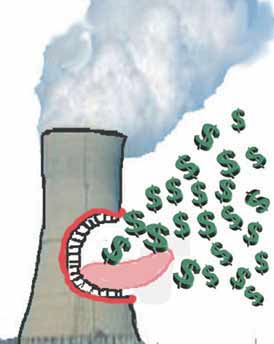
 (UK) New £1bn nuclear windfall must be avoided, John Leech, MP, JULY 2, 2011 On Monday, MPs will be asked to vote through £1 billion in windfall profits to existing nuclear operators for doing absolutely nothing new. The Lib Dems fought the last general election on the promise of opposing new nuclear power and certainly reject public subsidies for nuclear power. Whatever your take on nuclear power though, surely it’s unjustifiable and politically untenable to hand out £1 billion to EDF and Centrica directly from consumer purses, when people are already feeling the squeeze. Continue reading
India’s North Eastern States call for renewable energy funding
North Eastern ministers call for 90% funding The Assam Tribune Spl Correspondent NEW DELHI, July 2 – The Power Ministers of the NE States have called for 90 per cent funding from the Ministry of New and Renewable Energy for the renewable energyprojects in the region.
The Power Ministers also sought help for preparing the State-specific action plans forrenewable energy. They were participating in a meeting convened by New andRenewable Energy Minister Dr Farooq Abdullah to review the implementation of renewable energy policies and programmes in the NE States, here in Delhi today. The meeting was attended by the Chief Minister of Meghalaya and the Power Ministers of other NE States, senior officials from the ministry and the State governments.
Official sources said that Dr Abdullah agreed for getting the resource mapping of solar, wind and micro and small hydro projects prepared for these States. The States in the region have also been advised to put in more efforts for popularization of renewable energy for maximizing use of these technologies. The ministers of NE States would be given opportunities to visit showcase projects within and outside the country…..
It was informed during the meeting that out of 4,965 remote villages to be electrified and illuminated through renewable energy systems in the region, 3,841 villages have been provided solar lights. There are over 160 small and micro hydel projects installed in the NE States with 275 MW aggregate capacities… http://www.assamtribune.com/scripts/detailsnew.asp?id=jul0311/at07
Global warming increases jellyfish, jellyfish shut down nuclear plant
 The surge of jellyfish in the area is believed to have occurred because of a rise in the temperature in the North Sea.Since 2002 scientists have noted massive increases in jellyfish populations around the world. Some attribute this to overfishing, declining water quality and rising sea temperatures.
Jellyfish Shut Down Nuclear Power Plant, Care 2, by Sharon S. June 30, 2011 An invasion of jellyfish managed to stop operations at a nuclear power plant in eastern Scotland after high volumes of the creatures flooded water filters and clogged the cooling system. Continue reading
Emails reveal how UK govt and nuclear industry conspired to downplay Fukushima disaster

 “There is a risk that this event could impact on the global industry. We need to ensure that the anti nuclear chaps and chapesses do not gain ground on this. we need to occupy the territory and hold it… We need to get into context – show that the events in Japan…. are all part of the safety processes of this 1960s reactor. We also need to pull out the additional safety of Gen III…
Should also highlight and show that this is what has happened even with the 1960s reactor in Japan, radiation release has been controlled – the reactor has been protected.
We really need to show the safety of nuclear. We need to quash any stories trying to compare this to Chernobyl… We do not want to be on the back foot with this. People at new build sites are likely to be following closely…. The mitigation with nuclear is so high that the risk is minimal – as demonstrated in Japan”
UK government and nuclear industry email correspondence after the Fukushima accident, guardian.co.uk, 30 June 2011
Emails released under the Freedom of Information Act reveal the level of coordination between government departments and the nuclear industry during the Fukushima crisis.
More radiation problems predicted for Japan
Specifically, Mr. Kosako said the government set a relatively high ceiling for acceptable radiation in school yards, so that only 17 schools exceeded that limit. If the government had set the lower ceiling he had advocated, thousands of schools would have required a full cleanup. With Mr. Kan’s ruling party struggling to gain parliamentary approval for a special budget, the costlier option didn’t get traction, he said.
“When taking these steps, the only concern for the current government is prolonging its own life,” Mr. Kosako said……
He said he is especially concerned with contamination of the ocean by the large amounts radioactive material from the damaged Fukushima Daiichi reactors dumped into surrounding waters.
Radiation Expert Predicts More Threats, WSJ By YUKA HAYASHI, 2 July 11, Tokyo
In his first media interview since resigning his post in protest in April, Toshiso Kosako, one of the country’s leading experts on radiation safety, said Mr. Kan’s government has been slow to test for dangers in the sea and to fish, and has understated certain radiation threats to minimize clean-up costs. In his post, Mr. Kosako’s role was to advise the prime minister on radiation safety.
And while there have been scattered reports of food contamination—of tea leaves and spinach, for example—Mr. Kosako predicted there will be broader discoveries later this year, especially as rice, Japan’s staple, is harvested. Continue reading
Need to test children in Fukushima region for internal radiation contamination
 When asked whether the cesium levels found in these children were significant, Mr. Boilley said, “The amount of cesium should be zero.” He said Acro has determined traces of Cesium-137 in the air, soil and water around the world before the Fukushima Daiichi disaster, saying these traces could be remnants from nuclear experiments in the 1960s and the Chernobyl disaster in 1986. But he says that Cesium-134 is certainly from the Fukushima disaster.
More Fukushima Worries: Internal Contamination, WSJ By Anna Novick, 2 July 11 A urine analysis performed by a French non-profit organization on a small number of children in Fukushima city suggests they may have suffered internal radiation contamination from reactor fuel from the crippled Fukushima Daiichi nuclear power plant, even though they live outside the national government’s 30-kilometer evacuation zone. Continue reading
1 This Month

Protect Sazan Island from the Trump family! https://secure.avaaz.org/campaign/en/protect_sazan_island_from_the_trump_family_loc/?bqFCVab&v=174511&cl=22707147157&_checksum=5e9dde668860e8231c33699735e16a1fbf22ab2cb01da50c999fe8732b9775ef&utm_source=email&utm_medium=blast_email&utm_campaign=174511


Cuba Is Not a Failed State – It Is a Besieged State
PETITION: “Global Appeal to Endorse Palestinian Right of Return of Refugees”
To see nuclear-related stories in greater depth and intensity – go to https://nuclearinformation.wordpress.com
-
Archives
- June 2026 (129)
- May 2026 (306)
- April 2026 (356)
- March 2026 (251)
- February 2026 (268)
- January 2026 (308)
- December 2025 (358)
- November 2025 (359)
- October 2025 (376)
- September 2025 (257)
- August 2025 (319)
- July 2025 (230)
-
Categories
- 1
- 1 NUCLEAR ISSUES
- business and costs
- climate change
- culture and arts
- ENERGY
- environment
- health
- history
- indigenous issues
- Legal
- marketing of nuclear
- media
- opposition to nuclear
- PERSONAL STORIES
- politics
- politics international
- Religion and ethics
- safety
- secrets,lies and civil liberties
- spinbuster
- technology
- Uranium
- wastes
- weapons and war
- Women
- 2 WORLD
- ACTION
- AFRICA
- Atrocities
- AUSTRALIA
- Christina's notes
- Christina's themes
- culture and arts
- Events
- Fuk 2022
- Fuk 2023
- Fukushima 2017
- Fukushima 2018
- fukushima 2019
- Fukushima 2020
- Fukushima 2021
- general
- global warming
- Humour (God we need it)
- Nuclear
- RARE EARTHS
- Reference
- resources – print
- Resources -audiovicual
- Weekly Newsletter
- World
- World Nuclear
- YouTube
-
RSS
Entries RSS
Comments RSS
 nuclear-news