The radiation danger in seafoods
even at those low quantities the radioactive elements may pose a danger when concentrated in seafood,…..fish have been known to accumulate as much as 100 times the amount of pollutants in the environment,
Japan Scientists Say Sea Radiation Tests May Miss Seafood Threat, SF Gate,July 26 (Bloomberg) –– Japan’s government has to release more data from ocean radiation tests to accurately assess the contamination threat to seafood, according to a statement by the Oceanographic Society of Japan.
The government should release radiation readings in sea water that are below its minimum measurement level, because even at those low quantities the radioactive elements may pose a danger when concentrated in seafood, the group, which counts 1,860 marine scientists as its members, said yesterday.
“Depending on the species, fish have been known to accumulate as much as 100 times the amount of pollutants in the environment,” Jota Kanda, a professor at Tokyo University of Marine Science and Technology specializing in marine environment, said by phone yesterday.
Radiation threats to Japan’s food chain are multiplying as cesium emissions from the crippled Fukushima Dai-Ichi nuclear power plant spread. Aeon Co., Japan’s biggest supermarket chain, said yesterday 4,108 kilograms (9,056 pounds) of beef suspected of being contaminated by radiation was inadvertently put on sale at 174 stores across the country……..
Radiation in food is measured in becquerel, a gauge of the strength of radioactivity in materials such as Iodine-131 and Cesium-137. A becquerel represents one radioactive decay per second, which involves the release of atomic energy that can damage human cells and DNA, with prolonged exposure causing leukemia and other forms of cancer, according to the World Nuclear Association.,,,”The concern is that the contaminants will travel up the food chain reaching greater concentration in higher animals,” Eiji Tanaka, a professor at Tokyo University of Marine Science and Technology specializing in marine bioresources, said in an email yesterday.
1 Comment »
Leave a comment
1 This Month
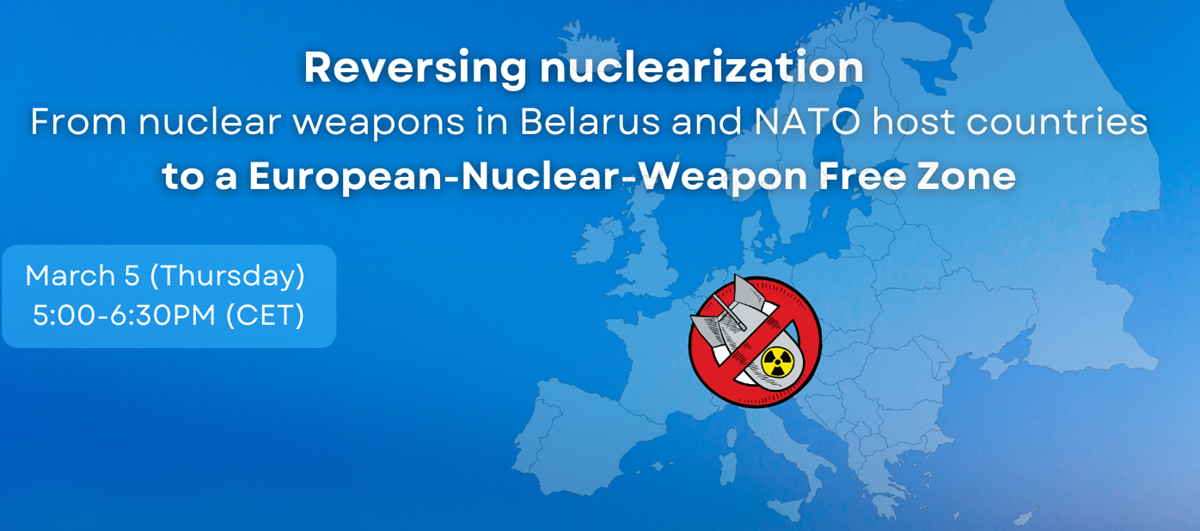
5 March -Online – Reversing nuclearization:
From nuclear weapons in Belarus and NATO host countries to a European-Nuclear-Weapon Free Zone
11am-12:30pm Eastern Time USA / 5pm-6:30pm CET

of the week – Advocating for a
nuclear free beach – https://www.samuellawrencefoundation.org/
The Samuel Lawrence Foundation advocates for a Nuclear Waste Free Beach at San Onofre, join us and take action!

10 March A LIVE WEBINAR THE REAL EFFECTS OF NUCLEAR POWER
What the Industry Isn’t Telling Us
1:00 PM Mountain, 2 pm Central, 3 pm Eastern. Live on the Keepers of the Water Facebook page

18 March Webinar @ 1 PM EST: An Assessment of SMR Projects: The Case of Canada
register for the zoom:
https://us02web.zoom.us/webinar/register/WN_o8BIIOUvQ2ONJR1nta65DQ#/registration

of the week – STOP SMALL MODULAR REACTORS IN CANADA
To see nuclear-related stories in greater depth and intensity – go to https://nuclearinformation.wordpress.com
-
Archives
- March 2026 (51)
- February 2026 (268)
- January 2026 (308)
- December 2025 (358)
- November 2025 (359)
- October 2025 (376)
- September 2025 (258)
- August 2025 (319)
- July 2025 (230)
- June 2025 (348)
- May 2025 (261)
- April 2025 (305)
-
Categories
- 1
- 1 NUCLEAR ISSUES
- business and costs
- climate change
- culture and arts
- ENERGY
- environment
- health
- history
- indigenous issues
- Legal
- marketing of nuclear
- media
- opposition to nuclear
- PERSONAL STORIES
- politics
- politics international
- Religion and ethics
- safety
- secrets,lies and civil liberties
- spinbuster
- technology
- Uranium
- wastes
- weapons and war
- Women
- 2 WORLD
- ACTION
- AFRICA
- Atrocities
- AUSTRALIA
- Christina's notes
- Christina's themes
- culture and arts
- Events
- Fuk 2022
- Fuk 2023
- Fukushima 2017
- Fukushima 2018
- fukushima 2019
- Fukushima 2020
- Fukushima 2021
- general
- global warming
- Humour (God we need it)
- Nuclear
- RARE EARTHS
- Reference
- resources – print
- Resources -audiovicual
- Weekly Newsletter
- World
- World Nuclear
- YouTube
-
RSS
Entries RSS
Comments RSS
 nuclear-news
Add this to the BP Corexit Gulf of Mexico debacle and We have ourselves oceans of mess http://realitycheck.no-ip.info/nnn.html