The Science Tells Us That Climate Change Is An Urgent Global Problem
 The window of opportunity to turn the climate trend would close unless a coordinated global effort is made to reduce emissions and a technological breakthrough is made to draw-down atmospheric CO2.
According to Schellnhuber “We are simply talking about the very life support system of this planet.” What is required is what has never been done before in human history — a plan for the future…
 An Orwellian climate: carbon price and the atmosphere, July 15, 2011 , by Crikey, Andrew Glikson, earth and palaeoclimate scientist at the Australian National University, writes: Professor Hans Joachim Schellnhuber, chief climate science advisor of the German government and keynote speaker at the Four Degrees or More? Australia in a hot world conference held this week in Melbourne, made a point on Lateline that even the least-informed should be able to understand: “Our body temperature is about 37 degrees. If you increase it by two degrees, 39, you have fever. If you add four degrees, it is 41 — you are dead, more or less. And you have to think about the body temperature of our planet, which has been brought about through many, many processes over many, many millions of years.” Continue reading
Continued radioactive contamination of beef from Northern Japan
 Japanese beef contamination widens, The Age, 16 July 11, MORE beef from cattle in Japan that ate straw tainted by radiation has found its way into the food supply, deepening concern about the safety of meat as the country struggles to contain the spread of the contamination.
Cattle at the farm in Asakawa, about 60 kilometres from the crippled Fukushima No. 1 nuclear station, were fed with rice straw containing 97,000 becquerels of caesium per kilogram, compared with the government standard of 300 becquerels, said Hidenori Ohtani at the livestock division of the Fukushima prefectural government.
The farm shipped 42 cattle in the past three months to slaughterhouses in Tokyo, Kanagawa, Chiba and Miyagi prefectures, which were processed into meat and sold to distributors, he said.
The discovery comes a week after the Tokyo metropolitan government said it detected beef tainted by radiation for the first time, underlining the severity of contamination caused by the stricken station in Fukushima, site of the worst nuclear disaster since Chernobyl.
Japan’s government might restrict beef shipments from all of Fukushima prefecture after the finding, Kyodo News has reported…..
http://www.theage.com.au/world/japanese-beef-contamination-widens-20110715-1hhye.html
USA Nuclear Regulatory Commission might be forced to get out of bed with the nuclear industry
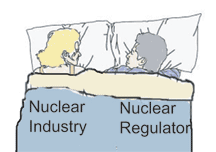 the days of uncontested, rubber-stamp relicensing may be drawing to an end. A new generation of legal warriors, armed with scheduled appeals and hotly debated contentions, have slowed some relicensing procedures to a glacial pace. Today, relicensing applicants may encounter committed opposition in high places they didn’t bargain for…..
The End of the NRC Rubber Stamp? OpEd News, By Abby Luby 16 July 11 On Friday, a major victory by New York State upset the Nuclear RegulatoryCommission’s rubber stamp process to relicense the Indian Point Nuclear Power Plant. The historical decision by the Atomic Safety and Licensing Board ruled in favor of a petition served by New York Attorney General Eric Schneiderman that argued the NRC’s environmental review violated the law.
This was the first successful motion of its kind and it heralds the growing trend to battle “business as usual’ when it comes to relicensing aging nuclear power plants who want to stay in business past their 40-year life expectancy. Continue reading
On health and safety grounds, Indian Point Nuclear Plant should be closed
First, to the cancer risk. Even the federal Nuclear Regulatory Commission — an agency that services the industry it is supposed to regulate, if there ever was one — has bowed to growing evidence and backed away from its decades of insisting that nuclear power plants do not cause cancer. …
 The Radiation and Public Health Project, a nonprofit anti-nuclear group, has found increasing levels of Strontium 90, a carcinogen that exists only as a byproduct of nuclear fission, in teeth from babies living close to nuclear plants, including Indian Point…the safety record, plus evidence that the facility already is slowly, steadily poisoning the region, makes clear that it’s time to close Indian Point.
It’s time to close Indian Point, ctpost.com, July 15, 2011 “……….But Hearst Newspapers‘ investigative reporter Bill Cummings in today’s paper presents a hard-to-dismiss examination of the plant closest to us. More than 17 million people live within a 50-mile radius of New York’s Indian Point Energy Center in Buchanan, N.Y., just south of Peekskill.
And incidence of cancer near the center, including in Fairfield County, is higher than the national average, and grow higher still as you get closer. Continue reading
Prospects improving for renewable energy in USA
Renewable Energy Funds Boosted as House Passes Energy Funding Bill, Science Insider, by Eli Kintisch , 16 July 11, An amendment to bring proposed 2012 funding for ARPA-E, the blue-sky research arm of the Department of Energy, up to the current year level of $180 million passed the House today by a vote of 214-213. That level is far lower than the $550 million that the Obama Administration requested. But it does suggest that the likely worst-case scenario for the agency is a flat budget next year, as the Democratic-controlled Senate, which takes up the legislation next, generally supports increases for energy research. The amendment added $80 million to the $100 million approved by the House appropriations panel.
Meanwhile, a number of amendments in the House of Representatives sought to cut the renewable energy and energy efficiency research program at the Department of Energy, but they all failed. So, too, did a number of proposals to boost research into renewables or fossil fuel energy. An amendment to add $10 million to the solar energy research program passed, however, by a close vote of 212-210. ..http://news.sciencemag.org/scienceinsider/2011/07/renewable-energy-funds-boosted-a.html
Doubts on when, or IF, Japan’s idled nuclear reactors will restart
Restart schedule for idled nuclear reactors still in limbo, Mainichi Daily News, Japan July 16, 2011 The Nuclear and Industrial Safety Agency’s draft plan for two-stage stress tests on Japan’s nuclear reactors does not state how long the first stage of the assessments will take, making it impossible to predict when currently idled reactors can be restarted.
The government agency simply said timing for the restart of reactors idled for regular inspections or shut down in the aftermath of the crisis at the Fukushima No. 1 Nuclear Power Plant depends on the investigative reports to be submitted by nuclear plant operators. Furthermore, Prime Minister Naoto Kan and three Cabinet members will decide whether to allow any of the idled reactors to be restarted. Continue reading
USA taxpayers paying up for nuclear companies’ radioactive wastes
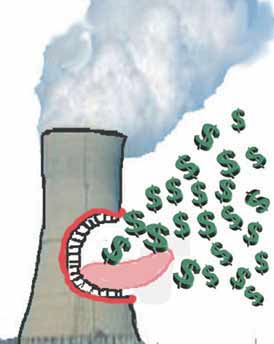 NPPD gets $61M to pay for storing nuclear waste, BLOOMBERG, 16 JULY 11BROWNVILLE, NEB., The Nebraska Public Power District has received nearly $61 million from the federal Energy Department to help pay for the cost of storing spent fuel at Cooper nuclear power plant.
The Columbus-based utility says it also reached an agreement with federal officials about how future fuel storage costs will be handled, so its lawsuit against the Energy Department has been dismissed.
The initial payment covers about 90 percent of NPPD’s storage costs from 2007 through 2009. NPPD says it had to build a facility to store spent fuel at Cooper because the federal government never set up the promised national repository for radioactive waste…..http://www.businessweek.com/ap/financialnews/D9OG8UCG2.htm
US Defense Dept supportive of renewable energy projects

 Pentagon clears Kansas wind projects, July 15, 2011, BLOOMBERG, TOPEKA, KAN., The Defense Department says a half-dozen wind energy projects planned in Kansas would have little or no effect on military missions.
The Pentagon issued a report Thursday on its review of 249 renewable energy projects in 35 states and Puerto Rico. The department found no problems with 229 of the projects.The report cleared all six of the Kansas wind projects reviewed. They’re located in Cimarron, El Dorado, Ensign, Lakin, Pratt and Ulysses.
Defense officials also said in the report that renewable projects will help the U.S. maintain its energy security.http://www.businessweek.com/ap/financialnews/D9OG64T00.htm
Two patients still irradiated months after medical scans
 The agency said it recently became aware of two patients who underwent PET imaging scans with CardioGen-82 and were later found to have detectable levels of radiation several months after their PET scans. Both patients were crossing the border to or from the United States when radiation detectors identified radiation originating from them.
The FDA said the scans had been performed 2 and 4 months earlier.
FDA Investigating Exposure To Excess Radiation From Certain Heart Scans, WSJ, By Jennifer Corbett Dooren, WASHINGTON (Dow Jones) 16 July 11–-The Food and Drug Administration Friday warned about the potential for excess radiation exposure in patients who underwent heart scans involving a radioactive drug called CardioGen-82. Continue reading
Radioactive water leak closes New Jersey nuclear plant
NJ nuclear plant taken offline due to water leak , LOWER ALLOWAYS CREEK TOWNSHIP, N.J. 16 JULY 11, The Salem 2 nuclear plant in southern New Jersey has been taken offline after a leak of low-level radioactive water developed during routine testing of an emergency cooling system…. it’s not known when the plant will return to service….http://www.businessweek.com/ap/financialnews/D9OGD6UG0.htm
—
1 This Month

of the week – Shut Down Drone Warfare!


Tell the Ukrainian Government to Drop Prosecution of Peace Activist Yurii Sheliazhenko

Petition to revoke the licensing of the Near Surface Nuclear Disposal Facility (NSDF) at Chalk River. https://www.ourcommons.ca/petitions/en/Petition/Details?Petition=e-7247
To see nuclear-related stories in greater depth and intensity – go to https://nuclearinformation.wordpress.com
-
Archives
- March 2026 (244)
- February 2026 (268)
- January 2026 (308)
- December 2025 (358)
- November 2025 (359)
- October 2025 (376)
- September 2025 (257)
- August 2025 (319)
- July 2025 (230)
- June 2025 (348)
- May 2025 (261)
- April 2025 (305)
-
Categories
- 1
- 1 NUCLEAR ISSUES
- business and costs
- climate change
- culture and arts
- ENERGY
- environment
- health
- history
- indigenous issues
- Legal
- marketing of nuclear
- media
- opposition to nuclear
- PERSONAL STORIES
- politics
- politics international
- Religion and ethics
- safety
- secrets,lies and civil liberties
- spinbuster
- technology
- Uranium
- wastes
- weapons and war
- Women
- 2 WORLD
- ACTION
- AFRICA
- Atrocities
- AUSTRALIA
- Christina's notes
- Christina's themes
- culture and arts
- Events
- Fuk 2022
- Fuk 2023
- Fukushima 2017
- Fukushima 2018
- fukushima 2019
- Fukushima 2020
- Fukushima 2021
- general
- global warming
- Humour (God we need it)
- Nuclear
- RARE EARTHS
- Reference
- resources – print
- Resources -audiovicual
- Weekly Newsletter
- World
- World Nuclear
- YouTube
-
RSS
Entries RSS
Comments RSS
 nuclear-news