Nuclear power a tragic cause of global warming, rather than a solution?
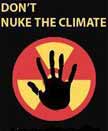 That which cannot be controlled must be prevented. Today, that means preventing the threat of climate change and eradicating nuclear weapons. But we cannot afford efforts to address one challenge that end up aggravating the other. Attempting to reduce greenhouse-gas emissions through nuclear energy, thereby fueling the dangers of the ultimate global incendiary – nuclear war – could be the most tragic of all miscalculations…….
From Fukushima to disarmament, BY MALCOLM FRASER, ABC Environment | 5 JUL 2011 In our rush to find a solution to climate change, nuclear energy has again been promoted. But the disaster at Fukushima reminds us of just how devastating nuclear can be.
MONTHS AFTER THE devastating March 11 earthquake and tsunami hit Japan, the ongoing nuclear disaster at Fukushima compounds the humanitarian tragedy and impedes recovery. The damaged reactors and spent-fuel ponds contain around 10 times as much nuclear fuel as did the Chernobyl reactor that exploded in 1986. In three reactors, the fuel has melted, almost certainly through the reactor vessels; primary containment structures have been breached; explosions have torn away the secondary containment (the buildings); radioactive releases continue; and closed-loop cooling has not been re-established.
Fukushima has highlighted how vulnerable spent-fuel ponds are to direct damage or disruption of power, water, or pumps for cooling. These pools contain vast amounts of long-lived radioactivity, typically in a simple building, without multiple engineered layers of containment. Each of the world’s 437 nuclear power reactors and associated spent-fuel ponds are effectively enormous pre-positioned radiological weapons, or “dirty bombs.”
Moreover, the world is wired with 22,400 purpose-built nuclear weapons. Around 1,770 of them in Russia and the US, and a further 64 in France and 48 in the United Kingdom, remain on high alert, ready to be launched in response to a perceived attack with only minutes for verification and decision. Recent history is peppered with a litany of false alerts and near misses, each unforeseen, each a combination of technical and human failure. The growing potential for a nuclear disaster by cyber attack adds to the existential danger……
Any country that can enrich uranium to fuel nuclear reactors has everything it needs to enrich uranium further, to weapons-grade strength. In a nuclear reactor, one to two per cent of the uranium fuel is inevitably converted to plutonium. This can be separated through chemical processing and used to build a bomb, as Israel, India, and North Korea did – and as many fear that Iran is seeking to do.
Currently, there is no restriction on any country building a uranium-enrichment plant or reprocessing spent nuclear fuel to extract plutonium. As we have seen, safeguards alone are not up to the job. We will not prevent further proliferation of nuclear weapons and their eventual use, much less achieve a world free of nuclear weapons, without strict international control of all uranium enrichment, and without banning the separation of plutonium from spent fuel.
That which cannot be controlled must be prevented. Today, that means preventing the threat of climate change and eradicating nuclear weapons. But we cannot afford efforts to address one challenge that end up aggravating the other. Attempting to reduce greenhouse-gas emissions through nuclear energy, thereby fueling the dangers of the ultimate global incendiary – nuclear war – could be the most tragic of all miscalculations…….http://www.abc.net.au/environment/articles/2011/07/05/3260732.htm
No comments yet.
1 This Month

of the week – Shut Down Drone Warfare!


Tell the Ukrainian Government to Drop Prosecution of Peace Activist Yurii Sheliazhenko

Petition to revoke the licensing of the Near Surface Nuclear Disposal Facility (NSDF) at Chalk River. https://www.ourcommons.ca/petitions/en/Petition/Details?Petition=e-7247
To see nuclear-related stories in greater depth and intensity – go to https://nuclearinformation.wordpress.com
-
Archives
- March 2026 (230)
- February 2026 (268)
- January 2026 (308)
- December 2025 (358)
- November 2025 (359)
- October 2025 (376)
- September 2025 (257)
- August 2025 (319)
- July 2025 (230)
- June 2025 (348)
- May 2025 (261)
- April 2025 (305)
-
Categories
- 1
- 1 NUCLEAR ISSUES
- business and costs
- climate change
- culture and arts
- ENERGY
- environment
- health
- history
- indigenous issues
- Legal
- marketing of nuclear
- media
- opposition to nuclear
- PERSONAL STORIES
- politics
- politics international
- Religion and ethics
- safety
- secrets,lies and civil liberties
- spinbuster
- technology
- Uranium
- wastes
- weapons and war
- Women
- 2 WORLD
- ACTION
- AFRICA
- Atrocities
- AUSTRALIA
- Christina's notes
- Christina's themes
- culture and arts
- Events
- Fuk 2022
- Fuk 2023
- Fukushima 2017
- Fukushima 2018
- fukushima 2019
- Fukushima 2020
- Fukushima 2021
- general
- global warming
- Humour (God we need it)
- Nuclear
- RARE EARTHS
- Reference
- resources – print
- Resources -audiovicual
- Weekly Newsletter
- World
- World Nuclear
- YouTube
-
RSS
Entries RSS
Comments RSS
 nuclear-news
Leave a comment