Nuclear plants at risk if flooding in Nebraska gets worse
Any new rain episode could worst the flooding, especially in Nebraska, …..
Fort Calhoun is not the only power plant that is threatened by the flooding. Cooper Nuclear Station is in a similar position, but the risk is higher if the water’s level is rising. In the worst case, the Fukushima’s situation could repeat here.
Nuclear danger in Nebraska because of the flooding News In A Box by Kelley Jeanie , 22 June 11 On Tuesday, June 21st 2011 A power plant from Nebraska, Fort Calhoun, was threatened to become a new Fukushima after several dams from around it broke because of the flooding on the Missouri River. The power plant was close to be under the water after the Missouri River got at 45 centimeters around it, according to dailymail.co.uk. If the water’s level got at 274,9 meters above the sea’s level in Brownville, the officials would have been forced to close the nuclear plant that is situated at 275,2 meters. Continue reading
30 years radiation health monitoring for 2 million Fukushima residents
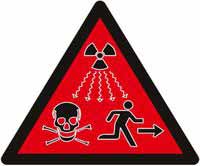 Residents in the Fukushima region have expressed growing concern surrounding the possible longterm health risks, in particular for children, triggered by the on-going nuclear power plant crisis.
Two million Fukushima residents to undergo radiation health checks Telegraph By Danielle Demetriou in Tokyo, 21 June 11 More than two million residents living in the region surrounding Japan’s damaged nuclear power plant will undergo longterm health checks starting from this month. 20 Jun 2011 The health of residents in Fukushima prefecture in northeast Japan will be monitored over the next 30 years in order to ease growing concerns surrounding radiation contamination. Continue reading
UK government held gravest fears about Fukushima crisis
 A substantial number of documents were withheld on grounds that they contained “information which, if disclosed, would adversely affect international relations,” the government’s civil contingencies team said…….
UK government’s Fukushima crisis plan based on bigger leak than Chernobyl As Japan’s nuclear emergency unfolded, scientists devised a worst case scenario involving issuing iodine pills to Briton. Ian Sample, science correspondent. guardian.co.uk, 20 June 2011
The British government made contingency plans at the height of the Fukushima nuclear crisis which anticipated a “reasonable worst case scenario” of the plant releasing more radiation than Chernobyl, new documents released to the Guardian show. Continue reading
Radioactive tritium leaking from 75% of USA’s nuclear plants
The leaks sometimes go undiscovered for years, the AP found. Many of the pipes or tanks have been patched, and contaminated soil and water have been removed in some places. But leaks are often discovered later from other nearby piping, tanks or vaults. Mistakes and defective material have contributed to some leaks. However, corrosion – from decades of use and deterioration – is the main cause. And, safety engineers say, the rash of leaks suggest nuclear operators are hard put to maintain the decades-old systems.
Nearly 50 US Nuclear Power Plants Are Leaking Tritium, Somewhere around 75 per cent of US nuclear power plants have been found leaking the radioactive element Tritium into the ground to various extents. Corroded piping buried underground seems to be the main problem, and a problem that can affect groundwater if ignored., GIZMODO y Adrian Covert on June 22, 2011 Continue reading
TEPCO’s sloppy care of 3700 nuclear clean-up workers
Whereabouts of 30 nuclear power plant subcontractors unknown: Health Ministry Mainichi Daily News 21 June 11 The whereabouts of about 30 subcontractors who helped deal with the crisis at the crippled Fukushima No. 1 Nuclear Power Plant is unknown, the Ministry of Health, Labor and Welfare said on June 20.
The workers are among some 3,700 who worked to control the disaster in March, the month the plant was struck by the Great East Japan Earthquake and tsunami.
The workers’ names were listed in records showing that they had been loaned dosimeters, but when the plant’s operator, Tokyo Electric Power Co. (TEPCO), contacted the companies they were associated with, the companies replied that there was no record of those workers.
The ministry has branded TEPCO’s administration of workers “sloppy” and ordered the company to conduct an investigation to identify the workers.
“We don’t know why there is no record of the workers. The records and dosimeters were managed by TEPCO and its administration can only be described as sloppy,” a representative of the ministry’s Labor Standards Bureau said…..http://mdn.mainichi.jp/mdnnews/news/20110621p2a00m0na005000c.html
Near disaster of U.S. nuclear submarine
Nuclear sub came close to disaster off Devon The Independent By David Wilcock 22 June 11 A US nuclear submarine nearly ran aground, following an incident in which two of its crewmen died near Plymouth, a report has revealed.
The attack submarine the USS Minneapolis-St Paul was trying to leave Plymouth Sound after a visit to Devonport naval base in 2006 when it hit rocks and became stuck with consequences that could have been “catastrophic”, the Royal Navy report, released through the Freedom of Information Act, said.
Two US sailors, Senior Chief Petty Officer Thomas Higgins and Petty Officer Michael Holtz, died while three others were swept into the rough seas before being rescued by nearby boats. The report said the incident was largely the fault of the vessel’s commanding officer, Commander Edwin Ruff, who was later relieved of his post.
It also criticised a lax safety culture at the naval base, the largest in western Europe, including a failure to heed warnings after a similar but non-fatal accident involving the British submarine HMS Sovereign the previous February.
“This was a severe incident with multiple loss of life. There was a very real possibility of the boat grounding in very rough seas and on an ebb tide 500 yards south of Plymouth breakwater,” the report said.
“Tragic as the loss of the lives of Holtz and Higgins was, the outcome could have been so much more catastrophic and thus must be regarded as at the less serious end of the potential spectrum of consequences….http://www.independent.co.uk/news/uk/home-news/nuclear-sub-came-close-to-disaster-off-devon-2300623.html
Another failure in Fukushima water treatment system
Decontamination system fails again at Japan nuclear plant THE HINDU 22 June 11The operator of a damaged Japanese nuclear plant suspended another test run of a newly installed water-treatment system after its pump stopped on Tuesday.
Tokyo Electric Power Co said the pump was overburdened by excessive liquid flow, Kyodo News reported.
The system designed to decontaminate highly radioactive water stopped only five hours into full operation on Friday at the Fukushima Daiichi plant, 250 kilometres north-east of Tokyo.
The operator concluded on Monday that absorbent materials inside the decontamination equipment needed changing more frequently than previously estimated, public broadcaster NHK reported.
The company is trying to reduce radioactivity in water that has accumulated around the plant as a result of emergency measures to cool the reactor cores. Storage facilities for contaminated water were reaching capacity.
Problems at Dominion Virginia nuclear power units
1 This Month

of the week – Shut Down Drone Warfare!


Tell the Ukrainian Government to Drop Prosecution of Peace Activist Yurii Sheliazhenko

Petition to revoke the licensing of the Near Surface Nuclear Disposal Facility (NSDF) at Chalk River. https://www.ourcommons.ca/petitions/en/Petition/Details?Petition=e-7247
To see nuclear-related stories in greater depth and intensity – go to https://nuclearinformation.wordpress.com
-
Archives
- April 2026 (57)
- March 2026 (251)
- February 2026 (268)
- January 2026 (308)
- December 2025 (358)
- November 2025 (359)
- October 2025 (376)
- September 2025 (257)
- August 2025 (319)
- July 2025 (230)
- June 2025 (348)
- May 2025 (261)
-
Categories
- 1
- 1 NUCLEAR ISSUES
- business and costs
- climate change
- culture and arts
- ENERGY
- environment
- health
- history
- indigenous issues
- Legal
- marketing of nuclear
- media
- opposition to nuclear
- PERSONAL STORIES
- politics
- politics international
- Religion and ethics
- safety
- secrets,lies and civil liberties
- spinbuster
- technology
- Uranium
- wastes
- weapons and war
- Women
- 2 WORLD
- ACTION
- AFRICA
- Atrocities
- AUSTRALIA
- Christina's notes
- Christina's themes
- culture and arts
- Events
- Fuk 2022
- Fuk 2023
- Fukushima 2017
- Fukushima 2018
- fukushima 2019
- Fukushima 2020
- Fukushima 2021
- general
- global warming
- Humour (God we need it)
- Nuclear
- RARE EARTHS
- Reference
- resources – print
- Resources -audiovicual
- Weekly Newsletter
- World
- World Nuclear
- YouTube
-
RSS
Entries RSS
Comments RSS
 nuclear-news