100 anti-nuclear rallies across Japan’s cities
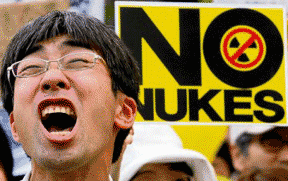 around 100 anti-nuclear events were staged nationwide, including in the western cities of Osaka and Hiroshima, which were devastated by a US atomic bomb in 1945. In the capital an estimated 6000 demonstrators, some carrying placards reading “We don’t want nuclear power plants”, marched by the head office of the Fukushima plant’s operator, Tokyo Electric Power Company (TEPCO), in a rally organised by the Japan Congress against Atomic and Nuclear Bombs..
Japan marks 3 months of pain News.com.au AAP * June 12, 2011 THOUSANDS of people rallied in Japan as the country marked three months since its horror quake and tsunami. Radiation continues to leak from the crippled Fukushima Daiichi nuclear power plant, 225 kilometres northeast of the capital, amid simmering public frustration over the government’s slow response to the triple catastrophe…... Media reports said that around 100 anti-nuclear events were staged nationwide, including in the western cities of Osaka and Hiroshima, which were devastated by a US atomic bomb in 1945. In the capital an estimated 6000 demonstrators, some carrying placards reading “We don’t want nuclear power plants”, marched by the head office of the Fukushima plant’s operator, Tokyo Electric Power Company (TEPCO), in a rally organised by the Japan Congress against Atomic and Nuclear Bombs……”I have yet to have a child, but I come here with my neighbours and their children because of the fear we feel every day,” Misuzu Kiyozumi, a 34-year-old housewife from the suburban city of Ichikawa, said…..
.. Rebuilding the muddy wastelands of the Tohoku region – an area now covered in 25 million tonnes of rubble – will take up to a decade and cost hundreds of billions of dollars, experts say. A 20-kilometre no-go zone has been enforced around the Fukushima nuclear plant, which emergency crews hope to bring into stable “cold shutdown” between October and January.
Environmental and anti-nuclear group Greenpeace called on Japan this week to evacuate children and pregnant women from Fukushima town, about 60 kilometres from the stricken plant, because of what it said was high radiation. Since the disaster, Japan has raised the legal exposure limit for people, including children, from one to 20 millisieverts per year – matching the safety standard for nuclear industry workers in many countries. In the wake of the disaster, Kan has said resource-poor Japan will review its energy policy, including its plans for more nuclear reactors, while making solar and other alternative energies new pillars of its energy mix. ..Japan marks 3 months of pain | News.com.au
No comments yet.
1 This Month

of the week – Shut Down Drone Warfare!


Tell the Ukrainian Government to Drop Prosecution of Peace Activist Yurii Sheliazhenko

Petition to revoke the licensing of the Near Surface Nuclear Disposal Facility (NSDF) at Chalk River. https://www.ourcommons.ca/petitions/en/Petition/Details?Petition=e-7247
To see nuclear-related stories in greater depth and intensity – go to https://nuclearinformation.wordpress.com
-
Archives
- March 2026 (244)
- February 2026 (268)
- January 2026 (308)
- December 2025 (358)
- November 2025 (359)
- October 2025 (376)
- September 2025 (257)
- August 2025 (319)
- July 2025 (230)
- June 2025 (348)
- May 2025 (261)
- April 2025 (305)
-
Categories
- 1
- 1 NUCLEAR ISSUES
- business and costs
- climate change
- culture and arts
- ENERGY
- environment
- health
- history
- indigenous issues
- Legal
- marketing of nuclear
- media
- opposition to nuclear
- PERSONAL STORIES
- politics
- politics international
- Religion and ethics
- safety
- secrets,lies and civil liberties
- spinbuster
- technology
- Uranium
- wastes
- weapons and war
- Women
- 2 WORLD
- ACTION
- AFRICA
- Atrocities
- AUSTRALIA
- Christina's notes
- Christina's themes
- culture and arts
- Events
- Fuk 2022
- Fuk 2023
- Fukushima 2017
- Fukushima 2018
- fukushima 2019
- Fukushima 2020
- Fukushima 2021
- general
- global warming
- Humour (God we need it)
- Nuclear
- RARE EARTHS
- Reference
- resources – print
- Resources -audiovicual
- Weekly Newsletter
- World
- World Nuclear
- YouTube
-
RSS
Entries RSS
Comments RSS
 nuclear-news
Leave a comment