Future human generations are affected by nuclear radiation
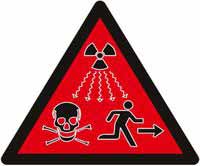 Ionising radiation – the kind that comes out of bombs and nuclear power plants – has been shown to alter sex ratios in fruit flies and mice, says Karl Sperling, of the Institute for Human Genetics at the University of Berlin. He suspects that radiation exposures might affect DNA in the first few cell divisions around the time of conception, which is known to be a highly vulnerable period.
If radiation can influence sex ratios in this way, he adds, there might be reason to be concerned about other environmental exposures, too.
 Nuclear radiation affects future generations, 8 June 2011, ABC Radio Emily Sohn After exposure to nuclear radiation events, women may be more likely to give birth to boys than to girls, suggests a new study.
The study documented a localised spike in the ratio of boy-to-girl births after the Chernobyl disaster and similar trends from the delayed fallout of atomic bomb tests in the 1960s and 1970s. The researchers also found a smaller, but still disproportionate number of boy births close to nuclear facilities in Germany and Switzerland.
It’s not yet clear whether radiation interferes with the father’s sperm, the mother’s body before she gets pregnant, the development of the embryo or fettas, or something else. But because skewed sex ratios can be a sign of other underlying health problems, the study offers a new category of concern about events like the recent nuclear disaster in Japan.
“The dogma was that this effect was not possible or that there was no effect of this kind,” says Hagen Scherb, a biostatistician at the Helmholtz Zentrum München, Germany. “Now, we can most clearly demonstrate that there is an effect. And this changes our thinking about radiation risks.”
Evidence has been sitting there
Some of the first evidence linking radiation with altered sex ratios among babies emerged after atomic bombs hit Hiroshima and Nagasaki in 1945, though the data was not strong enough to be convincing.
Subsequent bomb tests and animal studies connected radiation exposure and a rise in stillbirths and birth defects. For years, though, detailed records of birth data have been sitting there, just waiting to be analysed.
Using official and publicly available records, Scherb and colleague Kristina Voigt found that the ratio of male-to-female births in eastern and central Europe had been declining slightly for decades leading up to the Chernobyl disaster in 1986.
But in 1987, they reported in Environmental Science and Pollution Research , there was a sudden spike in male births compared to female births in those countries.
The trend continued upward for years, before levelling off around 2000. In the United States and elsewhere, sex ratios have continued downward for a variety of reasons, with no evidence of a spike in the mid-1980s.
440,00 missing girls
Overall, the shift was tiny – on the order of less than half a per cent – with somewhere between 1.045 and 1.06 boys born for every girl, depending on when and where you look.
Spread out over the entire population, though, that adds up to an estimated 440,000 missing girls as a result of the Chernobyl explosion, says Scherb. The researchers suspect that the trends points to a disproportionate loss of female pregnancies as a result of radiation exposure.
In both Europe and the United States, the study also found rises and falls in sex ratios that mirrored the frequency of atomic bomb testing. Those echoes showed a several-year lag that, the researchers proposed, corresponded with the delay in radioactive fallout from the atmosphere.
As a final piece of evidence, the researchers documented an uptick in the relative numbers of male births near nuclear facilities in Germany and Switzerland during periods when those facilities were operating.
Effect occurs early in conception
Ionising radiation – the kind that comes out of bombs and nuclear power plants – has been shown to alter sex ratios in fruit flies and mice, says Karl Sperling, of the Institute for Human Genetics at the University of Berlin. He suspects that radiation exposures might affect DNA in the first few cell divisions around the time of conception, which is known to be a highly vulnerable period.
If radiation can influence sex ratios in this way, he adds, there might be reason to be concerned about other environmental exposures, too.
No comments yet.
1 This Month

of the week – Shut Down Drone Warfare!


Tell the Ukrainian Government to Drop Prosecution of Peace Activist Yurii Sheliazhenko

Petition to revoke the licensing of the Near Surface Nuclear Disposal Facility (NSDF) at Chalk River. https://www.ourcommons.ca/petitions/en/Petition/Details?Petition=e-7247
To see nuclear-related stories in greater depth and intensity – go to https://nuclearinformation.wordpress.com
-
Archives
- March 2026 (244)
- February 2026 (268)
- January 2026 (308)
- December 2025 (358)
- November 2025 (359)
- October 2025 (376)
- September 2025 (257)
- August 2025 (319)
- July 2025 (230)
- June 2025 (348)
- May 2025 (261)
- April 2025 (305)
-
Categories
- 1
- 1 NUCLEAR ISSUES
- business and costs
- climate change
- culture and arts
- ENERGY
- environment
- health
- history
- indigenous issues
- Legal
- marketing of nuclear
- media
- opposition to nuclear
- PERSONAL STORIES
- politics
- politics international
- Religion and ethics
- safety
- secrets,lies and civil liberties
- spinbuster
- technology
- Uranium
- wastes
- weapons and war
- Women
- 2 WORLD
- ACTION
- AFRICA
- Atrocities
- AUSTRALIA
- Christina's notes
- Christina's themes
- culture and arts
- Events
- Fuk 2022
- Fuk 2023
- Fukushima 2017
- Fukushima 2018
- fukushima 2019
- Fukushima 2020
- Fukushima 2021
- general
- global warming
- Humour (God we need it)
- Nuclear
- RARE EARTHS
- Reference
- resources – print
- Resources -audiovicual
- Weekly Newsletter
- World
- World Nuclear
- YouTube
-
RSS
Entries RSS
Comments RSS
 nuclear-news
Leave a comment