Long lasting radioactive contamination of the sea, from Fukushima disaster
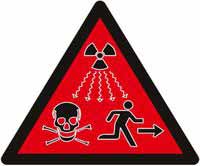 for all the focus on land-based contamination, the continuing flood of radioactive materials into the ocean at Fukushima could have the most problematic long-term impacts. ….for centuries to come, at least some radioactive materials dumped into the sea at Fukushima will find their way into the creatures of the sea and the humans that depend on them. ……
 Is Fukushima Now Ten Chernobyls into the Sea? | Common Dreams, May 26, 2011 by Harvey Wasserman New readings show levels of radioisotopes found up to 30 kilometers offshore from the on-going crisis at Fukushima are ten times higher than those measured in the Baltic and Black Seas during Chernobyl.
“When it comes to the oceans, says Ken Buesseler, a chemical oceonographer at the Woods Hole Oceanographic Institution, “the impact of Fukushima exceeds Chernobyl.”
for all the focus on land-based contamination, the continuing flood of radioactive materials into the ocean at Fukushima could have the most problematic long-term impacts. Long-term studies of radiological impacts on the seas are few and far between. Though some heavy isotopes may drop to the sea bottom, others could travel long distances through their lengthy half-lives. Some also worry that those contaminants that do fall to the bottom could be washed back on land by future tsunamis.
Tokyo Electric has now admitted that on May 10-11, at least 250 tons of radioactive liquid leaked into the sea from a pit near the intake at Unit 3, whose fuel was spiked with plutonium. According to the Japanese government, the leak contained about 100 times the annual allowable contamination.
About 500 tons leaked from Unit 2 from April 1 to April 6. Other leaks have been steady and virtually impossible to trace. “After Chernobyl, fallout was measured,” says Buesseler, “from as far afield as the north Pacific Ocean.”
A quarter-century later the international community is still trying to install a massive, hugely expensive containment structure to suppress further radiation releases in the wake of Chernobyl’s explosion.
Such a containment would be extremely difficult to sustain at seaside Fukushima, which is still vulnerable to earthquakes and tsunamis. To be of any real use, all six reactors and all seven spent fuel pools would have to be covered.
But avenues to the sea would also have to be contained. Fukushima is much closer to the ocean than Chernobyl, so more intense contamination might be expected. But the high radiation levels being measured indicate Fukushima’s most important impacts may be on marine life.
The US has ceased measuring contamination in Pacific seafood. But for centuries to come, at least some radioactive materials dumped into the sea at Fukushima will find their way into the creatures of the sea and the humans that depend on them. ……
Is Fukushima Now Ten Chernobyls into the Sea? | Common Dreams
No comments yet.
1 This Month
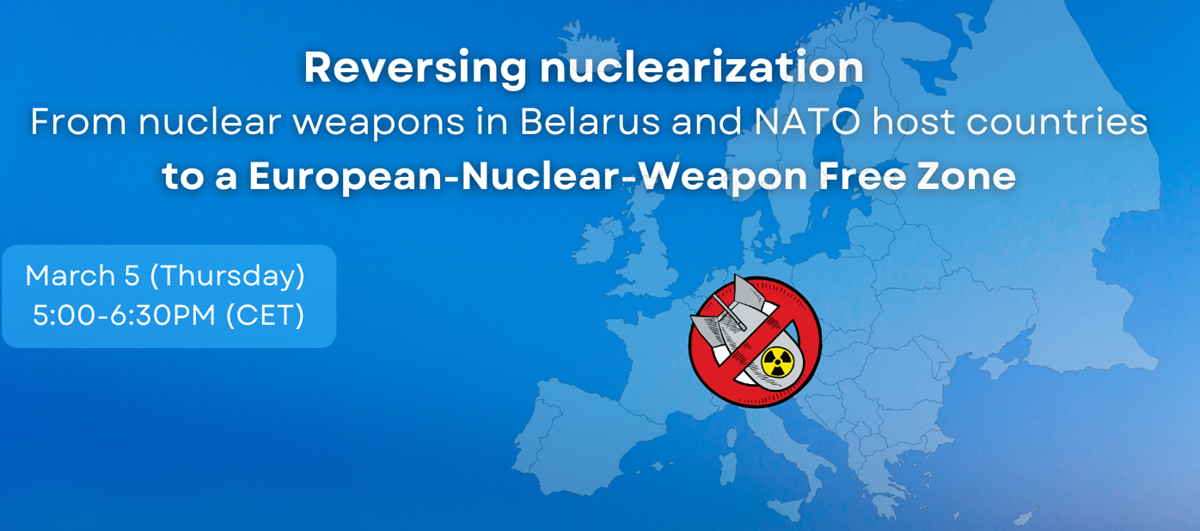
5 March -Online – Reversing nuclearization:
From nuclear weapons in Belarus and NATO host countries to a European-Nuclear-Weapon Free Zone
11am-12:30pm Eastern Time USA / 5pm-6:30pm CET

of the week – Advocating for a
nuclear free beach – https://www.samuellawrencefoundation.org/
The Samuel Lawrence Foundation advocates for a Nuclear Waste Free Beach at San Onofre, join us and take action!

10 March A LIVE WEBINAR THE REAL EFFECTS OF NUCLEAR POWER
What the Industry Isn’t Telling Us
1:00 PM Mountain, 2 pm Central, 3 pm Eastern. Live on the Keepers of the Water Facebook page

18 March Webinar @ 1 PM EST: An Assessment of SMR Projects: The Case of Canada
register for the zoom:
https://us02web.zoom.us/webinar/register/WN_o8BIIOUvQ2ONJR1nta65DQ#/registration

of the week – STOP SMALL MODULAR REACTORS IN CANADA
To see nuclear-related stories in greater depth and intensity – go to https://nuclearinformation.wordpress.com
-
Archives
- March 2026 (37)
- February 2026 (268)
- January 2026 (308)
- December 2025 (358)
- November 2025 (359)
- October 2025 (376)
- September 2025 (258)
- August 2025 (319)
- July 2025 (230)
- June 2025 (348)
- May 2025 (261)
- April 2025 (305)
-
Categories
- 1
- 1 NUCLEAR ISSUES
- business and costs
- climate change
- culture and arts
- ENERGY
- environment
- health
- history
- indigenous issues
- Legal
- marketing of nuclear
- media
- opposition to nuclear
- PERSONAL STORIES
- politics
- politics international
- Religion and ethics
- safety
- secrets,lies and civil liberties
- spinbuster
- technology
- Uranium
- wastes
- weapons and war
- Women
- 2 WORLD
- ACTION
- AFRICA
- Atrocities
- AUSTRALIA
- Christina's notes
- Christina's themes
- culture and arts
- Events
- Fuk 2022
- Fuk 2023
- Fukushima 2017
- Fukushima 2018
- fukushima 2019
- Fukushima 2020
- Fukushima 2021
- general
- global warming
- Humour (God we need it)
- Nuclear
- RARE EARTHS
- Reference
- resources – print
- Resources -audiovicual
- Weekly Newsletter
- World
- World Nuclear
- YouTube
-
RSS
Entries RSS
Comments RSS
 nuclear-news
Leave a comment